Artwork
Ploughing - Burragorang, New South Wales, Australia
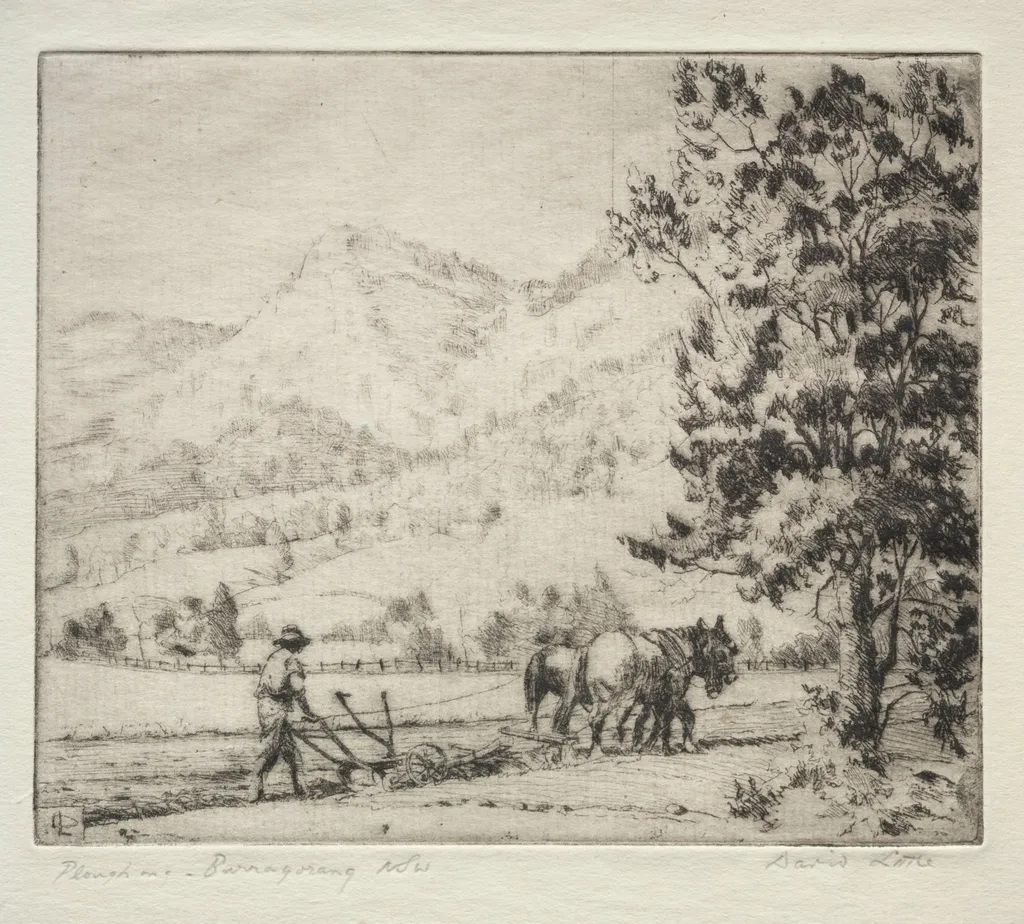
Ploughing - Burragorang, New South Wales, Australia is a print by David Little. It dates from 1932 and is held in the collection of the Cleveland Museum of Art.
About this work
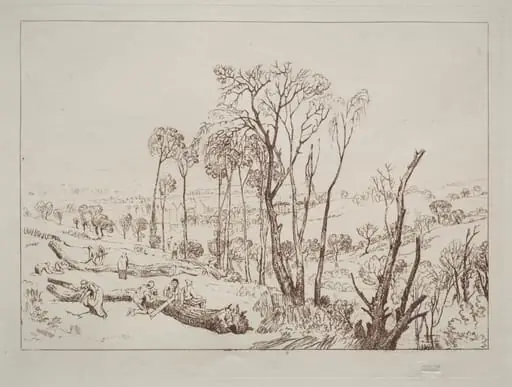
Trees with bare branches stand in the background, and a fence runs along the right side.
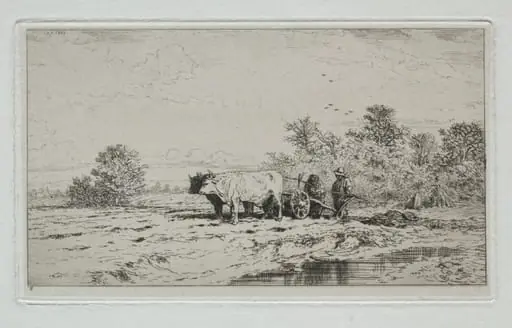
This sketch shows a man walking behind two oxen pulling a plow. The field is rough, with uneven furrows and patches of dirt. Trees with bare branches stand in the background, and a fence runs along the right side.
The artist used quick, sketchy lines to show movement and texture. The scene feels quiet and focused on hard work.
Next, check out David Little (Australian, 1893–1951) for more of his drawings.
Overview
“Ploughing – Burragorang, New South Wales, Australia” is a print executed around 1932 by Australian artist David Little (1893–1951). The work is part of the collection of the Cleveland Museum of Art. It presents a brief, observational study of rural labor in a New South Wales landscape, rendered in a sketch‑like manner that emphasizes movement and texture.
Subject & Meaning
The image captures a solitary figure walking behind a pair of oxen as they draw a plow through uneven furrows. The surrounding field is rough, dotted with patches of bare earth, while leafless trees rise in the distance and a fence marks the right edge. The composition conveys the quiet perseverance of agricultural work, focusing on the relationship between man, animal, and land.
Technique & Style
Little employs rapid, sketchy lines that suggest both the physical effort of ploughing and the tactile quality of the terrain. The economy of line and limited tonal range create a sense of immediacy, while the loose handling of texture conveys the irregularity of the soil and the movement of the oxen. The overall effect is a restrained, observational study rather than a polished illustration.
History & Provenance
Created circa 1932, the print reflects Little’s interest in documenting everyday Australian life during the interwar period. It entered the Cleveland Museum of Art’s collection through acquisition (specific acquisition details are not publicly recorded). The work remains an example of Little’s broader output of drawings and prints that record rural scenes across New South Wales.
Context
During the early 1930s, Australian artists often turned to regional subjects, highlighting the nation’s agricultural foundations amid economic hardship. Little’s focus on a modest farming activity aligns with contemporary trends that valued realism and social documentation. The depiction of Burragorang, a valley near Sydney, situates the work within a recognizable landscape that was undergoing change as urban expansion approached.
Artist & collection