Artwork
Nine Barrow Down
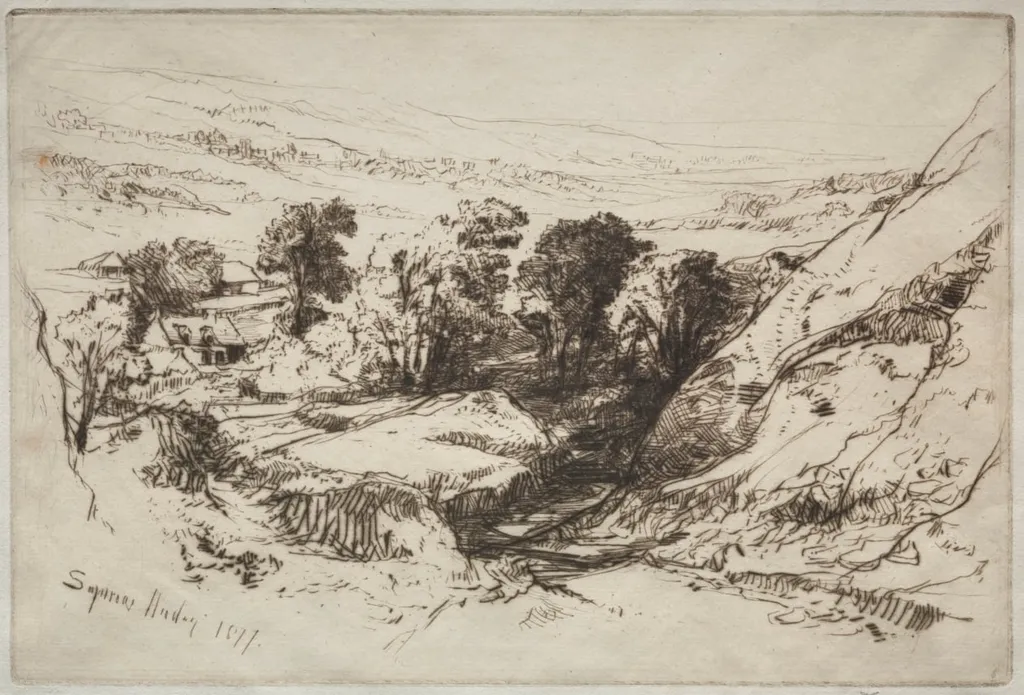
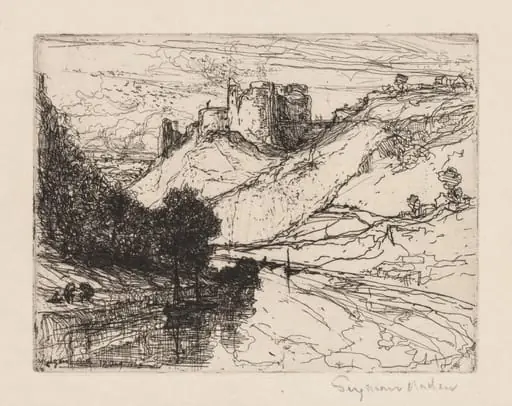
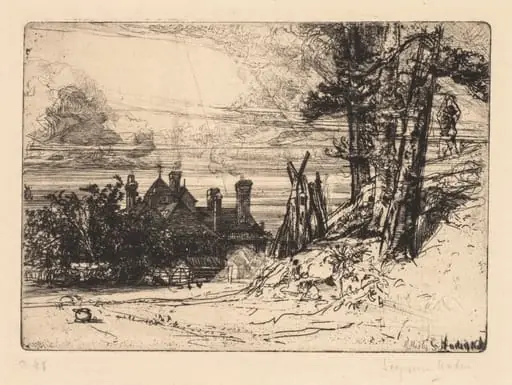
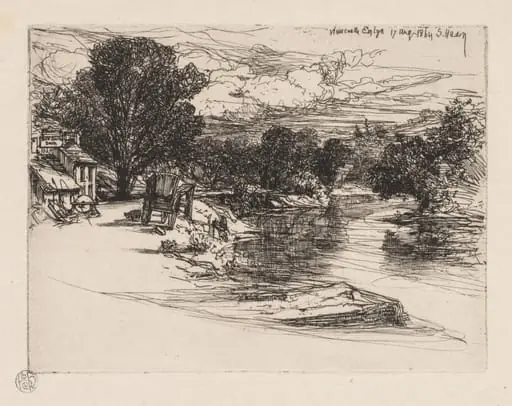
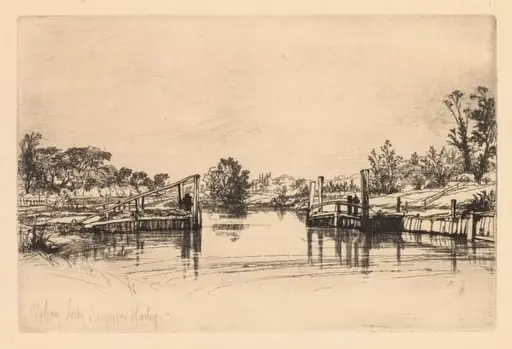
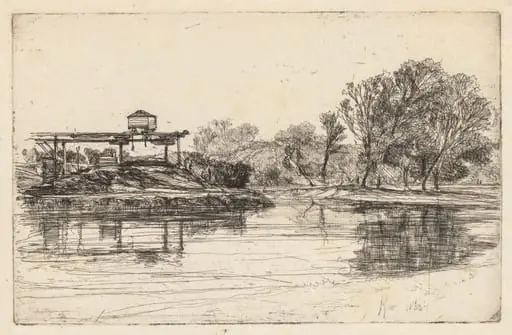
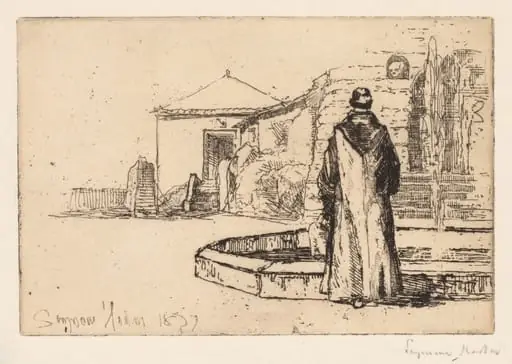
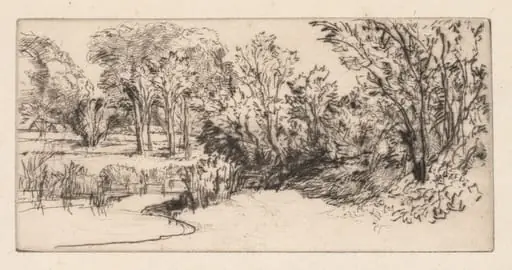
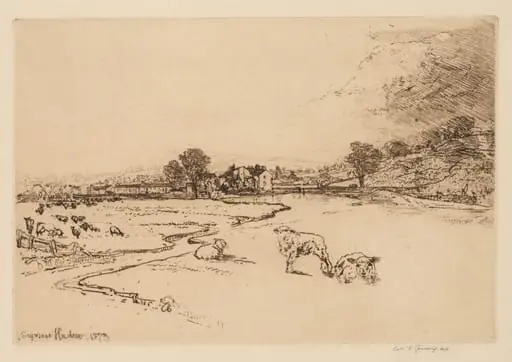
Nine Barrow Down is a print by the Impressionist artist Francis Seymour Haden. It dates from 1877 and is held in the collection of the Cleveland Museum of Art.
About this work
Overview
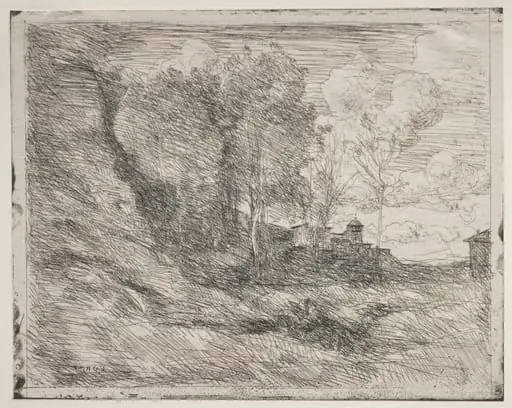
Created in 1877 by British printmaker Francis Seymour Haden, Nine Barrow Down is an etched landscape held in the collection of the Cleveland Museum of Art.
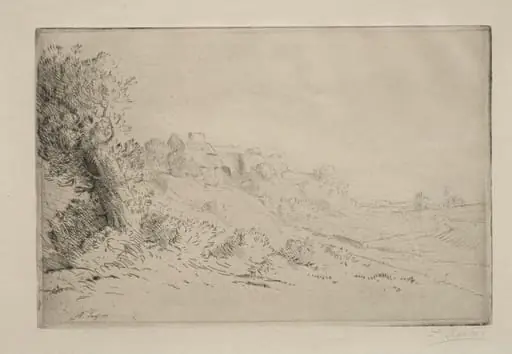
Created in 1877 by British printmaker Francis Seymour Haden, Nine Barrow Down is an etched landscape held in the collection of the Cleveland Museum of Art. The work presents a gentle hill crowned with grass and scattered trees, set beneath a softly clouded sky. A modest cluster of distant buildings introduces a human element, while the overall composition conveys a quiet, contemplative atmosphere.
Subject & Meaning
The image captures a rural scene where nature dominates the foreground, with the hill and foliage rendered in delicate tonal gradations. The distant structures hint at the presence of settlement without disrupting the sense of openness, suggesting a harmonious coexistence between the cultivated land and the surrounding countryside.
Technique & Style
Haden employed traditional etching techniques, using fine lines and varied hatching to model light and shadow across the terrain. The subtle modulation of tone creates depth, while the soft rendering of clouds and atmospheric perspective aligns the work with the tonal sensitivities of late‑19th‑century British printmaking, echoing aspects of contemporary Impressionist concerns for light.
History & Provenance
Since its completion, Nine Barrow Down has remained within institutional holdings, eventually entering the Cleveland Museum of Art’s collection. The museum acquired the piece as part of its broader effort to represent 19th‑century British printmaking, ensuring the work’s accessibility to the public and scholars alike.
Artist & collection