Artwork
In the Cotswolds
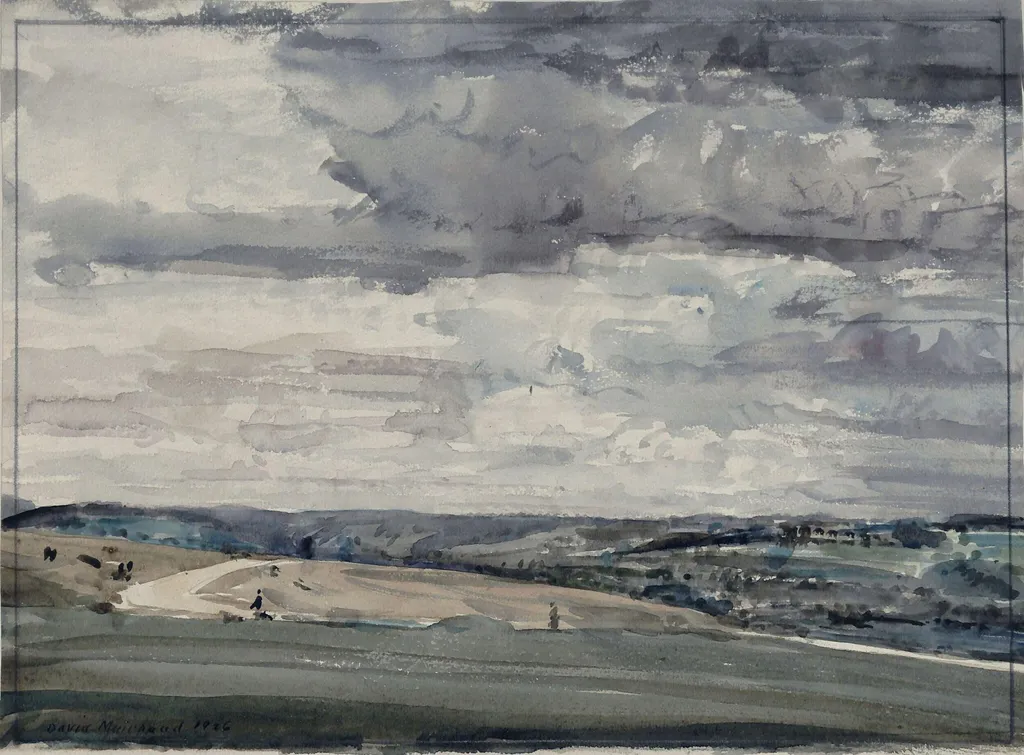
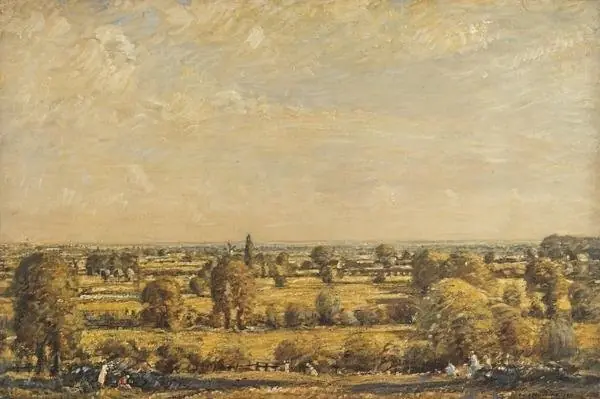
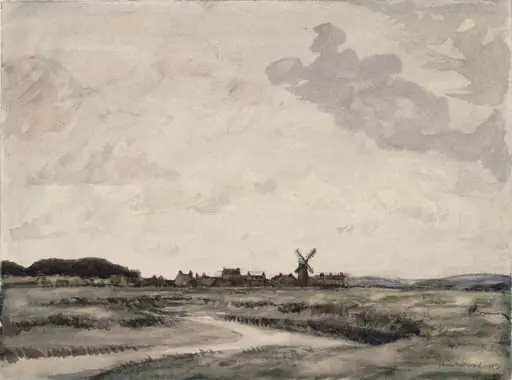
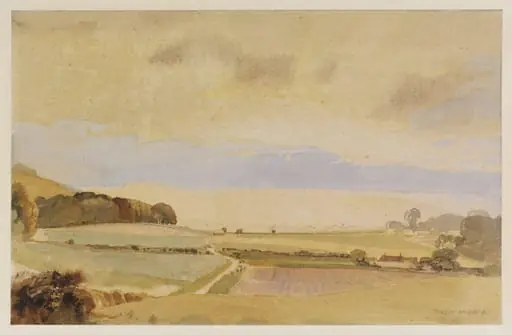
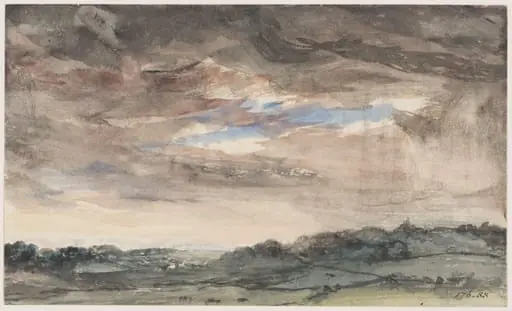
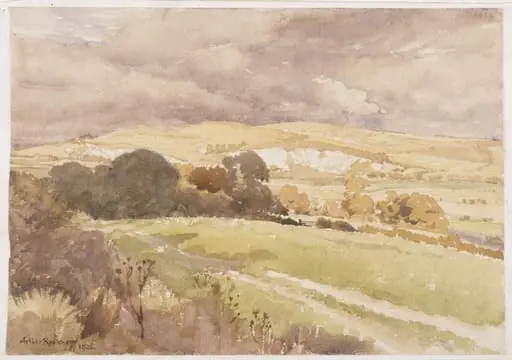
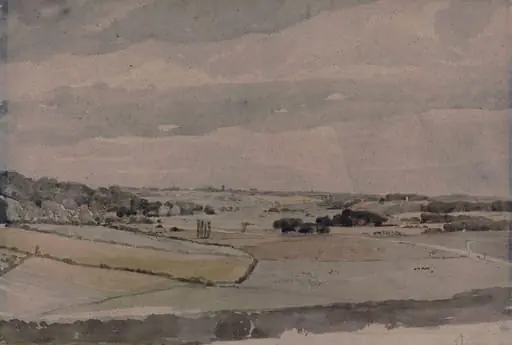
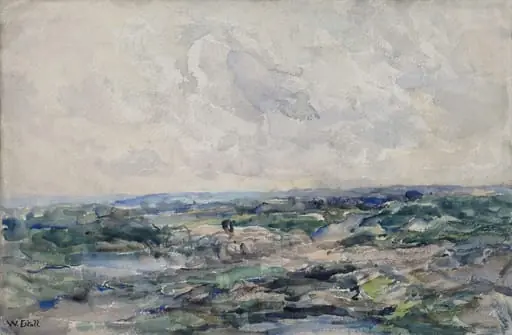
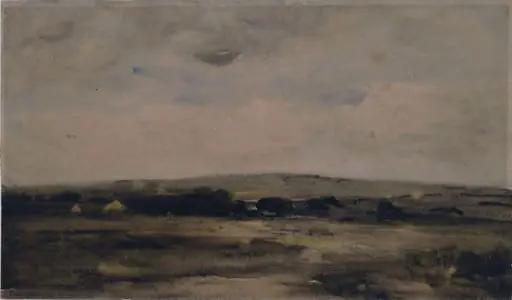
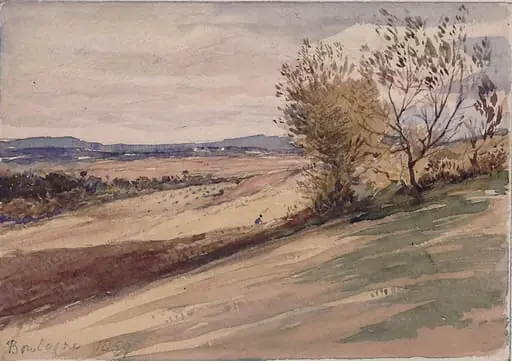
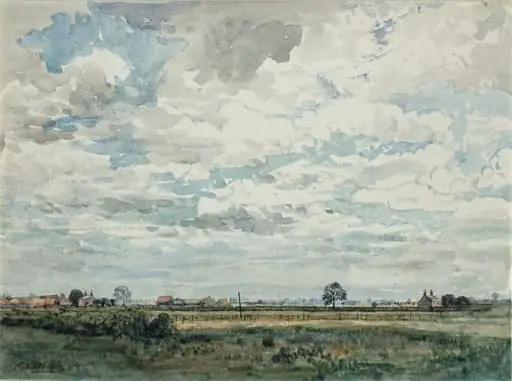
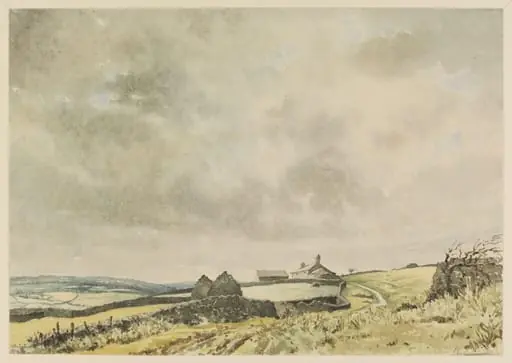
In the Cotswolds is a watercolor work on paper by the Impressionist artist David Muirhead. It dates from 1926 and is held in the collection of the Victoria and Albert Museum.
About this work
Overview
Signed and dated by the artist, it retains its original exhibition label on the reverse, confirming its early public presentation.
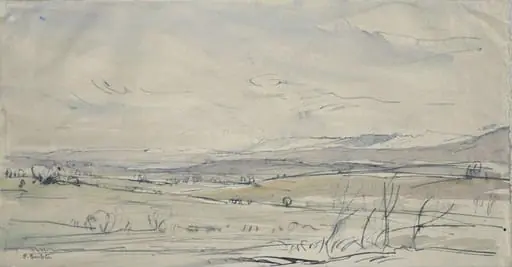
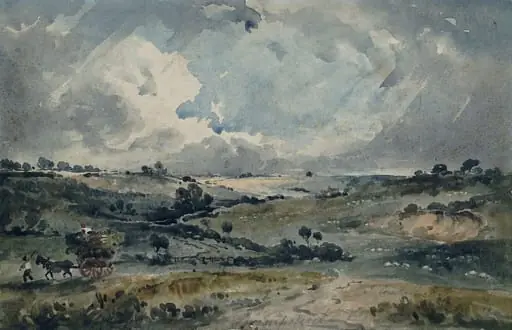
Painted in 1926, this watercolour by David Muirhead captures a tranquil stretch of the Cotswolds countryside. Executed in loose, fluid strokes, the work conveys the immediacy of a moment observed outdoors. Signed and dated by the artist, it retains its original exhibition label on the reverse, confirming its early public presentation. The composition avoids elaborate detail, favoring a spontaneous impression of light and terrain.
Subject & Meaning
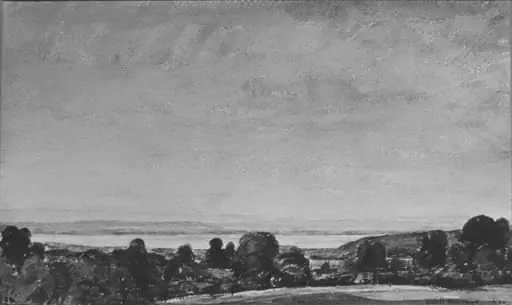
The scene depicts a quiet rural pathway winding through undulating hills under a muted sky. Two small figures, barely defined, move along the trail, suggesting quiet human presence amid nature’s stillness. There is no narrative or symbolic intent—only a restrained observation of place. The absence of dramatic elements reinforces a sense of ordinary, unremarkable beauty found in everyday landscapes.
Technique & Style
Muirhead employed a watercolour technique characterized by rapid, open brushwork. Skies and clouds are rendered with diluted washes and faint, sweeping strokes, while tree masses appear as dark smudges against lighter hills. The lack of fine detail and the visible texture of the paper contribute to a sketchlike quality. This approach prioritizes atmosphere over precision, aligning with early 20th-century British watercolour traditions that valued spontaneity.
History & Provenance
The painting was first exhibited shortly after its creation, as indicated by the original exhibition label affixed to its reverse. Its survival with this label suggests careful handling and early recognition within regional art circles. No further record of ownership or major collections is documented, indicating it remained in private hands, likely within the artist’s immediate network or local collectors.
Context
Created during a period when British artists increasingly turned to landscape as a subject of personal reflection rather than grand narrative, Muirhead’s work reflects a broader trend toward intimate, observational painting. The Cotswolds, long associated with pastoral ideals, offered artists a refuge from urban modernity. His restrained palette and loose handling echo contemporaries who favored tonal harmony over vivid color.
Legacy
Though not widely published or exhibited in major institutions, this work exemplifies the quiet, persistent tradition of British watercolourists who documented rural life with modesty and sensitivity. Muirhead’s oeuvre, though limited in public visibility, contributes to an understated but enduring body of work that values observation over spectacle, preserving the subtle rhythms of the English countryside.
Artist & collection
Artist
Sir David Francis Muirhead was a British diplomat, ambassador to Peru, Portugal and Belgium.