Artwork
Chepstow Castle
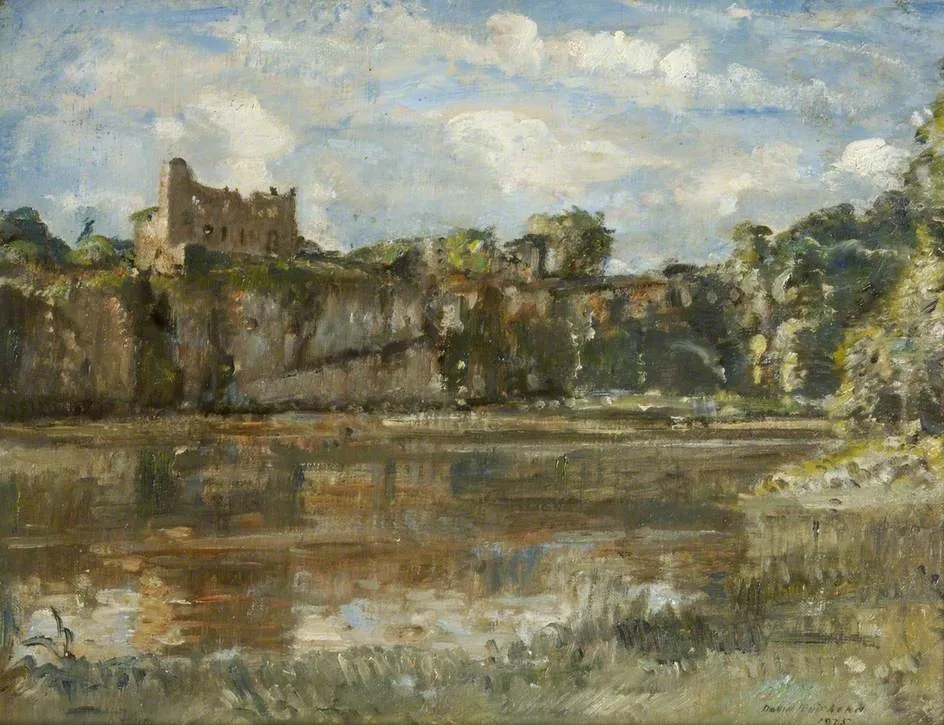
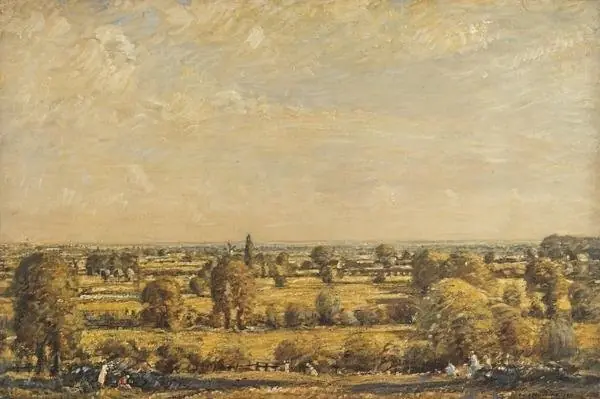
Chepstow Castle is an oil painting by the Impressionist artist David Muirhead. It dates from 1925 and is held in the collection of the Ashmolean Museum.
About this work
Overview
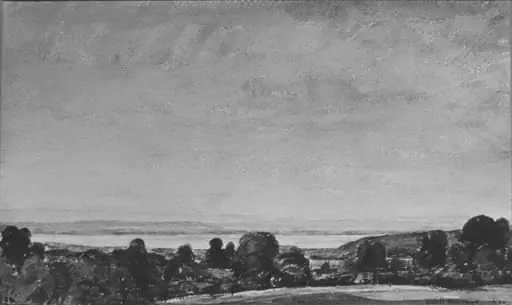
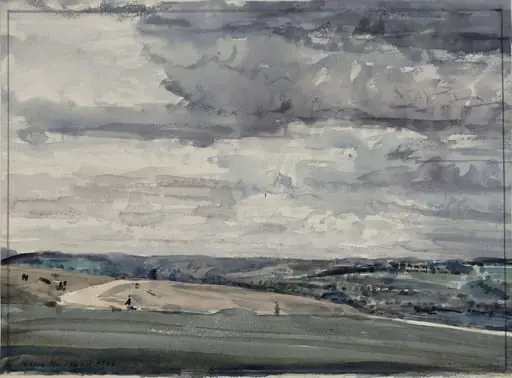
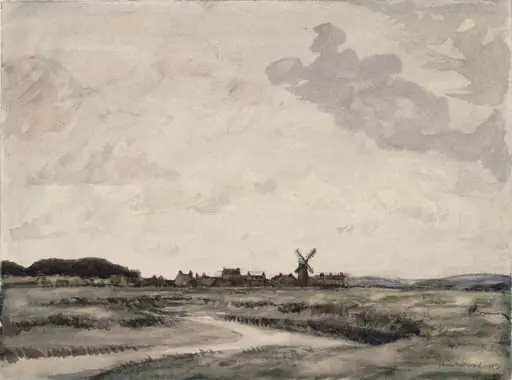
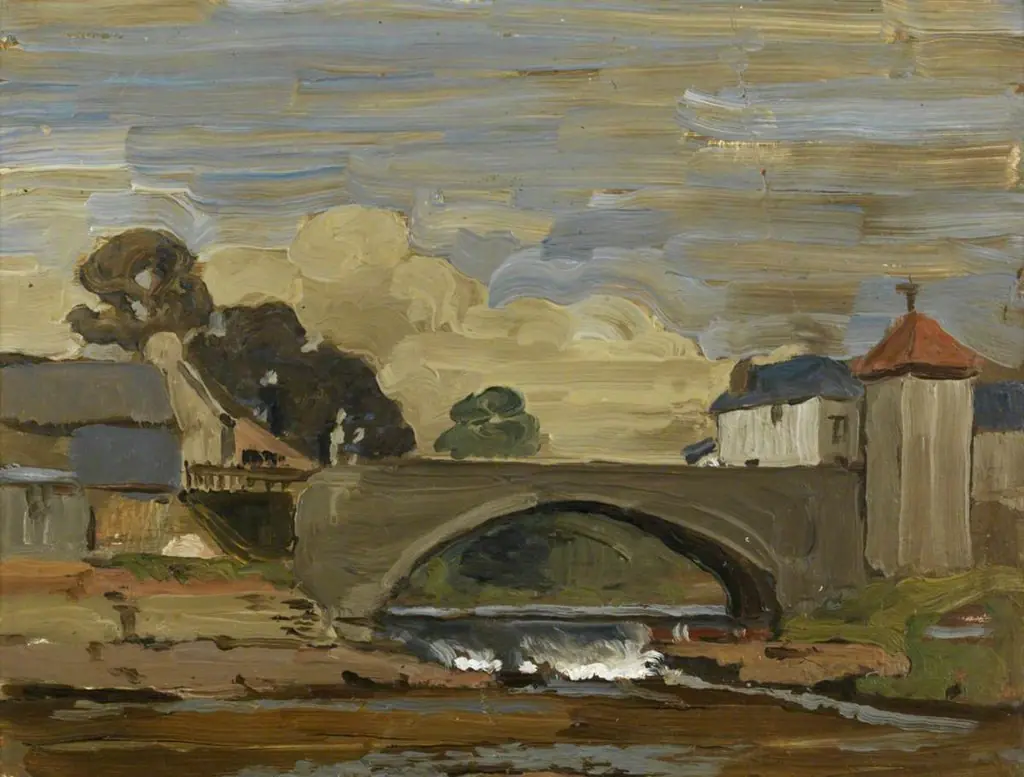
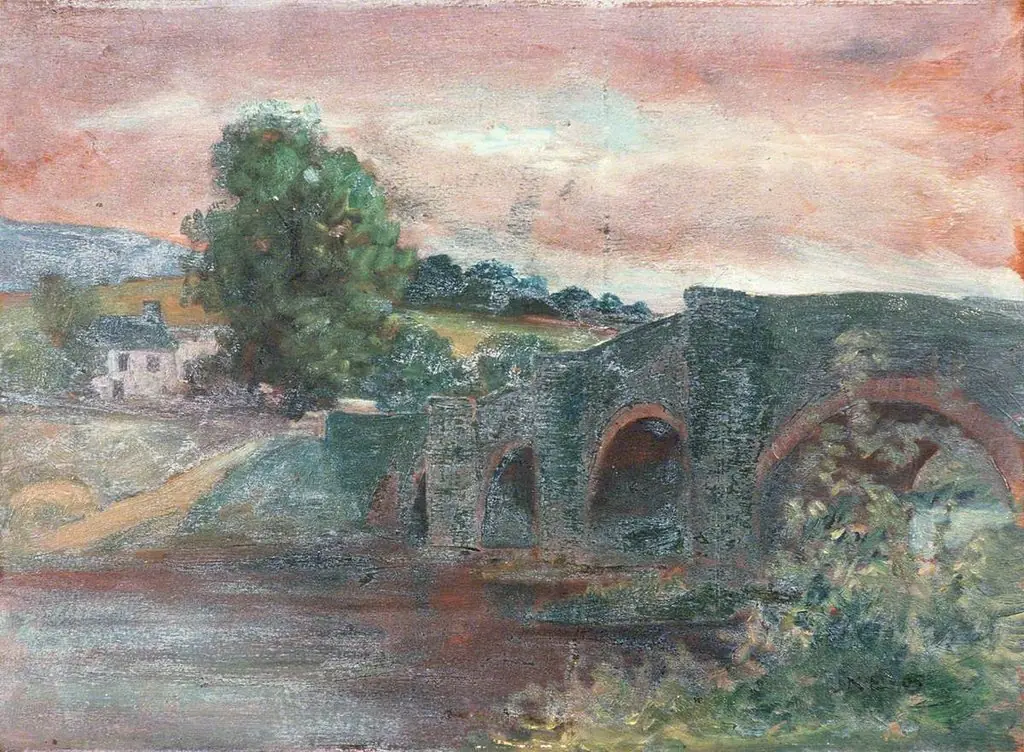
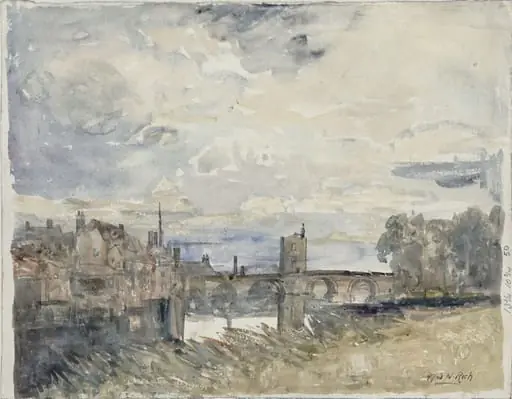
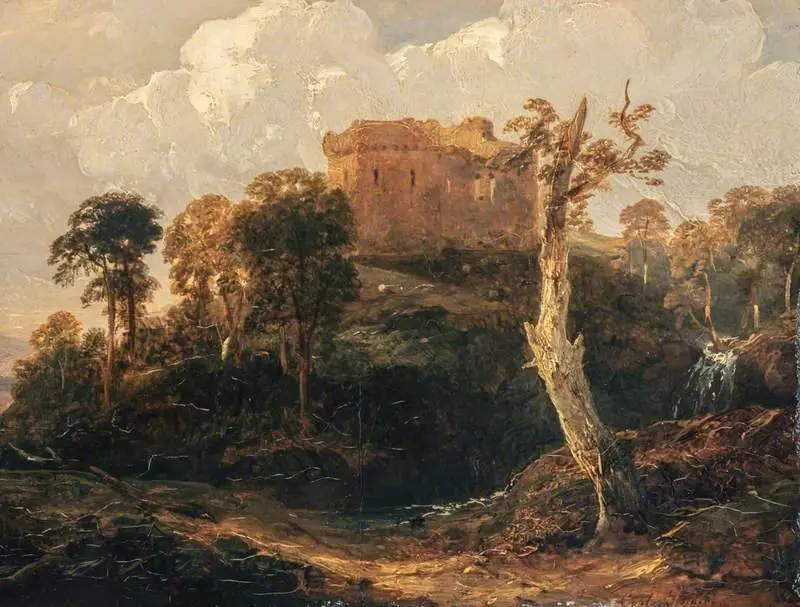
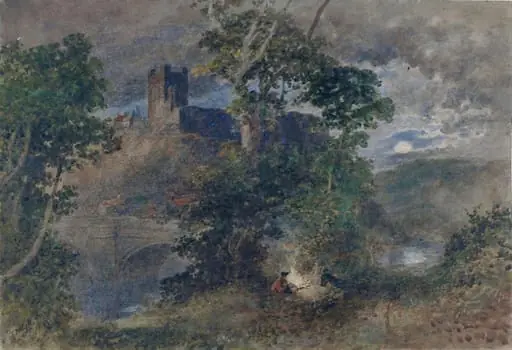
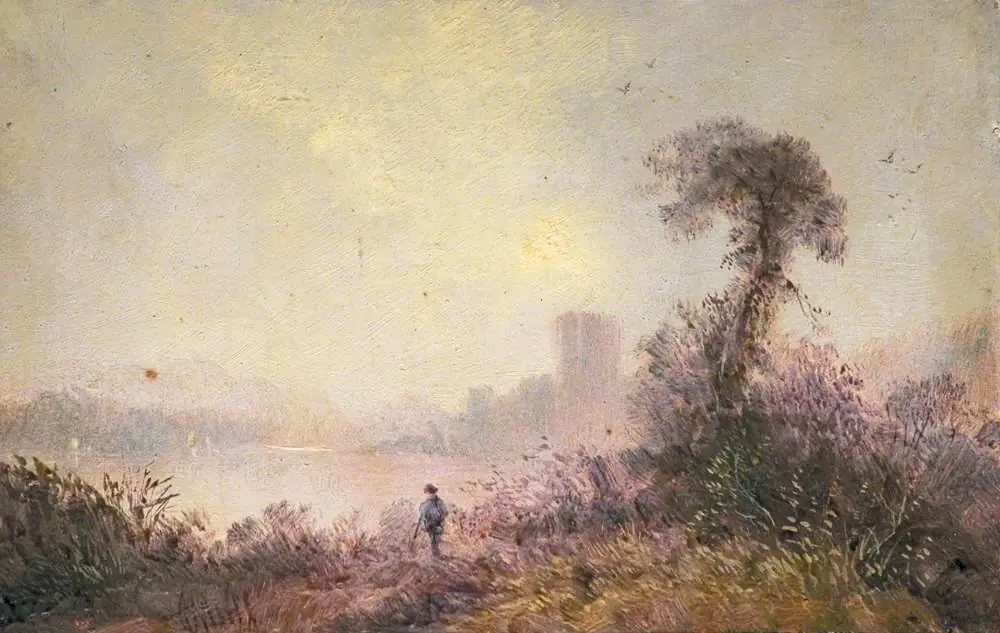
Painted in 1925 by David Muirhead, this oil on canvas work captures Chepstow Castle as it stands above the River Wye. The composition emphasizes the castle’s rugged stone structure perched on a cliff, with the river mirroring both its form and the sky above. The painting’s quiet realism and attention to natural light reflect Muirhead’s interest in topographical accuracy and atmospheric detail.
Subject & Meaning
The painting presents Chepstow Castle not as a romantic ruin but as a persistent landmark embedded in its landscape. The absence of human figures and the focus on geological and architectural forms suggest a contemplative engagement with time and endurance. The river’s reflection reinforces the castle’s permanence, tying its history to the flow of the natural world around it.
Technique & Style
Muirhead employed oil paint to build subtle gradations of light and texture, particularly in the stone walls and the rippling water. Brushwork is restrained, favoring smooth transitions over dramatic strokes. The sky, rendered in pale blues and soft whites, complements the earthy tones of the cliff and foliage, creating a harmonious, muted palette that enhances the scene’s stillness.
History & Provenance
The painting entered the Ashmolean Museum’s collection following its creation in 1925. While little is documented about its early exhibitions, its presence in the museum suggests it was acquired as part of a broader interest in early 20th-century British landscape painting. It remains part of the museum’s permanent holdings, preserved as an example of regional topographical art.
Context
Created during a period when British artists were re-examining historic sites through a modern lens, the painting aligns with a quiet movement away from romanticized medievalism. Muirhead’s approach—factual, unembellished—echoes contemporaries who sought to document architectural heritage with observational clarity rather than narrative flourish.
Legacy
Though not widely reproduced, the painting contributes to a lesser-known strand of interwar British art that valued quiet observation over spectacle. It remains a reference point for studies of Welsh borderland landscapes and offers insight into how regional heritage was visually interpreted during a time of shifting cultural priorities.
Artist & collection
Artist
Sir David Francis Muirhead was a British diplomat, ambassador to Peru, Portugal and Belgium.