Artwork
Stroud, Gloucestershire
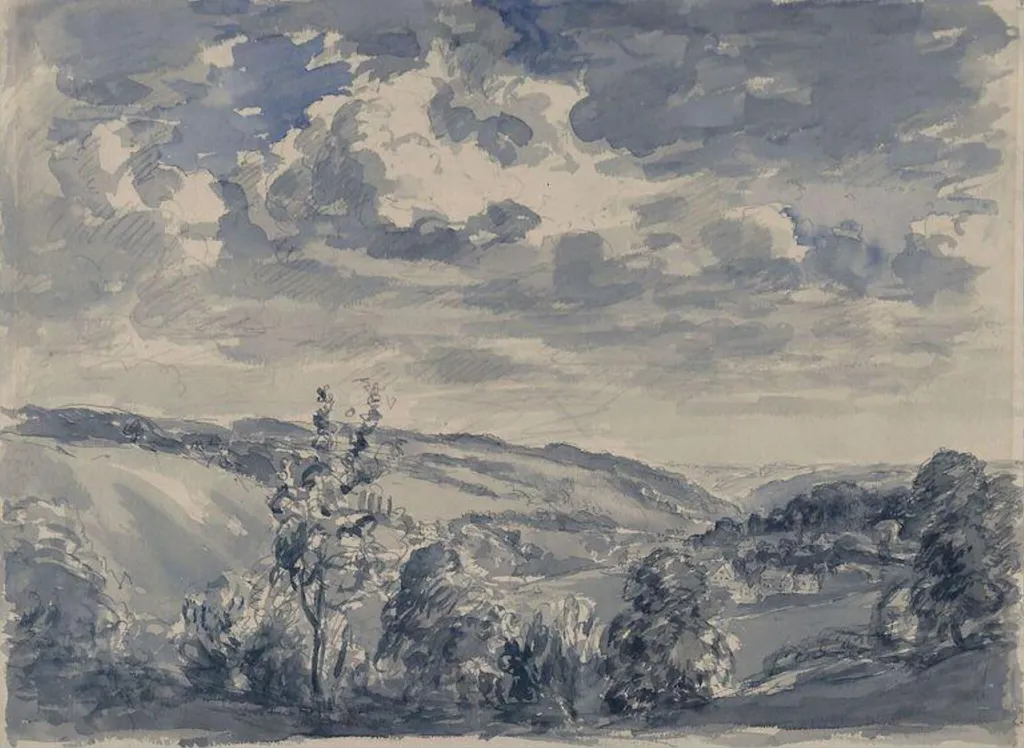
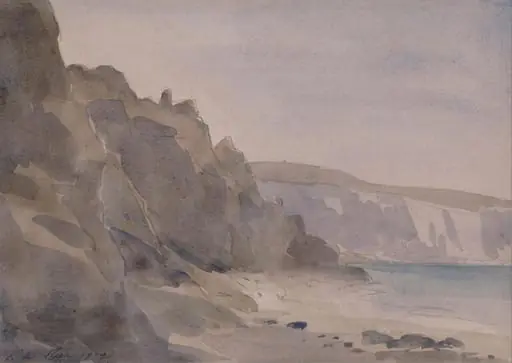
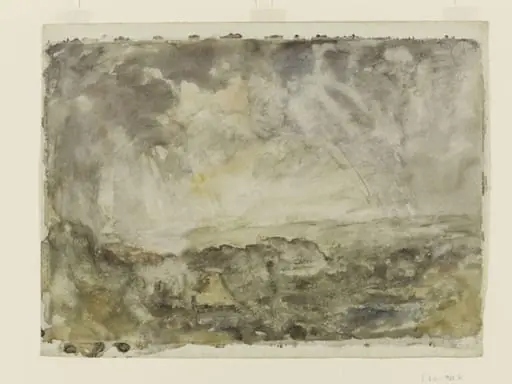
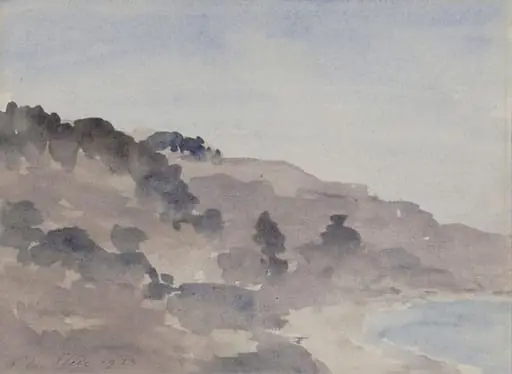
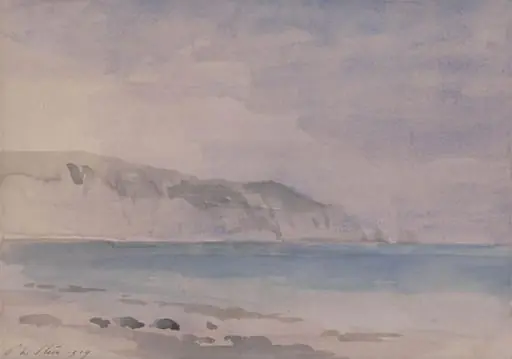
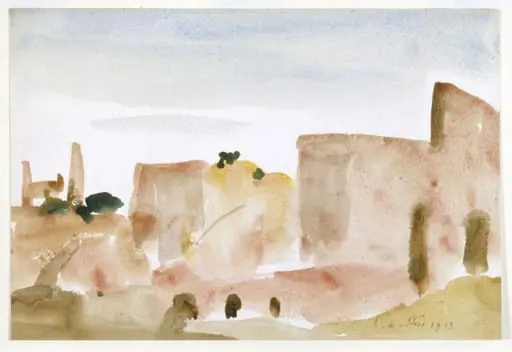
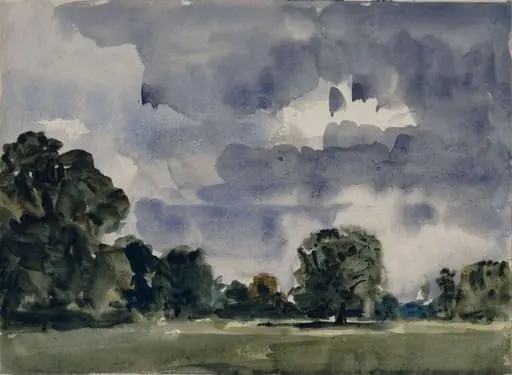
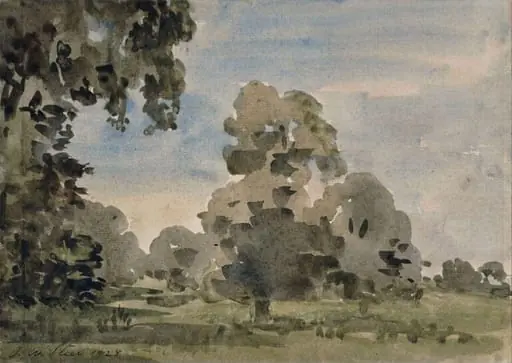
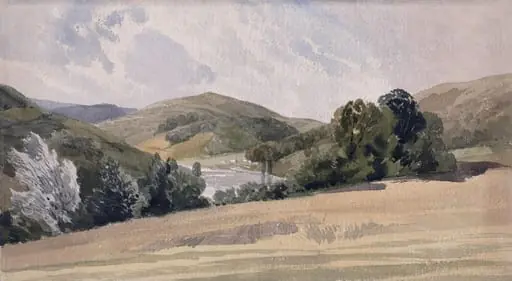
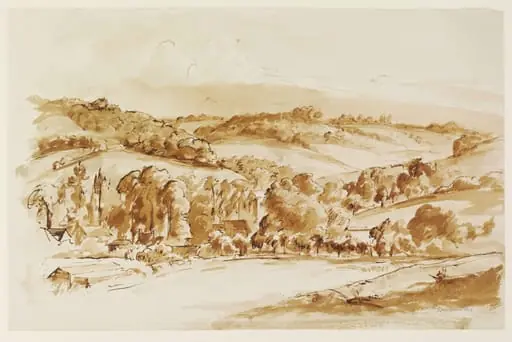
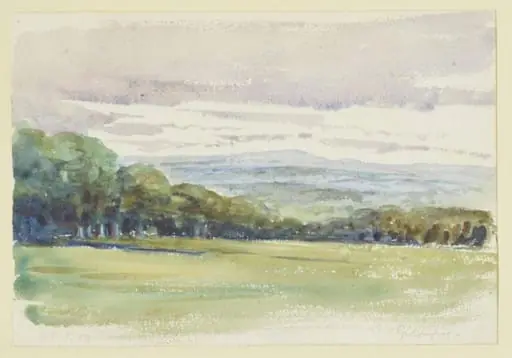
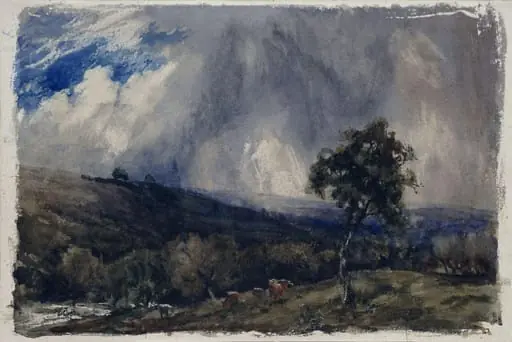
Stroud, Gloucestershire is a watercolor work on paper by Philip Wilson Steer. It is held in the collection of the Victoria and Albert Museum.
About this work
Overview
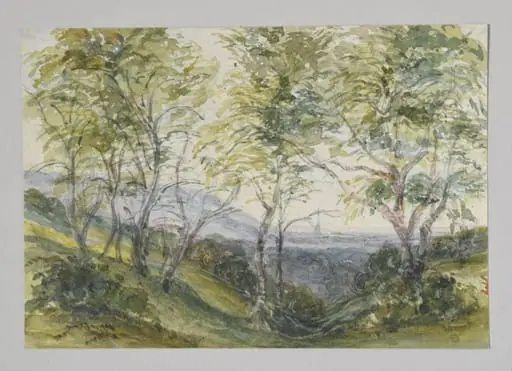
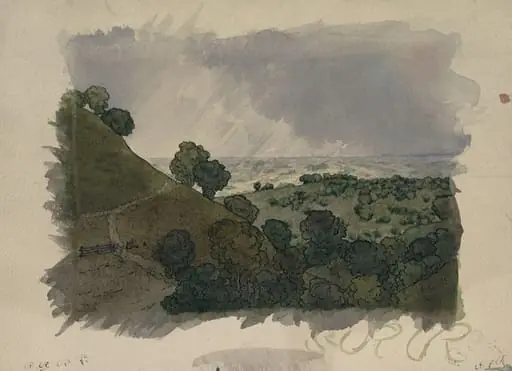
Philip Wilson Steer created this watercolour as a direct response to the natural environment of Stroud in Gloucestershire.
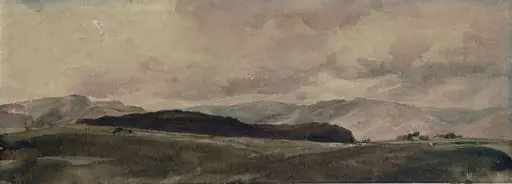
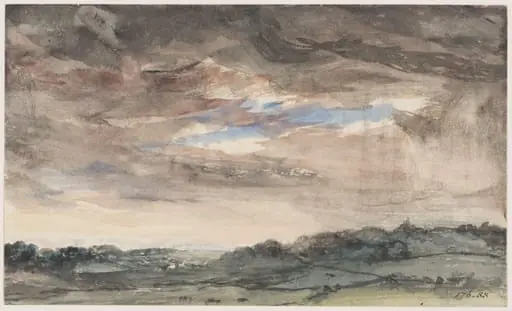
Philip Wilson Steer created this watercolour as a direct response to the natural environment of Stroud in Gloucestershire. Executed with immediacy, the work captures a moment in the landscape rather than an idealized view. The medium’s transparency and fluidity allowed Steer to convey shifting atmospheric conditions and the raw quality of the terrain, aligning with his interest in plein air observation.
Subject & Meaning
The scene presents a windswept, unpopulated valley marked by barren trees and jagged hills. There is no human presence, emphasizing nature’s autonomy. The absence of cultivated fields or architecture suggests a place untouched by domestication, evoking a sense of solitude and elemental force. The composition invites contemplation of nature’s resilience in harsh conditions.
Technique & Style
Steer employed rapid, unblended brushwork to suggest texture and movement. Pale washes of blue, gray, and white dominate, mimicking the chill of winter light and overcast skies. The paper’s texture remains visible in places, enhancing the sense of roughness. His loose handling avoids detail, instead focusing on the overall mood and spatial rhythm of the landscape.
History & Provenance
The watercolour entered the collection of the Victoria and Albert Museum in the early 20th century, likely acquired through the artist’s network or a contemporary patron. It reflects Steer’s broader practice of recording English countryside scenes during the 1890s and early 1900s. Its preservation in a major public institution underscores its significance within his oeuvre and British watercolour tradition.
Context
Created during a period when British artists were redefining landscape art beyond romanticized depictions, Steer’s work aligns with the Aesthetic Movement’s emphasis on tone and mood. His approach to Stroud contrasts with the detailed topographical views popular earlier in the century, favoring sensory impression over documentary precision.
Legacy
This watercolour exemplifies Steer’s contribution to modern British watercolour painting, influencing later artists who valued spontaneity and atmospheric truth. Its restrained palette and unembellished subject matter helped shift perceptions of landscape as a vehicle for emotional resonance rather than mere representation. It remains a quiet testament to his commitment to direct observation.
Artist & collection
Artist
Philip Wilson Steer painted delicate English coastal scenes in watercolor—sun-bleached cliffs, shifting skies, and choppy seas around the Isle of Wight.