Artwork
Semua
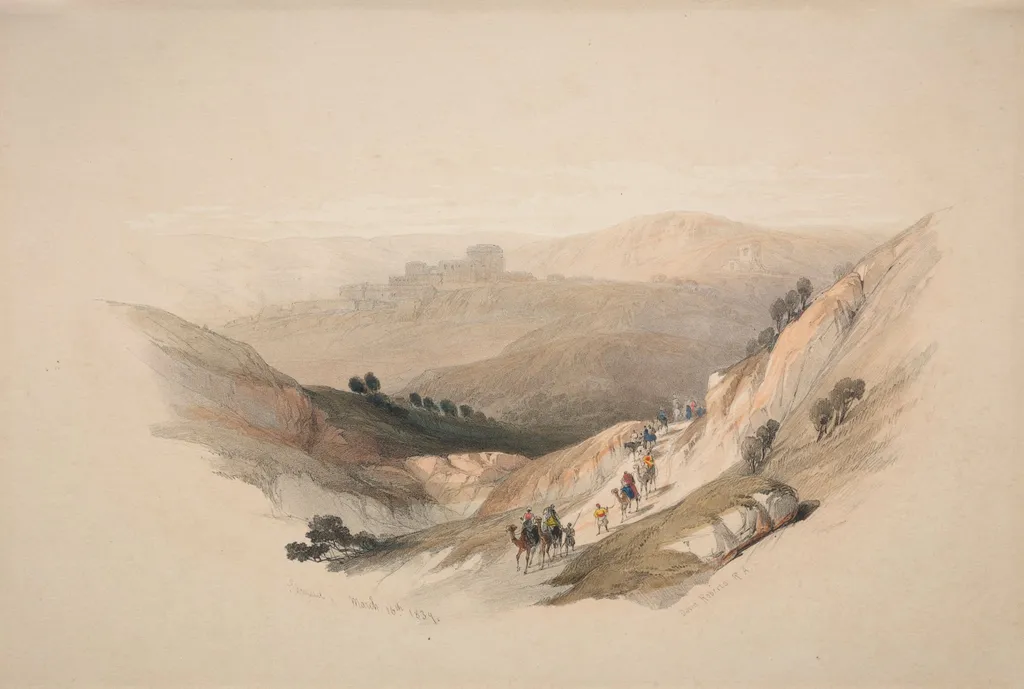
Semua is a print by the Romanticist artist David Roberts. It dates from 1839 and is held in the collection of the Cleveland Museum of Art.
About this work
Overview
Created in 1839, *Semua* is a lithographic print by Scottish artist David Roberts, produced during his travels in Egypt and the Levant.
Created in 1839, *Semua* is a lithographic print by Scottish artist David Roberts, produced during his travels in Egypt and the Levant. It belongs to a series of works documenting architectural and topographical scenes from the region. Roberts relied on on-site sketches to develop these images, which later served as the basis for published volumes. The print reflects his methodical approach to recording landscapes and structures encountered during his journey.
Subject & Meaning
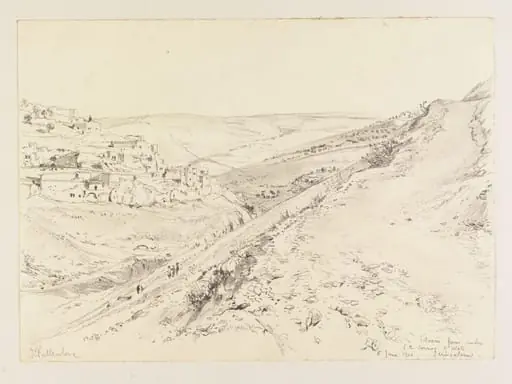
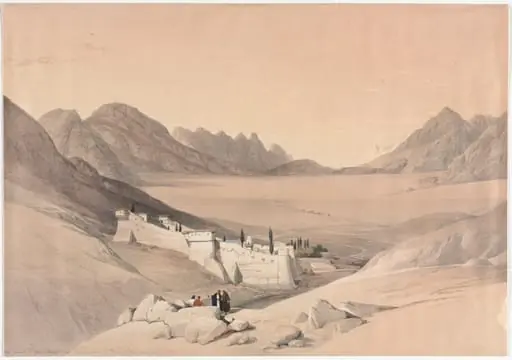
The scene depicts a narrow, rocky trail winding through arid hills, with a small party of travelers and pack animals progressing along it. A distant building, likely a ruin or outpost, anchors the horizon. The composition emphasizes movement through an unforgiving landscape, suggesting the quiet endurance required for travel in the region. There is no overt narrative, but the presence of people implies human interaction with a vast, ancient environment.
Technique & Style
Roberts employed loose, rapid strokes to convey the texture of dry rock and sparse vegetation, avoiding idealized detail in favor of observational immediacy. The palette is restrained—soft browns, grays, and muted greens—enhancing the sense of aridity. Linear perspective guides the viewer’s eye from the foreground path toward the distant structure, creating spatial depth. The technique aligns with topographical drawing traditions, prioritizing accuracy over dramatic effect.
History & Provenance
Roberts produced *Semua* during his 1838–1840 expedition to Egypt and the Holy Land, where he made hundreds of sketches later transformed into lithographs. The print was published as part of a multi-volume illustrated work released after his return. His documentation of Middle Eastern sites contributed to his election as a Royal Academician in 1841. The work entered institutional collections through early subscribers and publishers of his travel series.
Context
Roberts’s travels coincided with a surge of European interest in the Near East, fueled by archaeological exploration and colonial expansion. His work emerged alongside early Orientalist scholarship, though he avoided mythologizing the region. Unlike contemporaries who emphasized exoticism, Roberts focused on architectural precision and topographical fidelity, aligning his output with the scientific impulse of 19th-century travel documentation.
Legacy
Roberts’s prints, including *Semua*, became key visual references for Western audiences unfamiliar with the Middle East. His method of combining field sketches with lithographic reproduction influenced later travel publications and archaeological illustration. While his style is now viewed within the framework of Orientalism, his commitment to observed detail preserved valuable records of sites now altered or lost, lending his work enduring documentary value.
Artist & collection
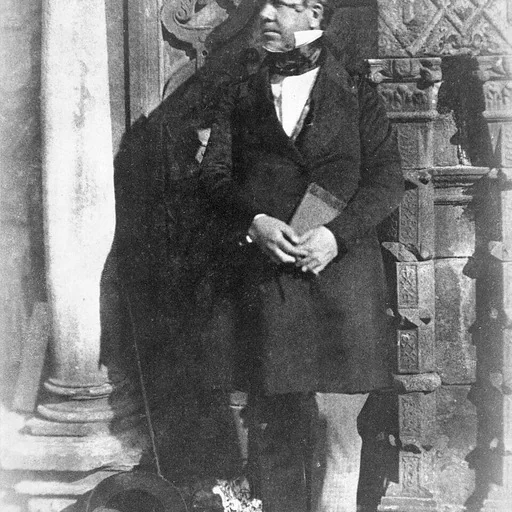
Artist
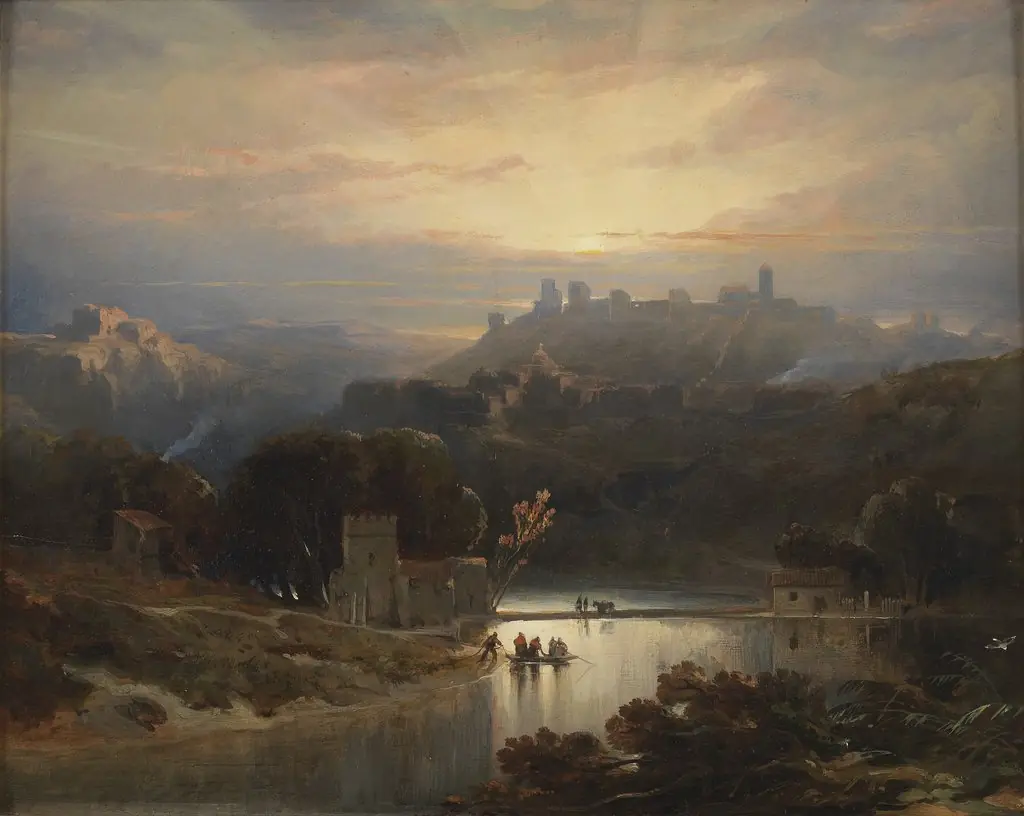
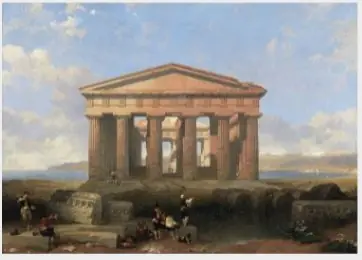
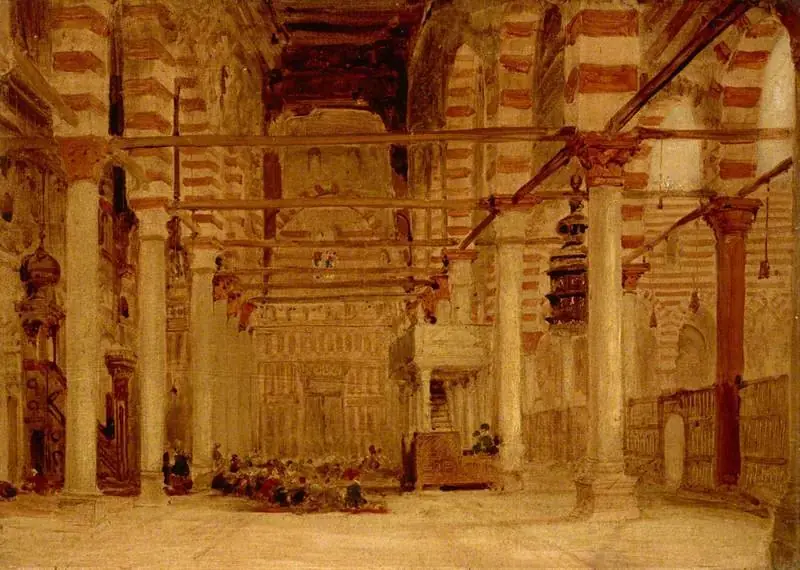
David Roberts (24 October 1796 – 25 November 1864) was a Scottish painter. He is especially known for The Holy Land, Syria, Idumea, Arabia, Egypt, and Nubia, a prolific series of detailed lithograph prints of Egypt and…

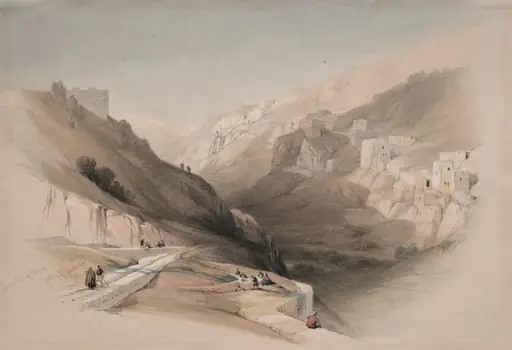 Lower Pool of Siloam, Valley of Jehoshaphat
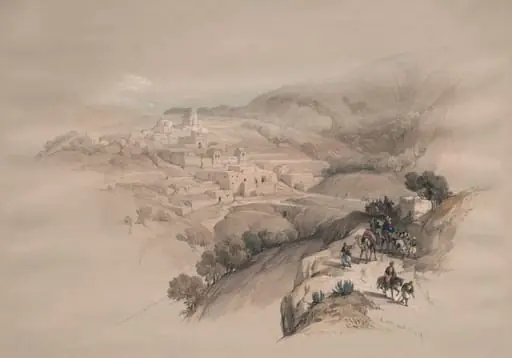 Bethany
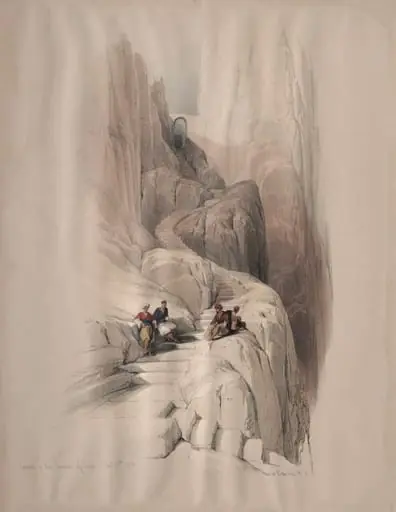 Ascent to the Summit of Sinai
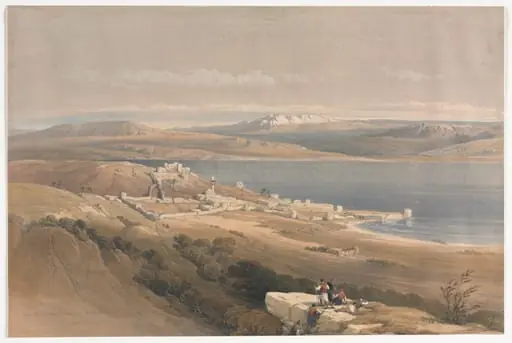 City of Tiberias on the Sea of Galilee, looking towards Hebron
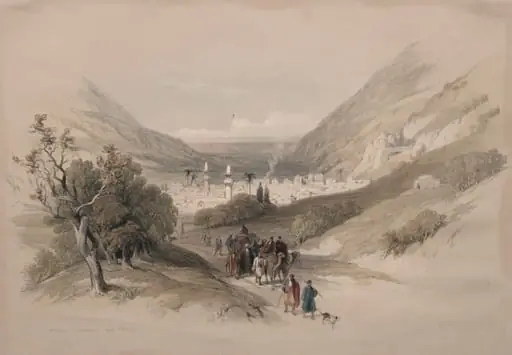 Entrance to Nablus
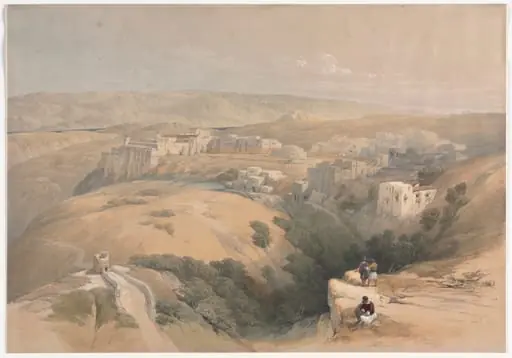 Bethlehem
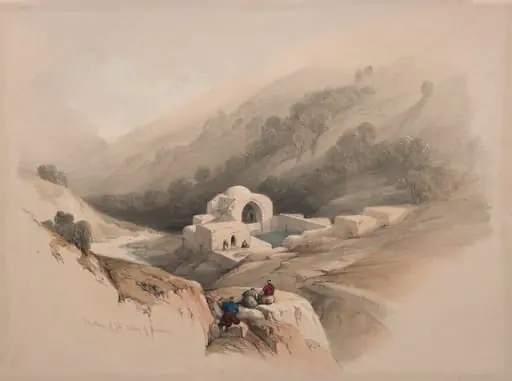 Fountain of Job, Valley of Hinnom
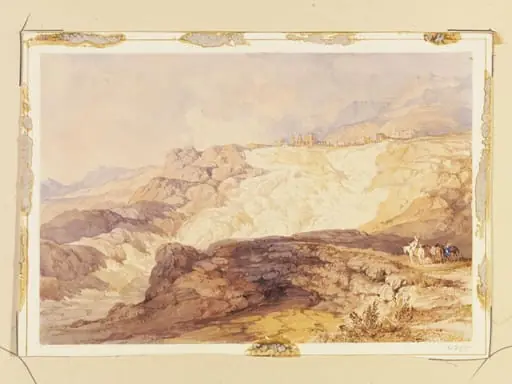 The Ruins of Hierapolis
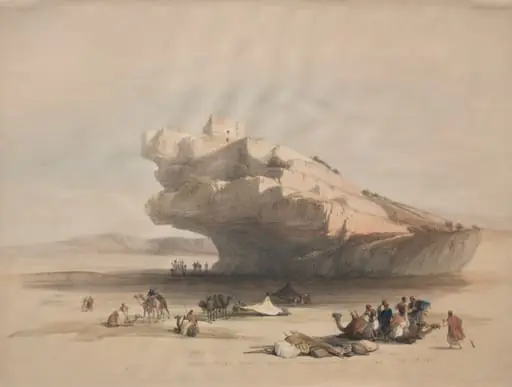 Approach to Petra, an Ancient Watch Tower Commanding the Valley of El Chor
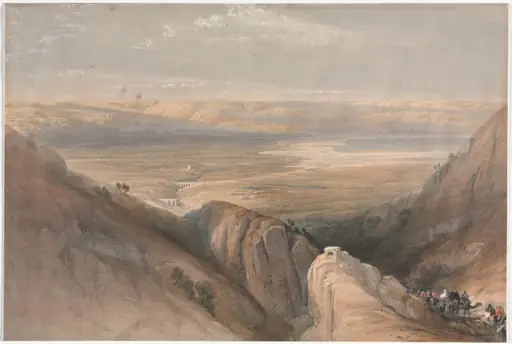 Descent from the Valley of the Jordan
 Siloam from under S.E. Corner of Wall Jerusalem
 The Convent of St. Catherine, Mount Sinai, Looking towards the Plain of the Encampment