Artwork
Bethlehem
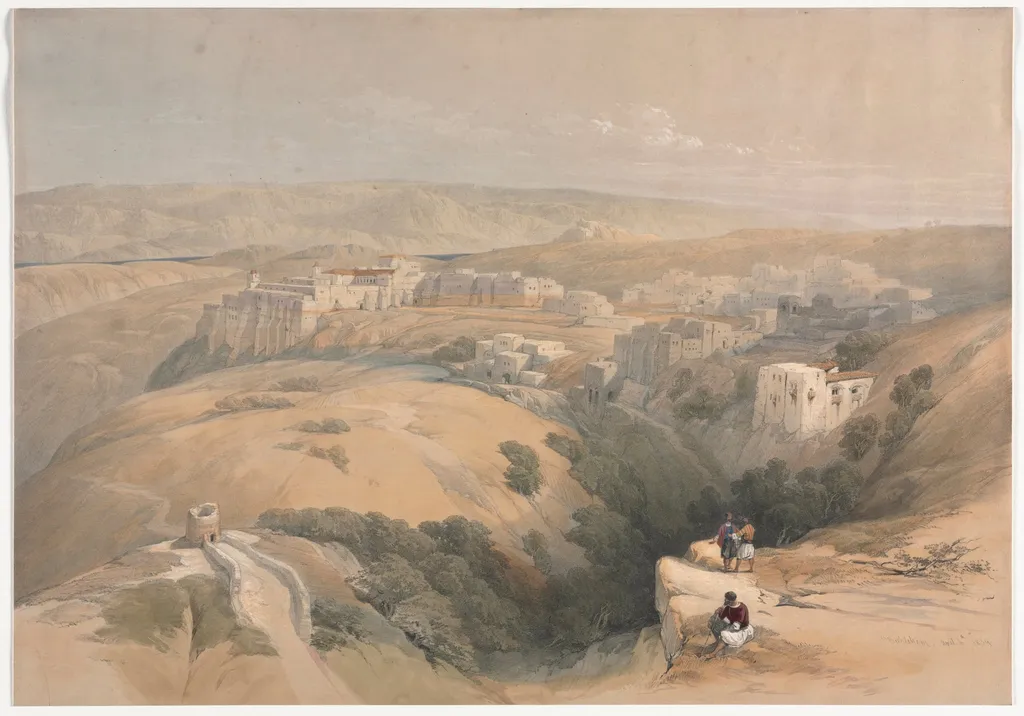
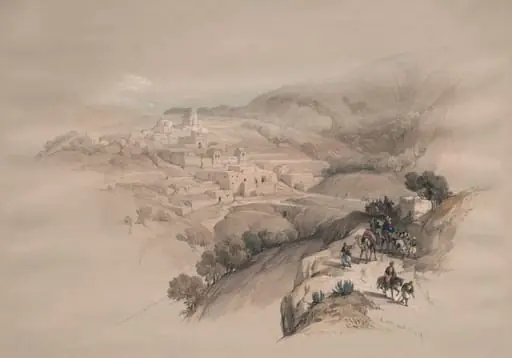
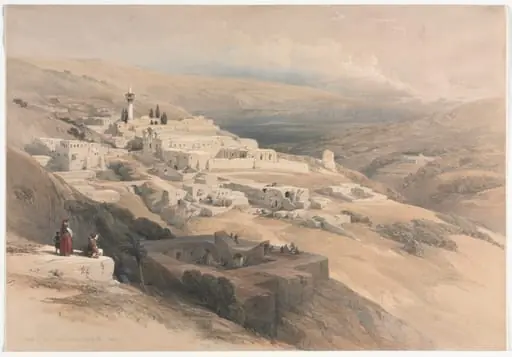
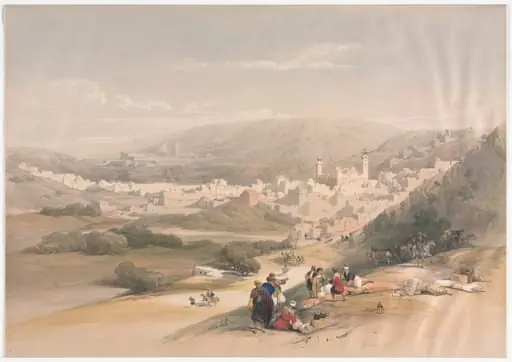
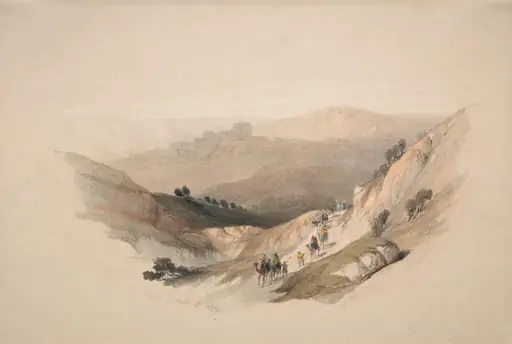
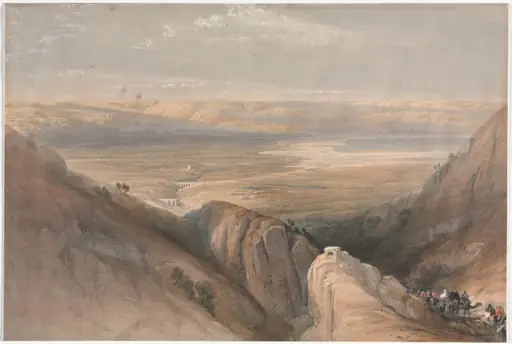
Bethlehem is a print by the Romanticist artist David Roberts. It dates from 1839 and is held in the collection of the Cleveland Museum of Art.
About this work
Overview
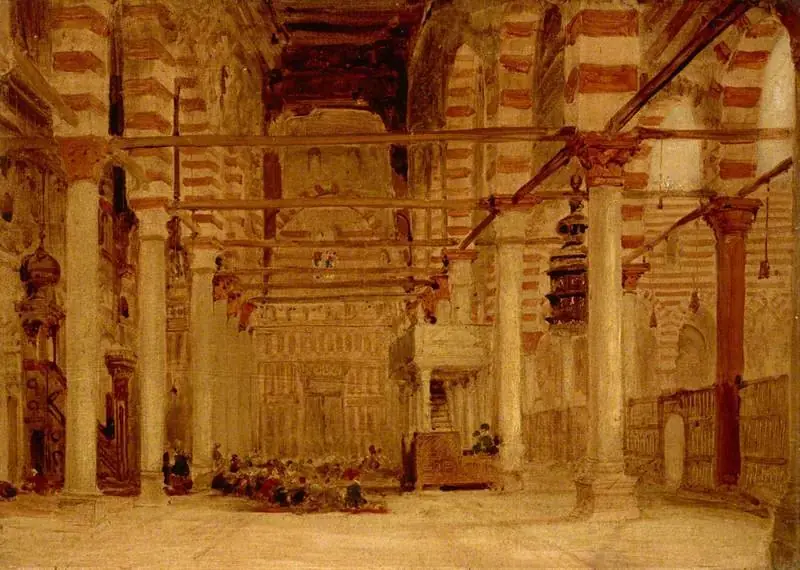
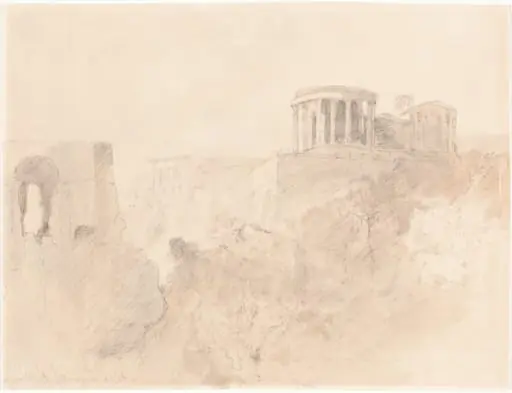
Bethlehem is a print created by Scottish artist David Roberts in 1839, part of his extensive documentation of Near Eastern sites through large oil paintings and lithographs, inspired by his travels from 1838 to 1840.
Subject & Meaning
The print depicts a distant view of Bethlehem, emphasizing its topography and architecture. The composition features a small, white-walled town set against a light, cloudy sky, with foreground hills populated by a few figures, highlighting Roberts' attention to detail and texture.
Technique & Style
Roberts employed meticulous detail and varied coloration to convey the textures of buildings and hills, achieving a sense of depth by layering the distant town behind the nearer hills, characteristics aligned with the Romantic movement's emphasis on natural beauty and detailed representation.
History & Provenance
Following its creation in 1839, Roberts' reputation as a leading Orientalist painter was solidified, culminating in his election as a Royal Academician in 1841.
Context
Bethlehem was produced within the broader context of Orientalist art, reflecting 19th-century European fascination with the Near East. Roberts' travels and documentation contributed significantly to this artistic and cultural phenomenon.
Legacy
As part of Roberts' oeuvre, Bethlehem contributes to the enduring legacy of Orientalist painting, influencing perceptions of the Near East in the 19th century and remaining a notable work in the artist's catalog.
Artist & collection
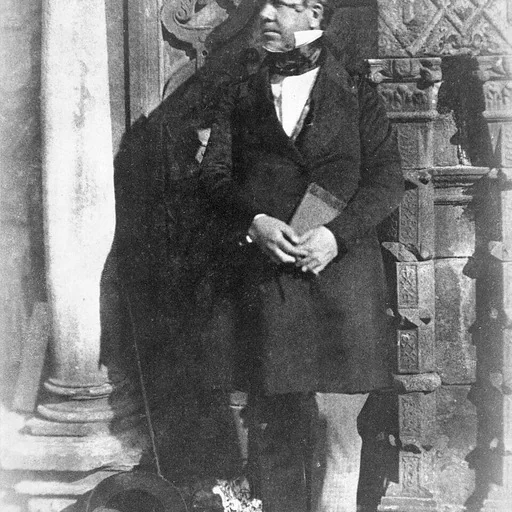
Artist
David Roberts (24 October 1796 – 25 November 1864) was a Scottish painter. He is especially known for The Holy Land, Syria, Idumea, Arabia, Egypt, and Nubia, a prolific series of detailed lithograph prints of Egypt and…