Artwork
The Dead Sea Looking Towards Moab
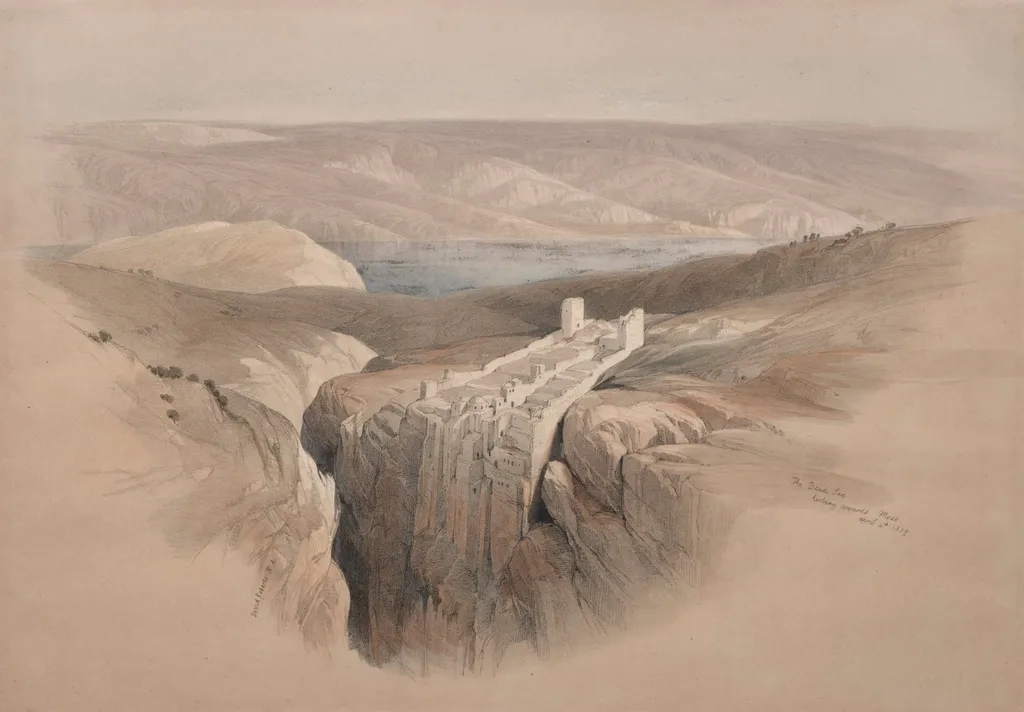
The Dead Sea Looking Towards Moab is a print by the Romanticist artist David Roberts. It dates from 1839 and is held in the collection of the Cleveland Museum of Art.
About this work
Below it, a deep drop leads to a narrow body of water, and beyond that, flat desert stretches to distant hills.
This sketch shows a rocky cliffside with a small white fortress built right on the edge. Below it, a deep drop leads to a narrow body of water, and beyond that, flat desert stretches to distant hills. The colors are mostly earthy browns and soft grays, with a pale blue-green water.
The artist wrote the title in the corner: *The Dead Sea Looking Towards Moab*. The rough, sketchy lines make the scene feel wild and untamed.
Next, check out David Roberts (Scottish, 1796–1864) to see more of his travel sketches.
Overview
The Dead Sea Looking Towards Moab is a 1839 print by David Roberts, a Scottish artist known for documenting his travels through detailed depictions.
Subject & Meaning
The print depicts a rugged cliffside with a fortress, overlooking the Dead Sea and the Moab region. Earthy tones dominate the scene, conveying a sense of wildness and untamed landscape.
Technique & Style
Characterized by rough, sketchy lines, the work captures the untamed quality of the landscape. The artist's use of earthy browns, soft grays, and pale blue-green creates a subdued color palette.
History & Provenance
Created following Roberts' extensive travels in the Near East, this print is part of a body of work that contributed to his election as a Royal Academician in 1841.
Artist & collection
Artist
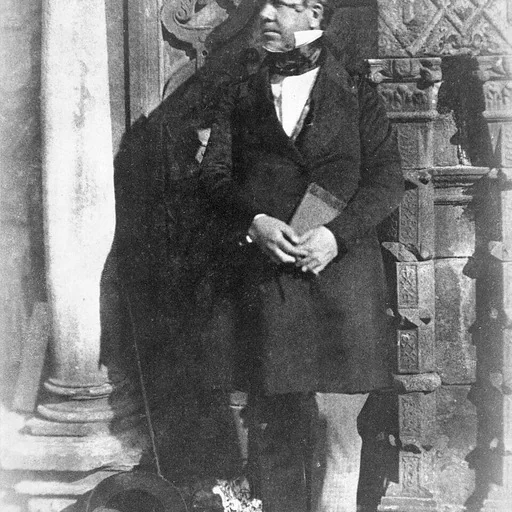
David Roberts (24 October 1796 – 25 November 1864) was a Scottish painter. He is especially known for The Holy Land, Syria, Idumea, Arabia, Egypt, and Nubia, a prolific series of detailed lithograph prints of Egypt and…

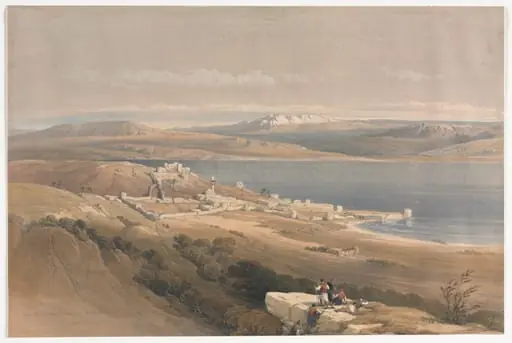 City of Tiberias on the Sea of Galilee, looking towards Hebron
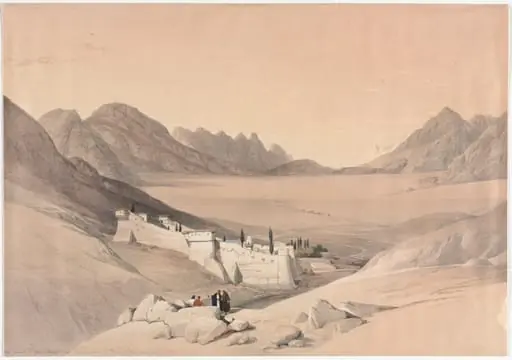 The Convent of St. Catherine, Mount Sinai, Looking towards the Plain of the Encampment
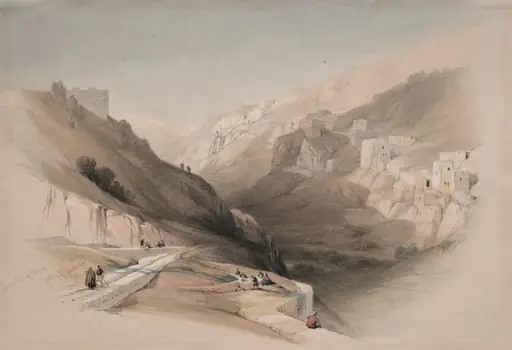 Lower Pool of Siloam, Valley of Jehoshaphat
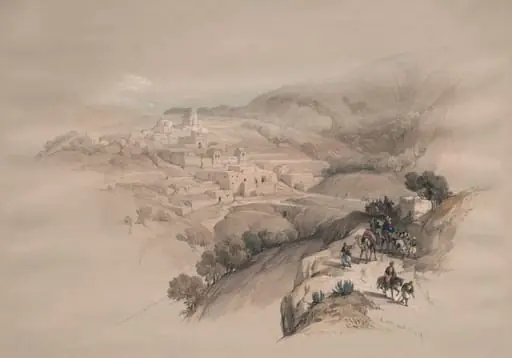 Bethany
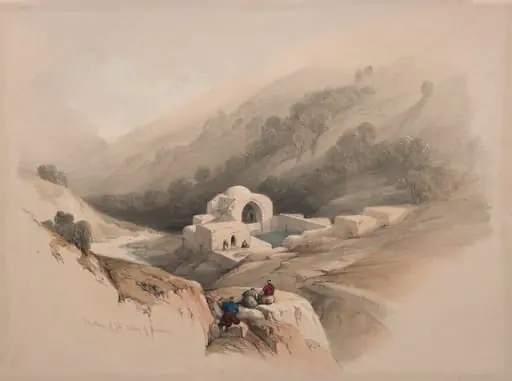 Fountain of Job, Valley of Hinnom
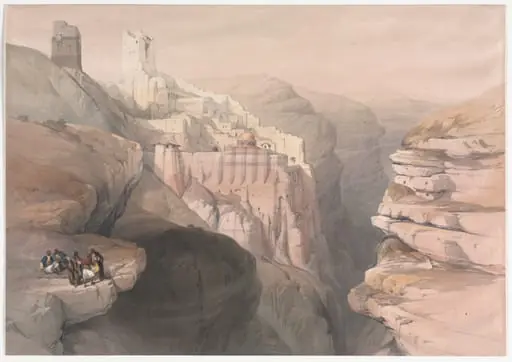 Convent of St. Saba
 Town of Tiberias Looking Towards Lebanon
 Ancient Ruins in the land of Edom above the bed of a valley and Arab Date gardens
 Christian and Mahomedan Chapels on the Summit of Sinai