Artwork
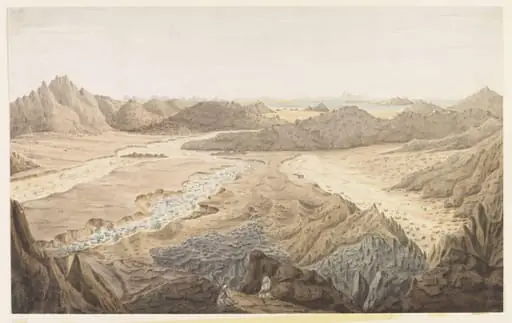
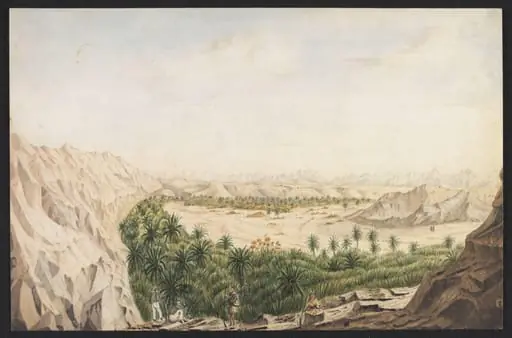
Ancient Ruins in the land of Edom above the bed of a valley and Arab Date gardens
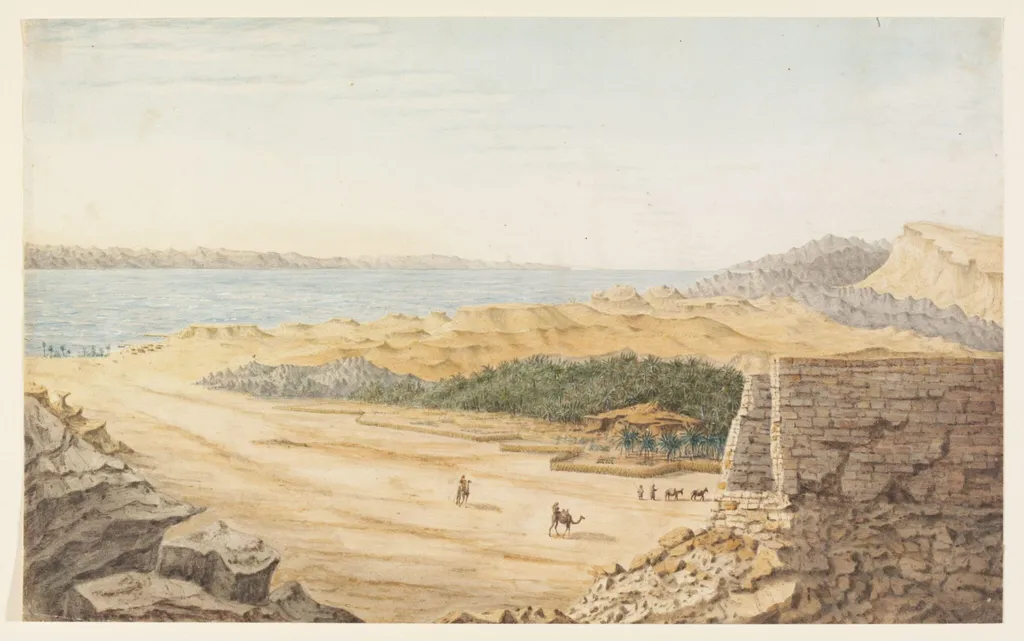
Ancient Ruins in the land of Edom above the bed of a valley and Arab Date gardens is a watercolor work on paper by the Orientalist artist Robert Moresby. It dates from 1832 and is held in the collection of the Victoria and Albert Museum.
About this work
Overview
Its muted palette and quiet composition reflect the survey’s documentary purpose, prioritizing topographical accuracy over romantic embellishment.
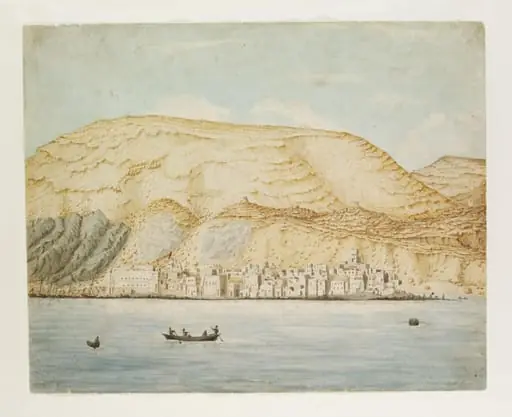
This watercolour by Captain Robert Moresby captures a desolate stretch of Edom’s landscape, recorded during his hydrographic survey of the Red Sea between 1829 and 1834. The scene portrays ancient stone remnants perched above a dry valley, with clusters of date palms and scattered human and animal figures. Its muted palette and quiet composition reflect the survey’s documentary purpose, prioritizing topographical accuracy over romantic embellishment.
Subject & Meaning
The painting presents ruins and cultivated date gardens coexisting in an arid environment, suggesting long-term human adaptation to harsh conditions. The crumbling walls imply abandoned settlements, while the palms and small figures hint at ongoing, modest habitation. The absence of dramatic action or grandeur emphasizes endurance over decay, portraying the land as both inhospitable and quietly sustained.
Technique & Style
Moresby employed delicate watercolour washes to render the rocky terrain and distant hills with subtle gradations of earth tones and soft blues. Fine linework defines architectural fragments and palm fronds, while minimal detail in figures and animals reinforces the scene’s stillness. The restrained palette and lack of contrast create a sense of atmospheric calm, aligning with the observational rigor of 19th-century survey art.
History & Provenance
Created during Moresby’s official survey missions, the work was later acquired by Mrs. Schidlof and sold to the museum in December 1966 for £50. Five other watercolours from the same Red Sea series reside in the National Maritime Museum, indicating a broader collection formed for navigational and geographic reference. Its provenance reflects its original function as a record, later preserved as historical material.
Context
Moresby’s watercolours were produced as part of British naval efforts to map the Red Sea’s coastlines and anchorages. These images served practical purposes—aiding navigation and assessing coastal resources—but also documented cultural and environmental conditions. The depiction of Edom’s ruins aligns with contemporary European interest in biblical landscapes, though Moresby’s approach remains restrained and empirical.
Legacy
The work contributes to a small but significant body of 19th-century survey art that blends scientific precision with landscape observation. While not widely exhibited, it remains a valuable record of regional geography and settlement patterns in a region rarely depicted in Western art of the period. Its preservation underscores the role of naval surveys in shaping early visual documentation of the Middle East.
Artist & collection

Artist
Captain Robert Moresby was a British naval officer, hydrographer and surveyor who served in the Bombay Marine and Indian Navy.

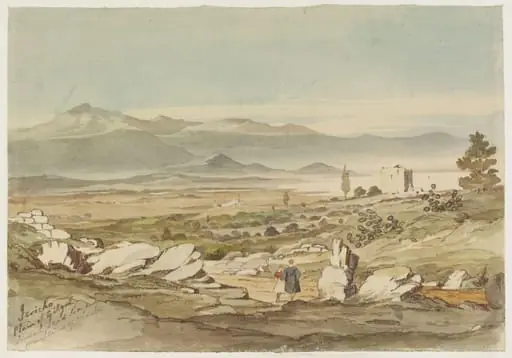 Jericho Plain of Gilgal, Jordan, Dead Sea, and Mountains of Moab
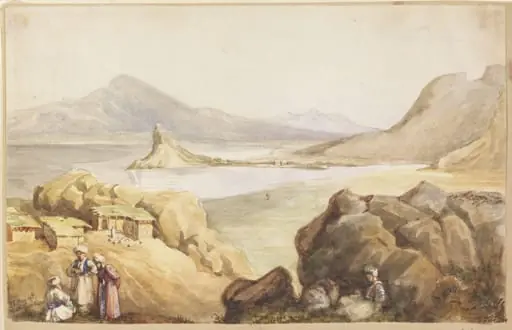 Gule-Hissa Ovassy in the Northern part of Lycia
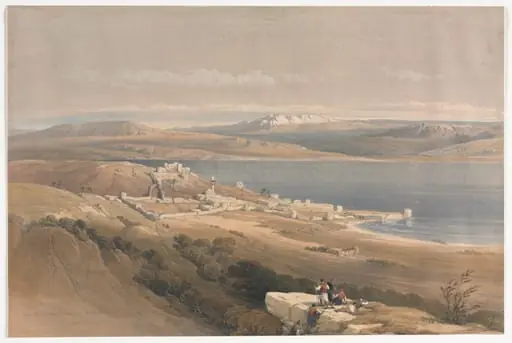 City of Tiberias on the Sea of Galilee, looking towards Hebron
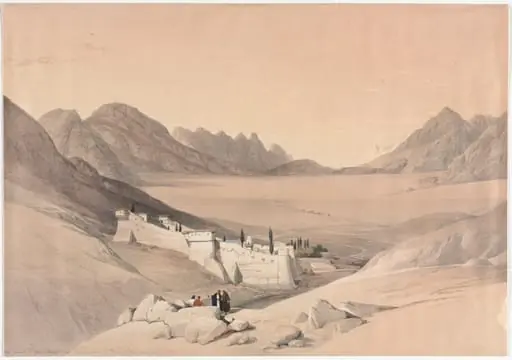 The Convent of St. Catherine, Mount Sinai, Looking towards the Plain of the Encampment
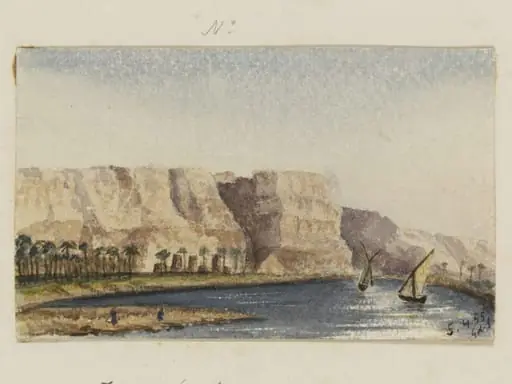 `Kusr-é-Syad. Opposite Choenoboscion. Upper Egypt'
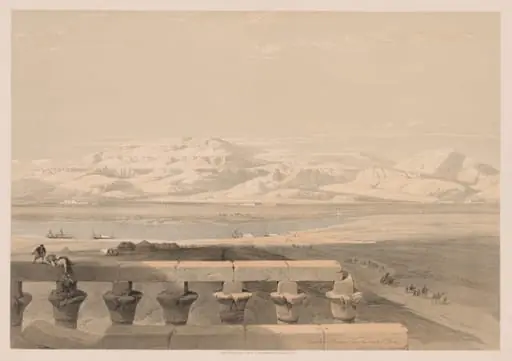 Egypt and Nubia: Volume I - No. 30, Lybian Chain of Mountains from the Temple of Luxor
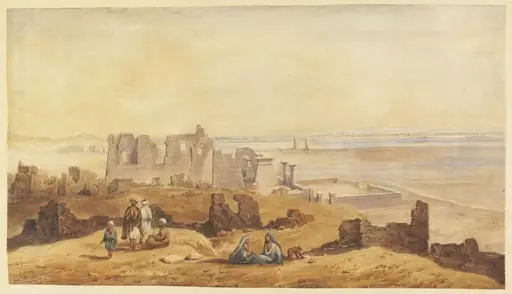 Luxor: the West Bank, with the Temple of Ramesses III at Madinat Habu; looking east towards the Nile
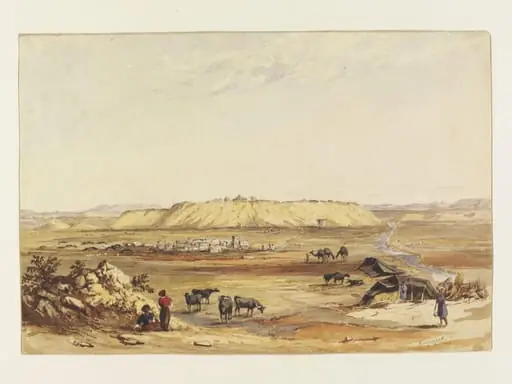 Kouyunjick
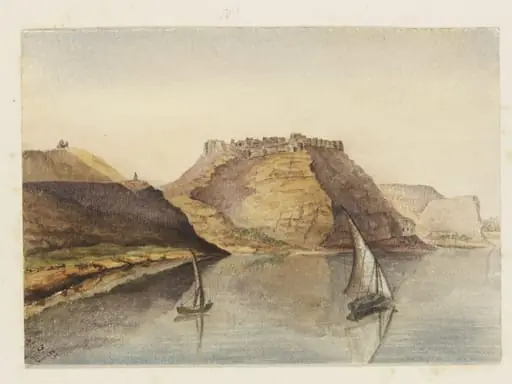 `Castle of Ibreem or Premnis, Nubia. Taken from our Boat'
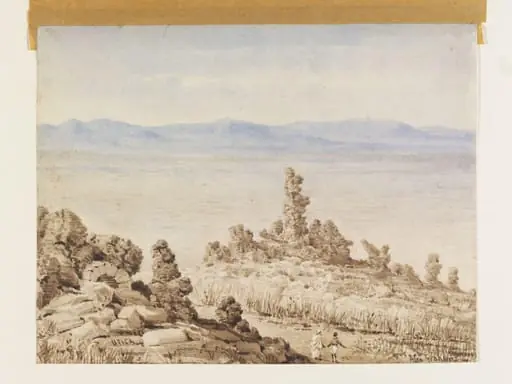 Utica
Utica