Artwork
The Castle of Ischia, Bay of Naples
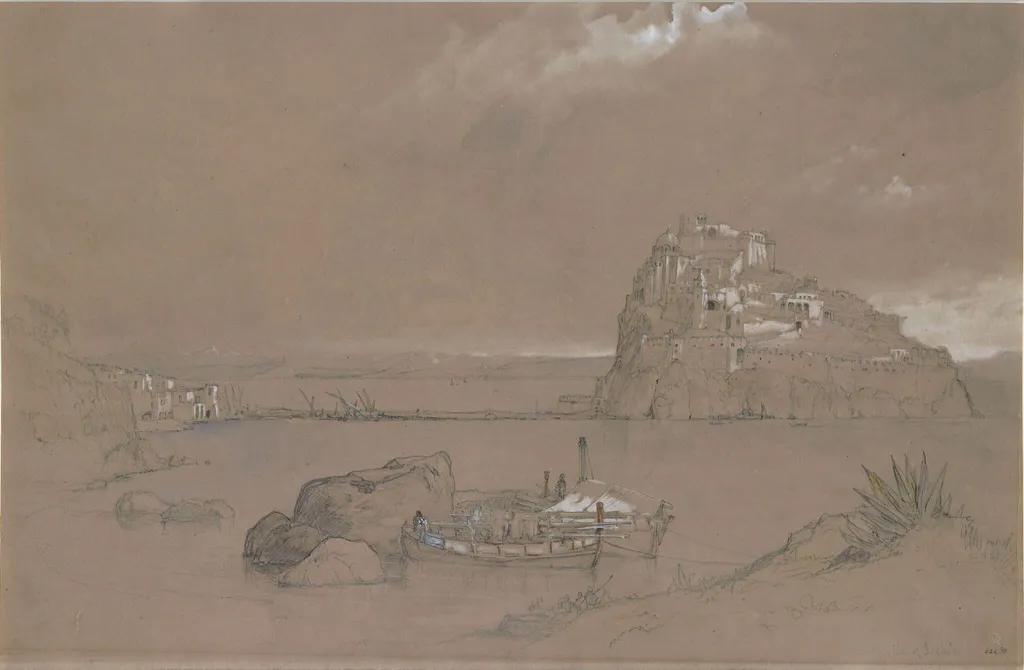
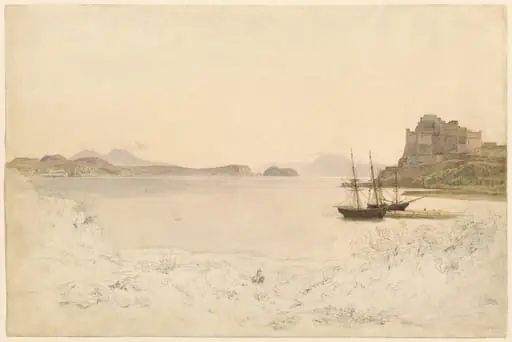
The Castle of Ischia, Bay of Naples is a watercolor work on paper by the British Romanticist artist David Roberts. It dates from 1825 and is held in the collection of the Victoria and Albert Museum.
About this work
Overview
Rendered in delicate washes, the work captures the fortress perched on a rugged promontory, with the sea stretching calmly beneath.
David Roberts created this watercolour depicting the Castle of Ischia on the island of Ischia, situated in the Bay of Naples. Rendered in delicate washes, the work captures the fortress perched on a rugged promontory, with the sea stretching calmly beneath. A small rowboat rests near the shoreline, adding a quiet human presence to the landscape. The composition balances architectural solidity with atmospheric softness.
Subject & Meaning
The castle, a medieval stronghold, stands as a silent witness to centuries of history, its weathered walls contrasting with the transient sky and sea. The inclusion of a solitary boat suggests human activity without narrative intrusion, reinforcing a mood of contemplative stillness. The scene evokes a sense of timelessness, where nature and ruin coexist in quiet harmony, reflecting a Romantic sensibility toward ruins and the sublime.
Technique & Style
Roberts employed transparent watercolour washes to build subtle gradations of tone, allowing the paper’s white to suggest highlights and atmospheric light. Soft edges and muted hues define the clouds and water, while sharper lines outline the castle’s stonework. The interplay of light and shadow models the forms without heavy detail, creating depth through restraint rather than precision, characteristic of his topographical approach.
History & Provenance
Painted during Roberts’s travels in Italy in the 1830s, this work belongs to a series of watercolours documenting Mediterranean architecture. It was likely made as a study for larger works or as a personal record, later entering private collections before being acquired by institutions. Its survival reflects the growing 19th-century interest in documenting historical sites through direct observation.
Context
Roberts’s journey through southern Italy coincided with a broader European fascination with classical ruins and picturesque landscapes. His watercolours contributed to a visual archive of sites then becoming accessible to travelers. Unlike grand historical paintings, his works emphasized observation over drama, aligning with the rising appreciation for accurate, intimate depictions of place.
Legacy
This watercolour exemplifies Roberts’s role in bridging topographical accuracy and poetic atmosphere. His method influenced later British watercolourists and helped shape the aesthetic of travel art in the 19th century. While not widely exhibited today, his works remain valued for their quiet documentation of places now altered or lost, preserving a visual record of the Mediterranean’s historical landscape.
Own this work as a print
Artist & collection

Artist
David Roberts (24 October 1796 – 25 November 1864) was a Scottish painter. He is especially known for The Holy Land, Syria, Idumea, Arabia, Egypt, and Nubia, a prolific series of detailed lithograph prints of Egypt and…




 The Gulf of Pozzuoli
 Palais de Tibere a Capri
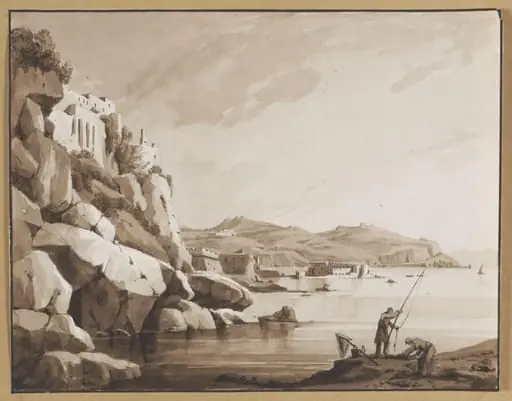 Pozzuoli
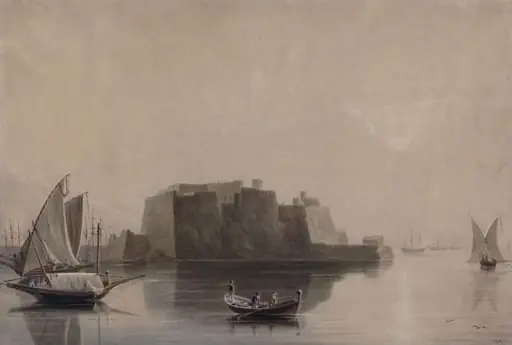 Castello dell'Ovo, Naples
 Convent of Siltina (on the Nile)
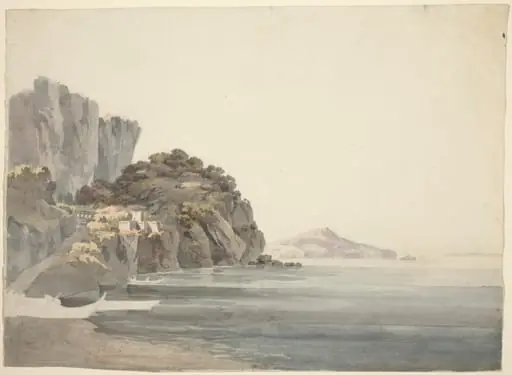 An Italian Coast Scene
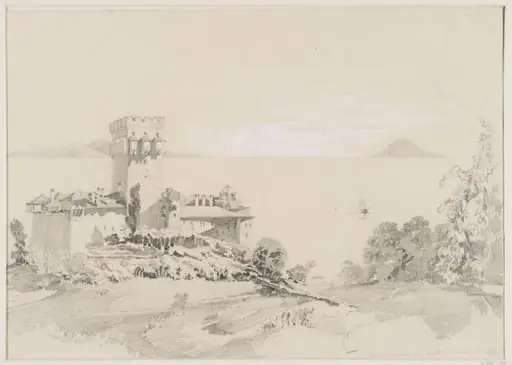 Stavronikéta, on the E. side of Athos; I<sup>s</sup> of Thasos & Samothrace in the distance
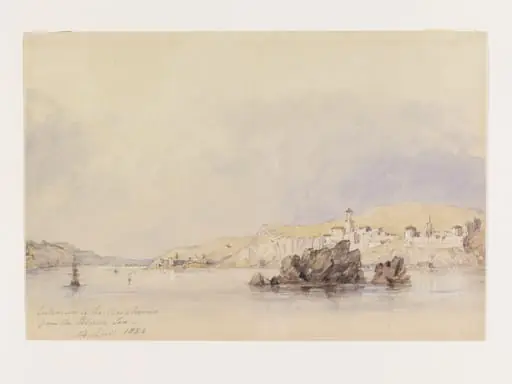 Entrance to the Bosphorus from the Black Sea
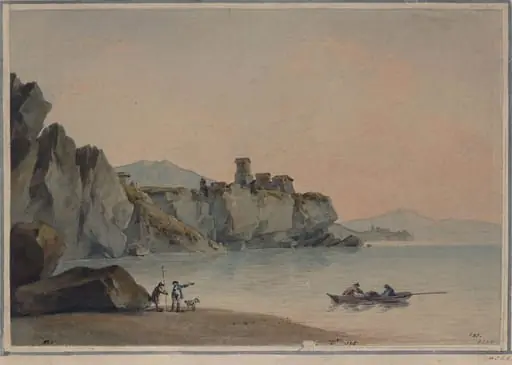 Coast near Castiglione
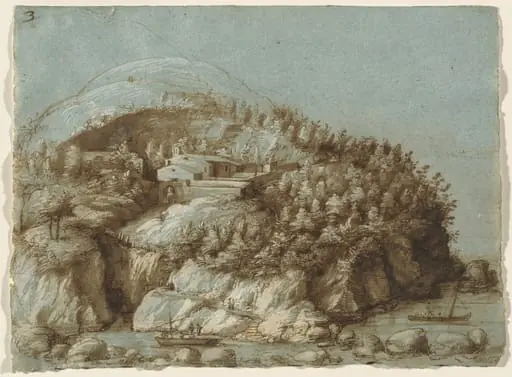 Hilly Landscape with Ships
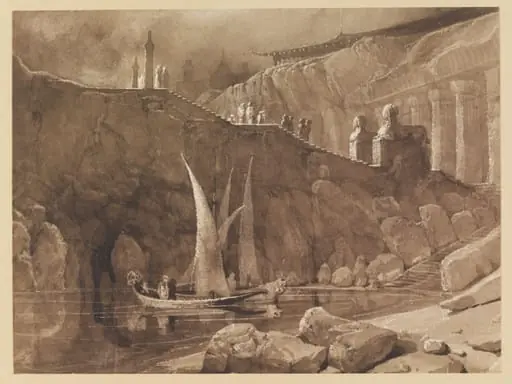 Oriental Capriccio, with water, boats and buildings
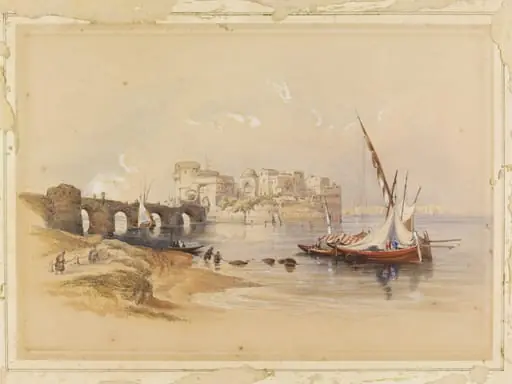 The Citadel of Sidon