Artwork
Pozzuoli
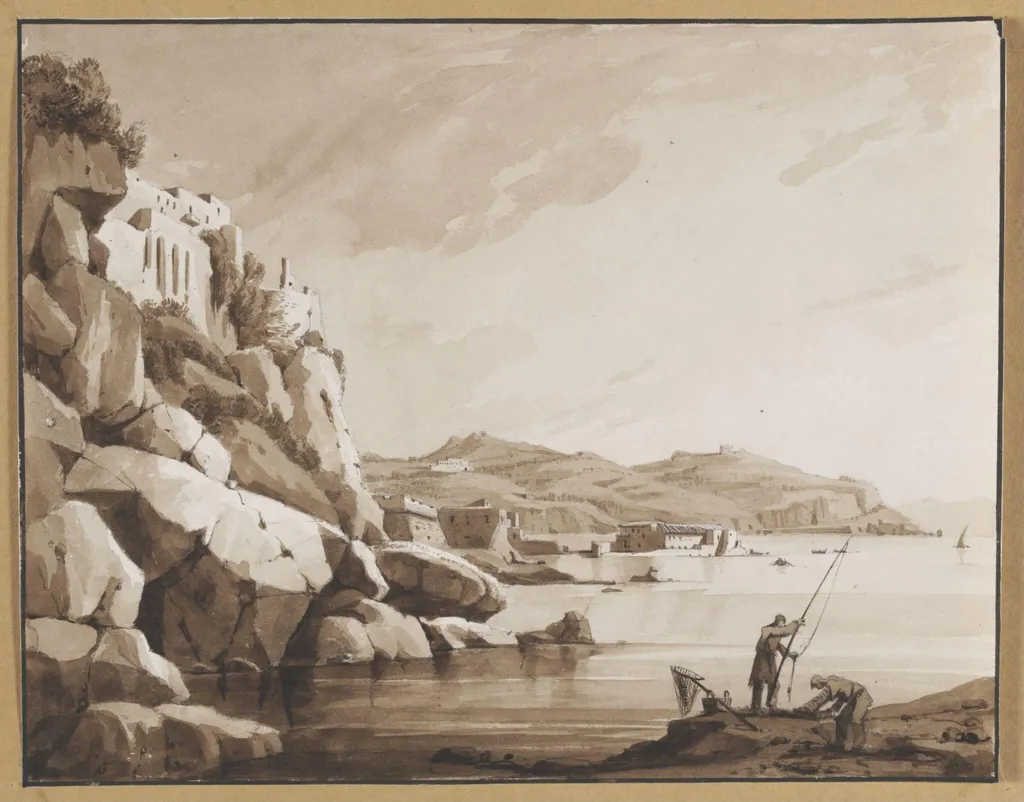
Pozzuoli is a drawing by Unknown. It dates from 1850 and is held in the collection of the Victoria and Albert Museum.
About this work
Overview
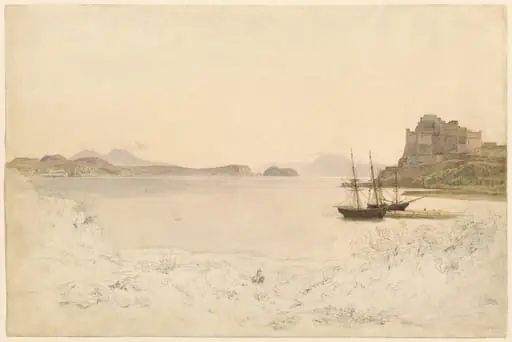
This 1850 sepia drawing offers a panoramic glimpse of the coastal town of Pozzuoli in Italy. Rendered in a monochromatic palette, the work captures a tranquil moment where land, sea, and sky converge, emphasizing the natural and built environment of the area.
Subject & Meaning
The composition centers on a sheer cliff that drops dramatically into a rocky shoreline, its summit softened by a wash of green.
The composition centers on a sheer cliff that drops dramatically into a rocky shoreline, its summit softened by a wash of green. A solitary fisherman occupies a modest boat, pole in hand, suggesting daily labor amid the quiet landscape. Adjacent structures cling to the water’s edge, while distant hills dissolve into a hazy backdrop, underscoring the interplay between human activity and the surrounding terrain.
Technique & Style
The artist employs swift, sketchy lines to delineate the contours of rock and water, allowing light to be suggested through varied pressure and tonal shading. Subtle cross-hatching creates texture on the cliff face, while a gentle green wash hints at vegetation, contributing to the overall sense of stillness.
History & Provenance
Created in the mid‑nineteenth century, the drawing reflects contemporary interest in documenting Italian coastal scenery. Its sepia tone aligns with the period’s preference for monochrome studies, often used as preparatory works or travel records.
Context
Pozzuoli, situated near the Bay of Naples, was a frequent subject for artists attracted to its volcanic landscape and historic ruins. This work fits within a broader tradition of landscape drawing that sought to capture the atmospheric qualities of the region during a time of growing tourism and scientific curiosity.
Artist & collection

 Domestic Scene
 Giacomo and Cardinal Marco, investing Andrea, Abbot of San Zeno, with his Benefice
 The Nymph of Fontainebleau
 Portrait of a Woman
 Madonna and Child with Saints in the Enclosed Garden
 Venus and Minerva
 Family Group of Four on Sofa
 Wall painting from Room H of the Villa of P. Fannius Synistor at Boscoreale
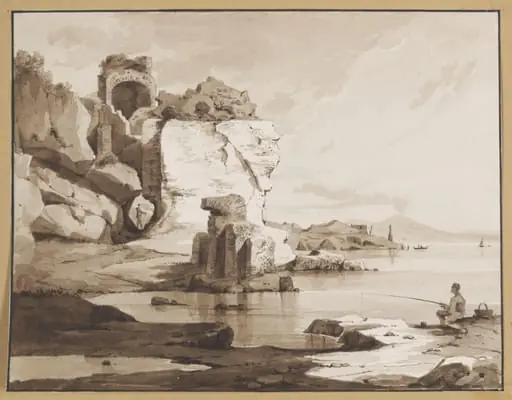 Ecole de Virgile, Baja
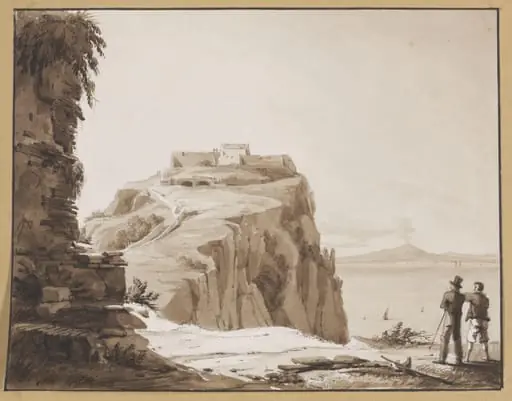 Palais de Tibere a Capri
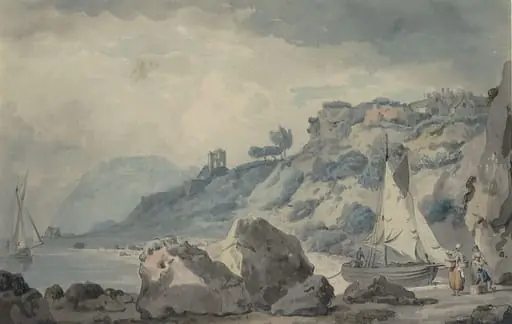 Howth, Ireland
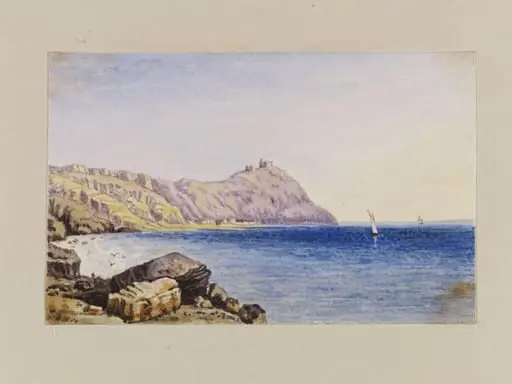 Carmel
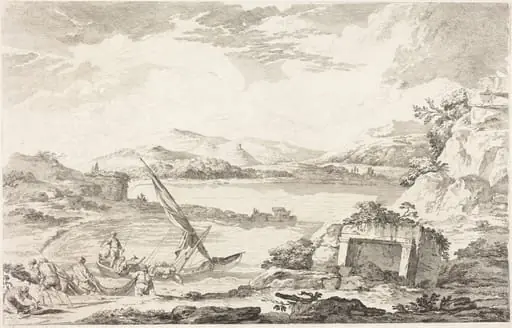 View of the Ancient Port of Phaleron, Athens
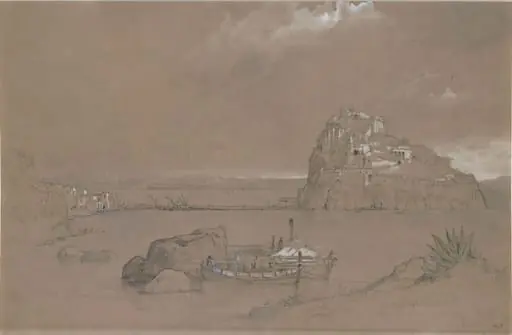 The Castle of Ischia, Bay of Naples
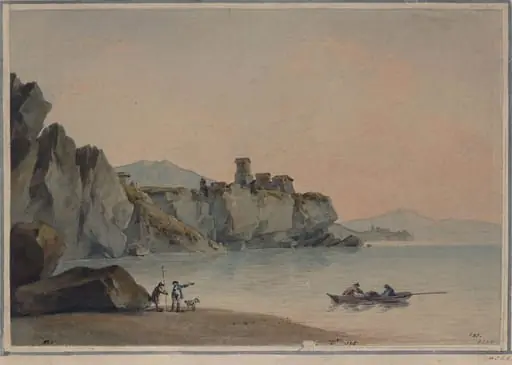 Coast near Castiglione
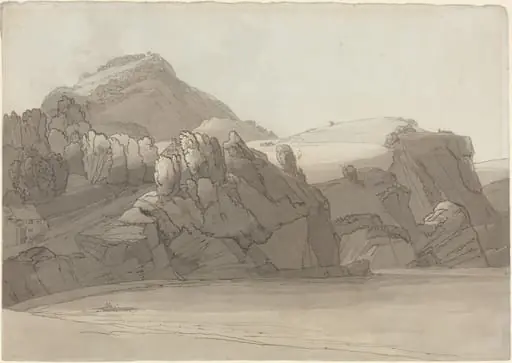 A Rocky Shore at Coombmartin, Devon (Combe Martin Bay)
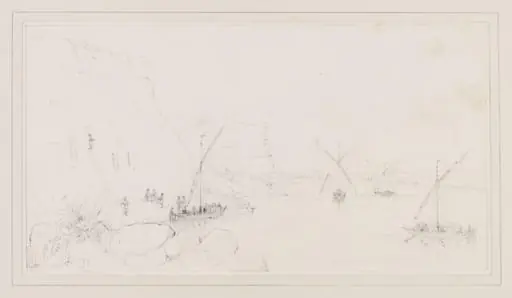 Convent of Siltina (on the Nile)
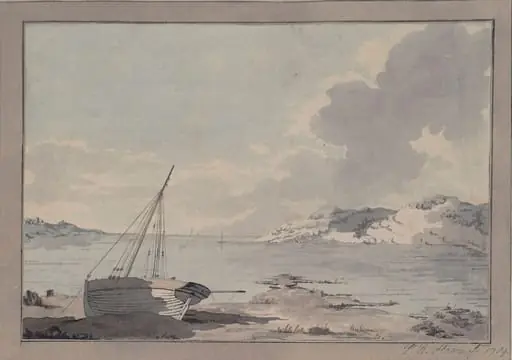 Coast Scene
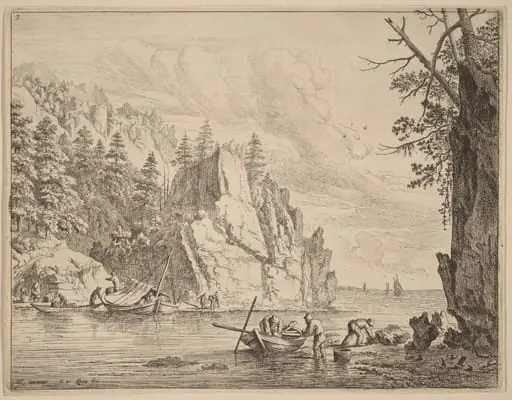 View of the River Rhine
 The Gulf of Pozzuoli