Artwork
The Dead Sarpedon, Borne by Sleep and Death (from Homer's 'The Iliad')
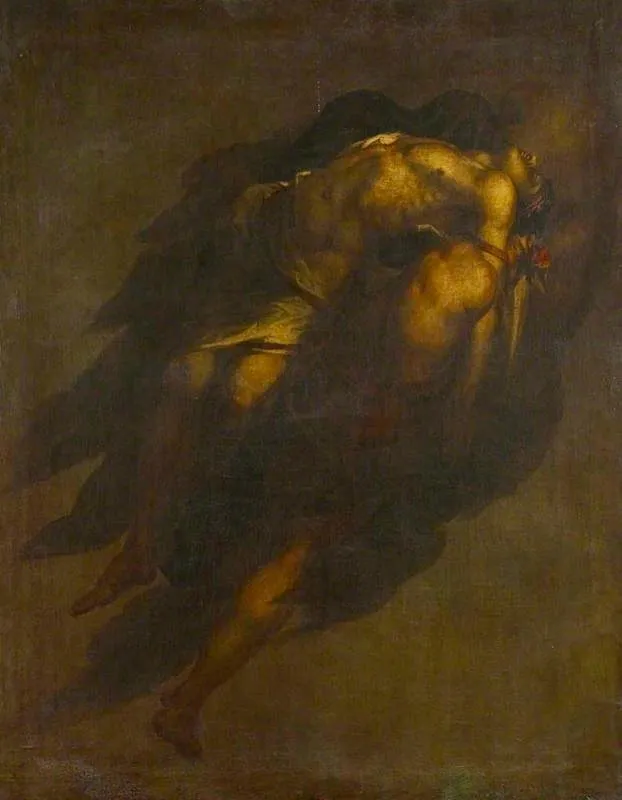
The Dead Sarpedon, Borne by Sleep and Death (from Homer's 'The Iliad') is an oil painting by David Scott. It dates from 1831 and is held in the collection of the National Galleries Scotland.
About this work
Overview
The painting resides in the Scottish National Gallery and reflects the artist’s engagement with classical literature and neoclassical aesthetics.
Painted in 1831 by David Scott, this oil work depicts a scene from Homer’s Iliad in which the fallen Trojan ally Sarpedon is carried from the battlefield by the personified figures of Sleep and Death. The painting resides in the Scottish National Gallery and reflects the artist’s engagement with classical literature and neoclassical aesthetics. Its composition centers on a solemn, quiet transport, avoiding dramatic action in favor of stillness and dignity.
Subject & Meaning
The scene illustrates the divine intervention granted to Sarpedon, son of Zeus, whose body is retrieved from the battlefield by supernatural attendants. The nude, lifeless form of Sarpedon, draped only in a waistcloth, conveys vulnerability and honor. The winged figures, serene and composed, embody the gentle transition from mortal life to the afterlife, reinforcing themes of fate, divine favor, and the quiet inevitability of death in epic tradition.
Technique & Style
Scott employs a restrained palette of browns and grays to create a somber atmosphere, with minimal background detail drawing focus to the central figures. The bodies are rendered with smooth, idealized contours, echoing classical sculpture. Light falls subtly across the forms, suggesting chiaroscuro without overt contrast. The flowing drapery of the winged attendants contrasts with the stillness of Sarpedon’s limbs, enhancing the emotional gravity of the moment.
History & Provenance
Completed in 1831, the painting was acquired by the Scottish National Gallery in the 19th century and has remained in its collection since. Scott, a Scottish artist trained in Edinburgh and Rome, produced this work during a period when British art increasingly turned to classical subjects. Though not widely exhibited beyond national collections, it reflects the academic priorities of its time and the artist’s commitment to historical narrative.
Context
In the early 19th century, European artists frequently revisited Homeric epics as sources of moral and aesthetic authority. Scott’s painting aligns with a broader neoclassical movement that favored idealized forms and mythological themes over contemporary subjects. Unlike more theatrical treatments of death in battle, this work emphasizes reverence and calm, resonating with contemporary ideals of noble sacrifice and stoic acceptance.
Legacy
While not widely reproduced or celebrated beyond institutional circles, the painting stands as a quiet example of Scottish neoclassicism. It illustrates how British artists interpreted ancient texts with restraint and emotional subtlety. Its preservation in the Scottish National Gallery ensures its continued role as a reference point for studies of 19th-century narrative painting and classical reception in the British Isles.
Artist & collection
Artist
David Scott painted dramatic scenes from history and myth in oils during the early 1800s.

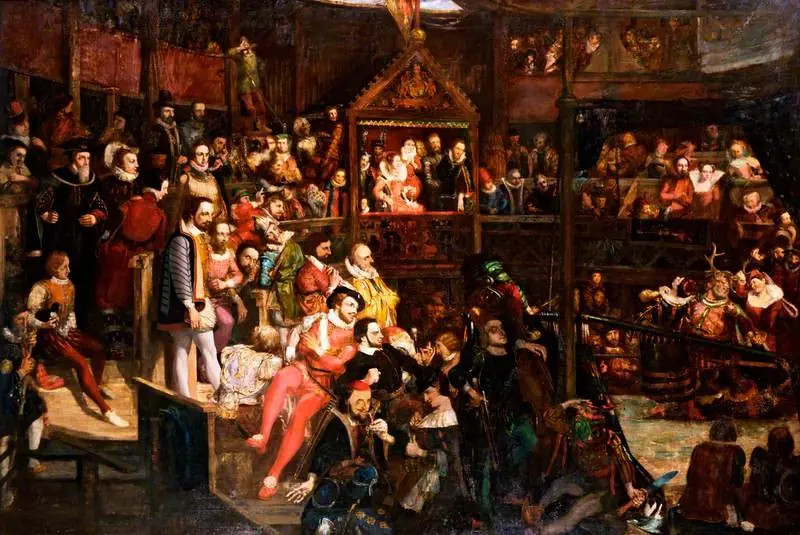 Queen Elizabeth (1533–1603), Viewing the Performance of 'The Merry Wives of Windsor' at the Globe Theatre
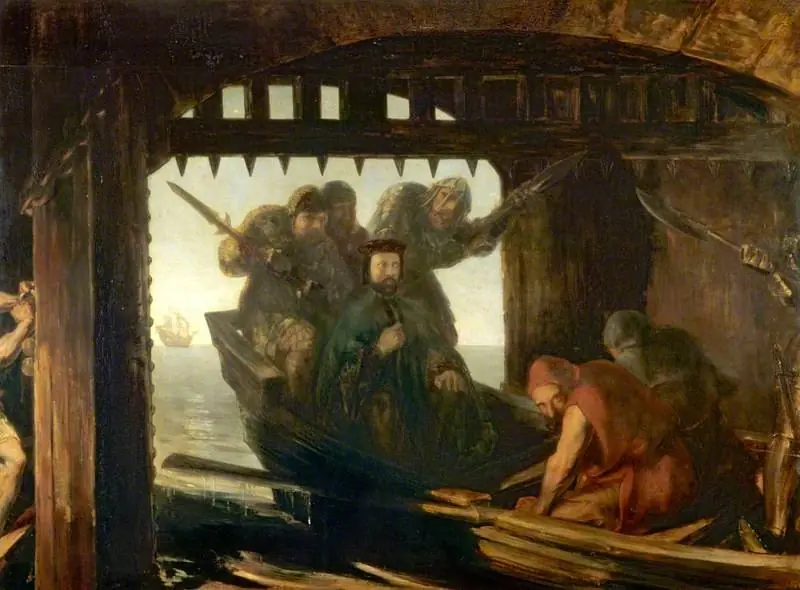 The Traitor's Gate
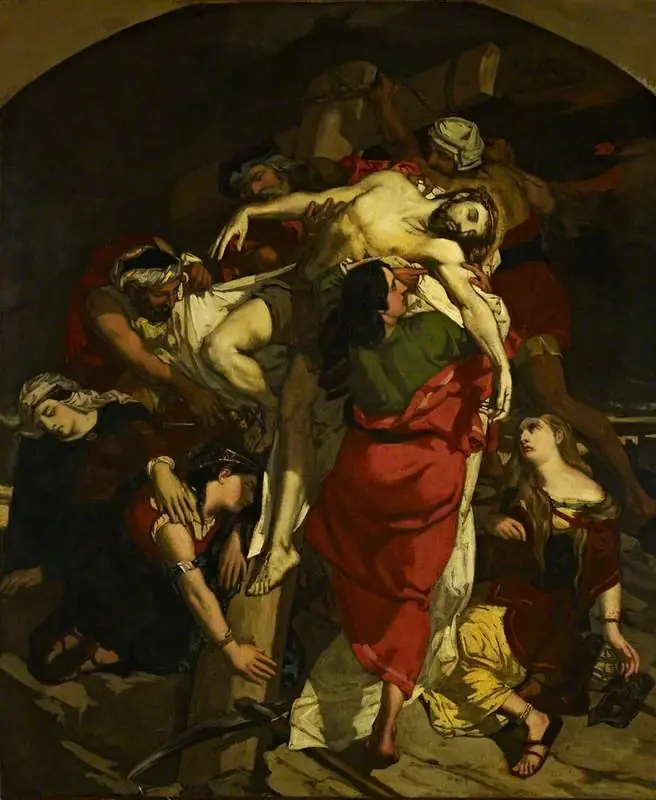 A Study for 'The Descent from the Cross'
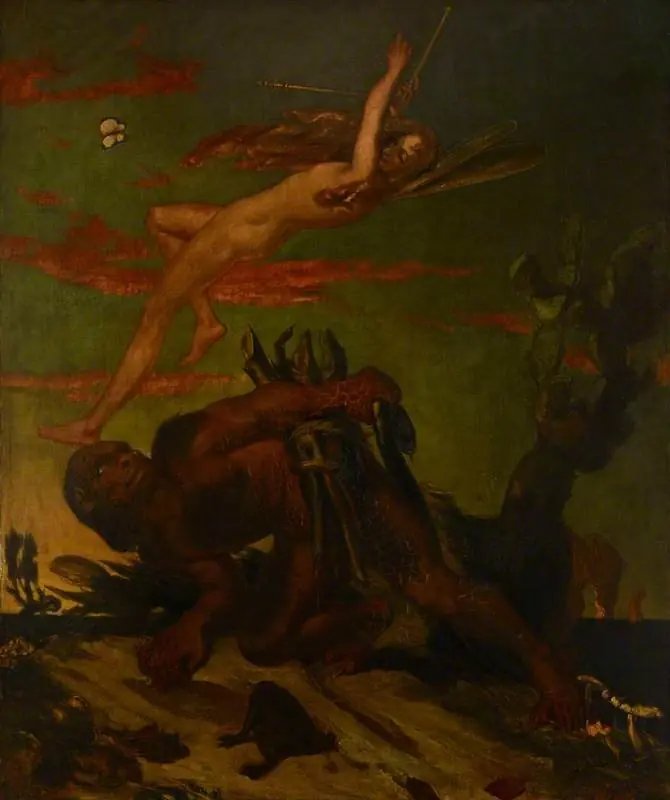 Ariel and Caliban
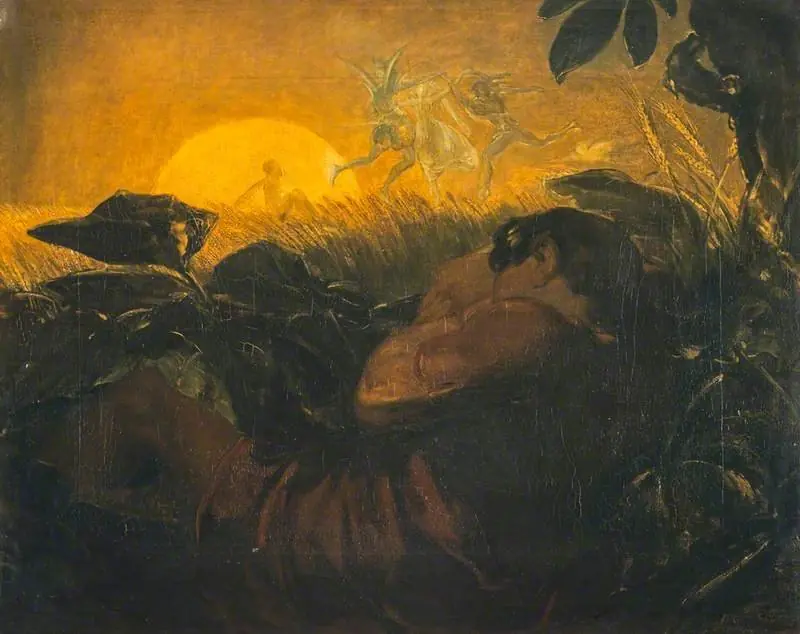 The Belated Peasant (from Milton's 'Paradise Lost')
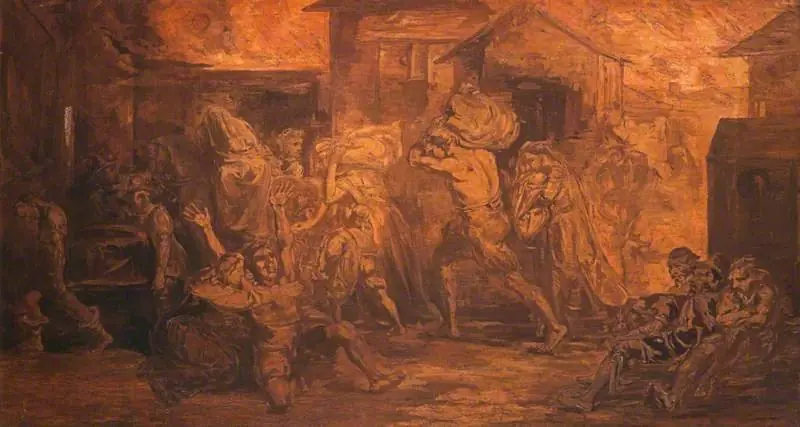 The Fire of London
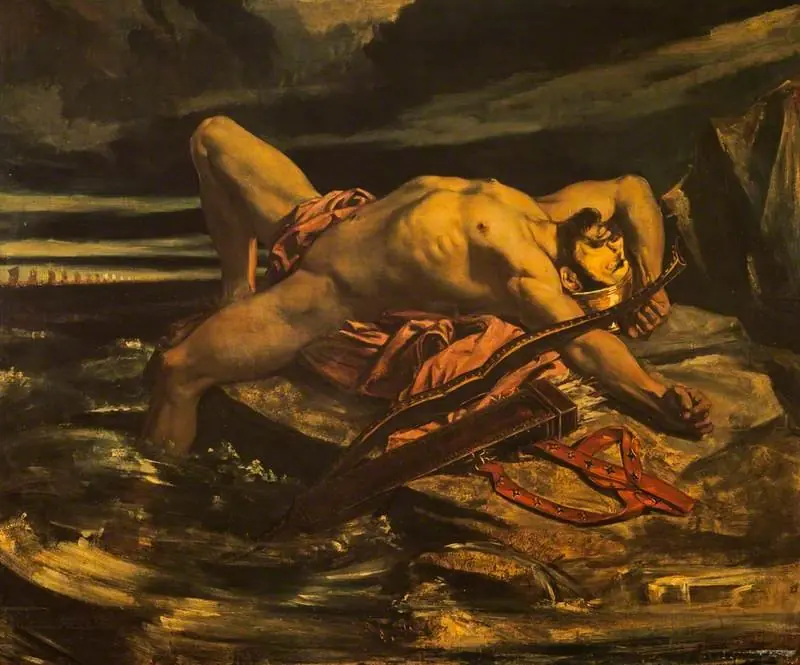 Philoctetes left on the Isle of Lemnos by the Greeks on their passage towards Troy
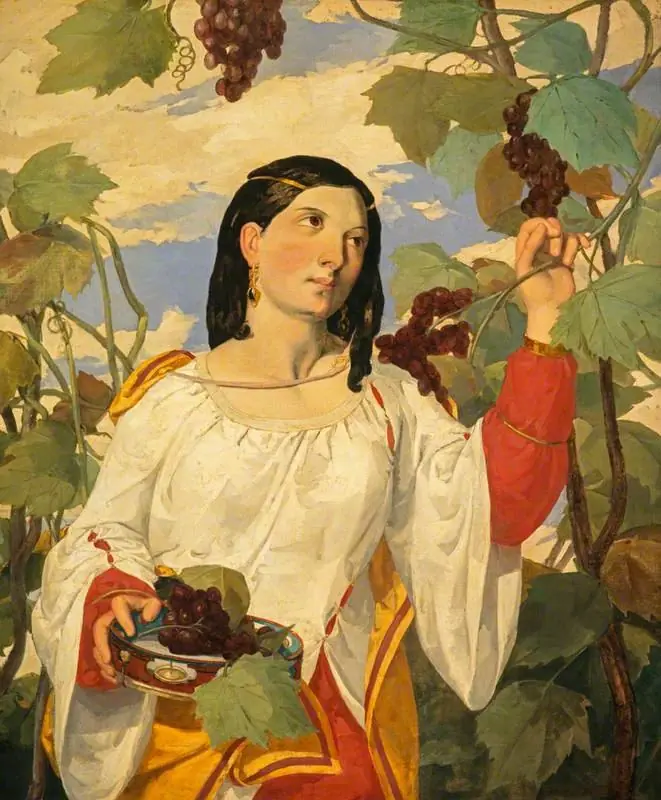 The Vintager
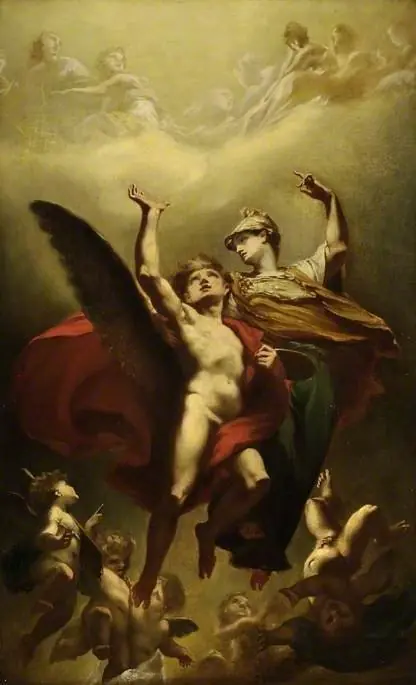 Study for 'Minerva leading the Genius of the Arts into Immortality'
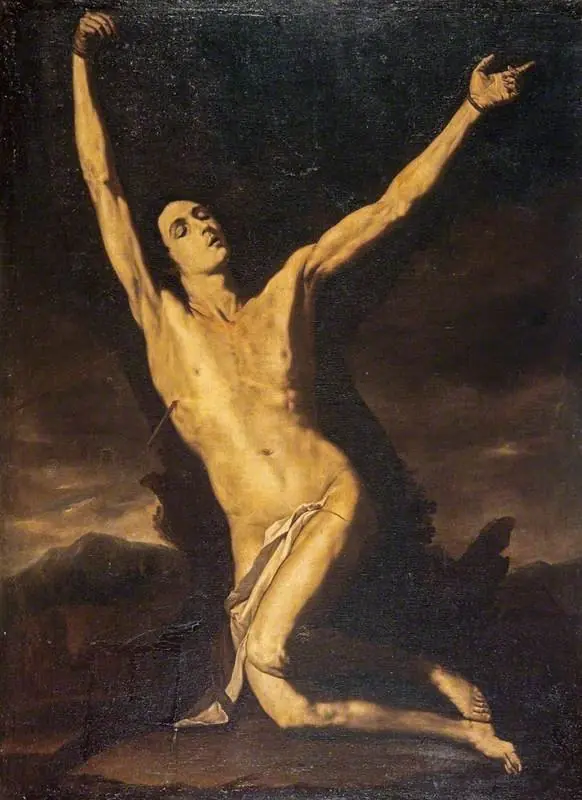 The Martyrdom of Saint Sebastian
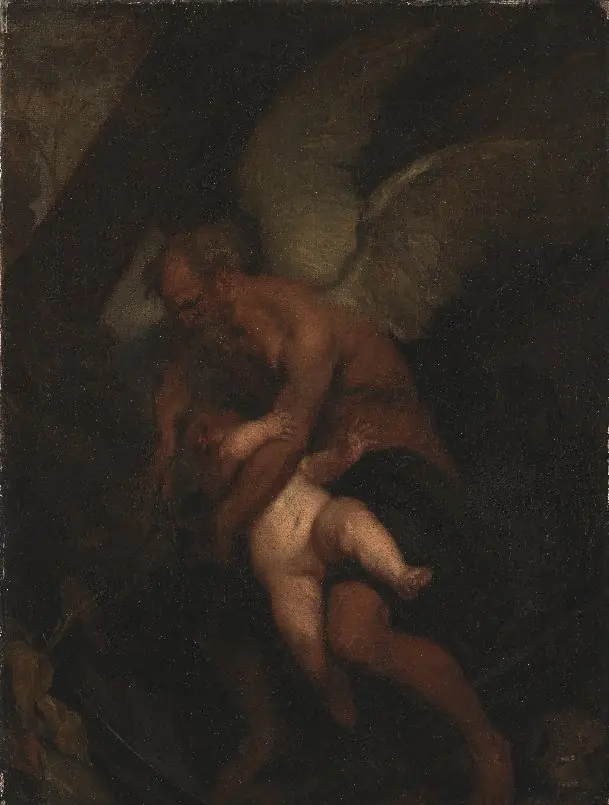 Time Clipping Cupid's Wings
 Amor und Psyche
 The Holy Trinity (unfinished)
 The Vision of Saint Jerome
 The Ecstasy of Saint Mary Magdalene
 The Agony in the Garden
 The Fall of Icarus
 Prometheus
 Dead Christ supported by Angels
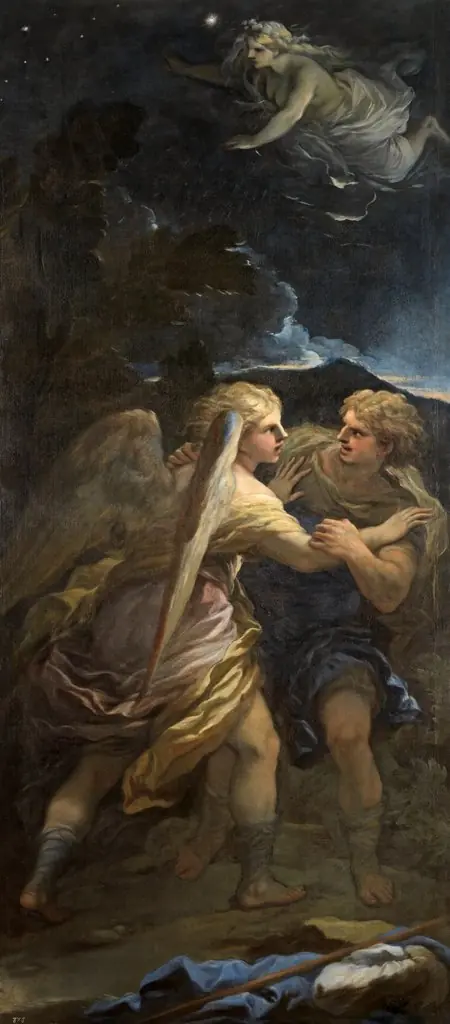 Lucha de Jacob con el ángel