Artwork
Hl. Hieronymus
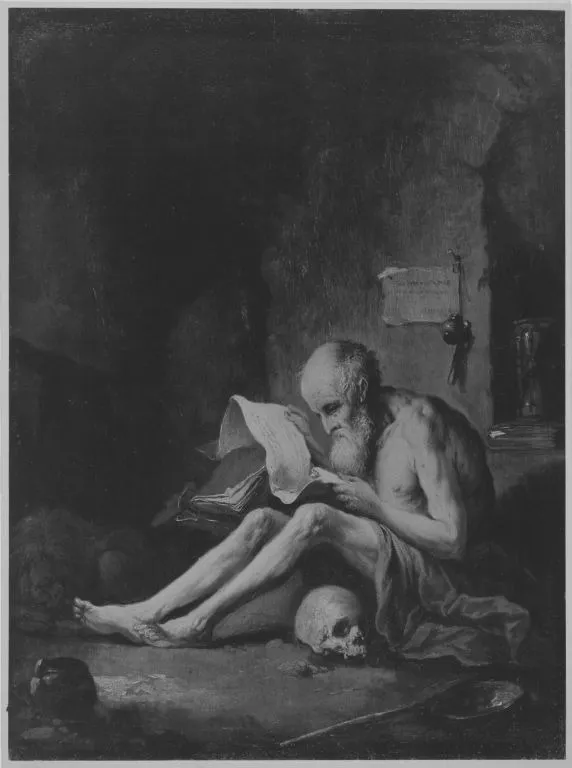
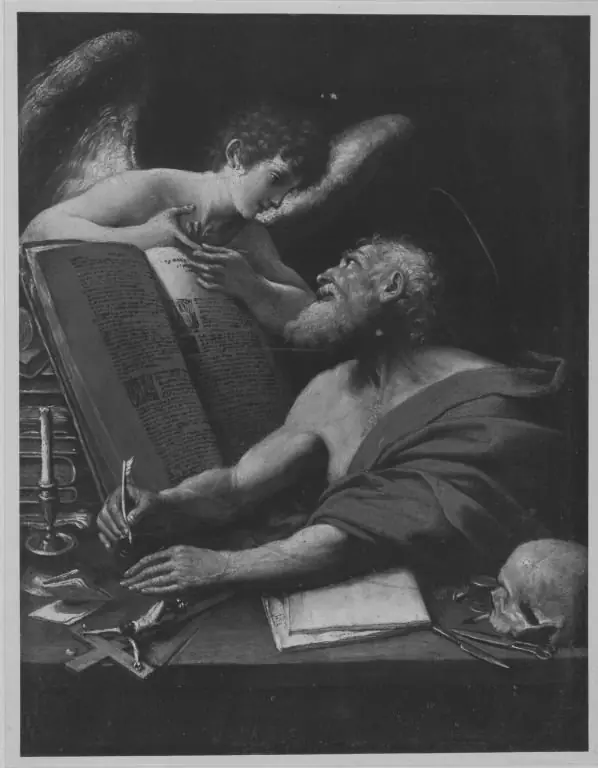
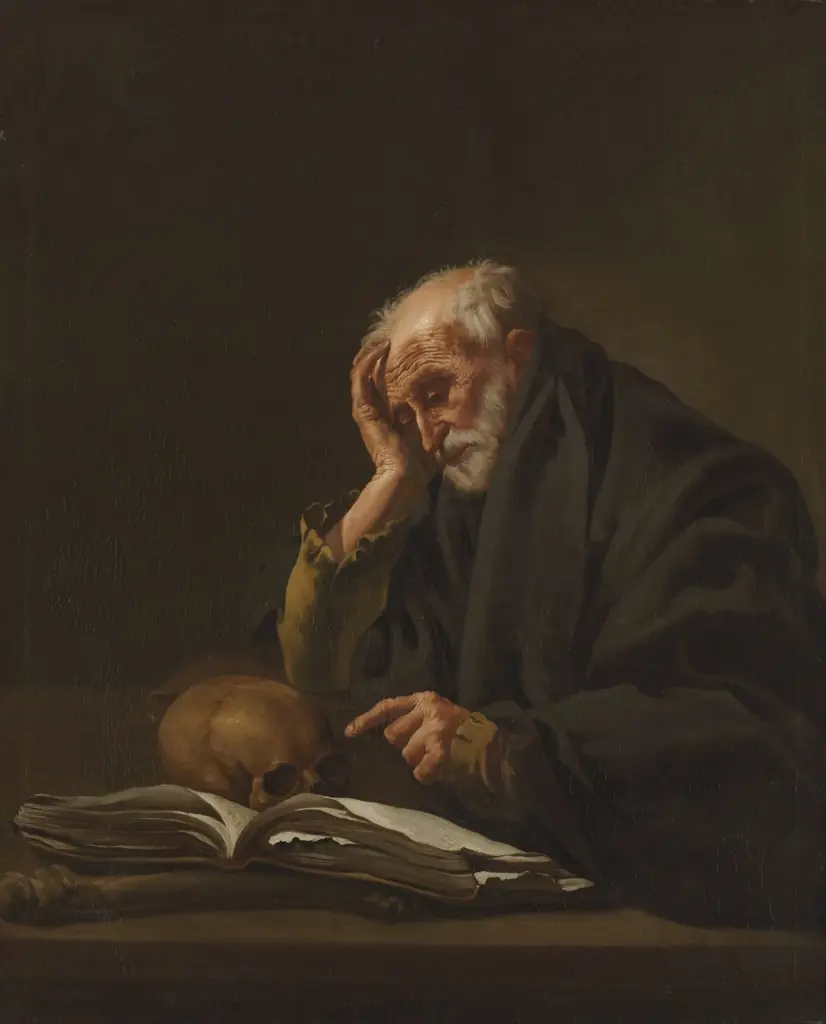
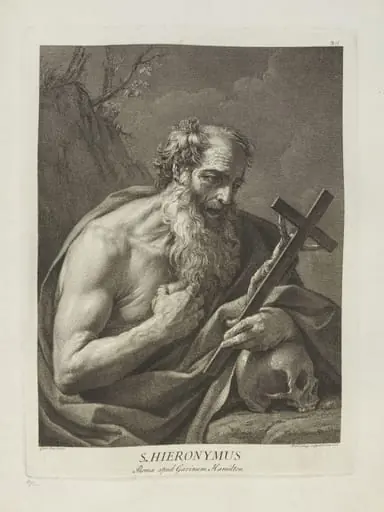
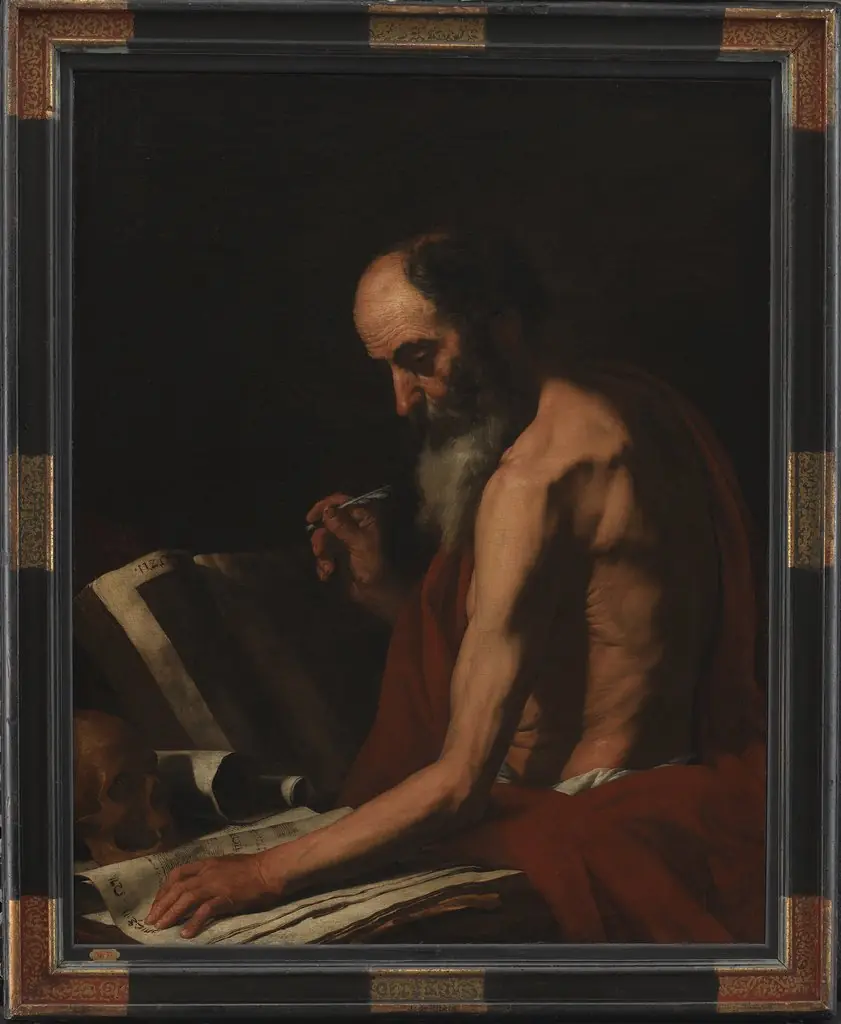
Hl. Hieronymus is an unspecified painting by the Flemish Baroque painting artist David Teniers the Younger. It dates from 1650 and is held in the collection of the Bavarian State Painting Collections.
About this work
Overview
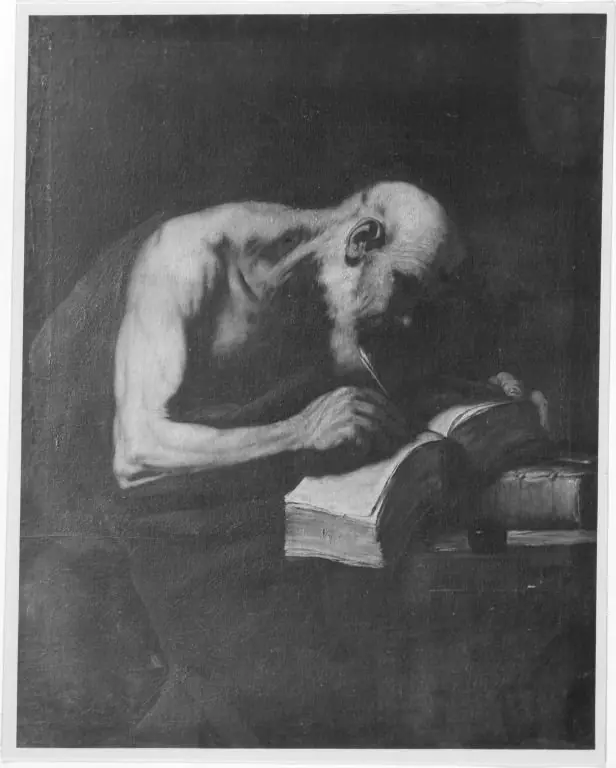
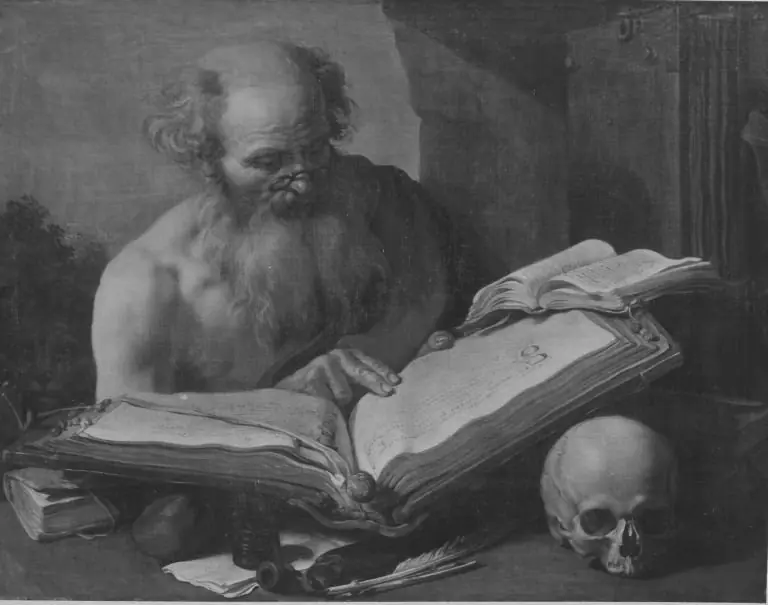
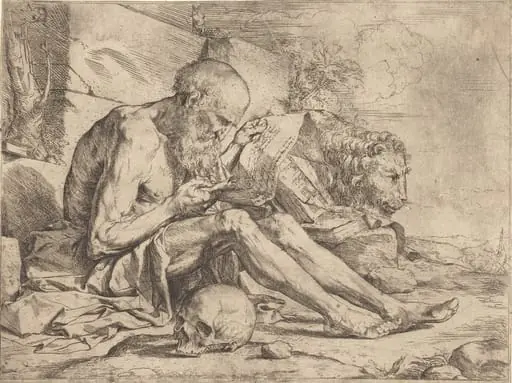
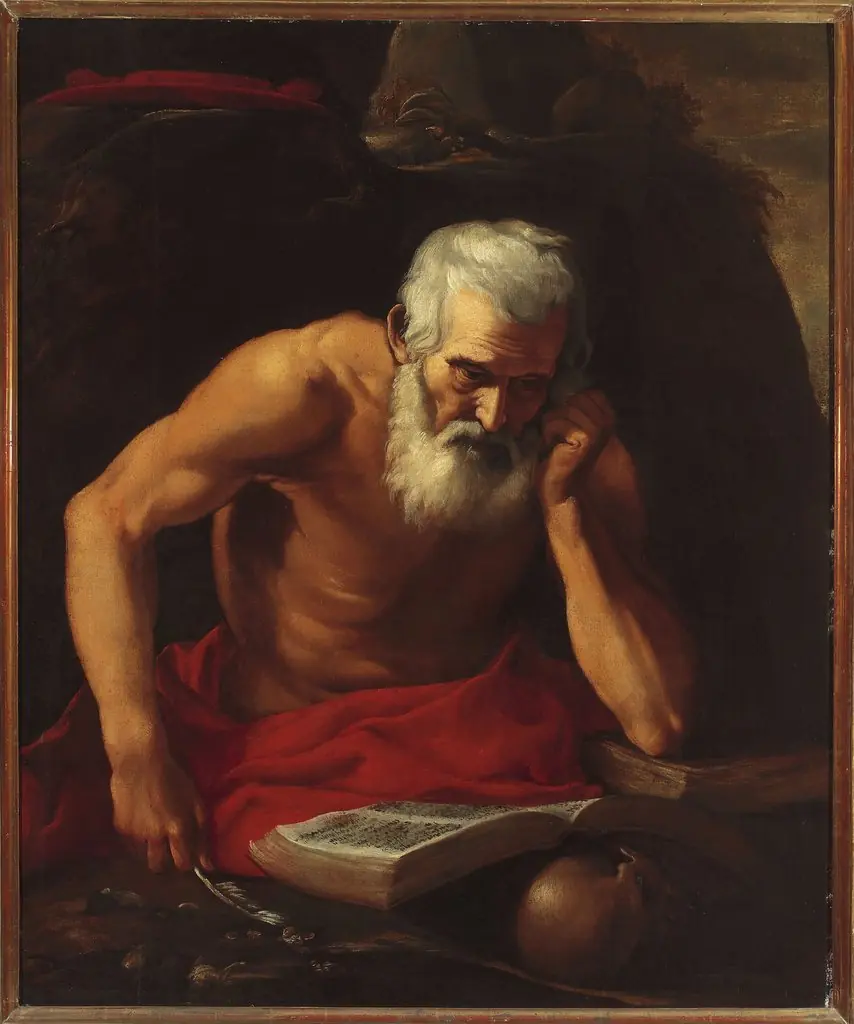
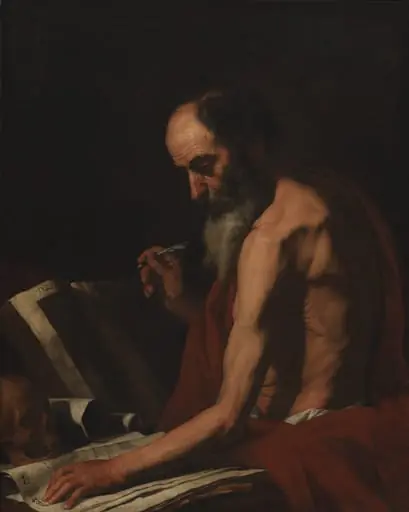
The composition centers on the elderly saint, characterized by a long white beard, seated directly on the floor in a posture of humble devotion.
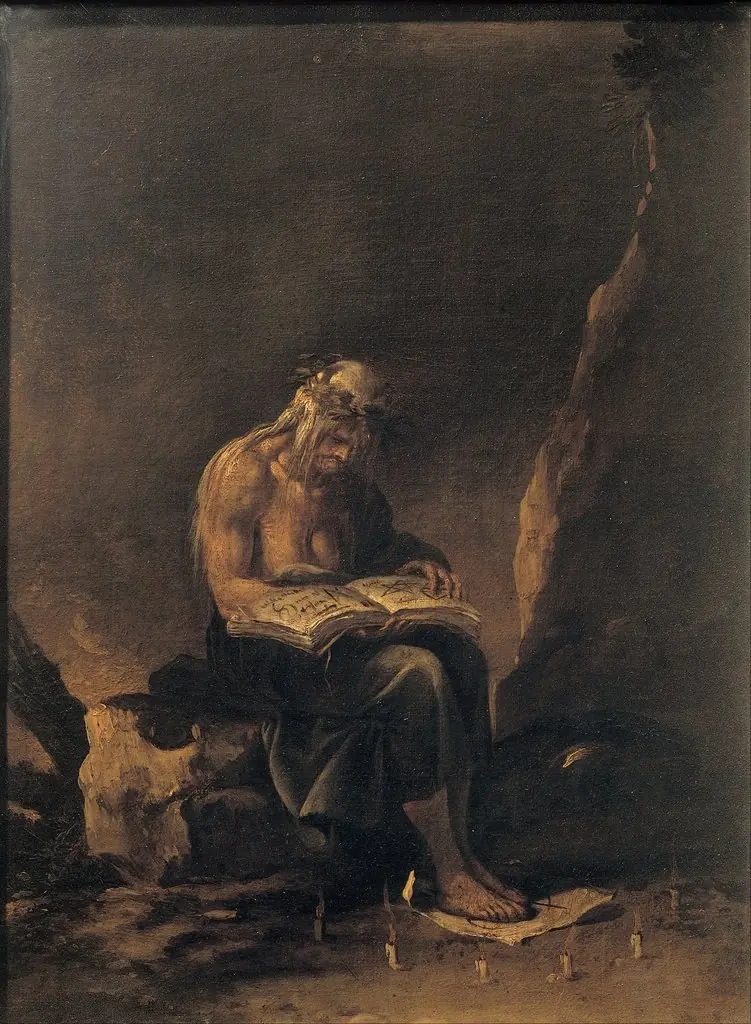
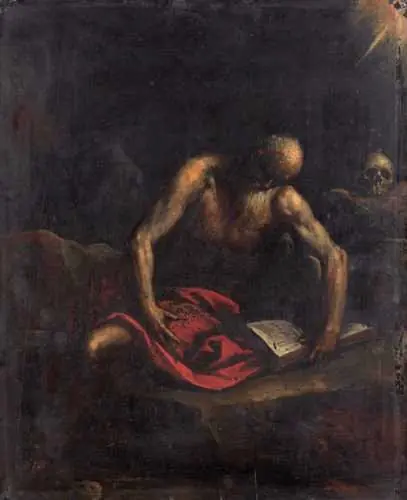
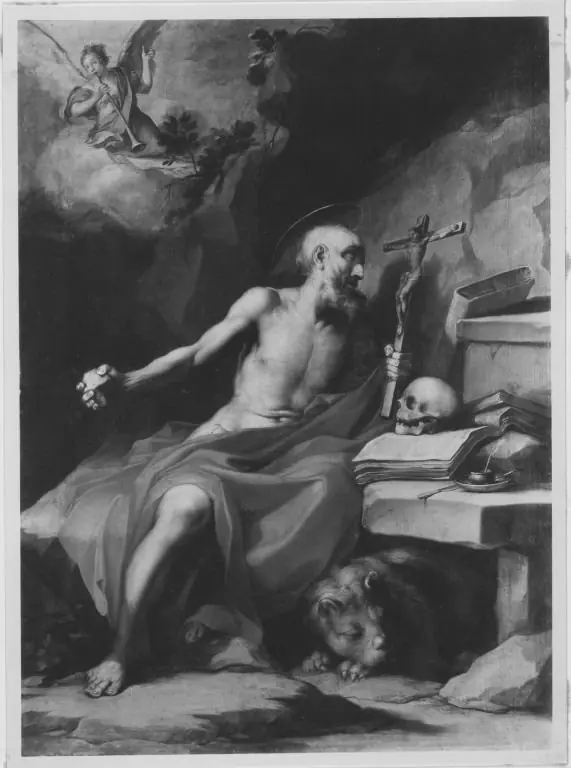
David Teniers the Younger's 'Hl. Hieronymus' (1650) depicts Saint Jerome in his study, a subject the Flemish Baroque master revisited frequently throughout his career. The composition centers on the elderly saint, characterized by a long white beard, seated directly on the floor in a posture of humble devotion. He is engaged in reading, holding one volume while another rests in his lap, emphasizing his role as a scholar and translator of the Vulgate. The setting is a sparsely furnished, dimly lit cell defined by rough stone walls, creating an atmosphere of ascetic isolation. Key iconographic elements include a skull placed near the saint, serving as a memento mori, and a small table holding a candle, additional books, and writing implements. Painted in 1650, during a period when Teniers was highly active in Antwerp and later at the court of the Archduke Leopold Wilhelm, this work exemplifies the artist's ability to blend religious solemnity with the detailed observation of everyday objects typical of Flemish genre painting. The work reflects the Counter-Reformation emphasis on penitence and scholarly piety, rendered with the precise brushwork and chiaroscuro effects characteristic of mid-seventeenth-century Flemish art.
Subject & Meaning
The figure is an elderly man with a flowing white beard, seated on the floor and absorbed in reading. A skull rests nearby, serving as a memento mori that underscores the transience of earthly life, a common motif in depictions of Jerome, who is traditionally associated with scholarly contemplation and penitence.
Technique & Style
Teniers employs a muted palette and chiaroscuro to create a dimly lit interior, with dark stone walls receding into shadow. The composition is anchored by a modest table holding a candle, a book, and assorted objects, rendered with careful attention to texture and the soft modeling of flesh.
History & Provenance
The painting entered the Alte Pinakothek’s holdings as part of its 19th‑century acquisitions of Flemish Baroque works. Its attribution to Teniers the Younger has been affirmed through stylistic comparison with his other religious canvases from the same period.
Context
Saint Jerome was a favored subject for Northern European artists, symbolizing erudition and asceticism. In the mid‑1600s, Flemish painters like Teniers often incorporated the skull motif to align the saint’s scholarly pursuits with the broader Counter‑Reformation emphasis on mortality and repentance.
Artist & collection
Artist
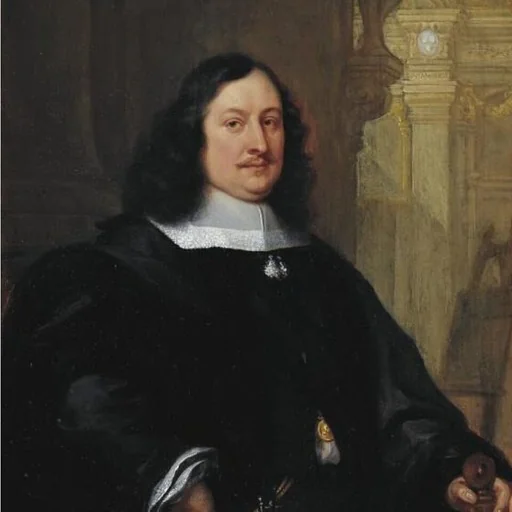
David Teniers the Younger or David Teniers II was a Flemish Baroque painter, printmaker, and artist.