Artwork
A Witch
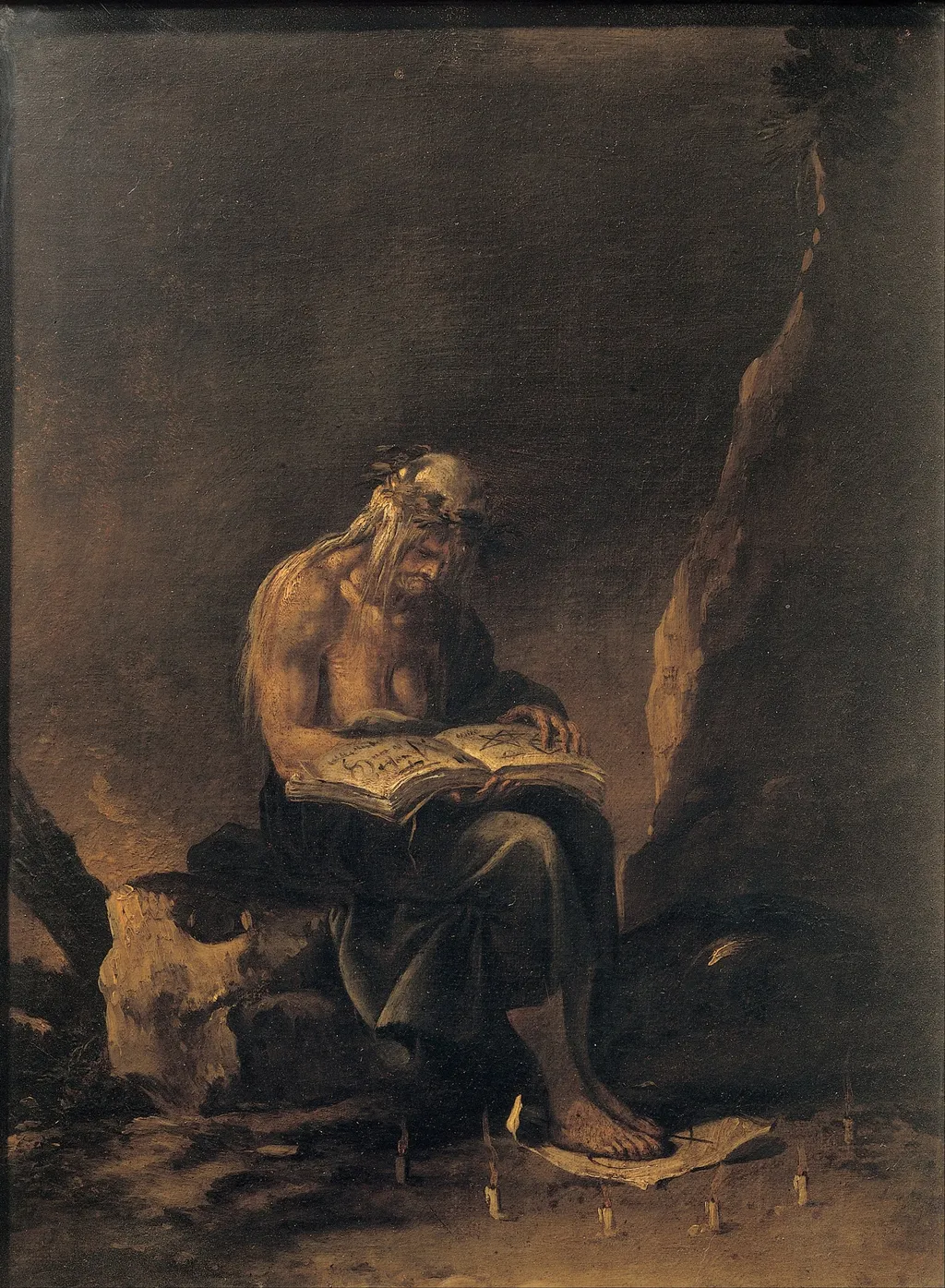
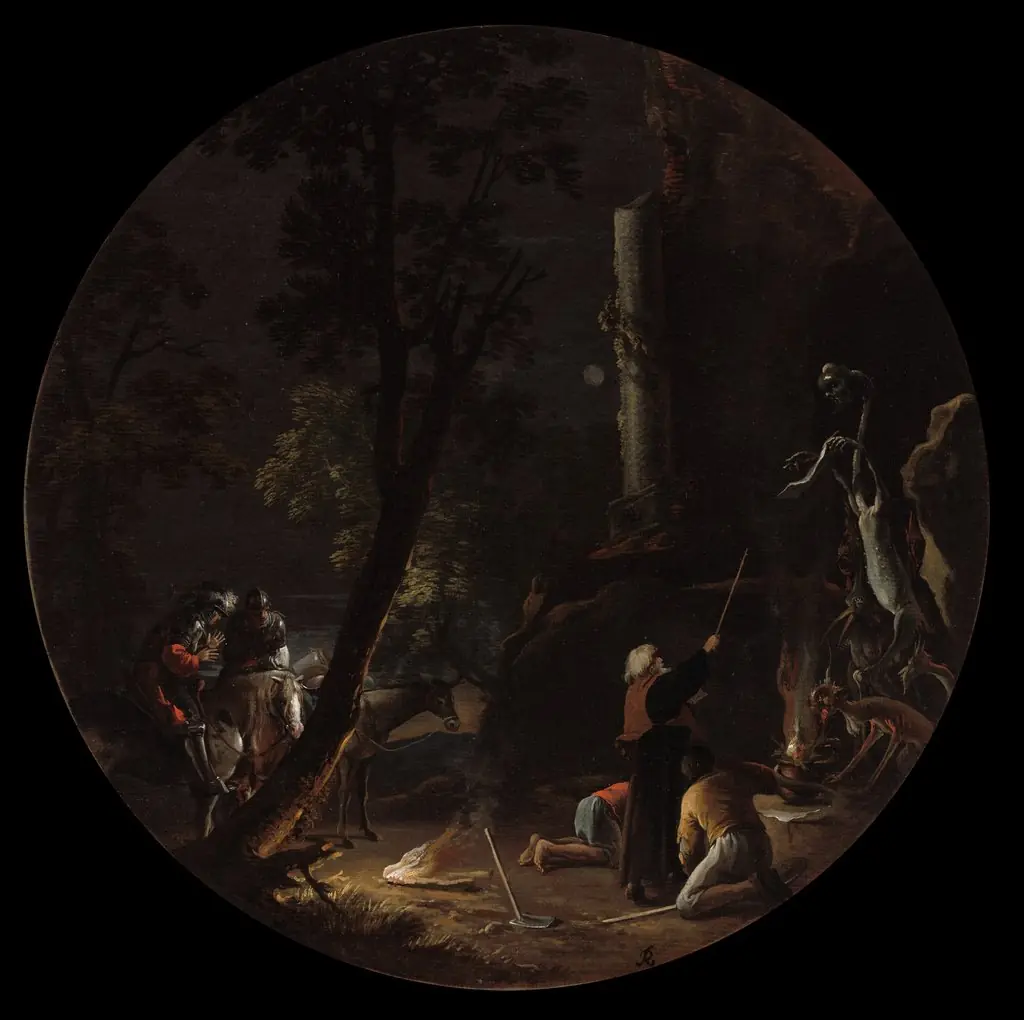
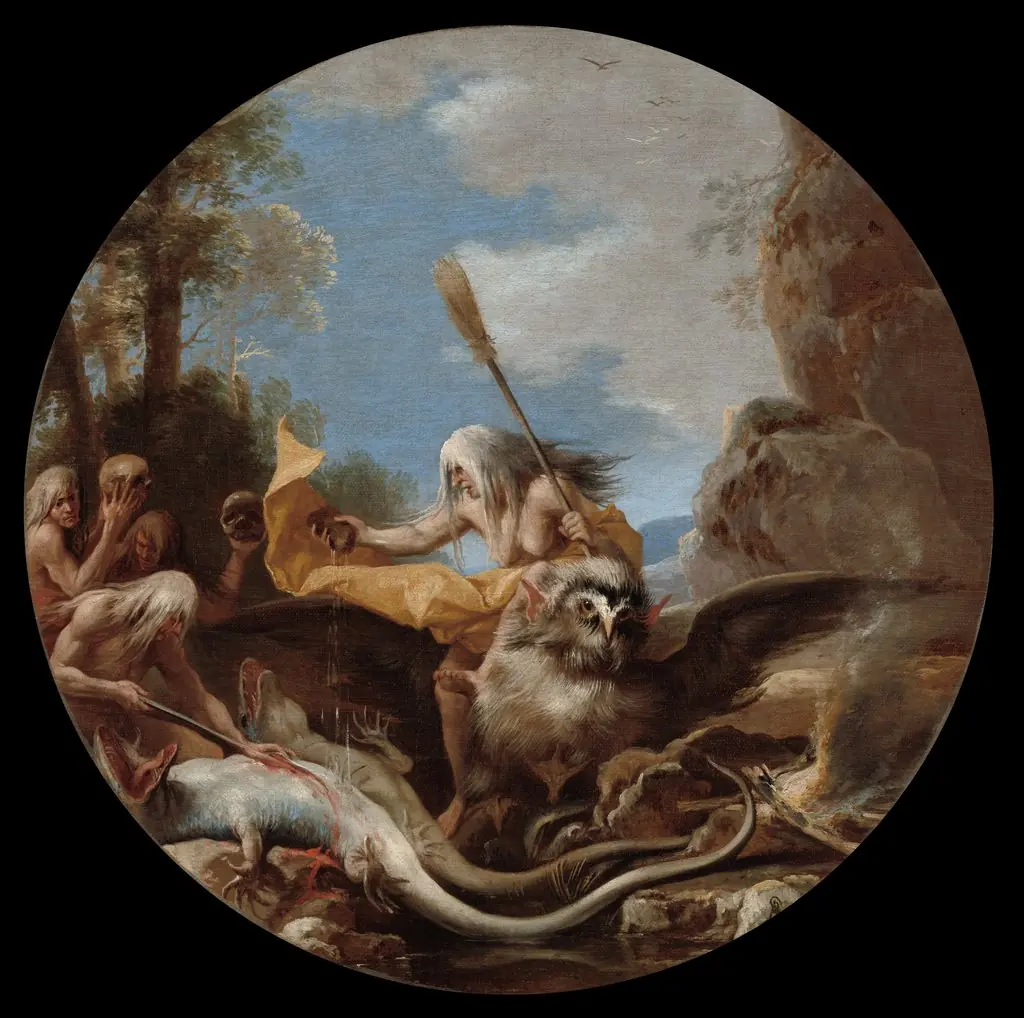
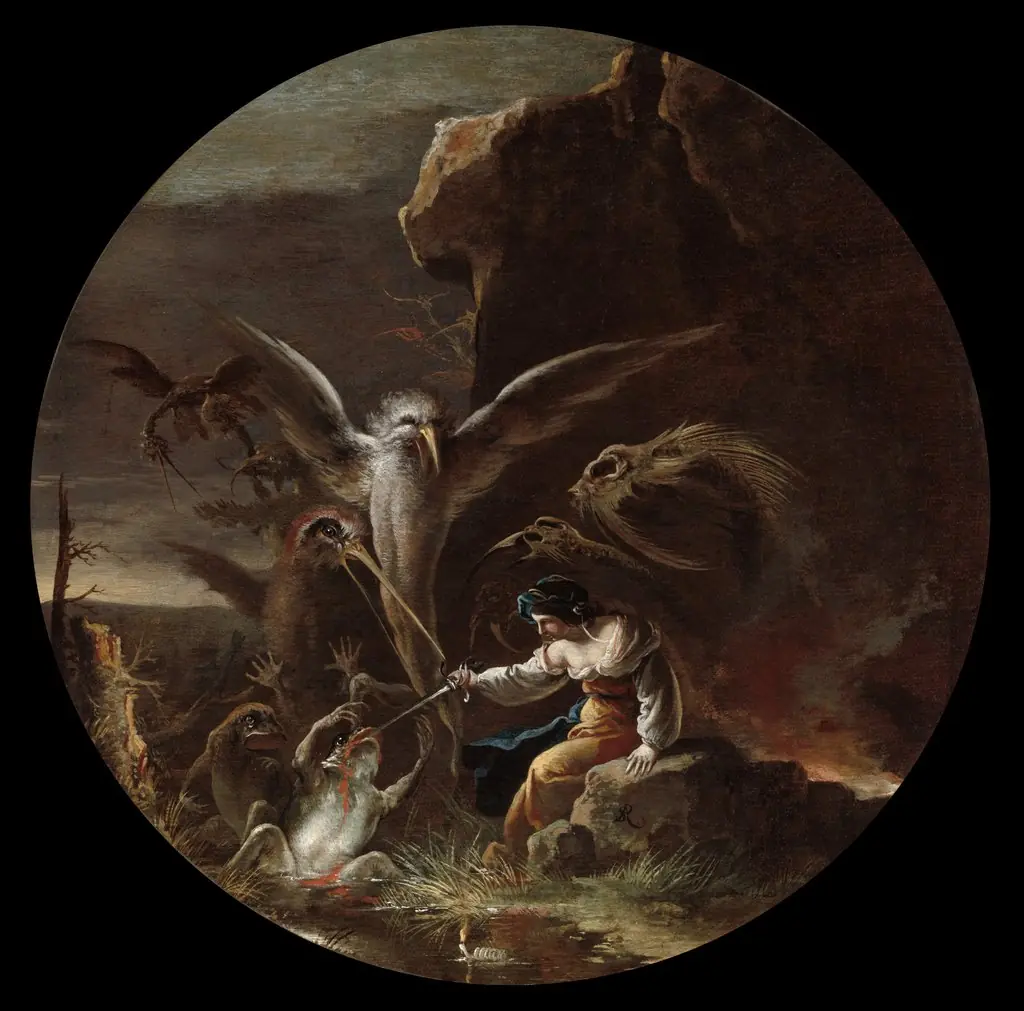
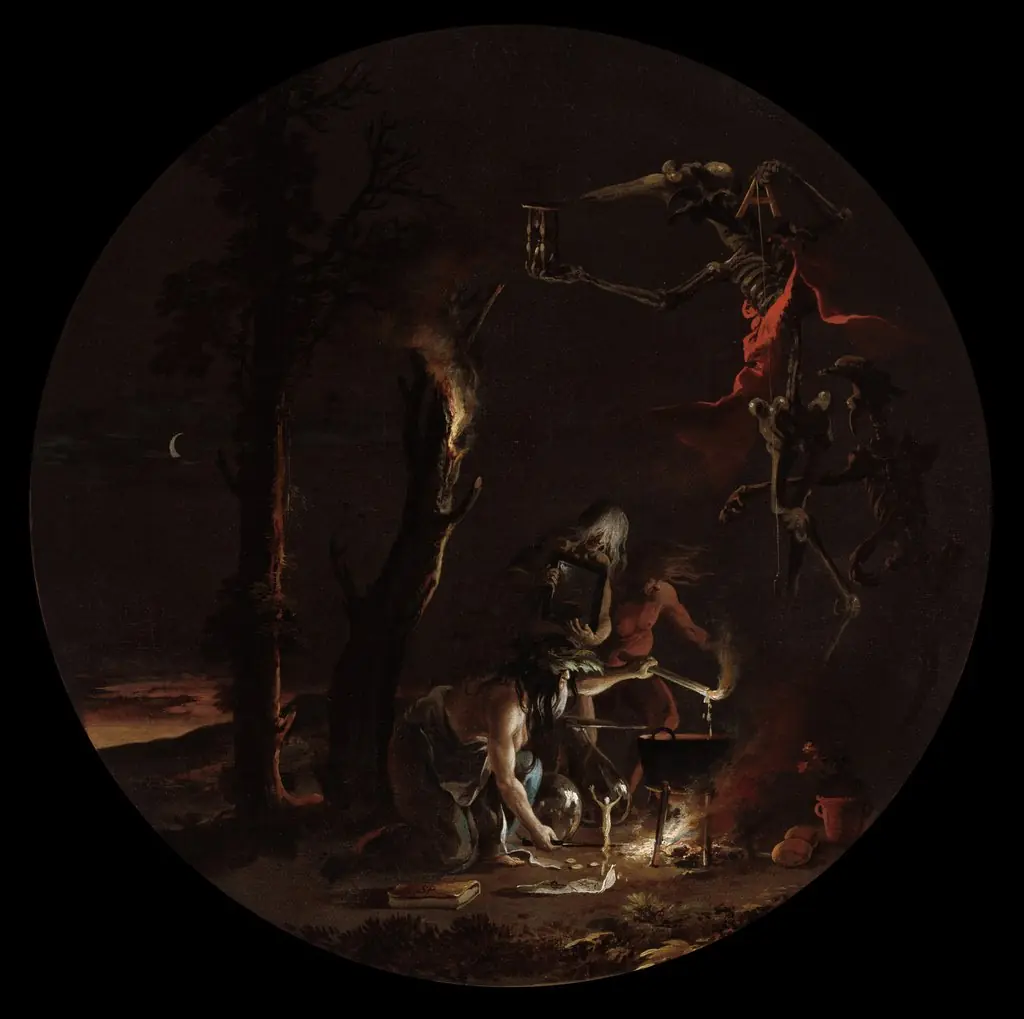
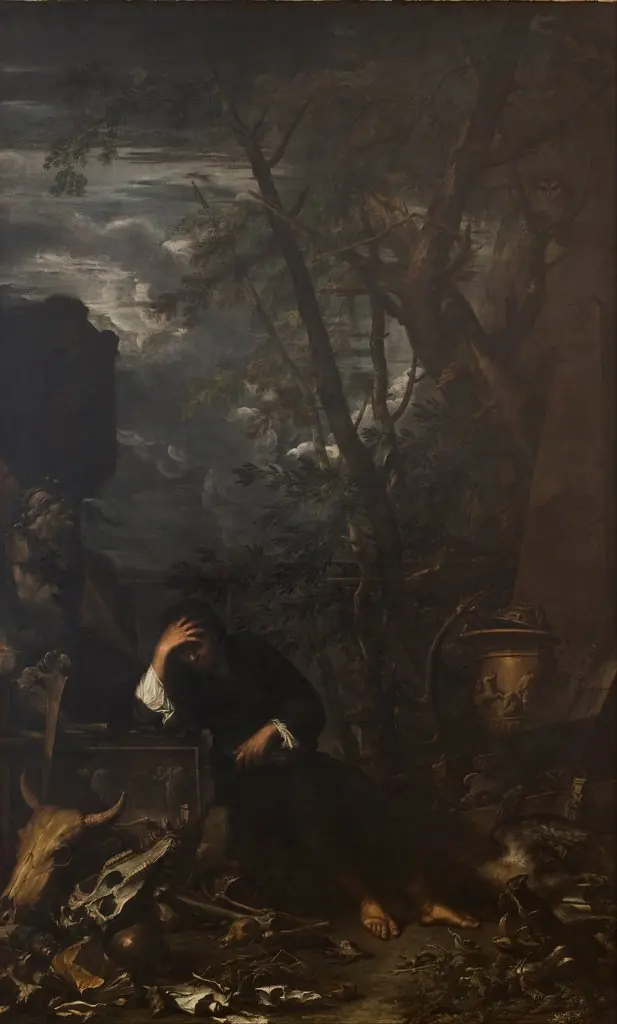
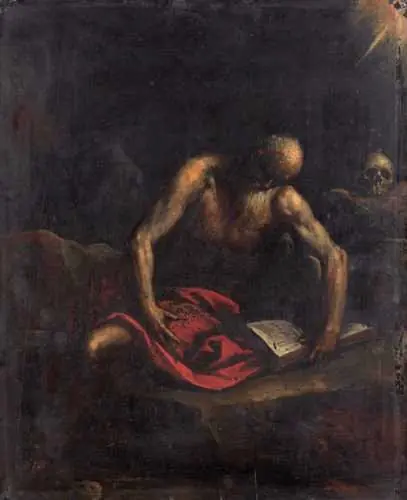
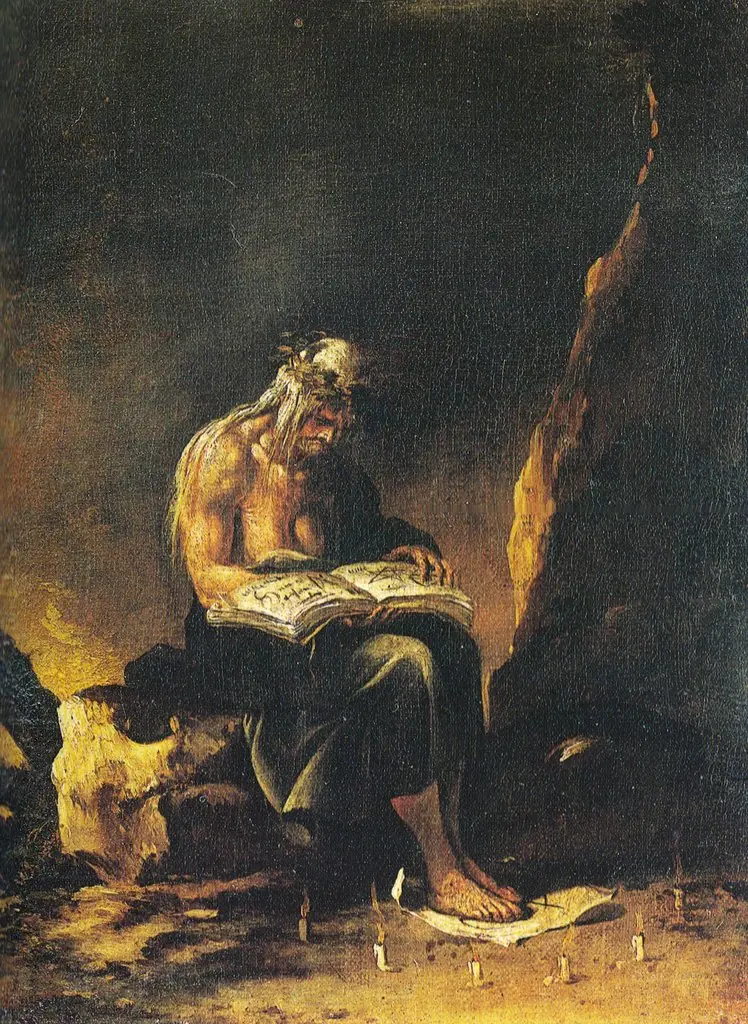
A Witch is an oil painting by the Early Baroque Italian artist Salvator Rosa. It dates from 1646 and is held in the collection of the Capitoline Museums.
About this work
Overview
The painting reflects his fascination with the macabre and the occult, set apart from his more conventional historical subjects.
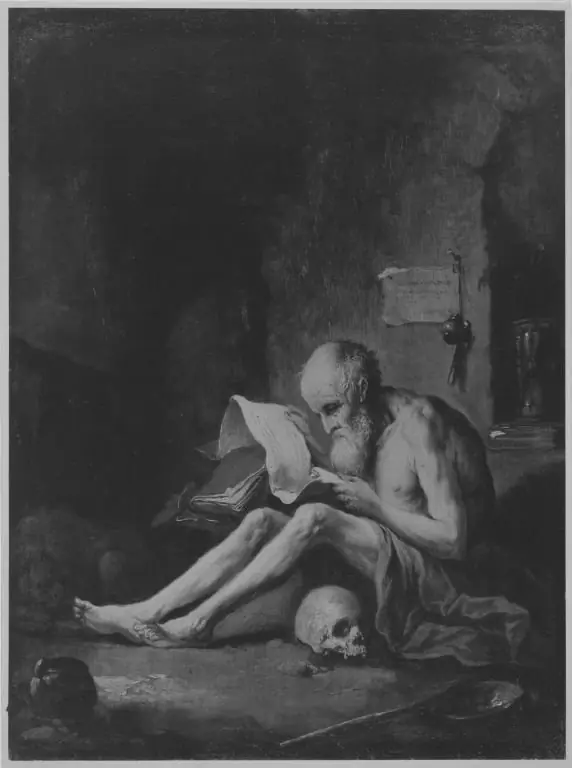
Painted in 1646 by Salvator Rosa, this oil-on-canvas work presents a solitary witch in a secluded, shadowed landscape. Rosa, an Italian artist known for his turbulent compositions and intellectual edge, rendered the figure with deliberate ambiguity, blending folklore with psychological tension. The painting reflects his fascination with the macabre and the occult, set apart from his more conventional historical subjects.
Subject & Meaning
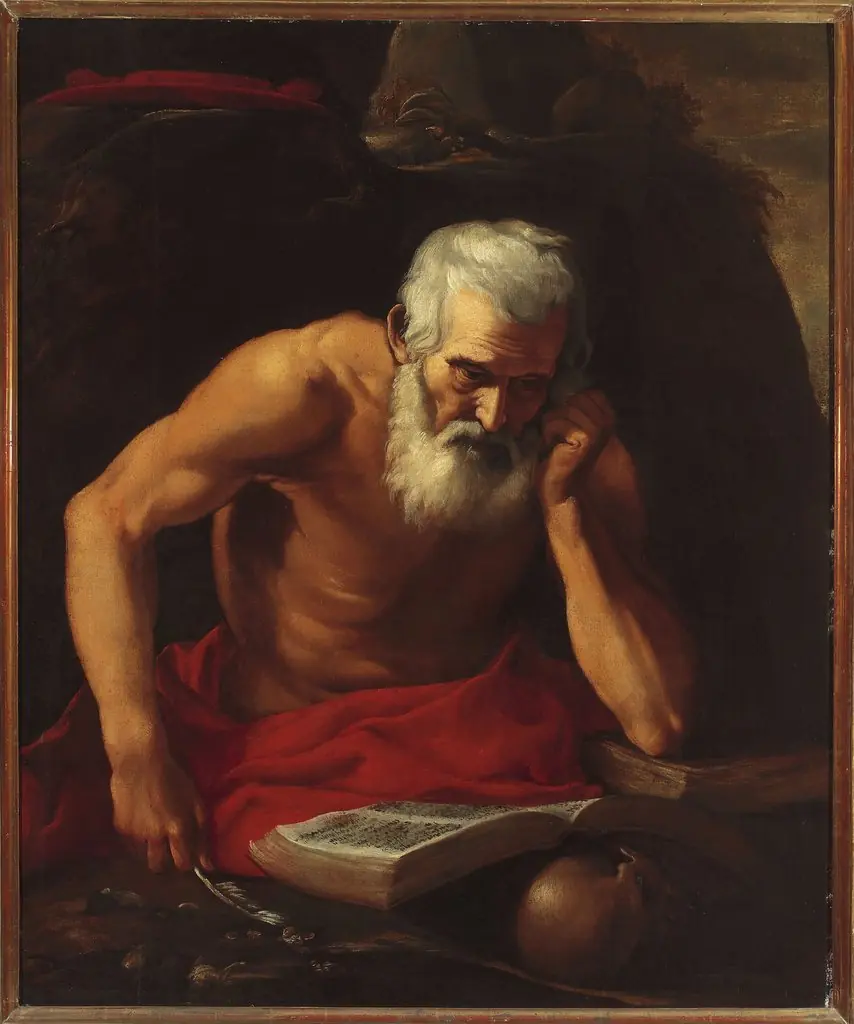
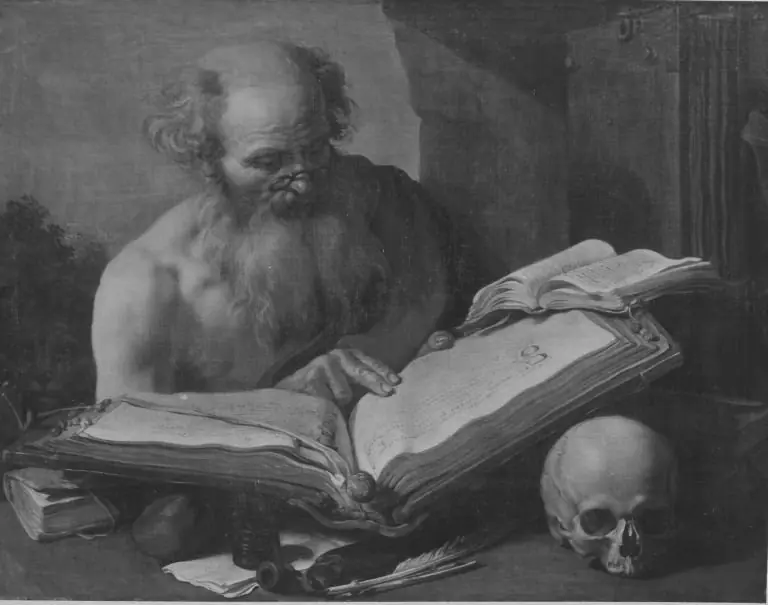
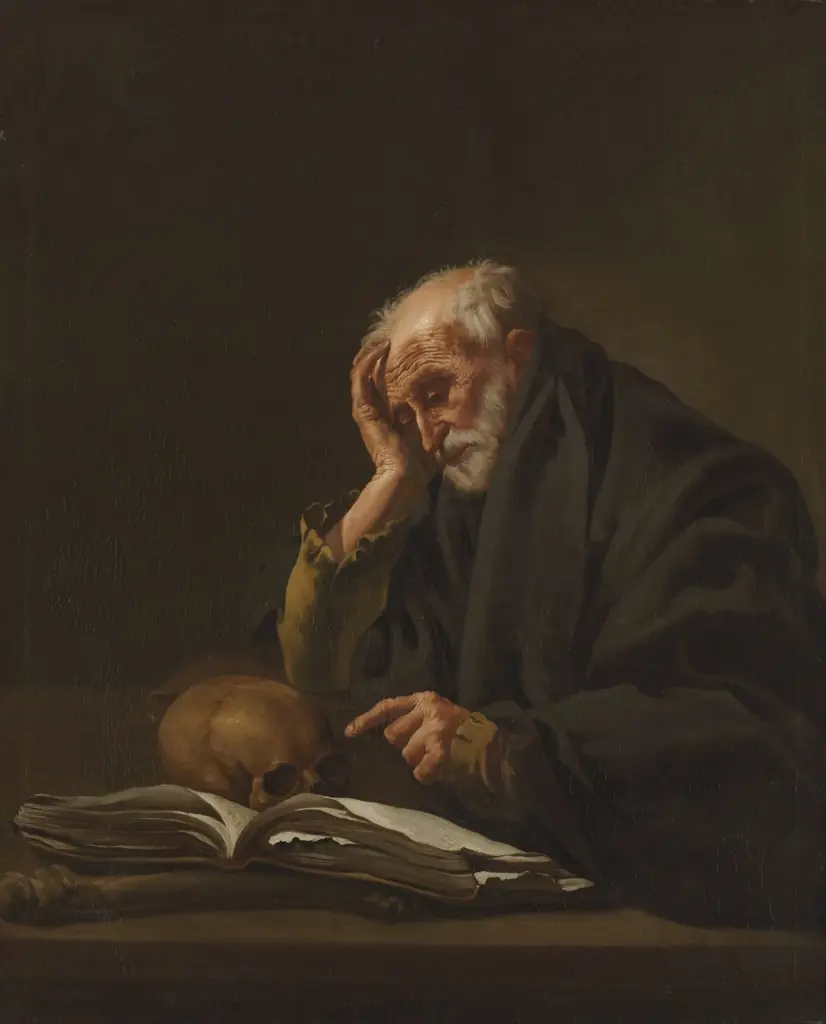
The figure, gendered ambiguously with long white hair and a beard, sits in contemplation amid flickering candles and an open grimoire. Rather than a caricature of evil, the witch appears absorbed in ritual or study, suggesting a complex inner world. Rosa’s portrayal resists moralizing, instead inviting unease through stillness and isolation, aligning with contemporary anxieties about hidden knowledge and female autonomy.
Technique & Style
Rosa employs chiaroscuro to sculpt the figure from deep shadow, with light glancing off the witch’s torso and the book’s pages. The dark, indistinct background isolates the subject, heightening the sense of secrecy. Brushwork is controlled yet expressive, with textured surfaces suggesting aged skin and weathered stone. The lighting echoes Caravaggio’s influence but is more atmospheric, less theatrical.
History & Provenance
Created during Rosa’s time in Rome, the painting entered the Capitoline Museums’ collection in the 18th century, likely through the acquisition of a noble Roman family’s holdings. Its survival through centuries of shifting tastes—particularly during periods when occult imagery was suppressed—speaks to its enduring, if unsettling, appeal among collectors of the unusual.
Context
In mid-17th-century Italy, witchcraft was both feared and mythologized, often tied to political and religious tensions. Rosa’s depiction diverges from popular demonology, offering a solitary, introspective figure rather than a monstrous villain. His interest in marginalized figures and natural philosophy positioned him as an intellectual outsider, challenging artistic norms of the time.
Legacy
Though not widely exhibited in Rosa’s lifetime, the painting later influenced Romantic-era artists drawn to the sublime and the occult. Its psychological depth and refusal to simplify evil contributed to its reevaluation in the 19th century as a precursor to modern explorations of the psyche. Today, it remains a quiet but potent example of Baroque ambiguity.
Own this work as a print
Artist & collection
Artist
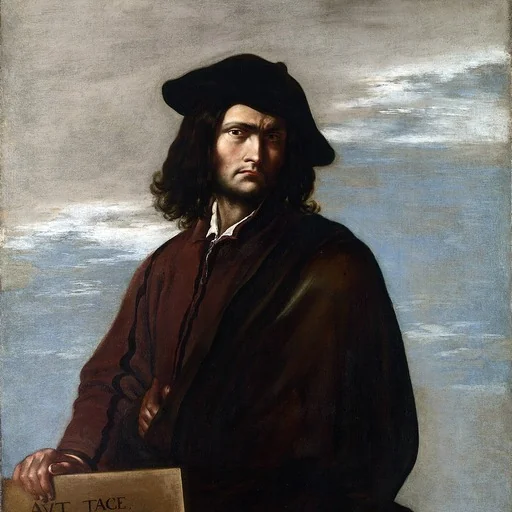
Salvator Rosa (1615 – 15 March 1673) is best known today as an Italian Baroque painter, whose romanticised landscapes and history paintings, often set in dark and untamed nature, exerted considerable influence from the 17th century into…