Artwork
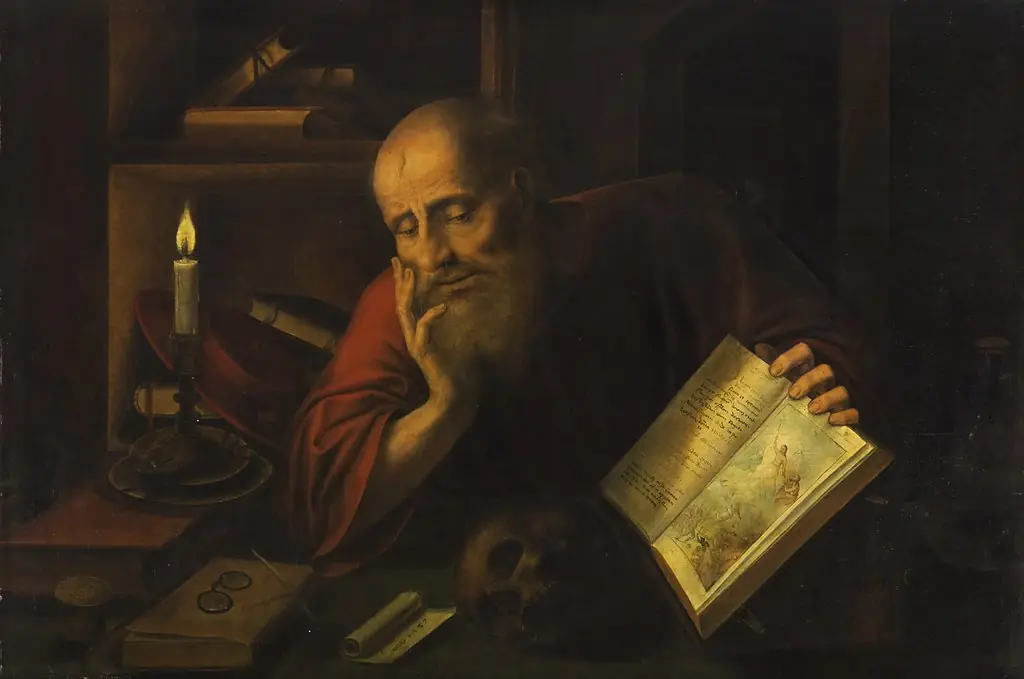
Saint Jerome reading
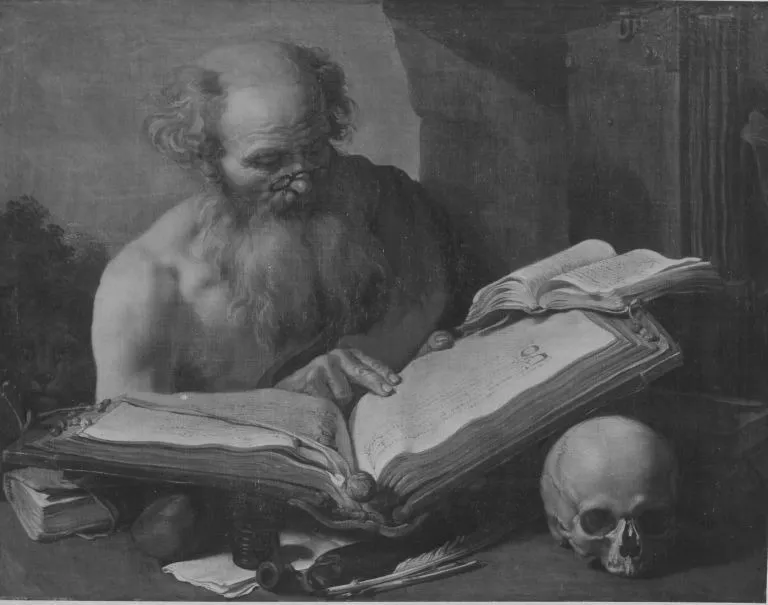
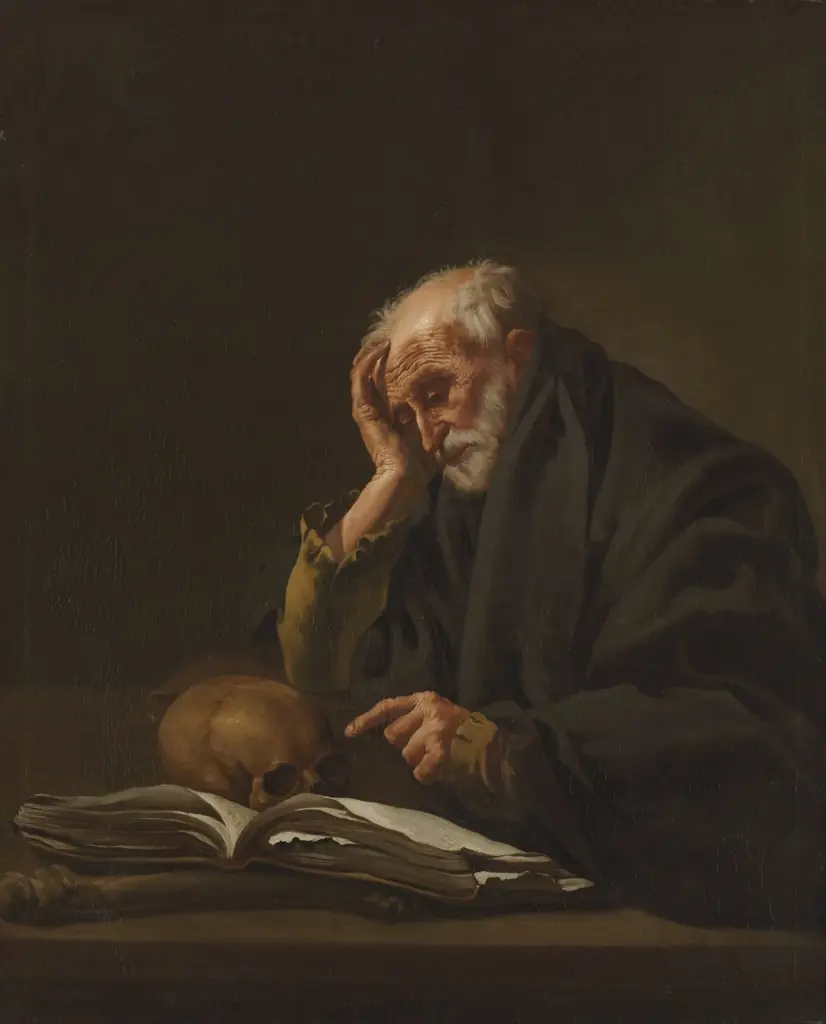
Saint Jerome reading is an oil painting by the Early Baroque Italian artist Hendrick Bloemaert. It dates from 1624 and is held in the collection of the Bavarian State Painting Collections.
About this work
Overview
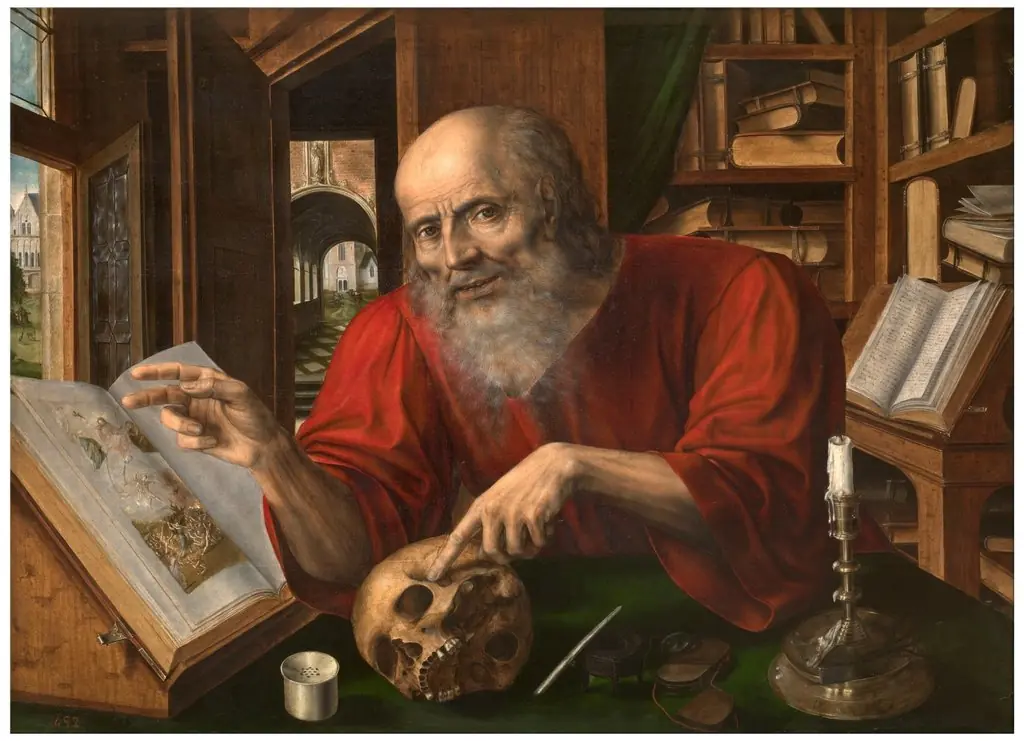
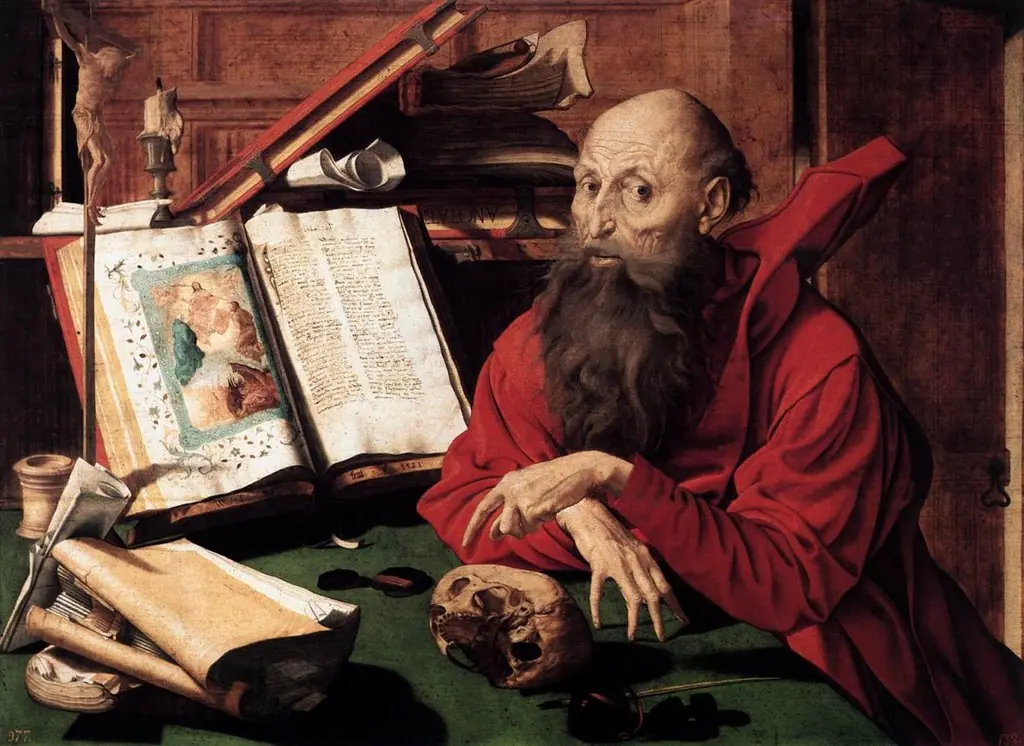
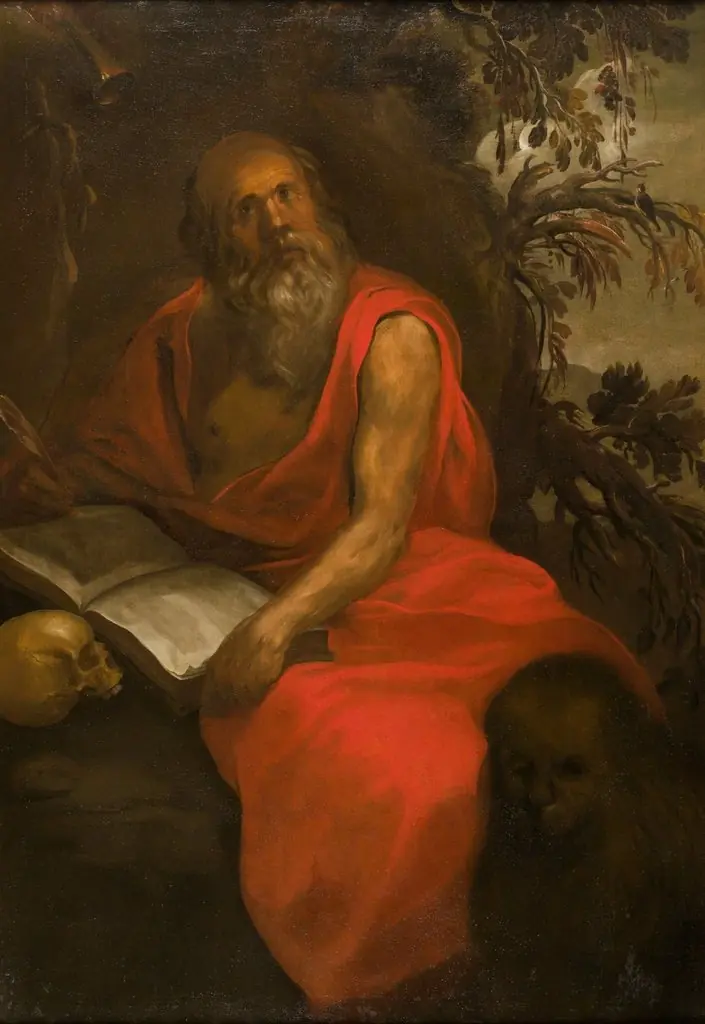
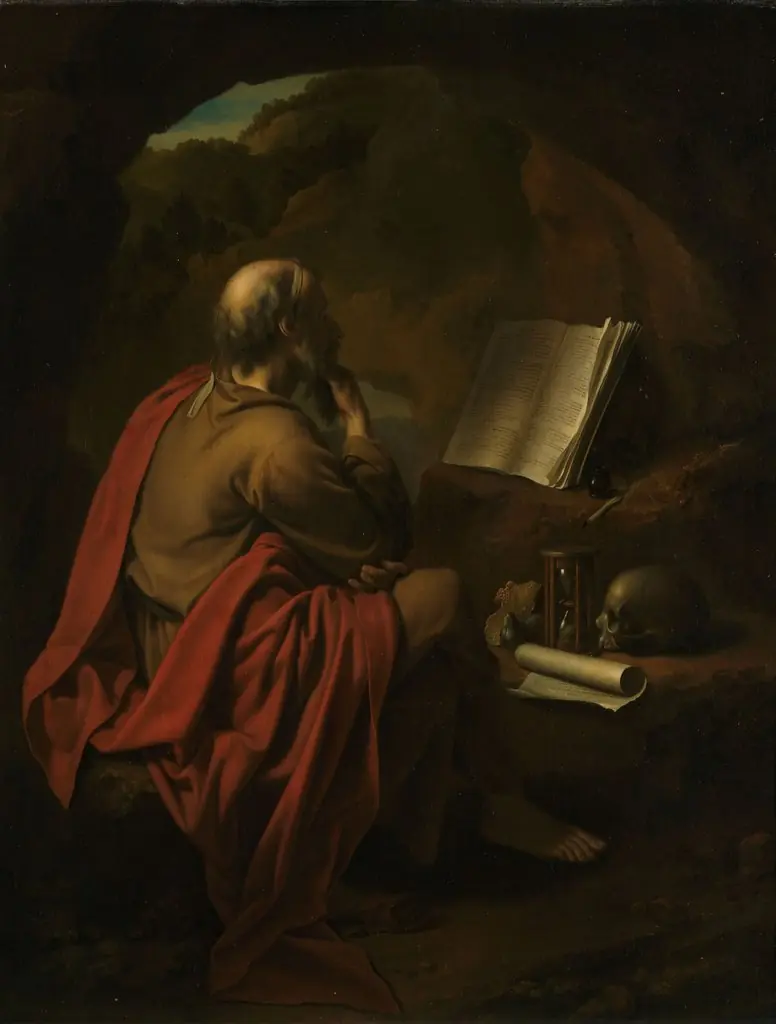
Painted in 1624 by Hendrick Bloemaert, this oil on panel work portrays Saint Jerome in a quiet moment of study. The figure is rendered in a dimly lit interior, with strong contrasts between light and shadow emphasizing his form. The painting is part of the collection at the Alte Pinakothek in Munich, where it has been held since the 19th century.
Subject & Meaning
The figure is Saint Jerome, the 4th-century scholar who translated the Bible into Latin. His bare torso and intense focus suggest ascetic devotion. The skull on the table serves as a memento mori, a conventional symbol reminding viewers of mortality and the transience of earthly pursuits. The open book and writing tools underscore his lifelong dedication to sacred texts.
Technique & Style
Bloemaert employs chiaroscuro to model the figure with dramatic lighting, isolating Jerome from the deep shadows of the room. The texture of skin, fabric, and parchment is rendered with subtle gradations, enhancing realism. The composition is tightly focused, with no extraneous details, directing attention to the saint’s contemplative posture and the objects surrounding him.
History & Provenance
The painting was completed in 1624 and entered the Bavarian royal collection in the early 1800s. It was later transferred to the Alte Pinakothek, where it remains today. Its attribution to Hendrick Bloemaert is supported by stylistic comparisons with his other known works and documented records from the period.
Context
In early 17th-century Northern Europe, depictions of Saint Jerome were common among Protestant and Catholic patrons alike, reflecting his status as a model of scholarly piety. Bloemaert’s version aligns with a broader trend of intimate, psychologically grounded portrayals of religious figures, moving away from grand altarpieces toward private devotion.
Legacy
Though not widely reproduced, the painting exemplifies the quiet intensity of Dutch and Flemish religious genre scenes of the period. Its restrained composition and emphasis on intellectual solitude influenced later depictions of scholars and contemplatives, contributing to a visual language of inner life in early modern art.
Artist & collection