Artwork
The Little Devil of Florence
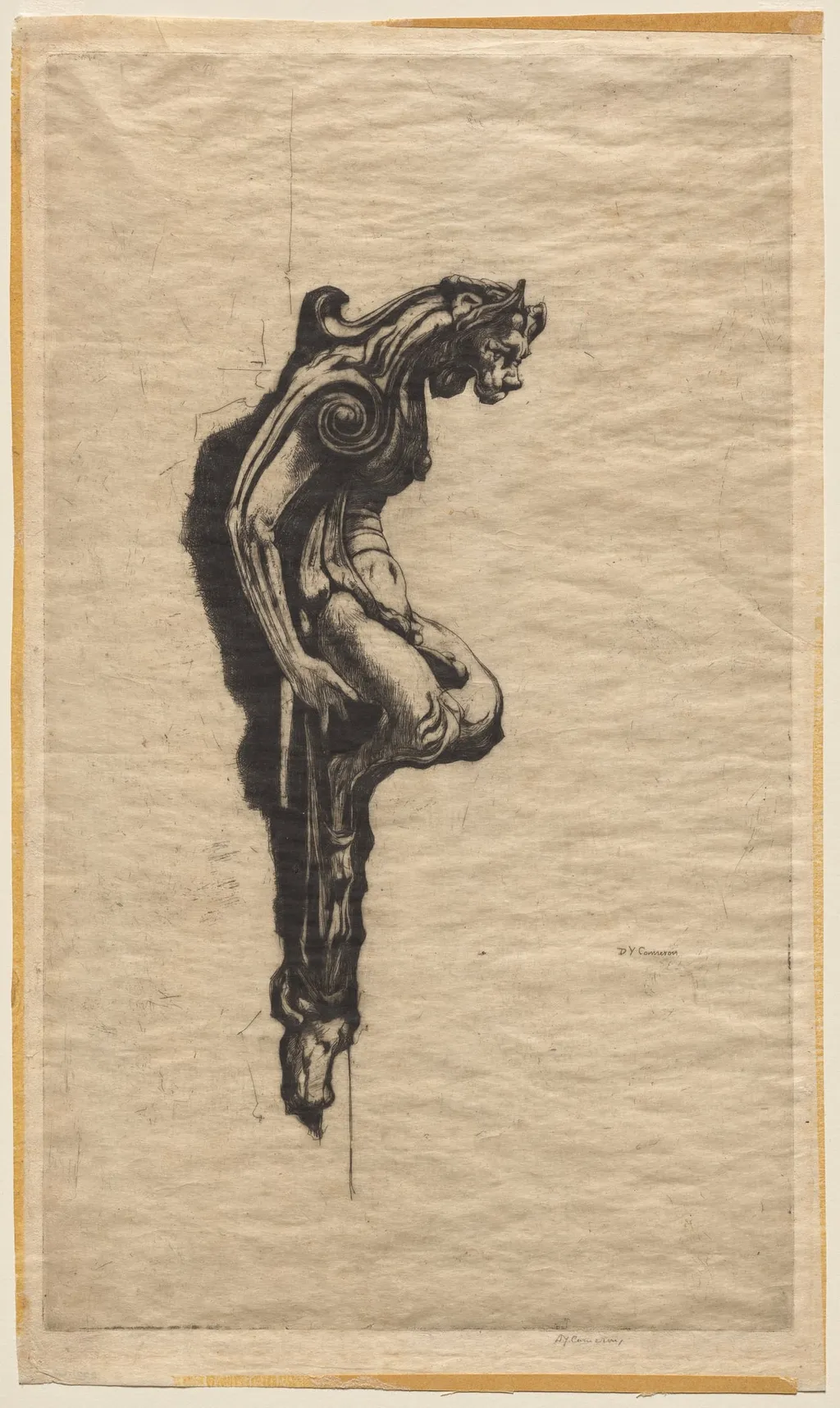
The Little Devil of Florence is a print by David Young Cameron. It dates from 1907 and is held in the collection of the Cleveland Museum of Art.
About this work
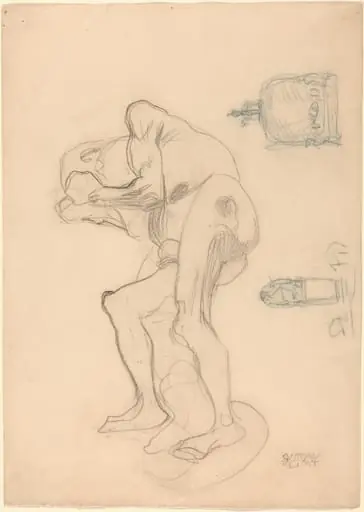
The body is hunched forward, one arm bent sharply at the elbow, the other hand gripping what looks like a small, twisted object.
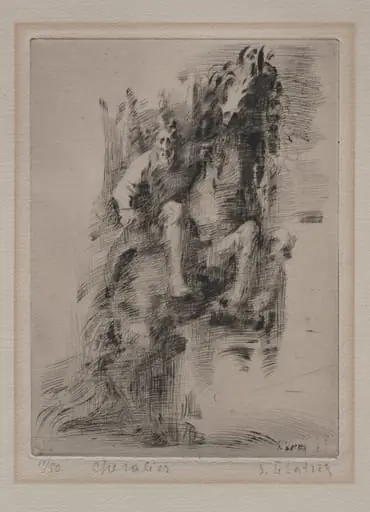
This sketch shows a twisted, muscular figure with a devilish face and horns. The body is hunched forward, one arm bent sharply at the elbow, the other hand gripping what looks like a small, twisted object. The lines are dark and heavy, creating deep shadows that make the figure look dramatic and intense.
The artist focused on the figure’s raw energy and strange posture. The sketch feels like a quick, powerful study rather than a finished work.
Want to see more by this artist? Check out David Young Cameron (British, 1865–1945).
Overview
Created in 1907 by Scottish artist David Young Cameron, *The Little Devil of Florence* is an etching that captures a singular, unsettling figure in a Florentine context. Though Cameron was primarily known for architectural landscapes, this work diverges into the realm of imaginative figuration. Executed with bold, incised lines, the print reflects his technical mastery in etching while revealing a more personal, expressive side of his practice.
Subject & Meaning
The print portrays a contorted, horned figure with a muscular, hunched form, gripping a small, ambiguous object. Its facial features are grotesque, evoking mythic or folkloric demons. The figure lacks clear narrative context, suggesting it may be a symbolic or psychological study rather than a literal scene. Cameron’s choice of a devilish form in Florence hints at themes of moral tension or urban mystery, though no definitive allegory is established.
Technique & Style
Cameron employed dense, heavy etching lines to generate deep shadows and a sense of sculptural volume. The strokes are forceful and irregular, emphasizing the figure’s dynamic tension and raw physicality. Unlike his more polished townscapes, this work appears spontaneous, with visible reworkings and unrefined edges. The technique prioritizes emotional impact over finish, aligning with the tradition of expressive graphic studies.
History & Provenance
The print emerged during the waning years of the Etching Revival, a movement Cameron helped sustain through his technical precision and thematic range. While no documented exhibition history or early ownership is recorded, the work aligns with his broader output from the early 20th century. It likely remained in private hands or within institutional collections focused on British printmaking.
Context
Cameron’s engagement with Italian subjects, particularly Florence, reflects a broader European interest in Renaissance cities among British artists. Yet this piece diverges from his typical serene vistas, suggesting a fascination with the city’s layered cultural myths. The devilish figure may respond to local iconography or personal symbolism, positioning the work as an introspective counterpoint to his more public-facing landscapes.
Legacy
Though less known than his architectural etchings, *The Little Devil of Florence* stands as a rare example of Cameron’s engagement with the grotesque and the fantastical. It reveals the breadth of his artistic curiosity and the expressive potential of etching beyond topographical documentation. The work contributes to understanding the psychological dimensions within late 19th- and early 20th-century British printmaking.
Artist & collection
Artist
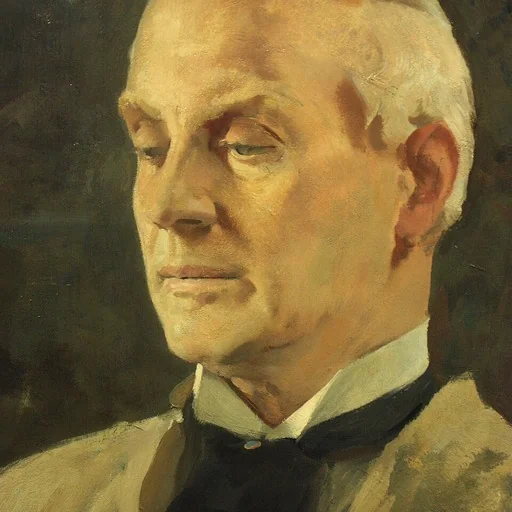
Sir David Young Cameron (28 June 1865 – 16 September 1945) was a Scottish painter and, with greater success, etcher, mostly of townscapes and landscapes in both cases. He was a leading figure in the final decades of the Etching Revival.