Artwork
Foxgloves
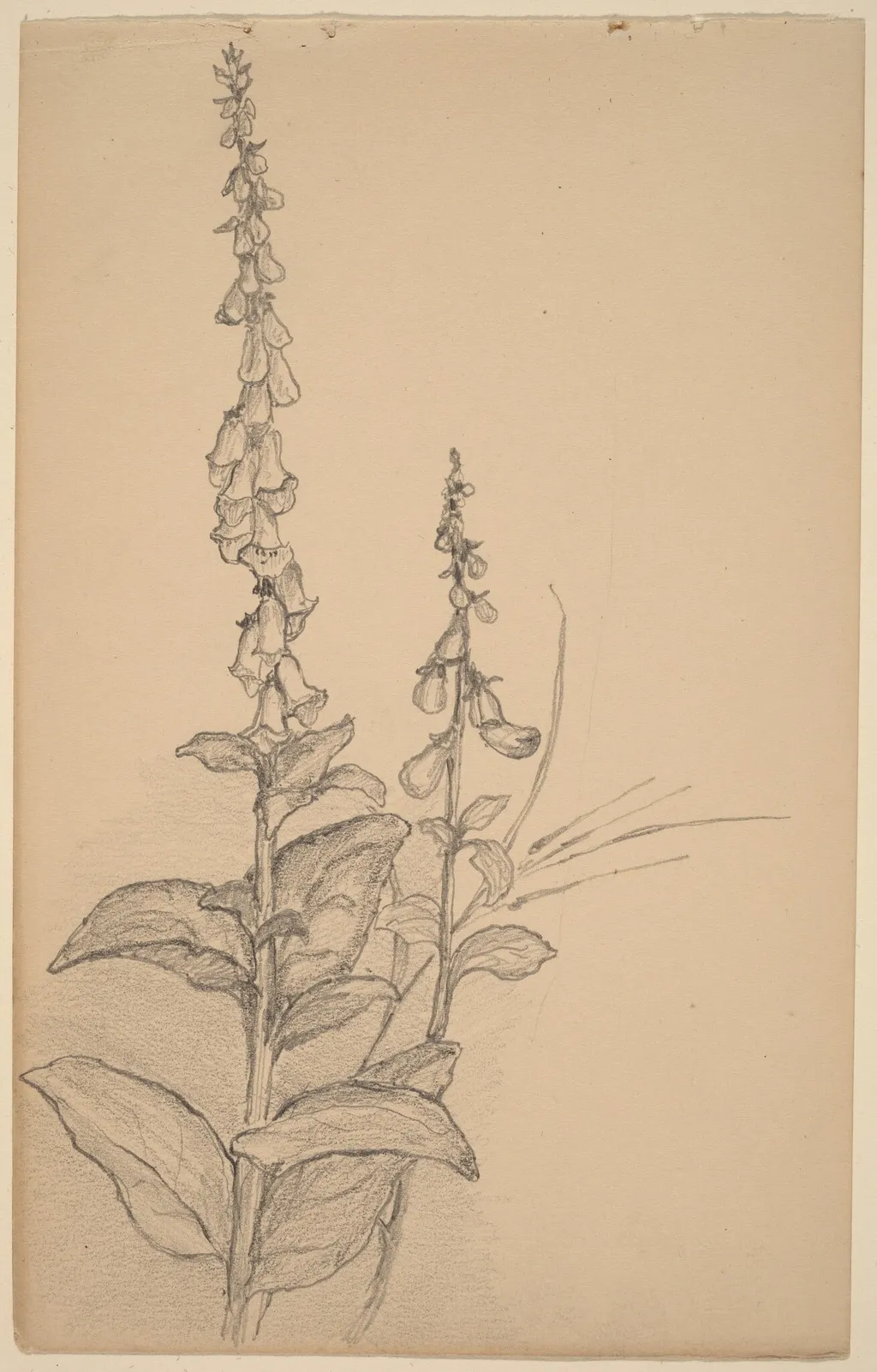
Foxgloves is a graphite drawing by the Impressionist artist Arthur Bowen Davies. It dates from 1895 and is held in the collection of the National Gallery of Art. Arthur B.
About this work
Overview
Rendered with controlled precision, the drawing reflects Davies’ technical discipline prior to his later advocacy for modernist movements in American art.
Arthur B. Davies executed *Foxgloves* in 1895, a graphite drawing that exemplifies his early commitment to meticulous draftsmanship. The work captures the botanical structure of foxglove plants, emphasizing their elongated stems, serrated leaves, and pendulous bell-shaped blossoms. Rendered with controlled precision, the drawing reflects Davies’ technical discipline prior to his later advocacy for modernist movements in American art.
Subject & Meaning
The drawing isolates a cluster of foxglove flowers, a subject chosen for its visual intricacy rather than symbolic weight. Davies focuses on the plant’s morphology—its vertical growth, layered petals, and textured foliage—without overt allegorical intent. The absence of contextual elements directs attention solely to the organic forms, suggesting an interest in botanical observation as an end in itself.
Technique & Style
Davies employs graphite to achieve a spectrum of tonal values, from faint outlines to dense shadows, lending the drawing volumetric solidity. Chiaroscuro enhances the three-dimensional illusion, with light and dark contrasts defining the flowers’ curves and the leaves’ veins. The linear precision and restrained shading align with academic realism, though the composition’s simplicity foreshadows his later shift toward abstraction.
History & Provenance
Created in 1895, *Foxgloves* predates Davies’ role as a curator of the 1913 Armory Show, which introduced European modernism to American audiences. The drawing’s early provenance remains undocumented, but its survival underscores the artist’s enduring engagement with draftsmanship alongside his better-known paintings. It offers insight into his formative years, when botanical studies served as a foundation for his evolving aesthetic.
Context
During the 1890s, American artists increasingly turned to nature as a subject, balancing scientific accuracy with artistic interpretation. Davies’ *Foxgloves* participates in this trend, though his approach eschews the decorative flourishes of contemporaneous floral studies. The work’s restraint reflects a transitional moment in his career, bridging academic training and his subsequent embrace of avant-garde experimentation.
Legacy
While *Foxgloves* lacks the renown of Davies’ later contributions to modernism, it exemplifies the technical rigor underlying his broader artistic practice. The drawing’s emphasis on observation and tonal control anticipates the formal concerns that would later inform his curatorial vision. It remains a testament to his versatility, illustrating how botanical subjects could serve as a conduit for both realism and abstraction.
Artist & collection
Artist
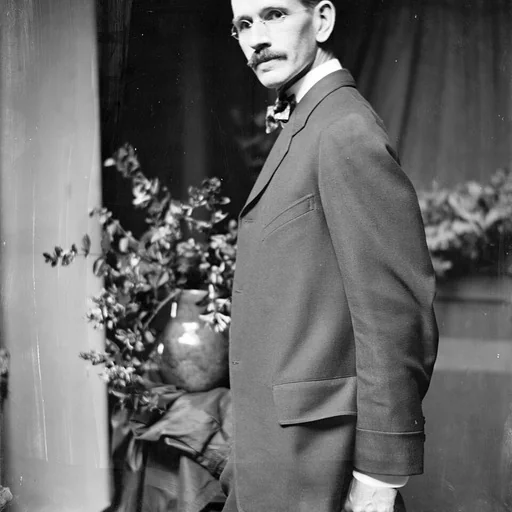
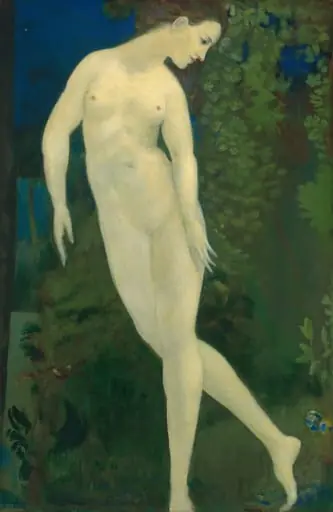
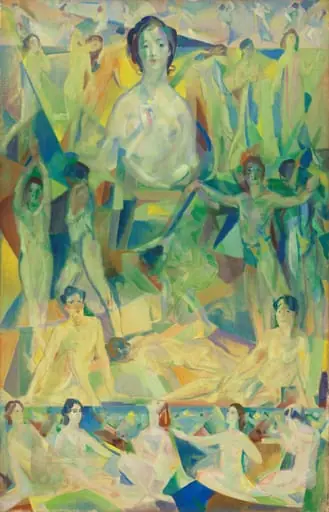
Arthur Bowen Davies (September 26, 1862 – October 24, 1928) was an avant-garde American artist and influential advocate of modern art in the United States c. 1910–1928.

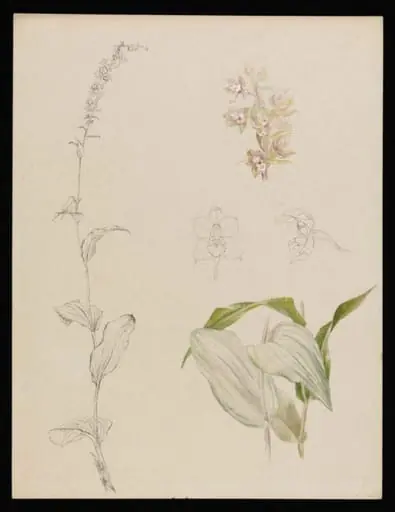 Sketches of marsh helleborine
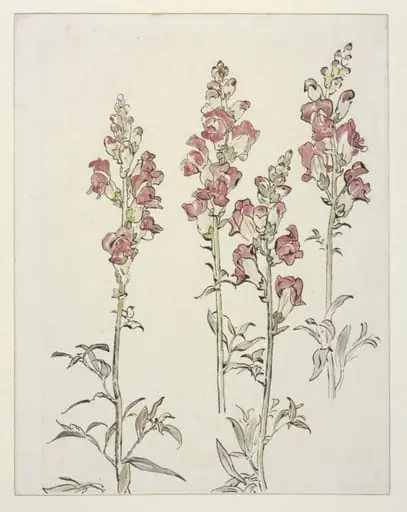 Untitled
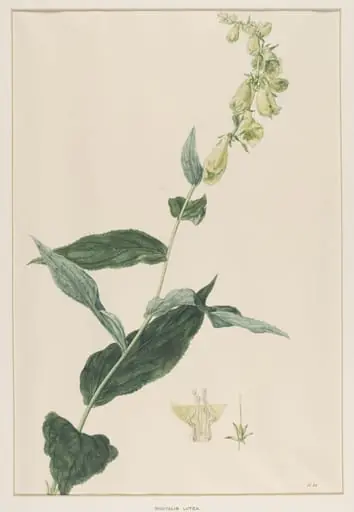 Digitalis Lutea
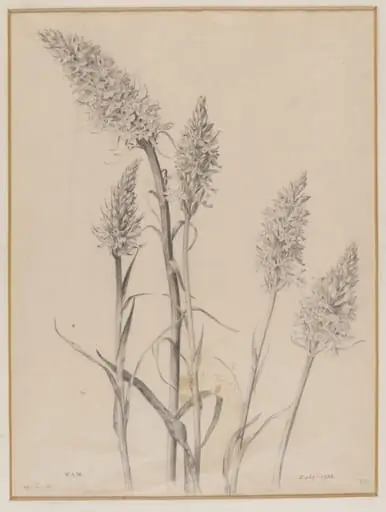 Untitled
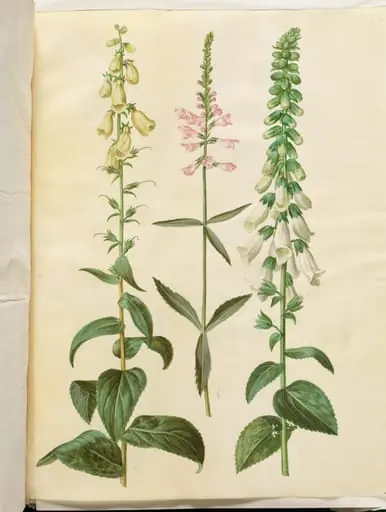 Digitalis grandiflora (storblomstret fingerbøl); Physostegia virginiana (drejeblomst); Digitalis purpurea (almindelig fingerbøl)
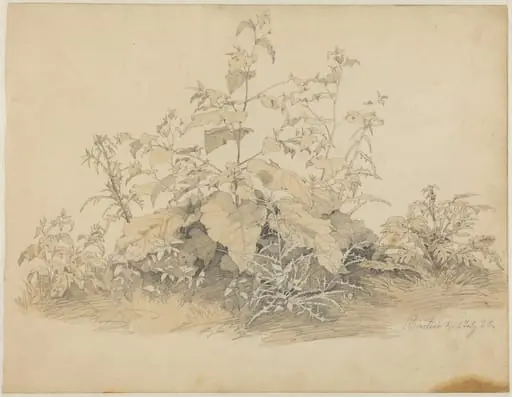 Wild Plants near Birstein
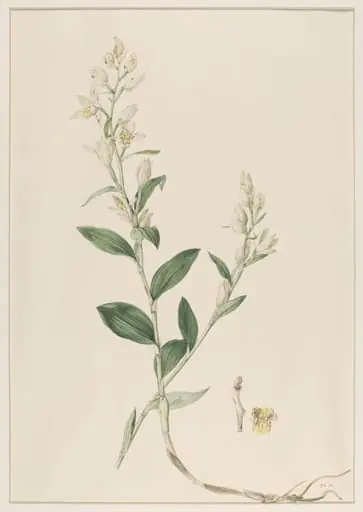 Epipactis Ensifolia
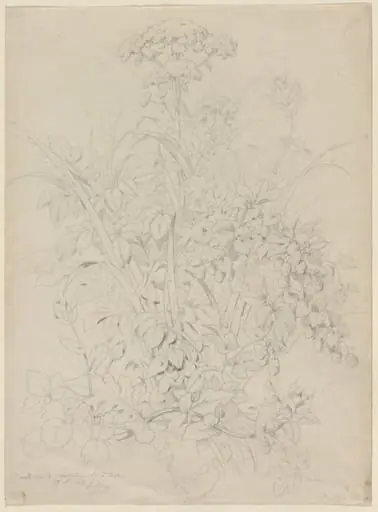 Plant Study
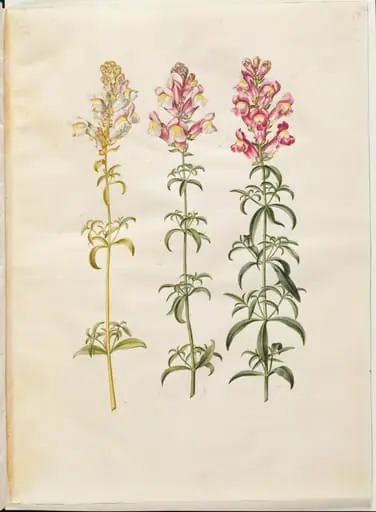 Antirrhinum majus (have-løvemund)
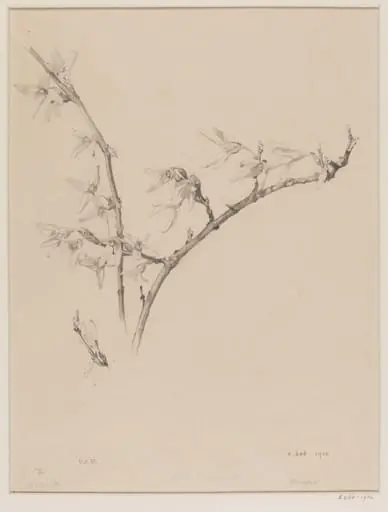 Forsythia
 A Stalk of Lilies with Six Blooms
 Untitled