Artwork
Untitled
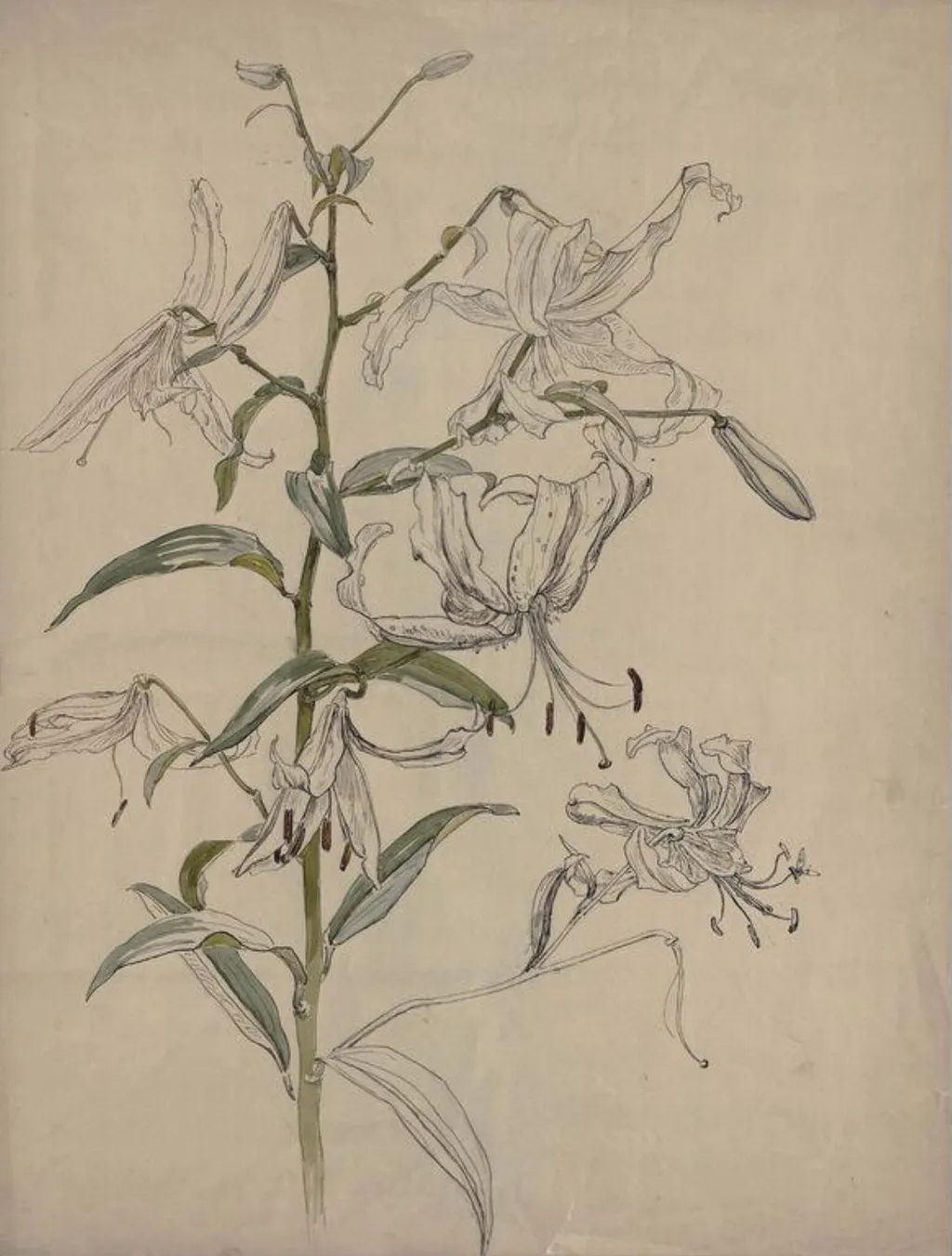
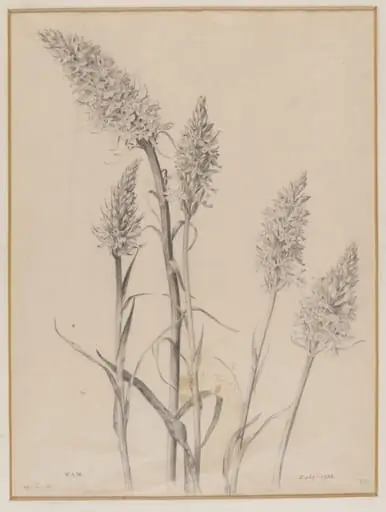
Untitled is a watercolor work on paper by the Biedermeier artist Rudolf Ribarz. It dates from 1875 and is held in the collection of the Victoria and Albert Museum.
About this work
Overview
A watercolour study from 1875 by Rudolf Ribarz, this work depicts a single lily stem with blossoms and foliage rendered in pen and ink over translucent washes.
A watercolour study from 1875 by Rudolf Ribarz, this work depicts a single lily stem with blossoms and foliage rendered in pen and ink over translucent washes. The piece is unframed and unadorned, emphasizing direct observation. A purple ink stamp on the reverse, reading 'Nachlass R. Ribarz,' confirms its origin in the artist’s estate, indicating it was retained as a personal study rather than a finished exhibition piece.
Subject & Meaning
The subject is a solitary lily in a moment of quiet decay—petals curl at the edges, blooms hang loosely, and stems lean with natural weight. There is no symbolic or narrative context; the focus lies in the plant’s physical presence. Ribarz captures the lily not as an idealized ornament but as a transient organic form, valuing its subtle imperfections and quiet dignity.
Technique & Style
Ribarz employed fine pen lines to define veins and contours, layered with delicate watercolour washes to suggest volume and light. The white petals, tinted faintly with yellow at their centers, contrast against the pale beige paper, which functions as both ground and ambient light. Greens are muted and translucent, avoiding bold outlines. The technique reflects a restrained, observational approach, prioritizing accuracy over embellishment.
History & Provenance
Created in 1875, the work remained in Ribarz’s possession until his death, after which it passed to his heirs as part of his estate. The purple ink stamp on the reverse, 'Nachlass R. Ribarz,' is a standard archival mark used to identify items from his personal collection. Its survival as a study rather than a saleable work suggests it was valued for its role in the artist’s process rather than its market potential.
Context
In mid-1870s Vienna, where Ribarz was active, botanical studies were common among artists engaged with naturalism and plein air practices. While not aligned with Impressionism, his focus on direct observation of flora aligns with broader European trends favoring empirical representation. This piece reflects a quiet, academic tradition of sketching from life, distinct from the more decorative floral still lifes of the period.
Legacy
The work survives as a modest but precise example of Ribarz’s engagement with natural forms. It contributes to understanding his method as a draftsman who valued restraint and close attention to botanical detail. Though not widely exhibited, its preservation in institutional collections underscores its role as a representative study within 19th-century Austrian artistic practice.
Artist & collection

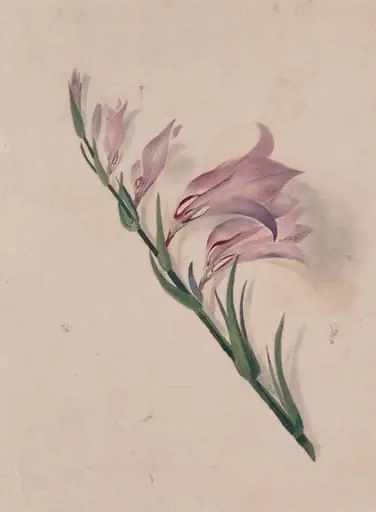 Study of a flower
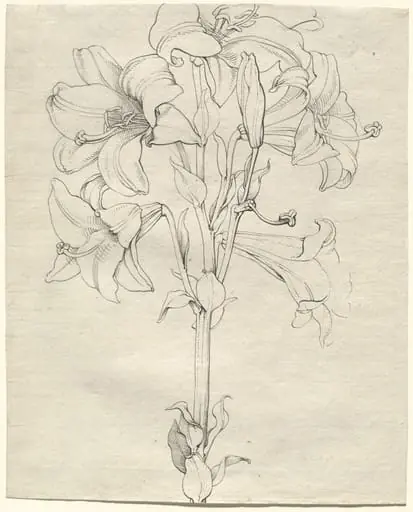 A Stalk of Lilies with Six Blooms
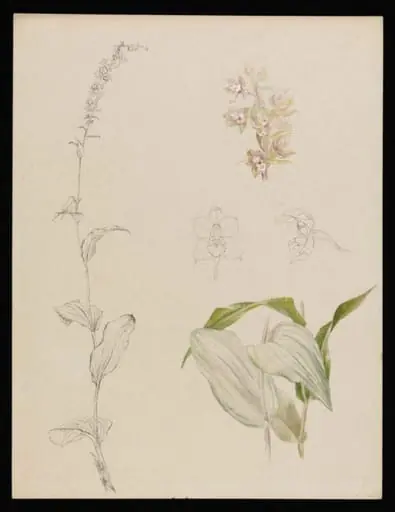 Sketches of marsh helleborine
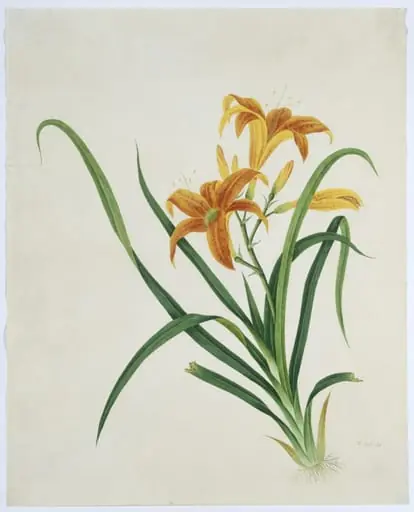 Orange Day Lily
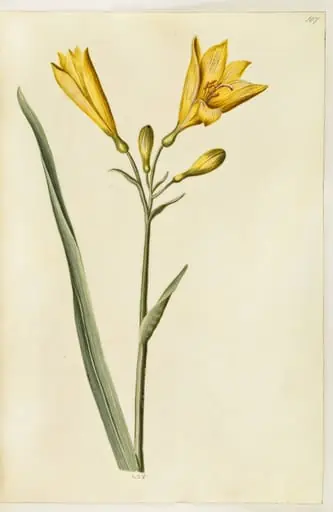 Hemerocallis lilioasphodelus (gul daglilje)
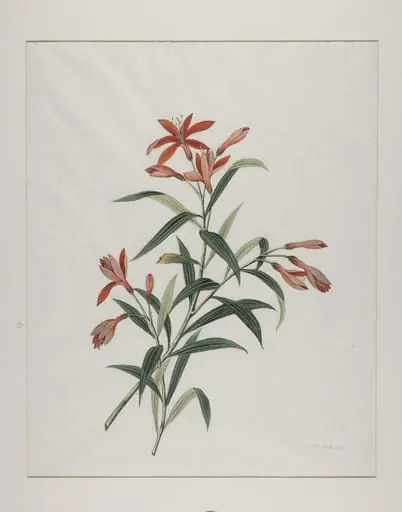 Common orange day lily (hemerocallis fulva), xuan cao
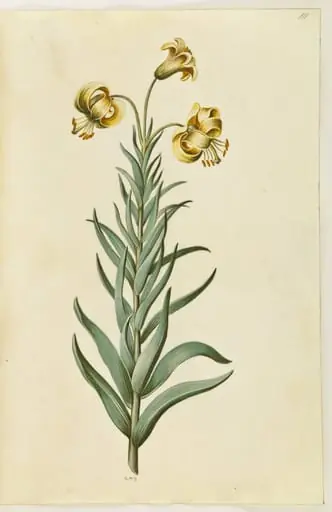 Lilium pyrenaicum (pyrenæisk lilje)
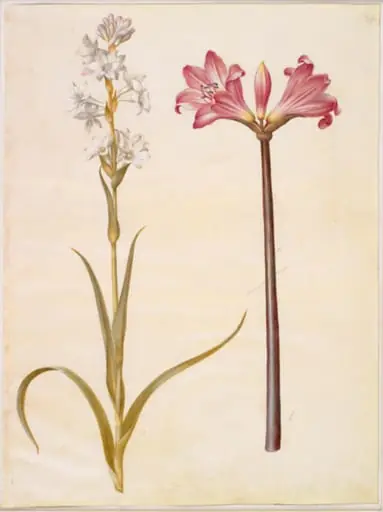 Polianthes tuberosa (tuberose); Amaryllis belladonna (belladonnalilje)
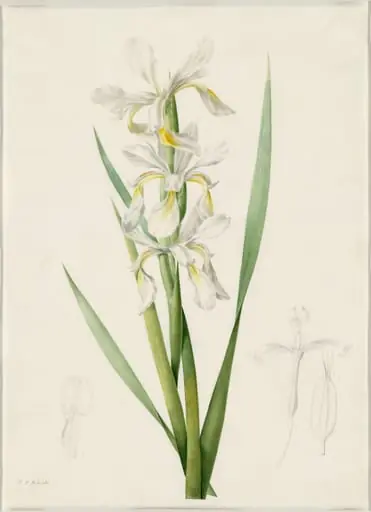 Iris ochroleuca
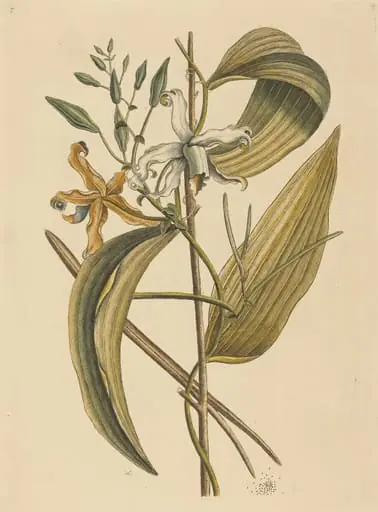 The Vanelloe (Epidendrum Vanilla)
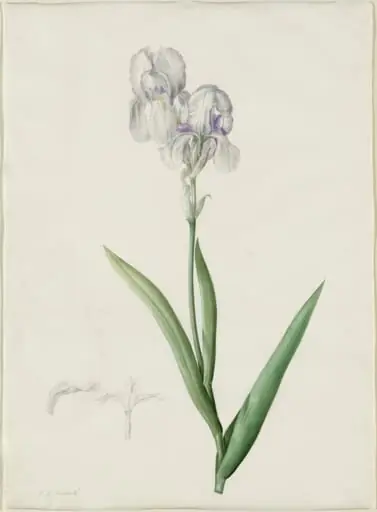 Iris Swertii
 Untitled