Artwork
Recueil de vingtquatre plantes et fleurs: Mallow
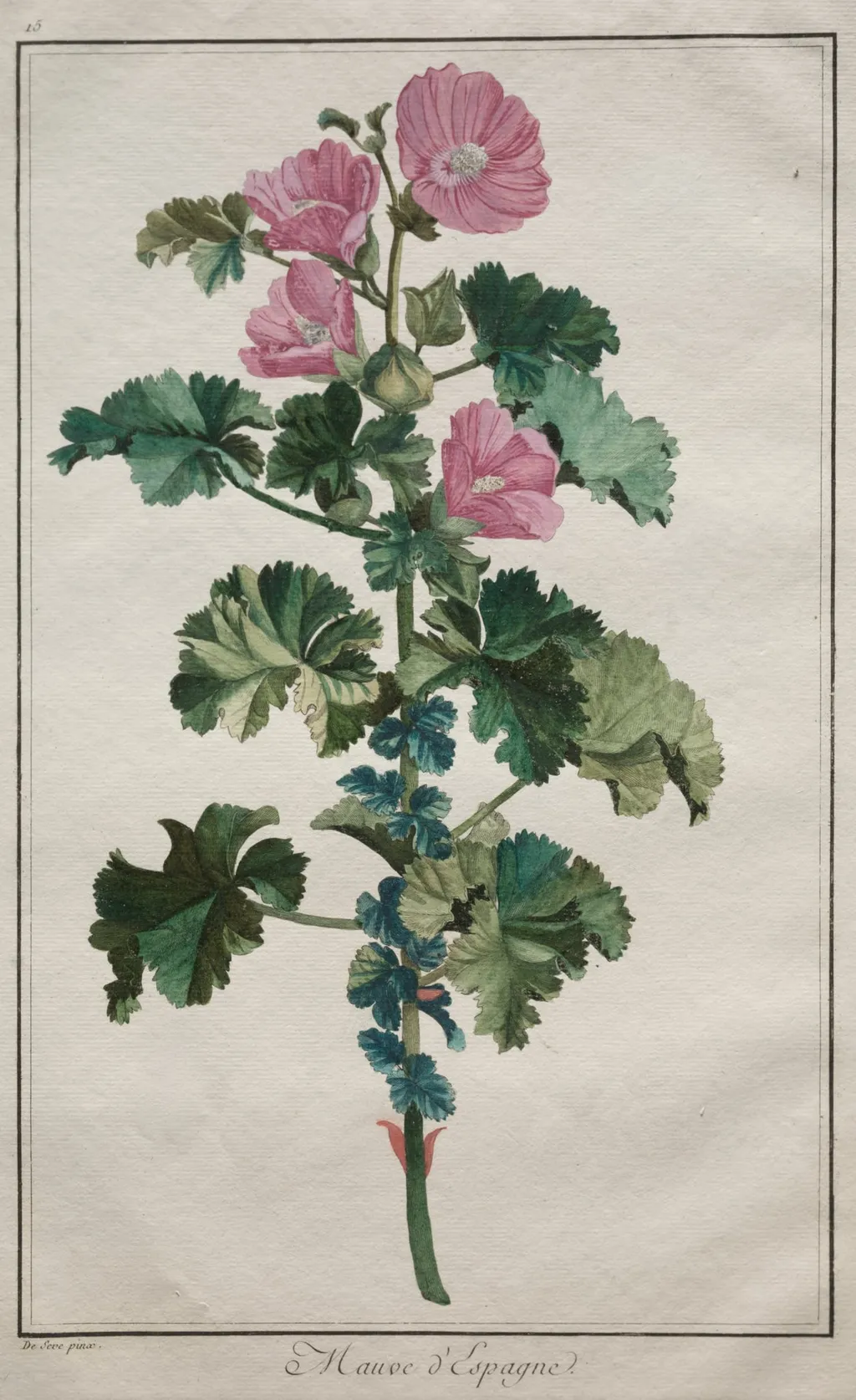
Recueil de vingtquatre plantes et fleurs: Mallow is a print by the Romanticist artist de Seve. It dates from 1772 and is held in the collection of the Cleveland Museum of Art.
About this work
Overview
Created in 1772 by de Seve, this print is part of a series documenting twenty-four plants and flowers. It depicts a single stem bearing two distinct floral types: larger pink blooms with dark centers and smaller blue flowers. The composition is clean and unshaded, emphasizing botanical clarity over artistic embellishment. The work is held in the collection of The Cleveland Museum of Art.
Subject & Meaning
The image labels one of the flowers as 'Mallow d’Espagne,' identifying it as Spanish mallow, a species native to southern Europe and the Mediterranean.
The image labels one of the flowers as 'Mallow d’Espagne,' identifying it as Spanish mallow, a species native to southern Europe and the Mediterranean. The inclusion of two floral forms on one stem suggests a comparative study, possibly reflecting botanical interest in regional variants. The precise labeling indicates an intent to document and classify, aligning with Enlightenment-era scientific practices.
Technique & Style
Rendered in fine, unshaded lines with soft but distinct coloration, the print avoids chiaroscuro or depth modeling. Each petal, leaf, and vein is outlined with precision, prioritizing accuracy over atmospheric effect. The palette is restrained, using muted pinks and blues against a neutral background to ensure botanical details remain legible and unambiguous.
History & Provenance
The print originates from a mid-18th-century botanical series commissioned for scientific documentation. It entered The Cleveland Museum of Art’s collection through established acquisition channels, likely as part of a larger album of plant studies. Its survival in good condition reflects its value as a reference object in early natural history collections.
Context
Produced during a period of heightened interest in plant classification, the work aligns with the efforts of naturalists like Linnaeus to systematize flora. Such illustrations were used in academic and aristocratic circles to support botanical education and horticultural exchange. The specificity of the label suggests the artist worked from live specimens or authoritative sources.
Legacy
Though not widely exhibited, the print remains a quiet example of pre-modern botanical illustration. Its methodical approach influenced later scientific publications and continues to serve as a reference for historians studying the intersection of art and natural science in the 18th century.
Artist & collection

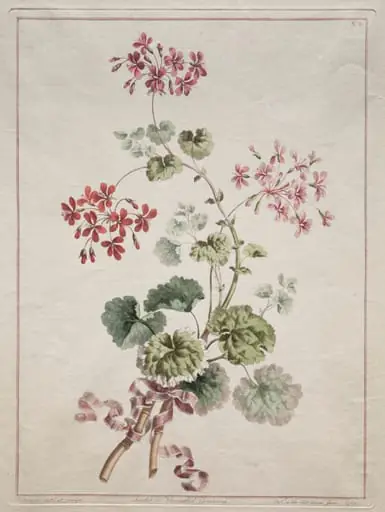 A Collection of Flowers Drawn from Nature: No. 6 - Scarlet and Variegated Geranium
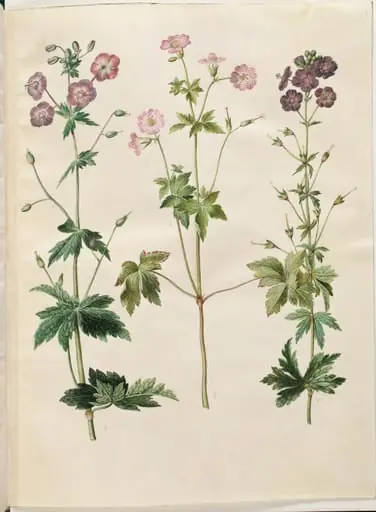 Geranium phaeum (bølgekronet storkenæb); Geranium versicolor (net-storkenæb)
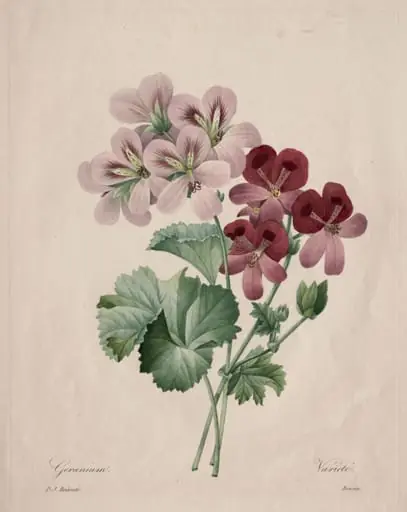 Geranium
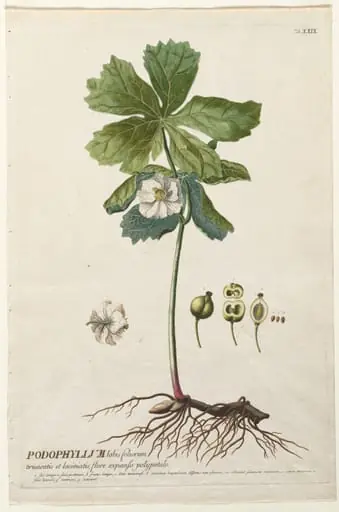 Plantae Selectae: No. 29 - American May Apple
![The Botanical Magazine or Flower Garden Displayed: Plate 892, Althaea Flexuosa. Seringapatam A Hollyhock . [Althea rosea], by Francis Sansom](https://artifactworldgallery.com/img/francis-sansom--the-botanical-magazine-or-flower-garden-displayed-plate-892--4abb4a5b7cb4bcd5-w320.webp) The Botanical Magazine or Flower Garden Displayed: Plate 892, Althaea Flexuosa. Seringapatam A Hollyhock . [Althea rosea]
The Botanical Magazine or Flower Garden Displayed: Plate 892, Althaea Flexuosa. Seringapatam A Hollyhock . [Althea rosea]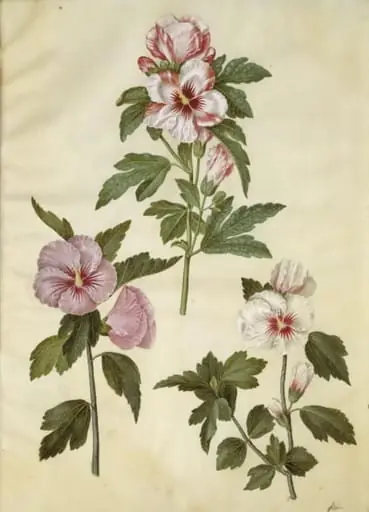 Hibiscus syriacus (syrisk rose)
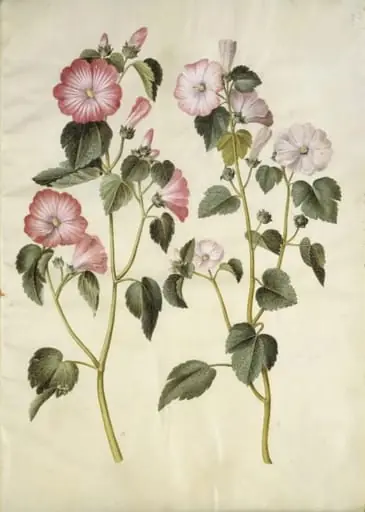 Lavatera trimestris (mamelukærme)
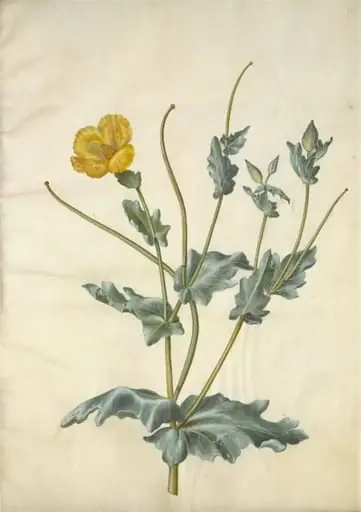 Glaucium flavum (strand-hornskulpe)
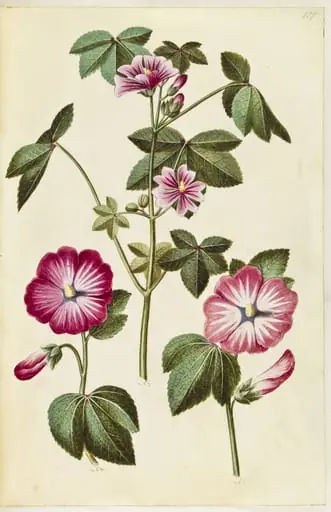 Malva sylvestris (almindelig katost); Lavatera trimestris (mamelukærme)
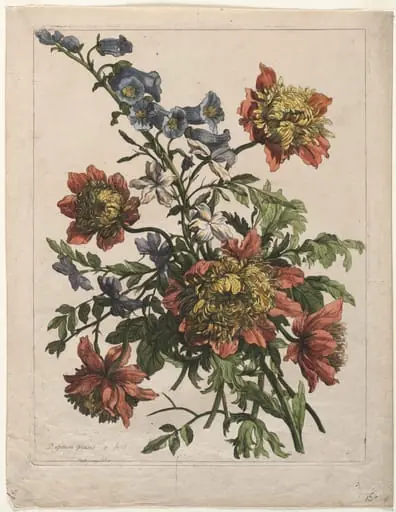 Bouquet
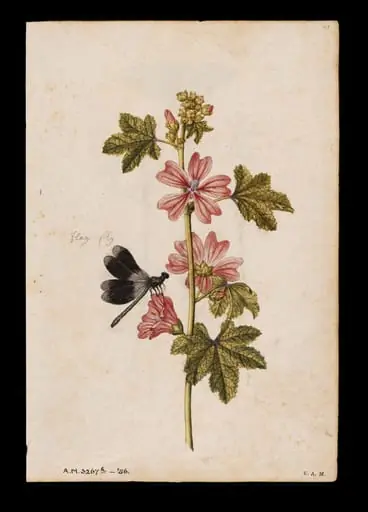 A common mallow and a damselfly; a snowdrop and a lady butterfly
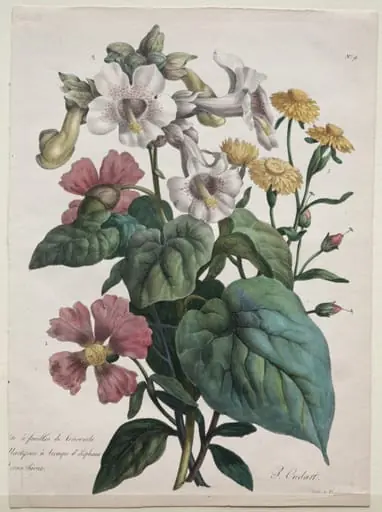 Cours d'Histoire Naturelle, contenant les principales espèces du règne animal, classées methodiquemenet: Martynia or Unicorn Plant