Artwork
Cours d'Histoire Naturelle, contenant les principales espèces du règne animal, classées methodiquemenet: Martynia or Unicorn Plant
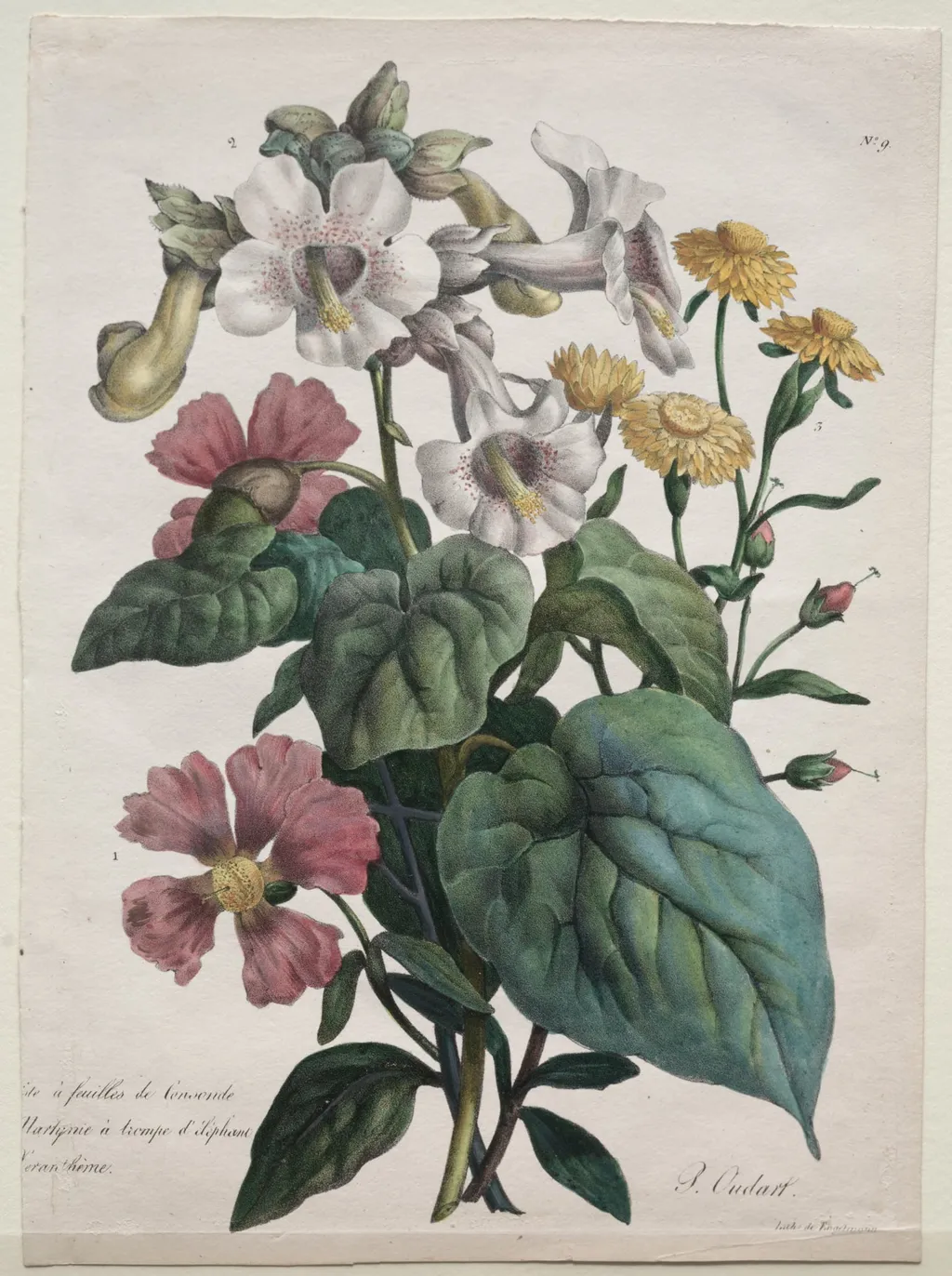
Cours d'Histoire Naturelle, contenant les principales espèces du règne animal, classées methodiquemenet: Martynia or Unicorn Plant is a print by the Romanticist artist Godefroy Engelmann. It dates from 1825 and is held in the collection of the Cleveland Museum of Art.
About this work
Overview
This print originates from a mid-1820s French natural history publication titled Cours d'Histoire Naturelle, which systematically cataloged animal species.
This print originates from a mid-1820s French natural history publication titled Cours d'Histoire Naturelle, which systematically cataloged animal species. The image depicts Martynia, commonly known as the unicorn plant, rendered with botanical precision. Though the title references the animal kingdom, the volume included plant illustrations, reflecting the era's broad classification of natural forms. The work was produced by Godefroy Engelmann, a noted French engraver and printer.
Subject & Meaning
Martynia, or unicorn plant, was selected for its distinctive seed pods, which resemble horned animals. Its inclusion in a natural history text underscores the 19th-century fascination with morphological oddities and the desire to link plant forms to animal characteristics. The illustration served not as decoration but as a scientific reference, aiding identification and classification within a growing system of biological taxonomy.
Technique & Style
The image was produced using lithography, a technique Engelmann helped advance in France. Lines are clean and controlled, with subtle tonal gradations to suggest texture and volume. The composition isolates the plant against a neutral background, emphasizing structural detail over artistic flourish. This restrained style aligns with the empirical goals of scientific illustration at the time, prioritizing accuracy over ornamentation.
History & Provenance
Created in 1825, the print was part of a multi-volume natural history series published in France. It entered the collection of The Cleveland Museum of Art through documented acquisition, likely as part of a larger set of scientific plates. Its preservation reflects institutional interest in historical scientific texts and the evolution of botanical documentation in the early 19th century.
Context
In the early 1800s, natural history publications were central to scientific education and public engagement with biology. The classification of plants alongside animals, despite taxonomic inconsistencies, reveals the transitional state of biological science before Darwinian theory. Engelmann’s work contributed to a broader European effort to visually systematize nature for scholarly and educational use.
Legacy
Though the publication is now a historical artifact, its plates remain valuable for studying the methods and assumptions of pre-Darwinian science. The print exemplifies how visual representation shaped scientific understanding, influencing later botanical illustration and museum display practices. Its survival in institutional collections ensures continued access for research into the history of scientific visualization.
Artist & collection

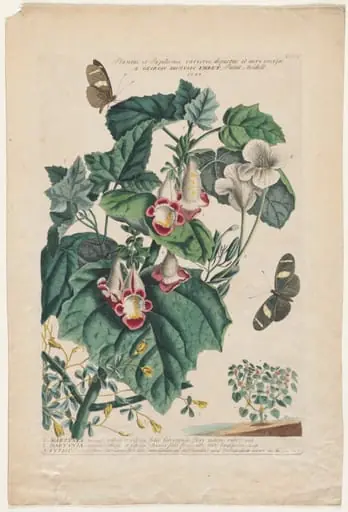 Plantae et Papiliones rariores: Martynia
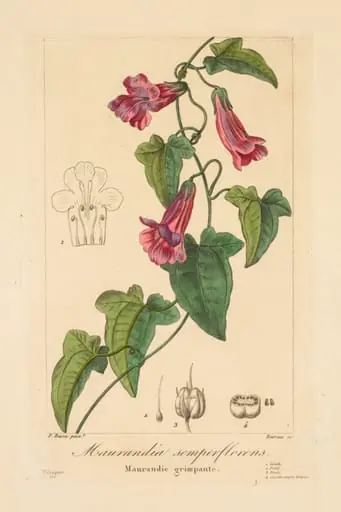 Flore des Jardiniers, Amateurs et Manufacturiers: Maurandia semperflorens
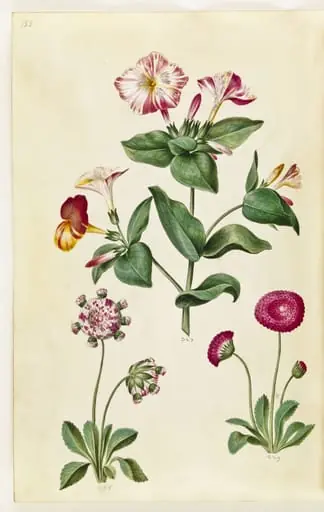 Mirabilis jalapa (vidunderblomst); Bellis perennis (almindelig tusindfryd)
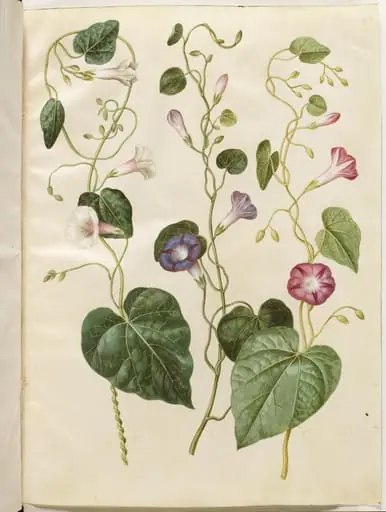 Ipomoea purpurea (purpur-pragtsnerle)
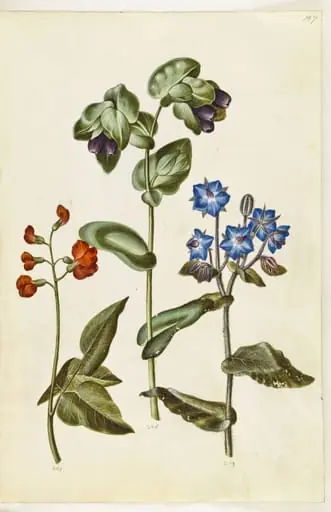 Phaseolus coccineus (pral-bønne); Cerinthe major (stor voksurt); Borago officinalis (almindelig hjulkrone)
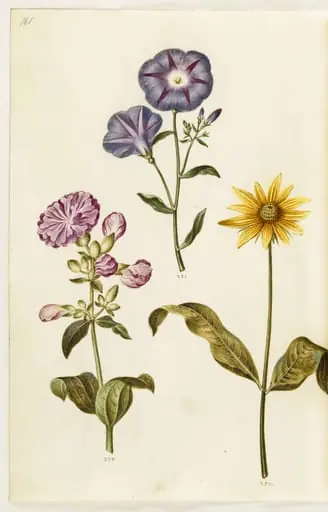 Saponaria officinalis (almindelig sæbeurt); Convolvulus tricolor (jomfruskørt); Helianthus (?) (solsikke-art)
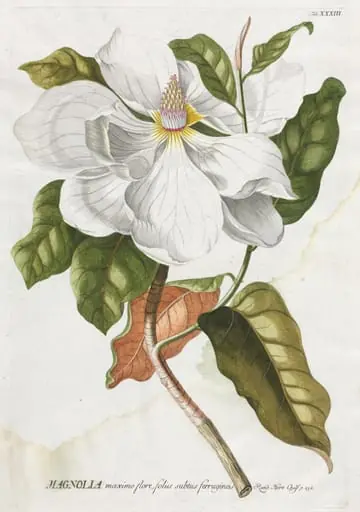 Plantae Selectae: No. 33 - Magnolia
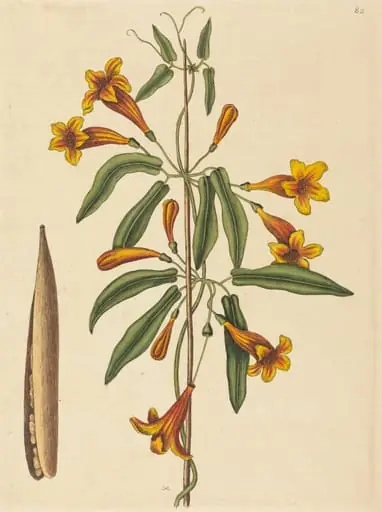 Cross-vine (Bignonia capreolata)
 Plantae Selectae: No. 46 - Tacamahaca