Artwork
Near Beverley, Yorkshire, the Minster in the Distance
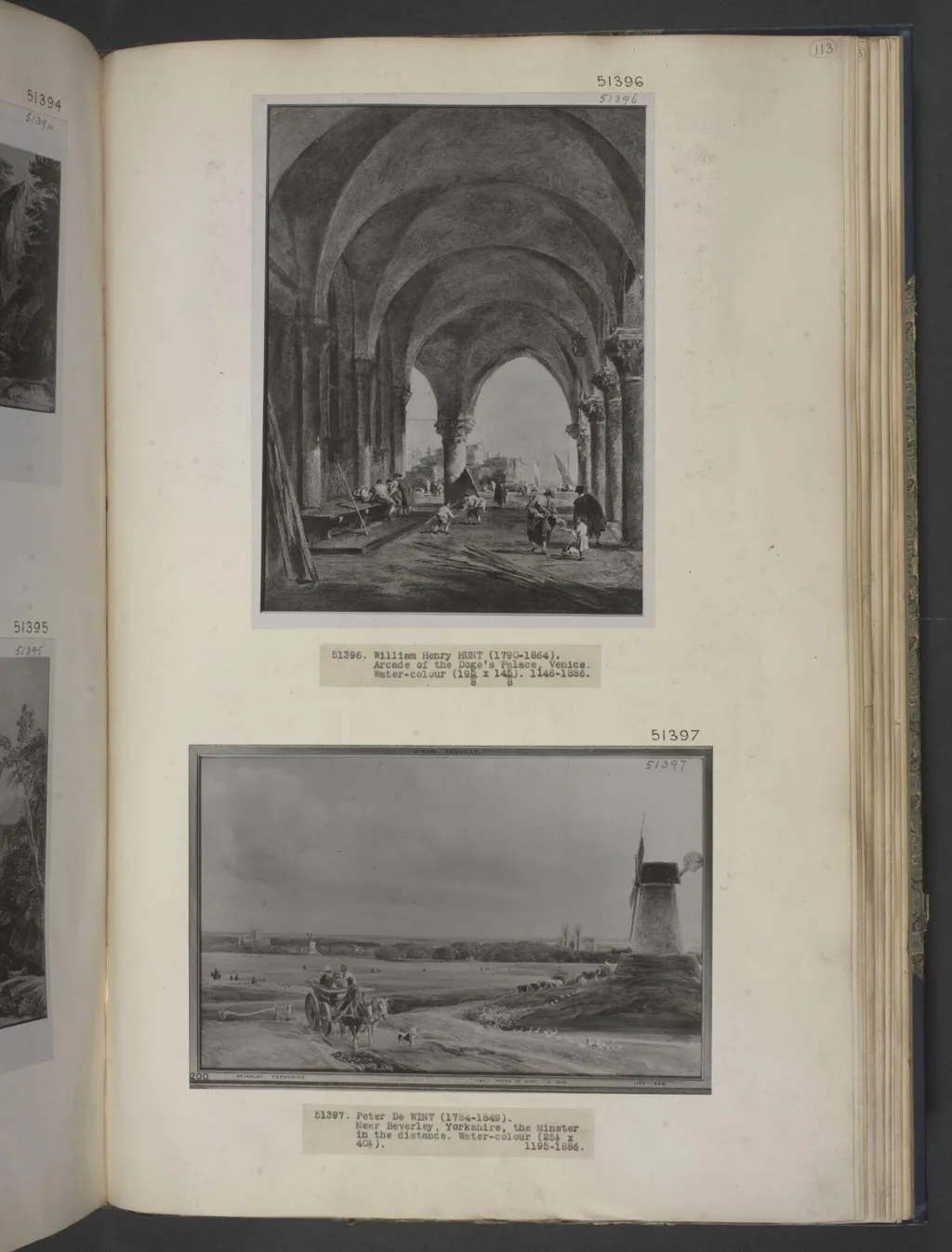
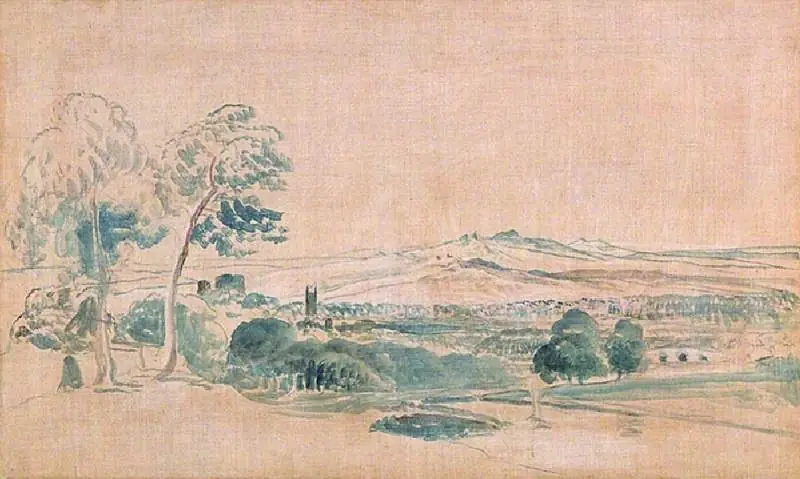
Near Beverley, Yorkshire, the Minster in the Distance is a watercolor work on paper by the British Romanticist artist Peter De Wint. It dates from 1805 and is held in the collection of the Victoria and Albert Museum.
About this work
Overview
Painted in 1805 by Peter de Wint, this watercolour captures a quiet stretch of the Yorkshire countryside near Beverley. The composition centers on a winding path leading the eye toward Beverley Minster, its spire rising faintly on the horizon. Delicate washes of pigment and restrained tonality convey a subdued, contemplative mood, characteristic of early 19th-century British landscape practice.
Subject & Meaning
The scene presents no human figures, emphasizing solitude and the quiet presence of the minster as a landmark in the rural landscape. Its distant placement suggests reverence for architectural heritage amid nature’s stillness. The work reflects a growing interest in regional identity and the spiritual resonance of historic buildings within everyday English scenery.
Technique & Style
De Wint employed transparent watercolour washes to build subtle gradations of light and atmosphere. Soft, layered brushwork defines the minster’s form without sharp detail, while the foreground’s trees and road are rendered with loose, suggestive strokes. The muted palette—soft greens, greys, and ochres—enhances the hazy, diffused quality of the light, evoking early morning or late afternoon.
History & Provenance
Created during de Wint’s early career, the work aligns with his travels through Yorkshire, where he documented architectural and rural scenes. It likely originated as a study for larger compositions or personal record. The painting remained in private hands until entering a public collection in the 20th century, where it is now preserved as part of Britain’s watercolour tradition.
Context
In the early 1800s, British artists increasingly turned to local landscapes as subjects worthy of serious attention. De Wint’s approach, though not overtly dramatic, resonated with Romantic ideals through its emotional tone and emphasis on atmosphere. This work reflects a broader cultural shift toward valuing the quiet beauty of the English countryside and its historic monuments.
Legacy
De Wint’s watercolours, including this one, helped define a distinctly English mode of landscape representation that prioritized subtlety over grandeur. His influence extended to later generations of watercolourists who valued tonal harmony and restrained expression. The painting endures as a quiet testament to the interplay between architecture and nature in the English visual imagination.
Artist & collection
Artist
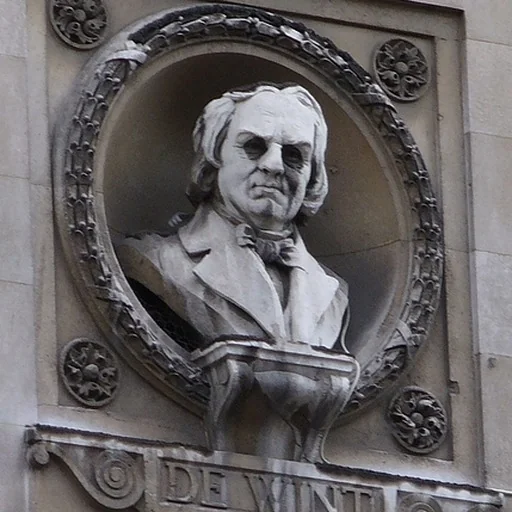
Peter De Wint was a prolific English painter, mostly in landscape painting in oils and watercolour. A number of his pictures are in Tate Britain, the Victoria and Albert Museum and The Collection, Lincoln. He died in London.