Artwork
Wilsford, Lincolnshire
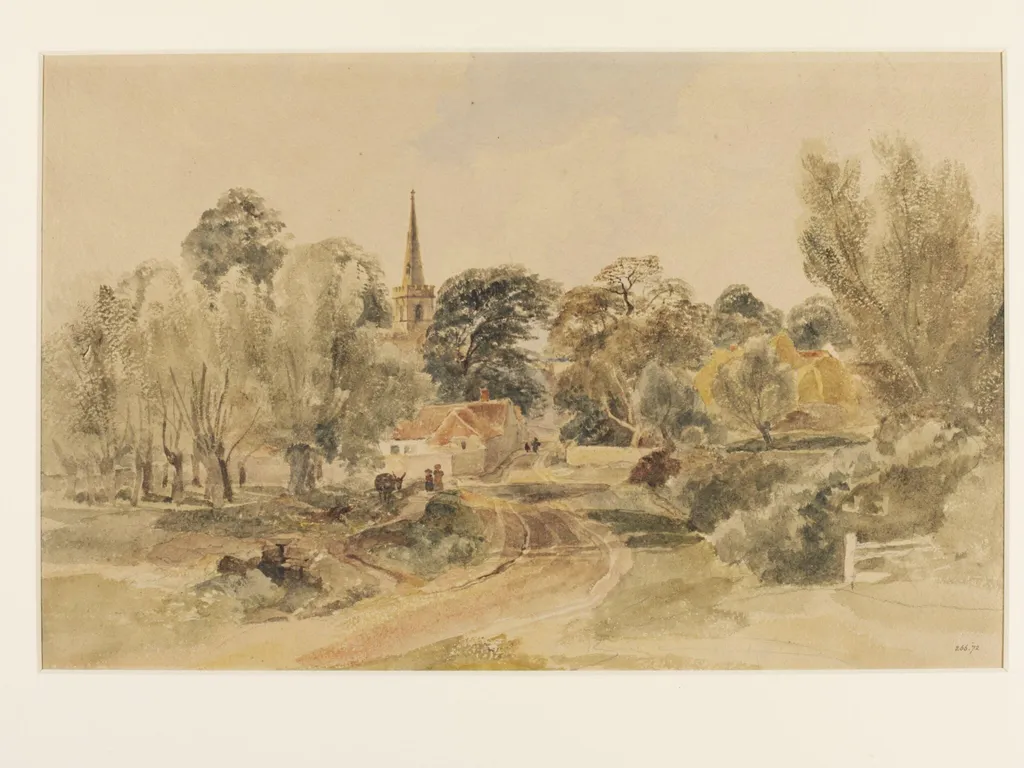
Wilsford, Lincolnshire is a watercolor work on paper by the Romanticist artist Peter De Wint. It dates from 1805 and is held in the collection of the Victoria and Albert Museum.
About this work
Overview
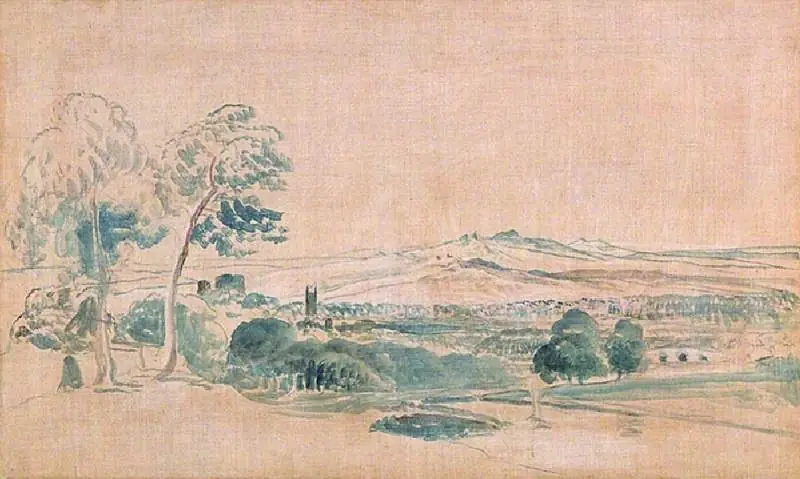
Created in 1805, this watercolour by Peter de Wint captures the rural village of Wilsford in Lincolnshire. Executed in delicate washes, the work presents a quiet, unembellished view of English countryside life. The composition emphasizes stillness and spatial depth, with soft transitions between land, sky, and structures, reflecting the artist’s sensitivity to natural light and atmosphere.
Subject & Meaning
The painting suggests an appreciation for ordinary rural existence, valued for its calm and continuity rather than grandeur.
The scene depicts a modest village nestled in open farmland, centered around a distant church steeple. A winding path threads through the settlement, lined with trees and traversed by a few figures and animals. There is no dramatic event—only the quiet rhythm of daily movement. The painting suggests an appreciation for ordinary rural existence, valued for its calm and continuity rather than grandeur.
Technique & Style
De Wint employed light, transparent watercolour washes to build subtle tonal variations, avoiding sharp outlines. Greens and browns blend gently, creating a hazy, atmospheric effect. The brushwork is restrained, with minimal detail, allowing the overall mood to emerge through tone and composition. This approach aligns with early 19th-century British watercolour traditions that favored lyrical suggestion over precision.
History & Provenance
The work was completed during de Wint’s early career, a period when he frequently traveled the English countryside sketching rural scenes. It entered the Victoria and Albert Museum’s collection as part of a broader acquisition of British watercolours, reflecting the institution’s interest in documenting regional topography and artistic practice of the period.
Context
In the early 1800s, watercolour was increasingly used by artists to record landscapes beyond urban centers, often as personal studies rather than public commissions. De Wint’s depiction of Wilsford aligns with this trend, capturing a moment of rural life during a time of agricultural change and growing interest in the English countryside as a subject of artistic and cultural reflection.
Legacy
This watercolour contributes to a body of work that helped define the British watercolour tradition’s emphasis on quiet observation and atmospheric nuance. Though not widely exhibited, it remains representative of de Wint’s consistent focus on the dignity of rural landscapes, influencing later artists who sought to convey place through understated, contemplative means.
Artist & collection
Artist
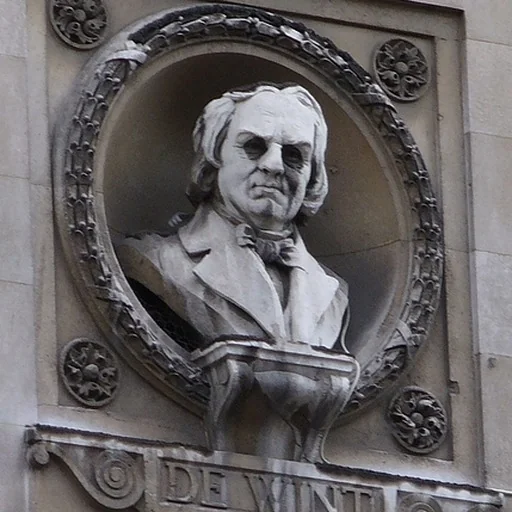
Peter De Wint was a prolific English painter, mostly in landscape painting in oils and watercolour. A number of his pictures are in Tate Britain, the Victoria and Albert Museum and The Collection, Lincoln. He died in London.

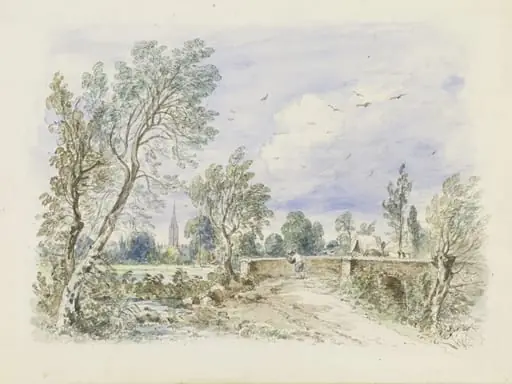 Milford Bridge, with a distant view of Salisbury
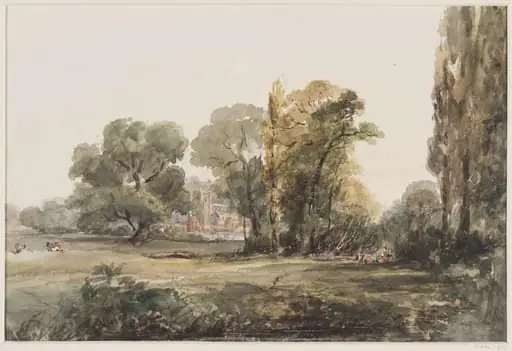 Stowe: a church in the distance, seen amid trees
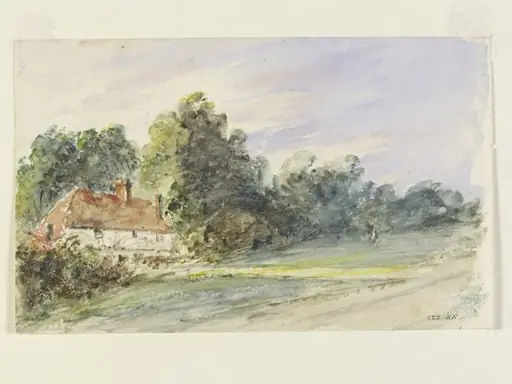 A cottage with a red-tiled roof, by a wood
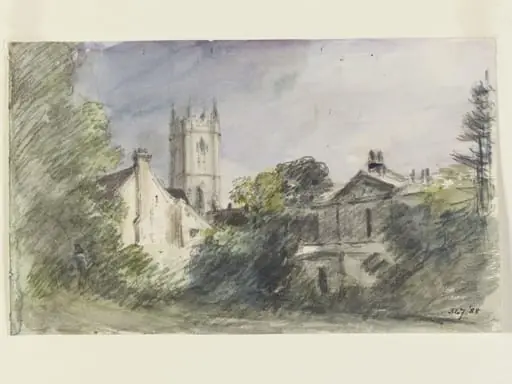 Houses in Dedham, with the church tower
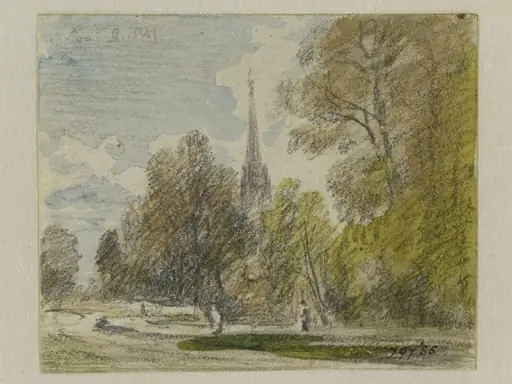 Salisbury Cathedral with trees
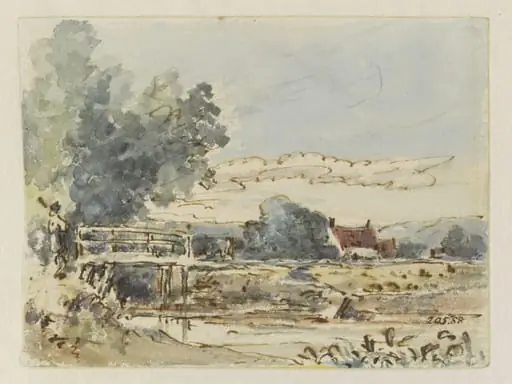 A bridge over a stream, with a cottage behind
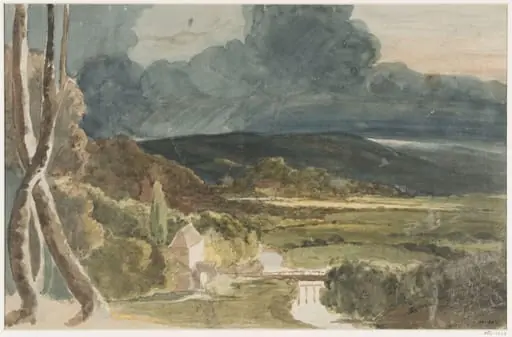 Landscape with river and mountains
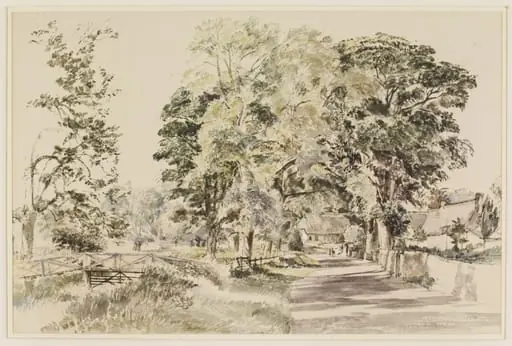 Dalham
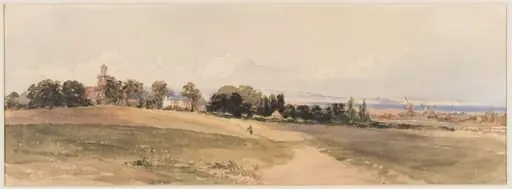 Upper Deal - Ramsgate in the distance
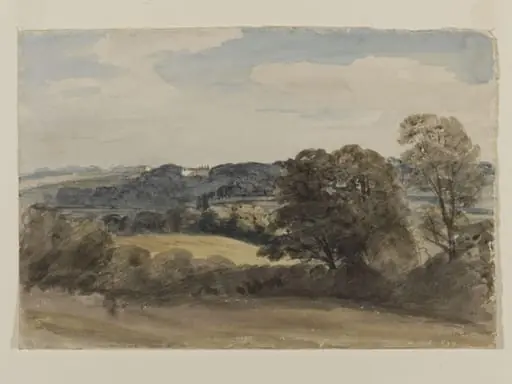 Landscape with buildings in the distance
 Turville Village
 Dedham Vale