Artwork
Dalham
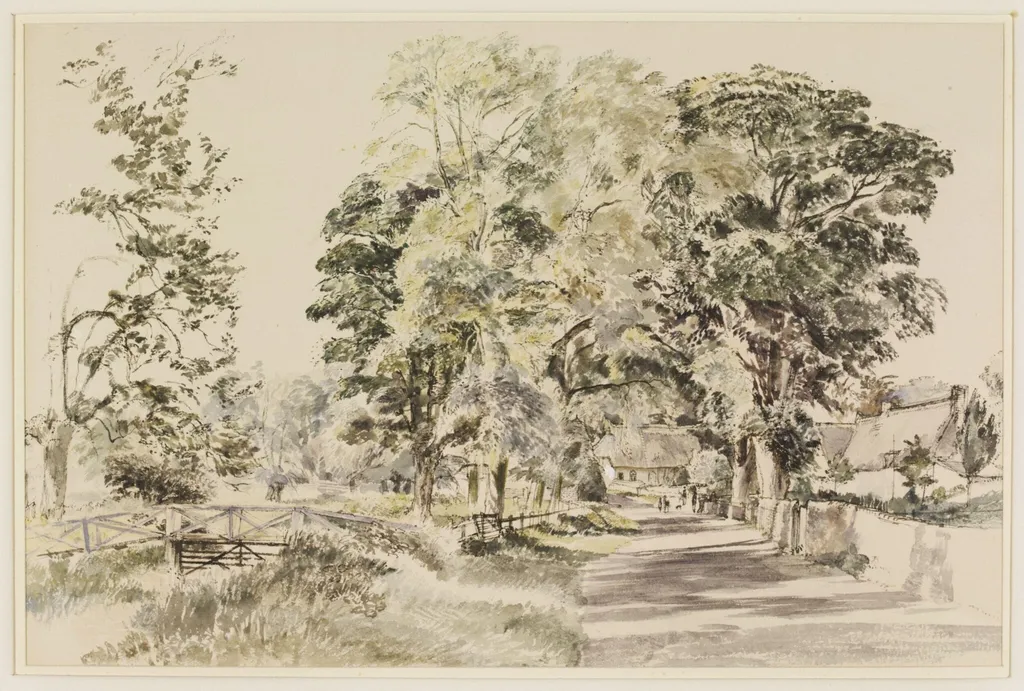
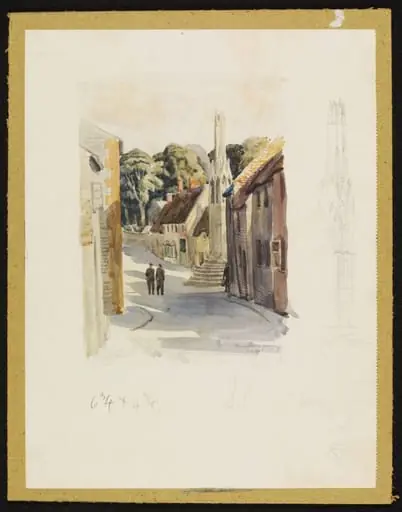
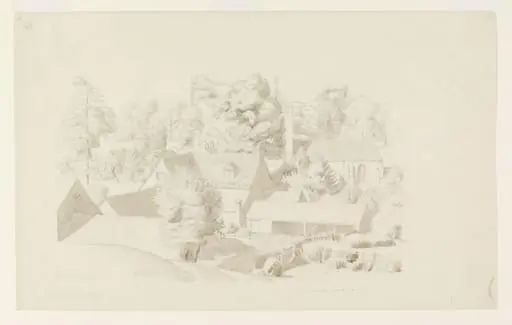
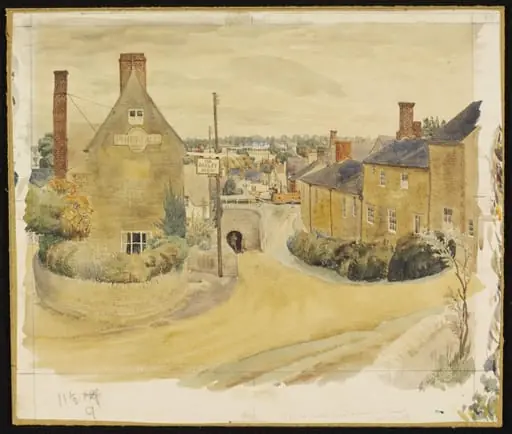
Dalham is a watercolor work on paper by Badmin. It dates from 1940 and is held in the collection of the Victoria and Albert Museum.
About this work
Overview
The watercolour, created in 1940 by the artist Badmin, portrays a tranquil lane in the hamlet of Dalham, flanked by tall, leafy trees whose branches form a natural canopy over the road. A modest white building is nestled beneath the foliage, while a small bridge spans a narrow stream to the left of the composition.
Subject & Meaning
The scene captures a typical English rural setting, emphasizing the relationship between the built environment and the surrounding landscape. The gentle play of light through the leaves and the modest scale of the structures convey a sense of quiet continuity within the countryside.
Technique & Style
Badmin employs a rapid, sketch‑like approach, using loose, fluid strokes that vary in intensity. Broad washes suggest the canopy and sky, while finer lines define details such as the roof tiles of the house. The overall effect is that of an immediate impression rather than a finished, highly polished rendering.
History & Provenance
The work was produced under the Recording Britain initiative, a wartime programme launched by Sir Kenneth Clark to document the nation’s landscapes. Funded by the Pilgrim Trust and overseen by the Committee for the Employment of Artists in Wartime, the scheme commissioned artists to capture scenes of national significance.
Context
Recorded Britain assembled more than 1,500 pieces by 97 artists, including noted watercolourists like John Piper and Rowland Hilder. Badmin’s contribution reflects the broader effort to preserve visual records of rural England at a time when wartime change threatened traditional vistas.
Artist & collection
Artist
Stanley Roy Badmin was an English painter and etcher particularly notable for his book illustrations and landscapes.

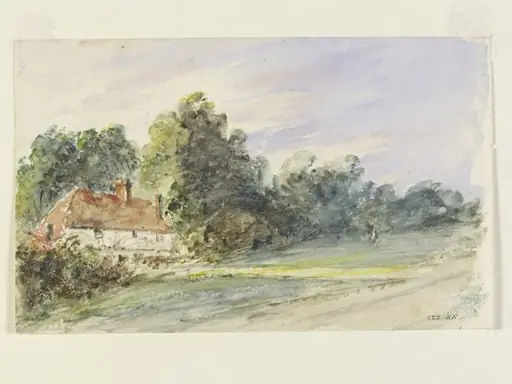 A cottage with a red-tiled roof, by a wood
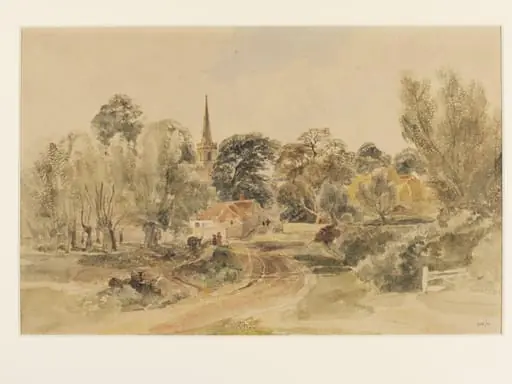 Wilsford, Lincolnshire
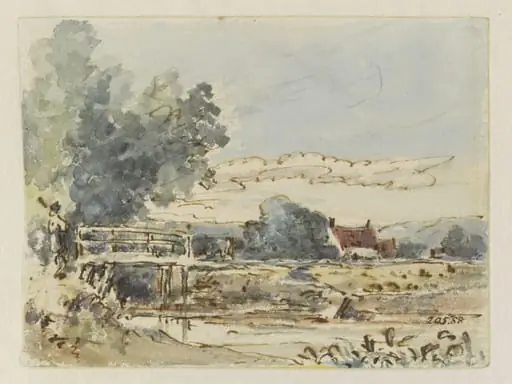 A bridge over a stream, with a cottage behind
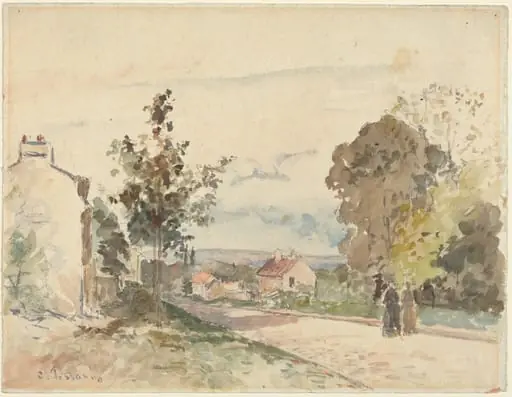 The Road from Versailles to Louveciennes
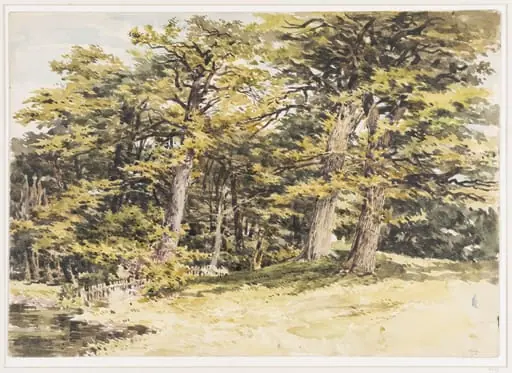 Stoke Park, Guildford
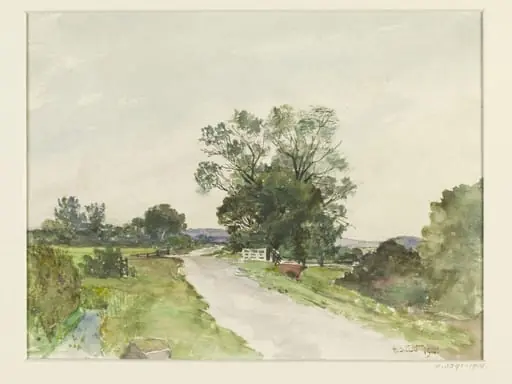 Landscape with road in flat country
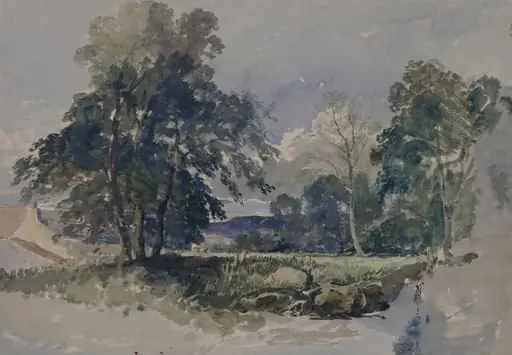 Woody Landscape with rocks and a cottage
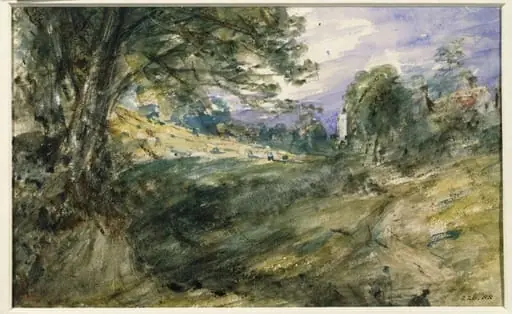 Cottages on high ground.
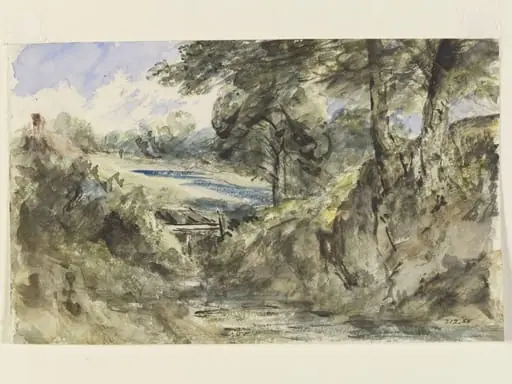 A brook with a high bank
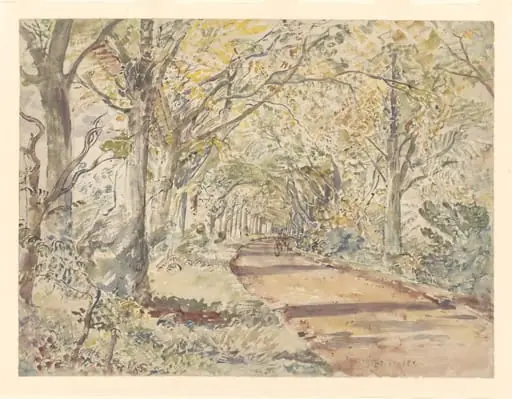 The Beech Avenue, Lasham, Hampshire
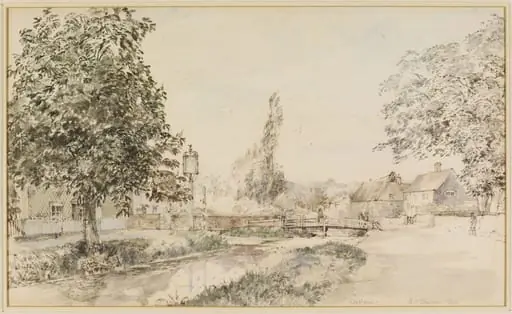 Dalham (the footbridge)
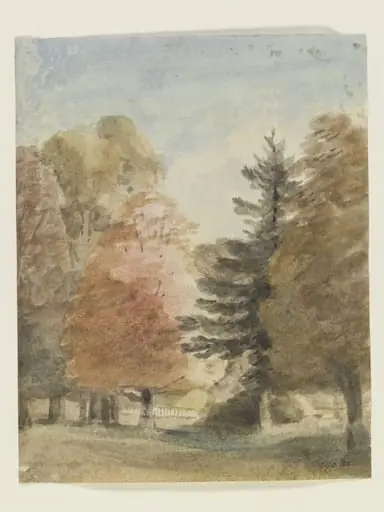 Study of trees in a park, perhaps Helmingham Park