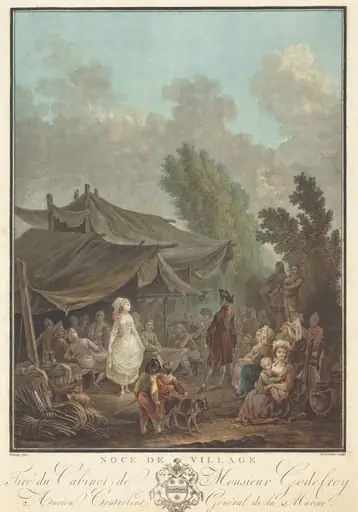
Artwork
Le Menuet de la mariée (The Bride's Minuet)
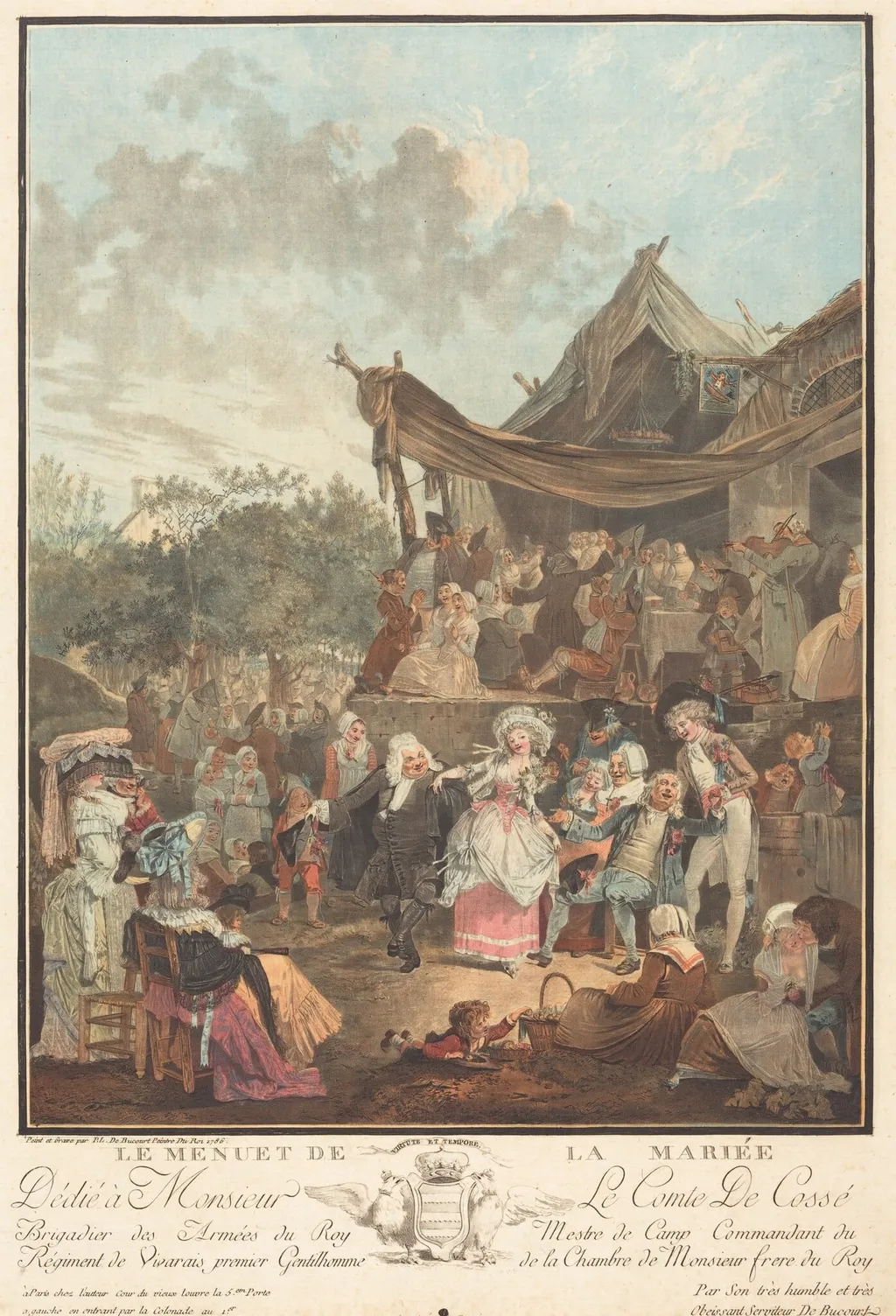
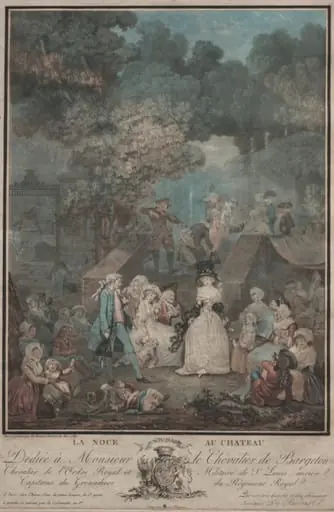
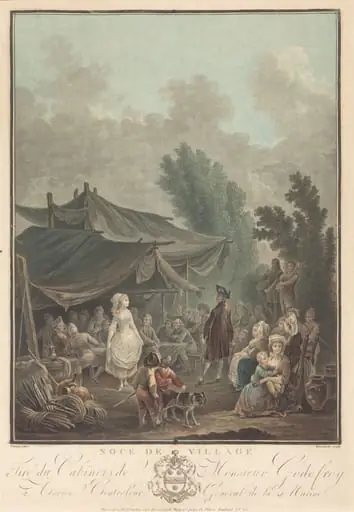
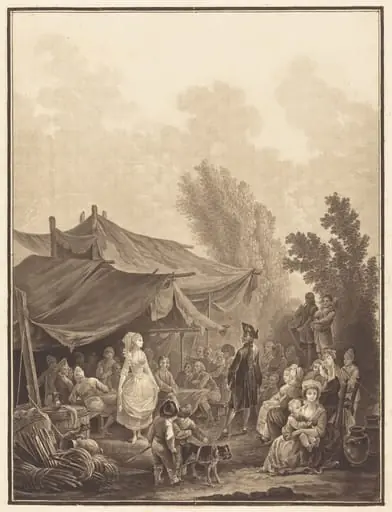
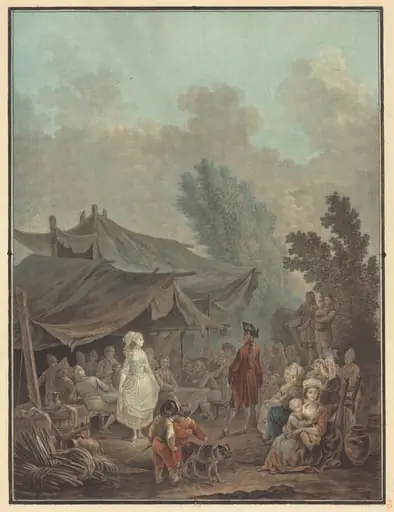
Le Menuet de la mariée (The Bride's Minuet) is an ink print by the Romanticist artist Philibert-Louis Debucourt. It dates from 1786 and is held in the collection of the National Gallery of Art.
About this work
Overview
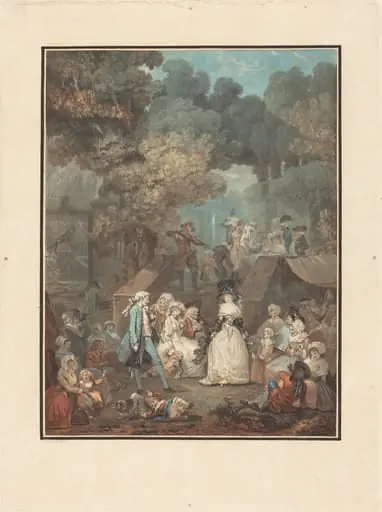
It captures a moment of communal celebration in an open-air setting, centered on a newly married couple performing a minuet.
Le Menuet de la mariée is a color etching with wash on laid paper, produced by Philibert-Louis Debucourt in 1786. It captures a moment of communal celebration in an open-air setting, centered on a newly married couple performing a minuet. The work belongs to the tradition of French printmaking that documented social rituals with precision and nuance, blending technical refinement with observational detail.
Subject & Meaning
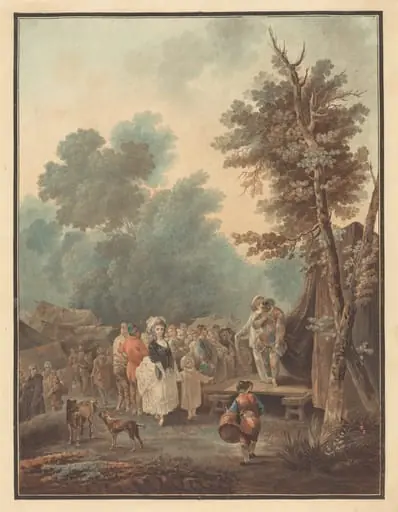
The scene portrays a wedding dance, with the bride and groom at the focal point, surrounded by a diverse assembly of onlookers. Their movement suggests formality within festivity, reflecting the social customs of late 18th-century France. The gathering implies class cohesion, as figures from varying social strata observe the ritual, underscoring marriage as a public, communal event rather than a private affair.
Technique & Style
Debucourt employed multiple color etchings layered with hand-applied washes to achieve subtle tonal gradations and atmospheric depth. The composition uses soft, fluid lines to suggest movement and texture, while the delicate handling of light and shadow enhances the sense of a sunlit outdoor space. His technique elevated printmaking beyond mere reproduction, approaching the richness of painted scenes.
History & Provenance
Created in 1786, the print was part of a series depicting contemporary French life, intended for a middle-class audience. It was widely circulated, reflecting growing public interest in scenes of domestic and civic ritual. The work remained in private collections through the 19th century and is now held in major institutional print rooms, including the British Museum and the Metropolitan Museum of Art.
Context
Produced just before the French Revolution, the image reflects a society still structured by aristocratic customs yet increasingly observed by a broader public. While often associated with Rococo elegance, Debucourt’s work anticipates the social realism that would gain traction in the 19th century. The scene’s quiet dignity contrasts with the theatricality of earlier courtly imagery, signaling a shift toward everyday subject matter.
Legacy
Debucourt’s print influenced later generations of artists interested in capturing urban and rural social life through print. Its technical innovation in color etching set a standard for commercial and artistic print production. Though not part of Romanticism, its focus on human interaction and emotional nuance contributed to the broader movement toward naturalistic representation in French visual culture.
Artist & collection
Artist
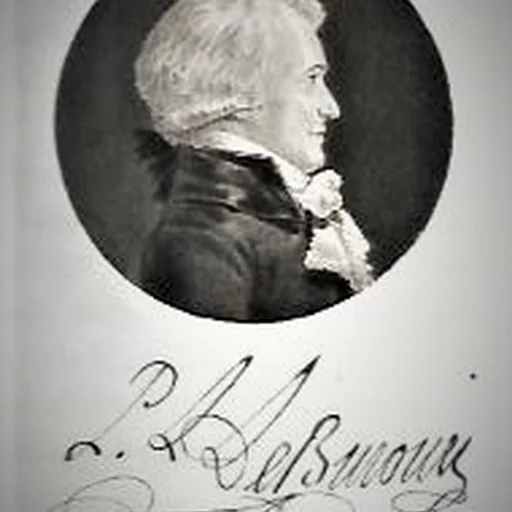
Philibert-Louis Debucourt (1755–1832) was a French artist, born in Paris.