Artwork
Alphonse Hirsch
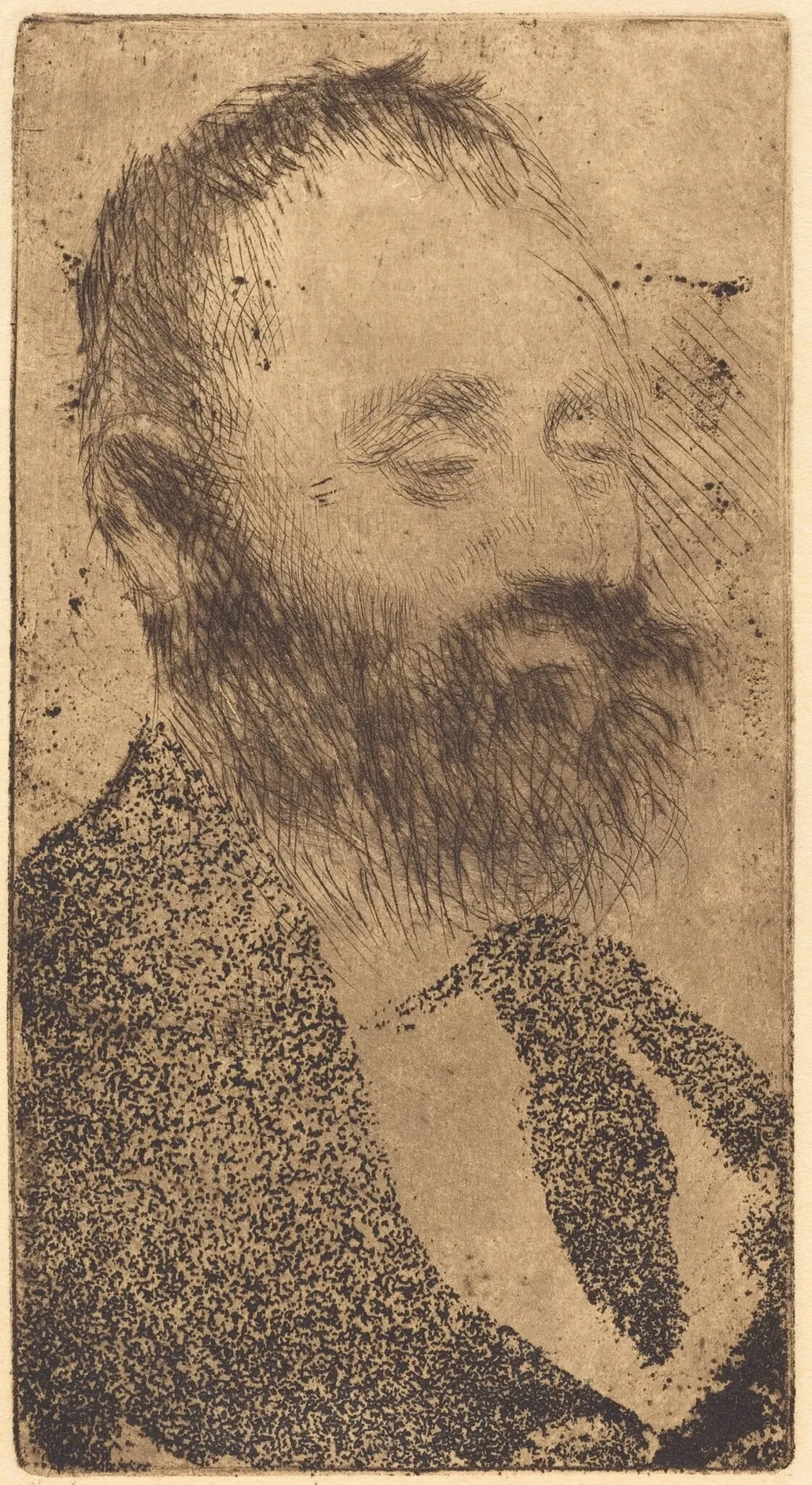
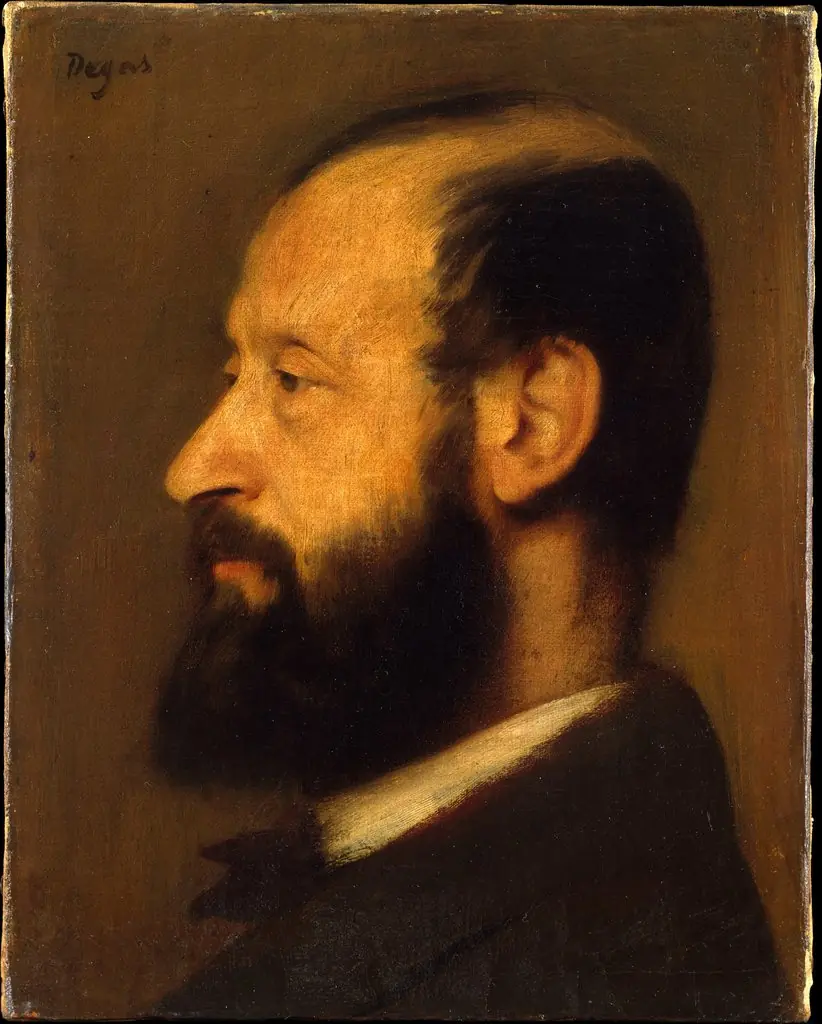
Alphonse Hirsch is an ink print by the Impressionist artist Edgar Degas. It dates from 1875 and is held in the collection of the National Gallery of Art.
About this work
Overview
Created in 1875, this print by Edgar Degas depicts Alphonse Hirsch seated and gazing directly at the viewer. Executed as a drypoint and aquatint on laid paper, the image presents a finely rendered portrait that emphasizes subtle tonal variations and surface texture.
Subject & Meaning
The work captures Hirsch in a composed pose, his direct stare suggesting a quiet confidence. While Degas is best known for scenes of movement, here he turns his attention to a single figure, exploring the psychological presence of the sitter through a restrained, intimate composition.
Technique & Style
Degas employed drypoint to incise lines that retain a soft, velvety edge, while aquatint provided broad, muted washes of tone. The combination allows for delicate gradations of light and shadow, giving the portrait a sense of depth and tactile quality uncommon in his more painterly output.
History & Provenance
The image is a restrike, meaning Degas reprinted the plate after the original edition, using the same laid paper substrate. This later impression reflects the artist’s ongoing interest in printmaking and his willingness to revisit earlier works for further distribution.
Context
During the 1870s Degas was associated with the Impressionist circle, yet he preferred to be identified as a realist. His printmaking, including this portrait, demonstrates his experimental approach to media beyond the pastels and oils for which he is most frequently cited.
Artist & collection
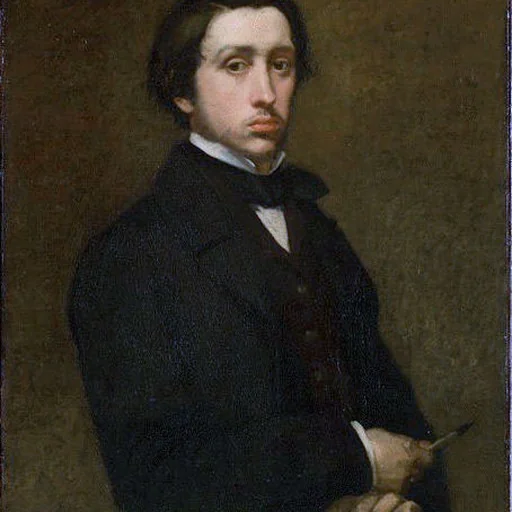
Artist
Born Hilaire-Germain-Edgar De Gas on 19 July 1834 in Paris, Edgar Degas came from an affluent banking family with aristocratic roots and spent his childhood among the cultivated circles of the French capital.

![Self-Portrait [recto], by Paul Cezanne](https://artifactworldgallery.com/img/paul-cezanne--self-portrait-recto--d76a05e14030ebd2-w320.webp)