Artwork
Self-Portrait
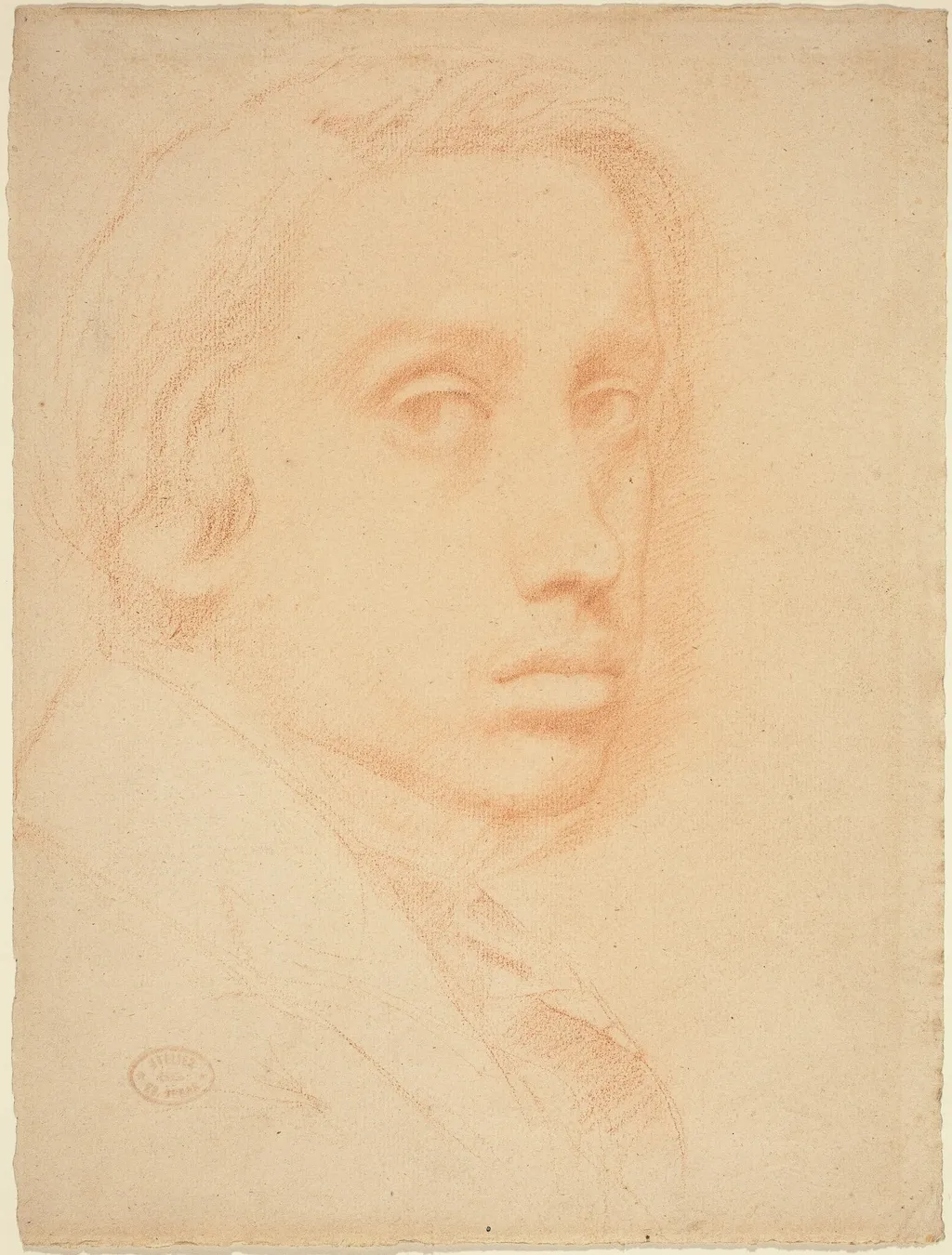
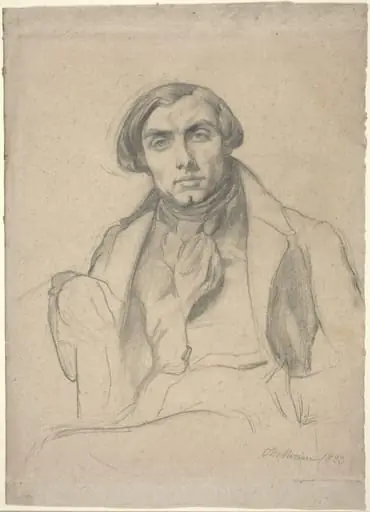
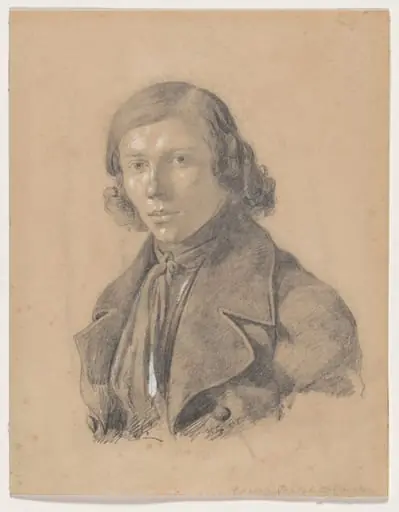
Self-Portrait is a chalk drawing by the Impressionist artist Edgar Degas. It dates from 1855 and is held in the collection of the National Gallery of Art.
About this work
Overview
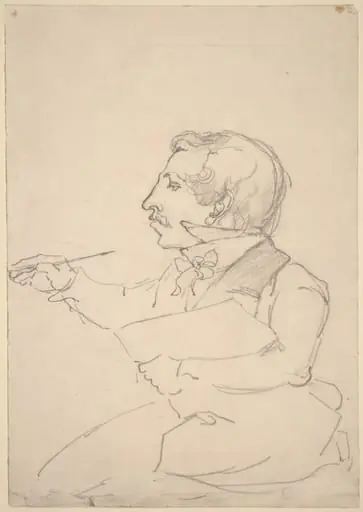
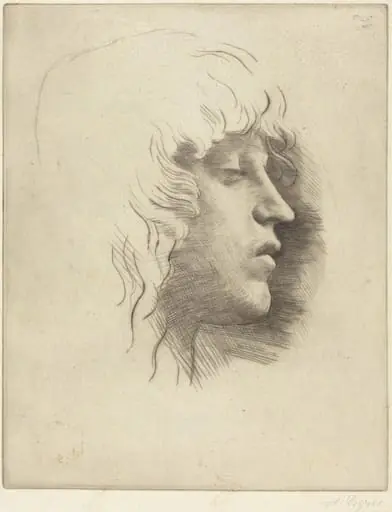
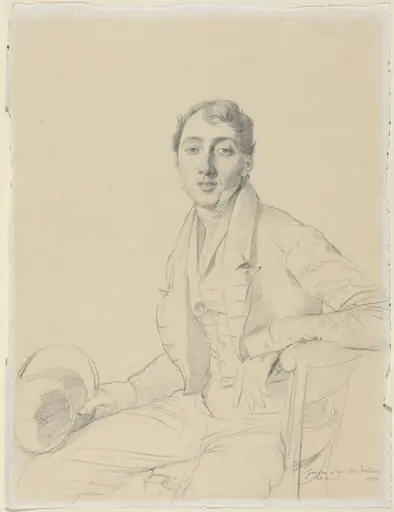
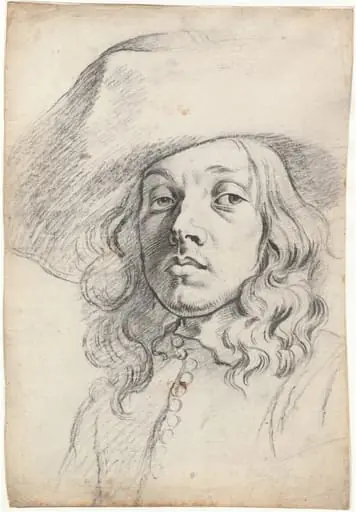
This red chalk drawing on laid paper, created circa 1855, is a self-portrait of a young Edgar Degas, depicting him with short, dark hair, a white high-collared shirt, and a slightly averted gaze.
Subject & Meaning
The subject is Degas himself, portrayed in a contemplative pose with eyes cast downward, suggesting introspection. The work focuses on realistic representation rather than conveying a specific narrative or emotion beyond self-portraiture.
Technique & Style
Executed in a realistic style, the drawing showcases Degas' early technical proficiency. Hatching and cross-hatching techniques are employed to achieve depth and texture, highlighting the artist's attention to detail.
History & Provenance
Dating to around 1855, this piece belongs to Degas' formative period, preceding his later thematic focuses on movement and light. Provenance details are not specified in the provided information.
Context
While Degas is often associated with Impressionism, he identified as a realist. This self-portrait reflects his realist inclinations and his broader exploration of various mediums, including pastels, oils, prints, and sculpture.
Artist & collection
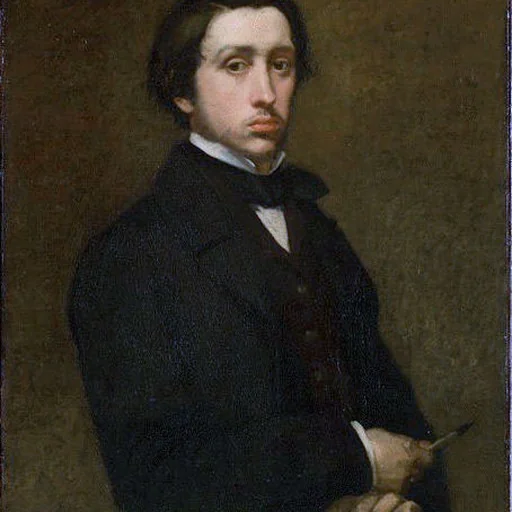
Artist
Born Hilaire-Germain-Edgar De Gas on 19 July 1834 in Paris, Edgar Degas came from an affluent banking family with aristocratic roots and spent his childhood among the cultivated circles of the French capital.