Artwork
Head of a Young Girl (Tete de jeune fille)
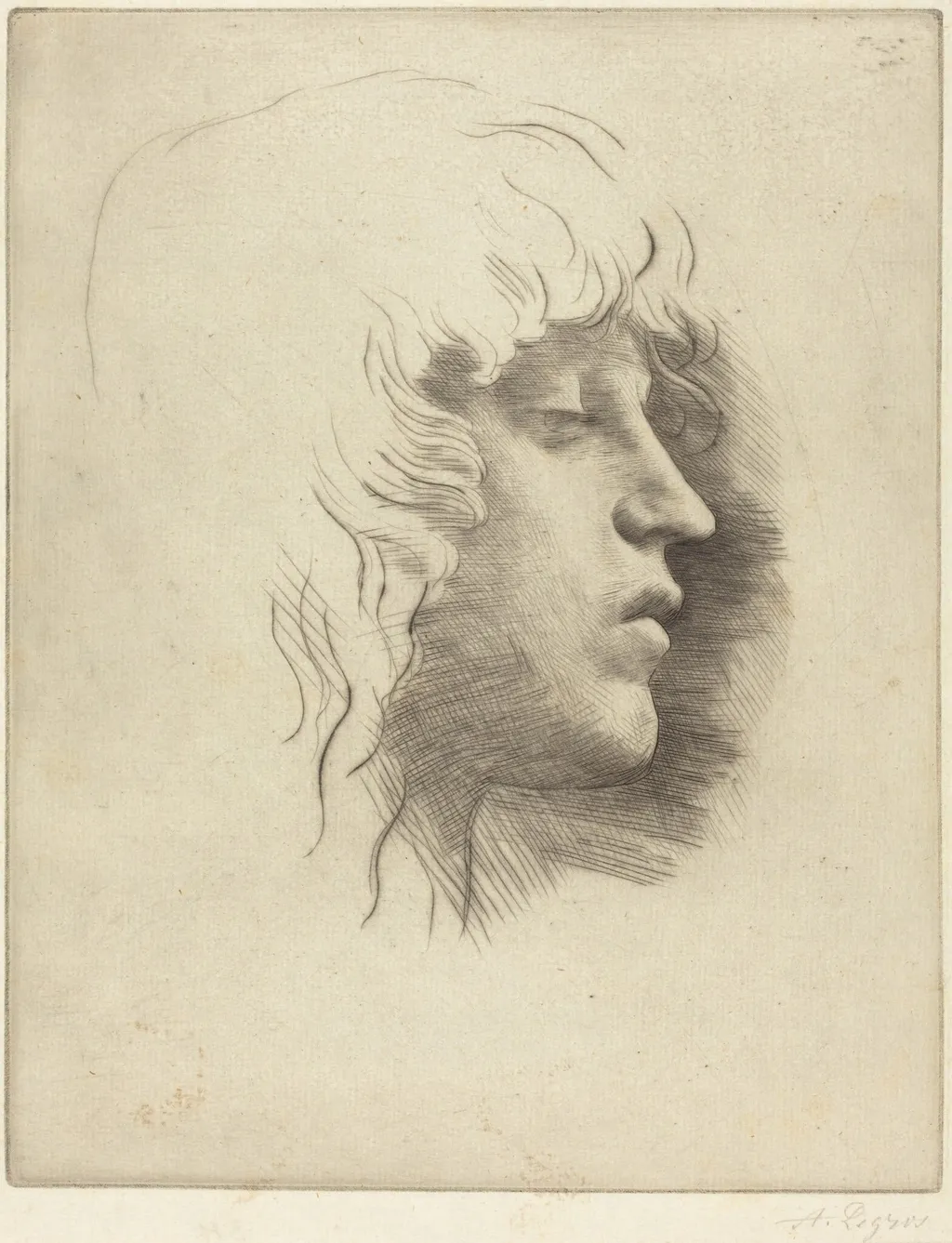
Head of a Young Girl (Tete de jeune fille) is an ink print by the Romanticist artist Alphonse Legros. It dates from 1874 and is held in the collection of the National Gallery of Art.
About this work
Overview
The piece stands as one of many in his extensive graphic oeuvre, reflecting his commitment to the expressive potential of the medium.
Created in 1874, *Head of a Young Girl* is a print by Alphonse Legros, executed in etching and drypoint. Though French by birth, Legros spent much of his career in Britain, where he became a pivotal figure in the revival of printmaking. This work exemplifies his mastery of intaglio techniques, capturing a quiet, intimate portrait with precision and sensitivity. The piece stands as one of many in his extensive graphic oeuvre, reflecting his commitment to the expressive potential of the medium.
Subject & Meaning
The portrait depicts a young girl in profile, her gaze turned away, conveying a sense of stillness and introspection. Her loosely rendered hair frames the face without ornamentation, emphasizing naturalism over idealization. There is no narrative context or symbolic element; the focus remains on the quiet dignity of the subject. The absence of external detail invites contemplation of the individual’s presence, aligning with a broader 19th-century interest in unadorned human form.
Technique & Style
Legros employed fine etched lines and drypoint burr to build subtle gradations of tone, particularly around the contours of the cheek, nose, and jaw. The background, left lightly inked in a pale beige, enhances the contrast of the darker, densely worked facial features. The texture of the hair is suggested through fluid, irregular strokes, avoiding rigid definition. This approach reveals his technical discipline and his preference for tonal nuance over bold outlines, characteristic of his mature graphic style.
History & Provenance
The print was made during Legros’s early years in England, following his move from Paris in 1863. It likely originated from his time teaching at the Slade School of Fine Art, where he encouraged direct observation and technical rigor. While specific early ownership records are sparse, the work entered institutional collections in the 20th century, reflecting its recognition among scholars of British printmaking. It remains part of the broader legacy of his pedagogical and artistic influence.
Context
In the 1870s, British print culture was undergoing a revival, with artists and collectors rediscovering the expressive capacities of etching. Legros, trained in France but active in London, bridged continental realism with emerging British sensibilities. His work contrasted with the ornamental styles of the time, favoring directness and emotional restraint. This portrait aligns with a broader trend toward intimate, unidealized portraiture in graphic arts during the late 19th century.
Legacy
Legros’s prints, including this one, influenced a generation of British etchers who sought to elevate printmaking beyond reproduction. His emphasis on handcrafted line and tonal subtlety helped redefine etching as a serious artistic medium. Though less widely known today than his contemporaries, his contributions to teaching and technique left a lasting imprint on the British printmaking tradition, particularly in academic circles.
Own this work as a print
Artist & collection

Artist
Alphonse Legros (French pronunciation: ; 8 May 1837 – 8 December 1911) was a French, later British, painter, etcher, sculptor, and medallist.

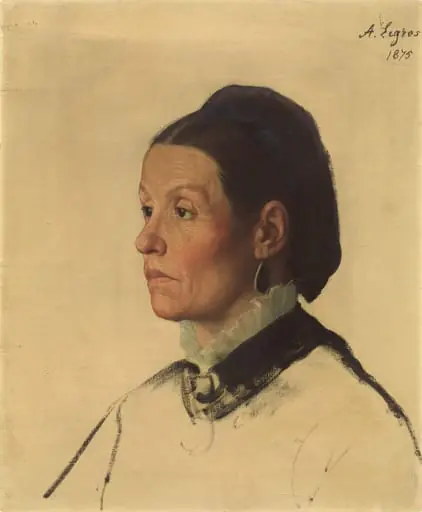
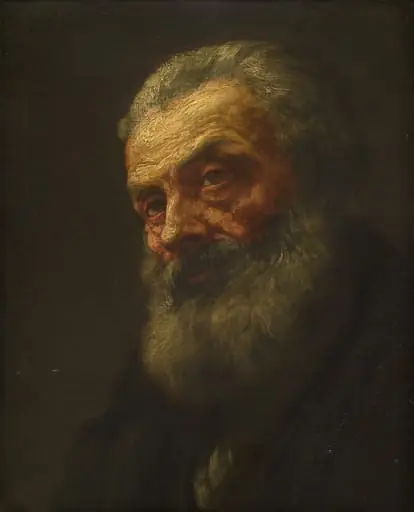
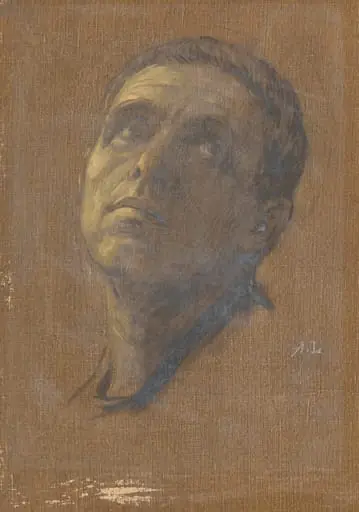
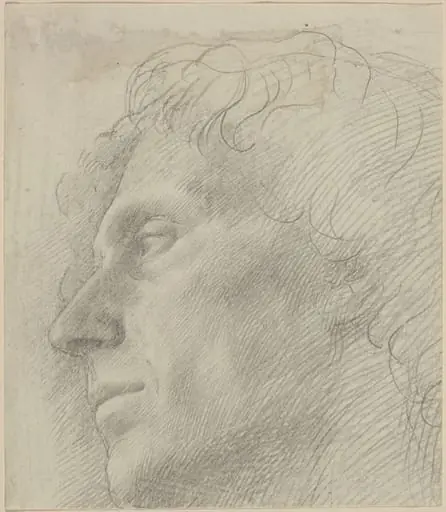 Head of a Man Facing Left
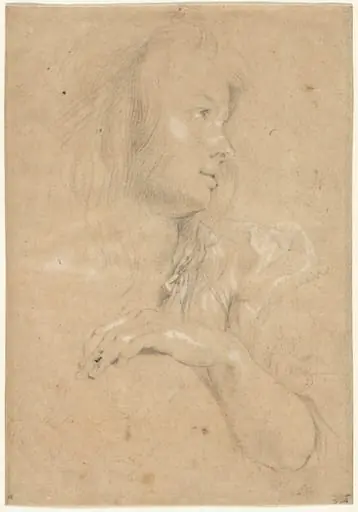 Young Woman in Profile
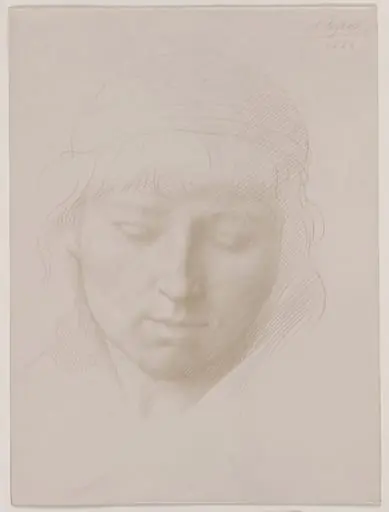 Head of a Man
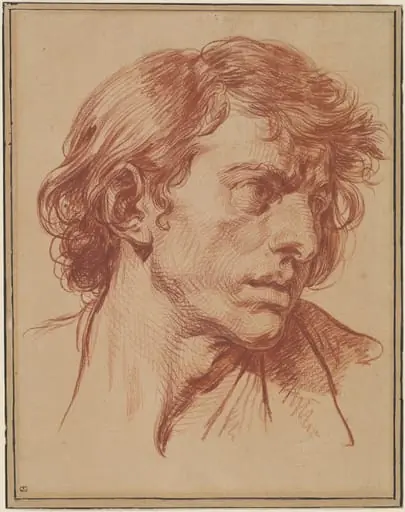 The Ungrateful Son
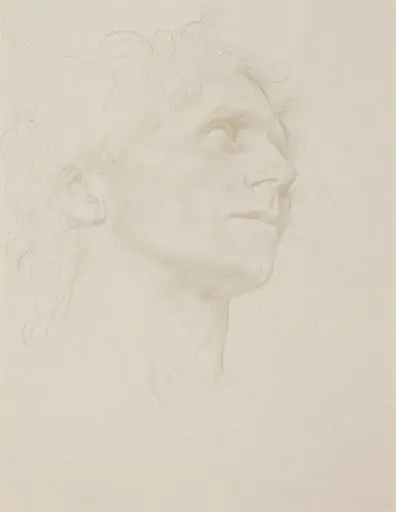 Study of Woman's Head, Turned Right
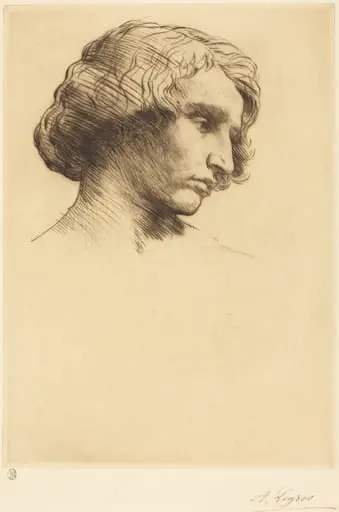 Head of a Man (Tete d'homme)
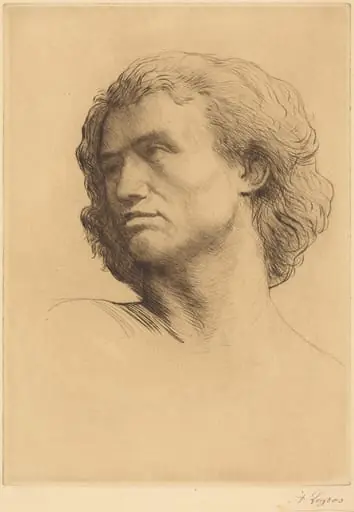 Head of a Man (Tete d'homme)
 Untitled
 Head of a Man Looking Up to the Right
 Head of a Boy (Gennaro Falcone?)
 Study for the Head of a Man (Etude de tete d'homme)
 Bust of Nude Man