Artwork
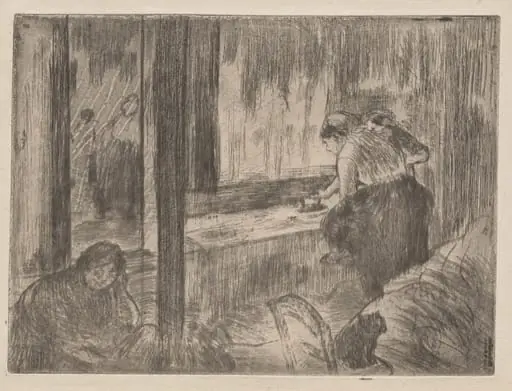
The Laundresses (Les blanchisseuses (La repassage))
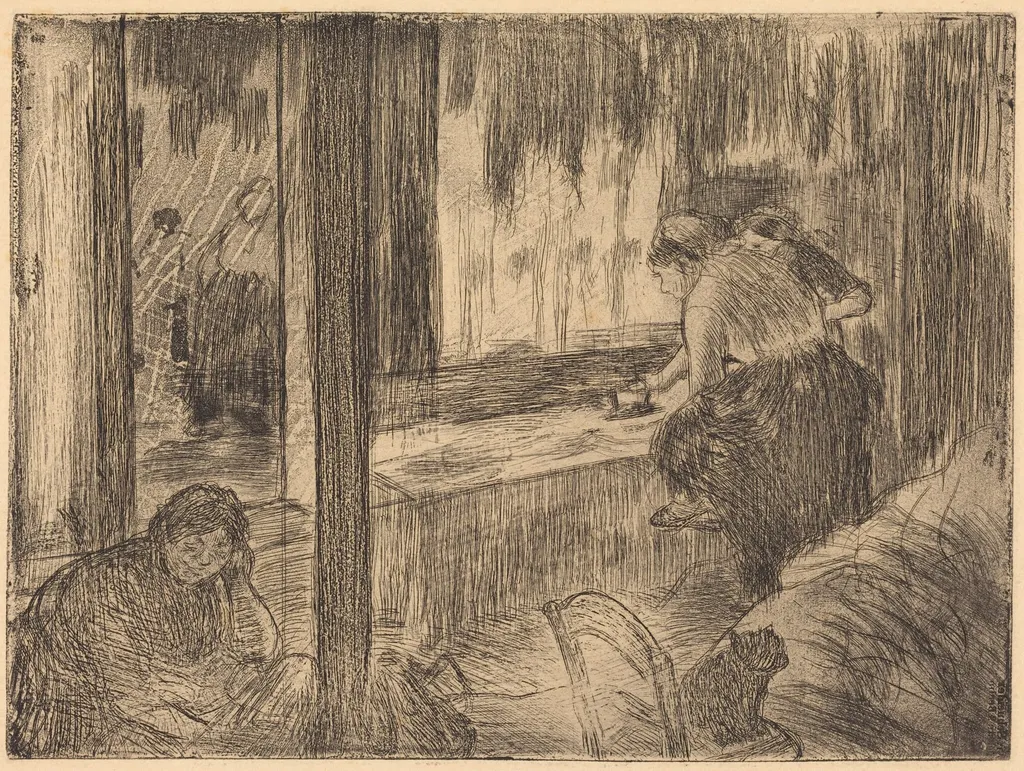
The Laundresses (Les blanchisseuses (La repassage)) is an ink print by the Impressionist artist Edgar Degas. It dates from 1880 and is held in the collection of the National Gallery of Art.
About this work
Overview
Created in 1880, *The Laundresses* is an etching and aquatint by Edgar Degas, capturing a quiet moment in a Parisian laundry room.
Created in 1880, *The Laundresses* is an etching and aquatint by Edgar Degas, capturing a quiet moment in a Parisian laundry room. Though often linked to Impressionism, Degas identified more closely with realism, focusing on unidealized labor. The print reflects his deep engagement with printmaking techniques and his consistent interest in the routines of working-class life, rendered without sentimentality or theatricality.
Subject & Meaning
The scene depicts three women engaged in the physical labor of ironing and folding laundry, their bodies bent under the weight of repetitive work. Faces are obscured, directing attention to posture and motion rather than individual identity. The setting is sparse and functional, emphasizing the monotony and physical toll of domestic labor. Degas presents their labor not as picturesque, but as an unvarnished part of urban existence.
Technique & Style
Degas employed etching and aquatint to build dense, textured surfaces through layered lines and tonal gradations. The scratchy, incised marks mimic the roughness of the environment and the strain of labor, while the uneven ink application enhances the dim, shadowed atmosphere. His control over the medium allows for both precision and rawness, creating a tactile sense of the room’s confined, dimly lit space.
History & Provenance
The print was made during a period when Degas was intensely focused on printmaking, producing a series of works centered on laborers and dancers. It was likely part of a limited edition, circulated among collectors and artists who valued his experimental approach. Its survival in museum collections today reflects its significance as a study in both social observation and technical innovation in 19th-century printmaking.
Context
In late 19th-century Paris, domestic labor was largely performed by women in overcrowded, poorly lit spaces. Degas’s choice to depict laundresses aligns with broader artistic interest in urban labor, though his treatment avoids moralizing. His focus on the physicality of work, rather than narrative or emotion, situates the print within a realist tradition that valued observation over idealization.
Legacy
The work stands as a quiet testament to Degas’s commitment to documenting the unnoticed rhythms of daily life. Its influence lies in its unembellished portrayal of labor and its demonstration of how printmaking could convey psychological and environmental depth. Later artists recognized its formal rigor and empathetic restraint, cementing its place in the history of modern graphic art.
Artist & collection
Artist
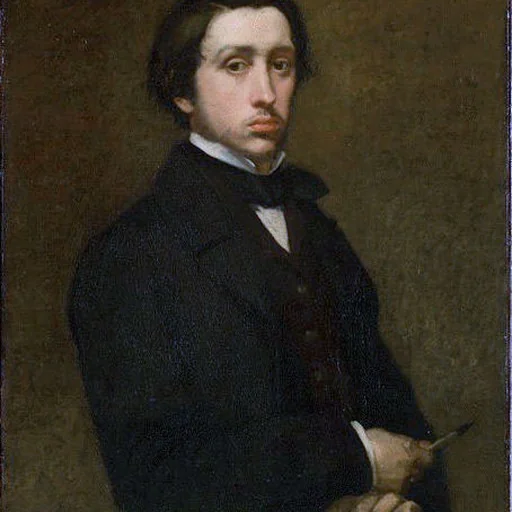
Born Hilaire-Germain-Edgar De Gas on 19 July 1834 in Paris, Edgar Degas came from an affluent banking family with aristocratic roots and spent his childhood among the cultivated circles of the French capital.

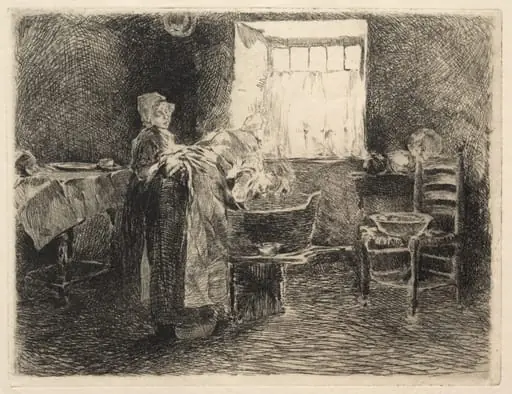 Monday Morning, Holland
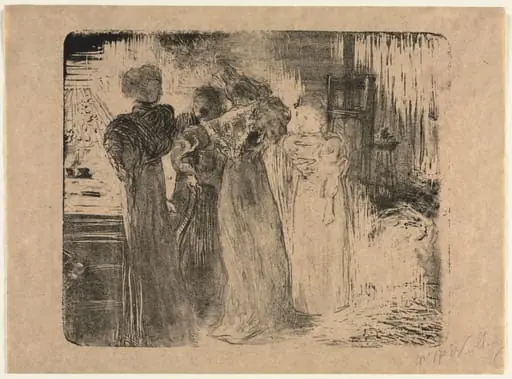 The Studio
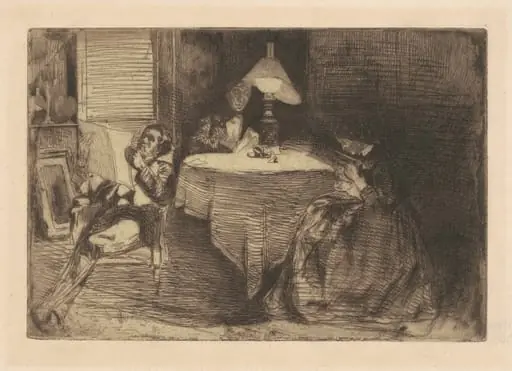 The Music Room
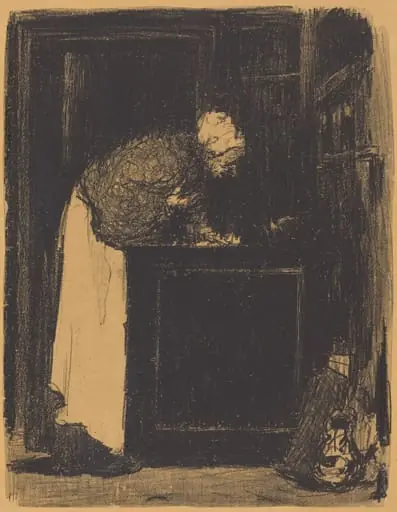 Old Woman at a Stove (Vielle Femme au Fourneau)
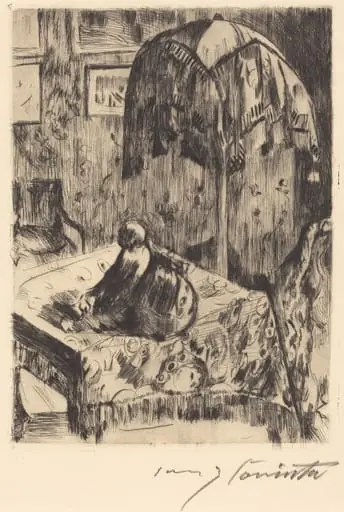 Interieur mit Stehlampe (Interior with Floor Lamp)
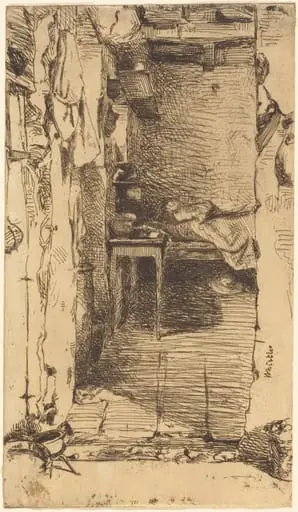 Rag Pickers, Quartier Mouffetard, Paris
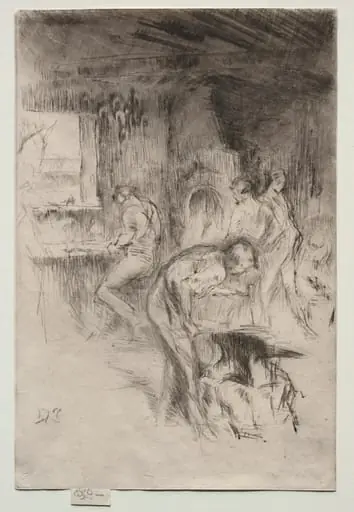 The Little Forge
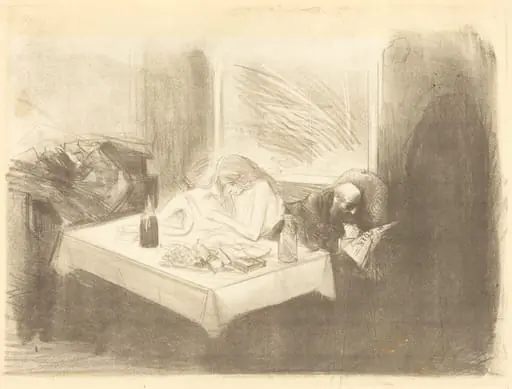 Le cabinet particulier (4e planche) (The Private Room) (fourth plate)
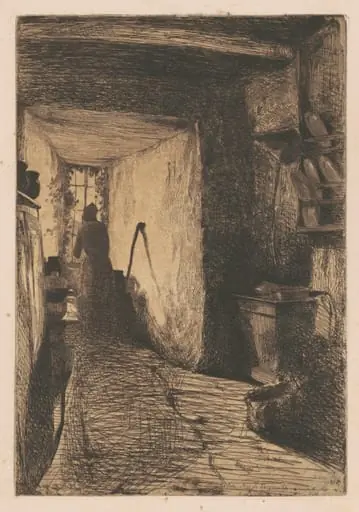 The Kitchen
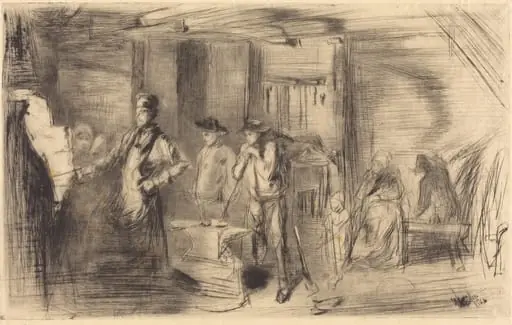 The Forge
 The Laundresses
 The Childhood of Pierre Clémenceau (L'Enfance de Pierre Clémenceau)