Artwork
Icoată.
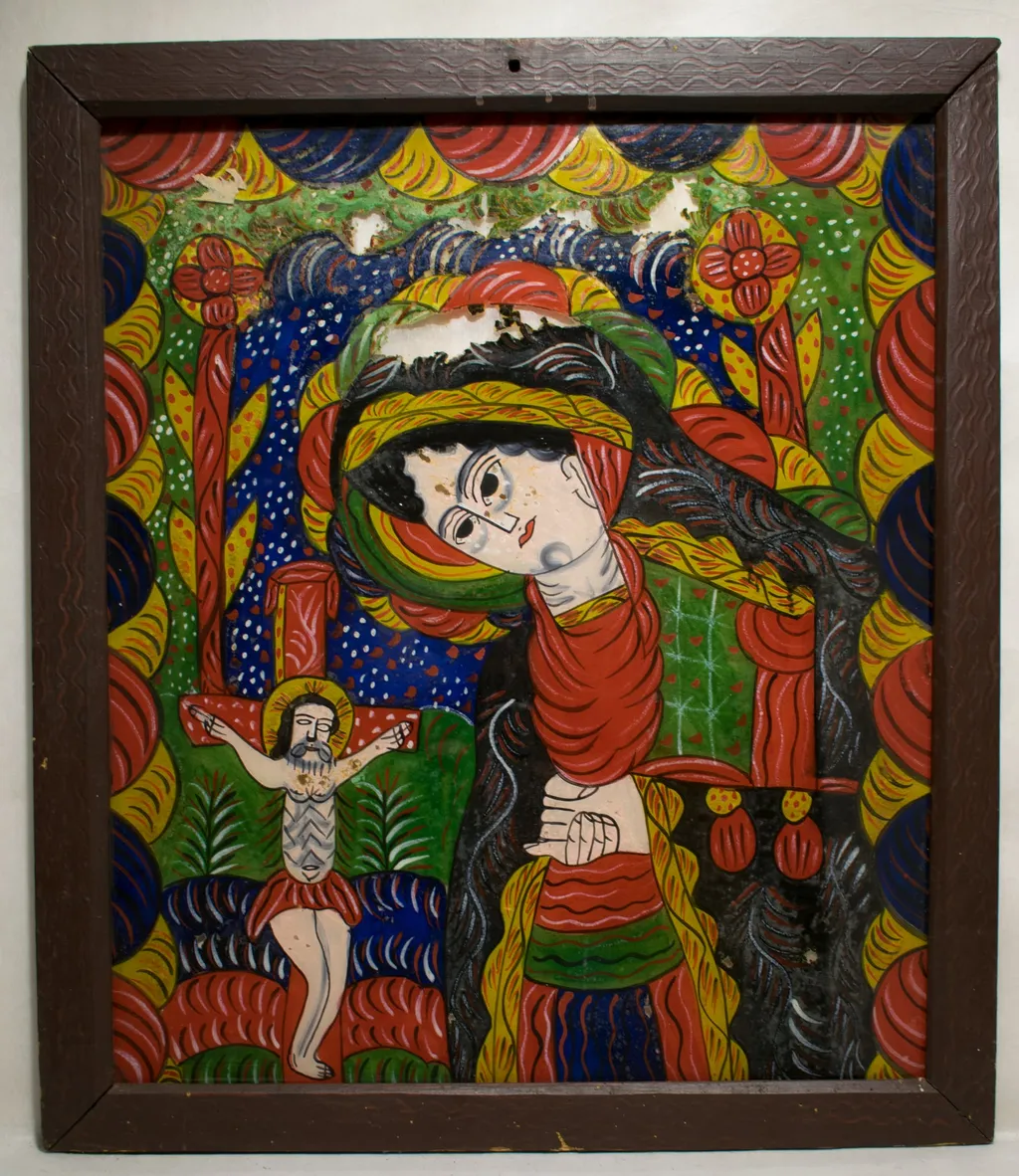
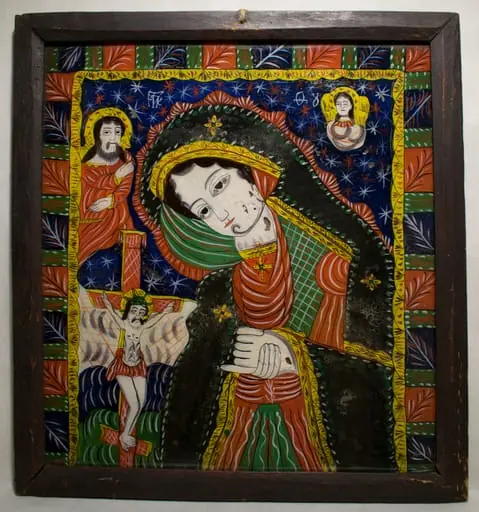
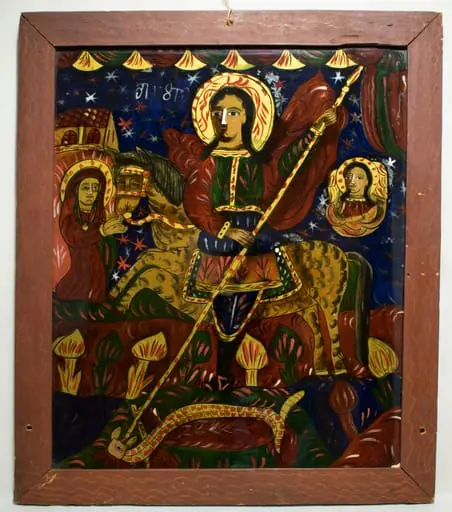
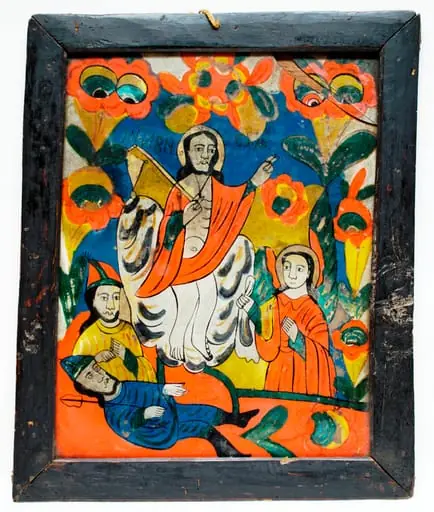
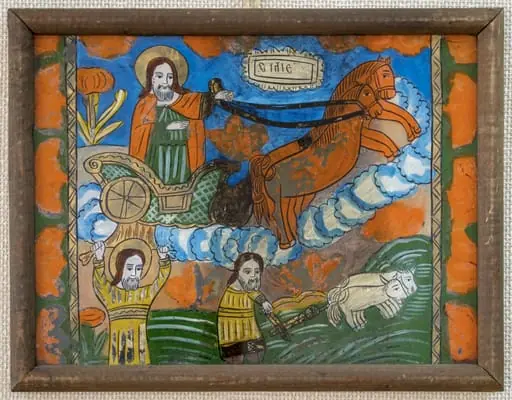
Icoată. is a drawing by Ana Deji. It is held in the collection of the "Dimitrie Gusti" National Village Museum. This painting depicts a woman in vivid red and green attire, cradling a small, haloed figure.
About this work
Overview
The woman’s face is partially obscured by a headscarf, her gaze directed downward at the childlike figure, suggesting a moment of quiet reverence.
This painting depicts a woman in vivid red and green attire, cradling a small, haloed figure. The background is dense with swirling, non-naturalistic hues of blue, yellow, and green, creating a rhythmic, almost abstract field. The composition emphasizes flat planes and bold outlines, avoiding perspective or depth. The woman’s face is partially obscured by a headscarf, her gaze directed downward at the childlike figure, suggesting a moment of quiet reverence.
Subject & Meaning
The haloed figure and the woman’s attire point to a religious theme, likely rooted in Eastern European devotional imagery. The child may represent the Christ Child or a saint, while the woman could be the Virgin Mary or a local venerated figure. The intimate gesture of the child reaching upward implies spiritual connection or supplication, reinforcing themes of protection and divine presence within a domestic or folk context.
Technique & Style
The artist employs flat, unmodulated colors and simplified forms characteristic of folk art traditions. Lines are used deliberately to define edges and suggest texture, particularly through cross-hatching in the background patterns. There is no attempt at realistic shading or spatial depth; instead, the composition relies on symbolic color and rhythmic patterning to convey meaning and emotional tone.
History & Provenance
The work’s origins are not documented in public records, but its visual language aligns with regional folk painting practices from the Balkans or Carpathian areas. Similar imagery appears in church decorations, household icons, and festival textiles from the 19th to early 20th centuries. Its preservation suggests it may have been collected by ethnographers or local artisans rather than produced for formal ecclesiastical use.
Context
This piece reflects a tradition where religious subjects were rendered through local aesthetics rather than academic norms. In rural communities, such images served both devotional and cultural functions, blending Orthodox iconography with indigenous motifs. The use of bright, non-naturalistic colors and stylized forms was common in folk art, where symbolic meaning outweighed realism.
Legacy
Though not widely known outside regional collections, the painting exemplifies how religious narratives were adapted in vernacular art forms. Its survival offers insight into how spiritual imagery persisted in everyday life, separate from institutional art channels. Contemporary artists and scholars reference such works to understand the diversity of visual piety in Eastern Europe.
Artist & collection
Artist
Ana Deji made colorful religious drawings and paintings with bold colors and simple shapes.

Museum
"Dimitrie Gusti" National Village Museum
Continue through works from the same source collection.
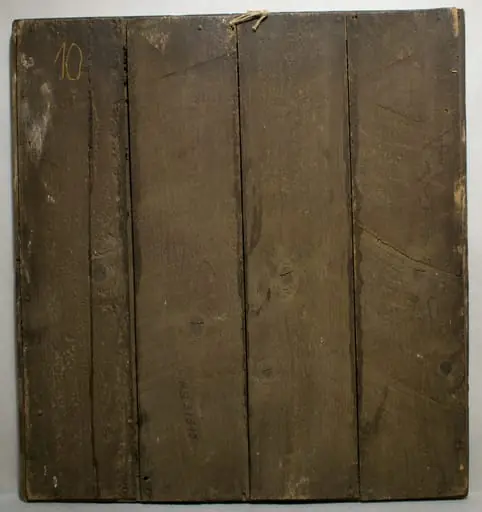
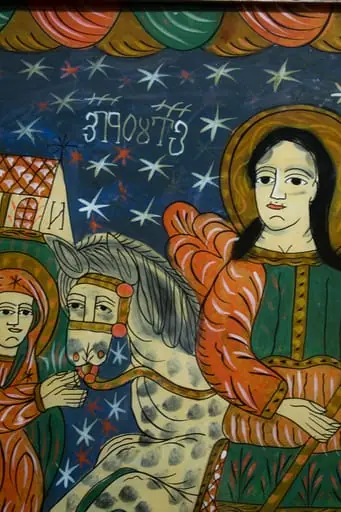
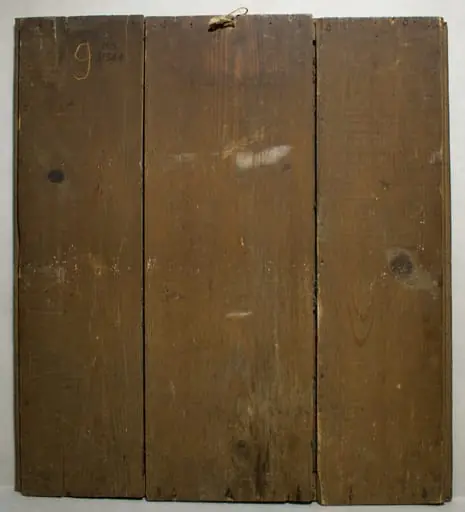 Zugrăvița a combinat cu inocență două teme iconografice (cea a Bunei Vestiri cu cea a Botezului), fenomen frecvent în icoanele Anei Deji.În prim plan, în picioare, un sfânt cu o ramură verde în mâna dreaptă înălțată binecuvintează un înger. Sfântul tânăr, cu părul lung, negru, barbă scută, mustăți. După poziție și trăsături ar putea fi asimilat Sf. Ioan din scena Botezului. Poartă un chiton roșu, asemănător blănii de cămilă și un himation verde.În jurul capului are o aureolă cu limbi de foc asemănător acelora din Pogorârea Sfântului Duh. Îngerul privește către sfânt, ținînd pe brațul stâng un ștergar cu vrâste verzi și roșii, iarăși asemănare cu scena Botezului. Îngerul are trăsături feminine, ochii mari, negri, aripi strânse, tunică roșie cu poale cafenii.Nu poate fi vorba de Botez deoarece lipsește Isus dintre cele două personaje iar decorul arhitectural din planul doi(o construcție cu mai multe caturi, cu intrări largi, cu portal semicircular, 4 ferestre la ultimul cat și acoperiș rotund de olane) nu se regăsește în scena Botezului. De sus coboară sfântul Duh, sub formă de porumbel roșu cu aripi cafenii, pe un fond verde într-un oval de nori alburii marcați cu linii roșii. În partea de jos,relief ușor vălurit, realizat din benzi late cu margini ondulate de culoare verde, roșie și cafenie.Restul câmpului- albastru ultramarin, decorat cu steluțe albe și roșii. Pe trei laturi este pictat un chenar din semicercuri suprapuse, primul cu roșu alternînd cu verde, al doilea ocru. Icoana ar putea fi asimilată Buneivestiri, dar în acest caz în locul sfântului ar trebui să fie un înger iar în locul îngerului Fecioara Maria. Rama este alcătuită din patru șipci drepte, îmbinate oblic la colțuri. Dosul este realizat din scândurele subțiri de brad, dispuse vertical și fixate în cuie.
 Icoale c
 Icoaastr
 Icoacum
 Temadin
 Icoaotiv
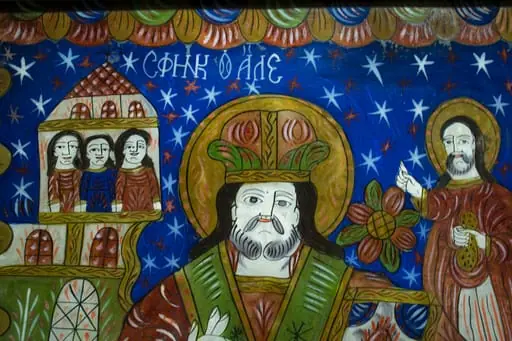
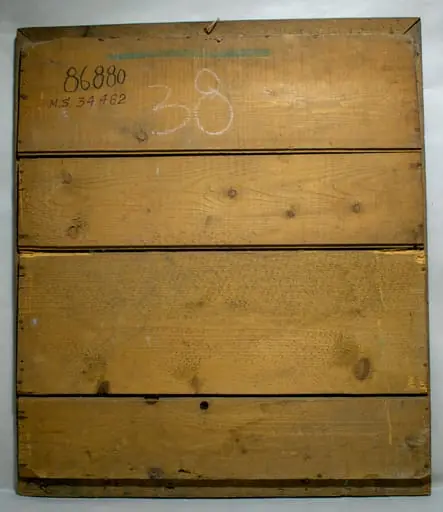
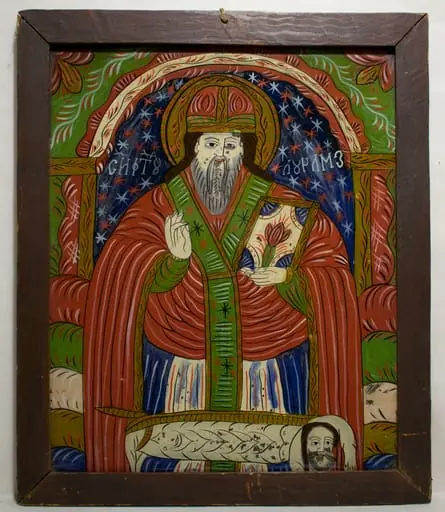
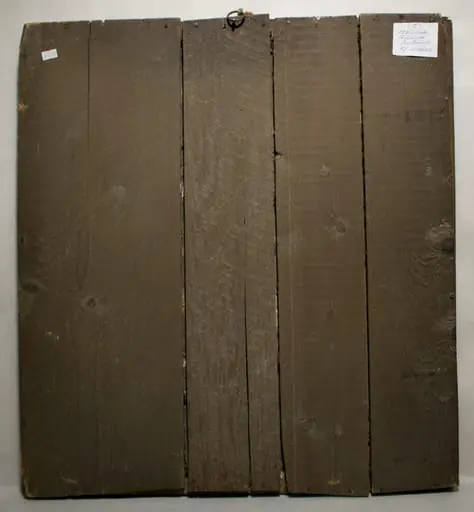 Icoana este pictată pe dosul unei bucăți de sticlă de formă dreptunghiulară în ax vertical. Sfântul mare Ierarh Nicoale, 3/4, în veșminte de arhierești, redat frontal, cu mitră înaltă, bipartită pe cap, ține Evanghelia în stângă iar cu mâna dreaptă binecuvintează.Barba căruntă, ondulată, scurtă, părul lung, negru, lăsat pe umeri. Ochii, negri, înguști, asimetrici, gura roșie.În jurul capului aureolă galbenă cu motiv fitomorf. Înveșmântat cu un sacos roșu cu linii de fald albe, galon aurit decorat cu motiv fitomorf, stihar alb cu albastru și linii de fald albe, roșii, bleu. Epitrahilul, veșmântul liturgic cel mai important este verde, lung, chenar auriu punctat pe margini, steluțe negre. Relieful - succesiune de benzi late de culoare roșie, bleumarin și verde, brăzdate de linii subțiri, roșii și albe. Sfântul este încadrat de un portal semicircular, cu marginea ondulată, fond bleumarin, jos elemente arhitecturale schematizate. Lateral și superior un chenar dublu din semicercuri în culori alternante roșu, ocru, verde, bleumarin. Restul câmpului este de culoare verde deschis cu elemente fitomorfe. Desenul este îngrijit, dar prezintă asimetrii, stângăcii, disproporții. Paleta cromatică bogată, culorile intense. Țăranii îl țineau pe sfântul Nicolae "aducător de noroc, apărător de boli, apărător de vărsat și de lovituri" Rama îngustă, realizată din patru șipci îmbinate oblic, decorată cu un motiv vălurit, dispus longitudinal. Dos-scânduri de brad, dispuse vertical și fixate în cuie metalice.
 Icoaesiv