Artwork
Icoaa și
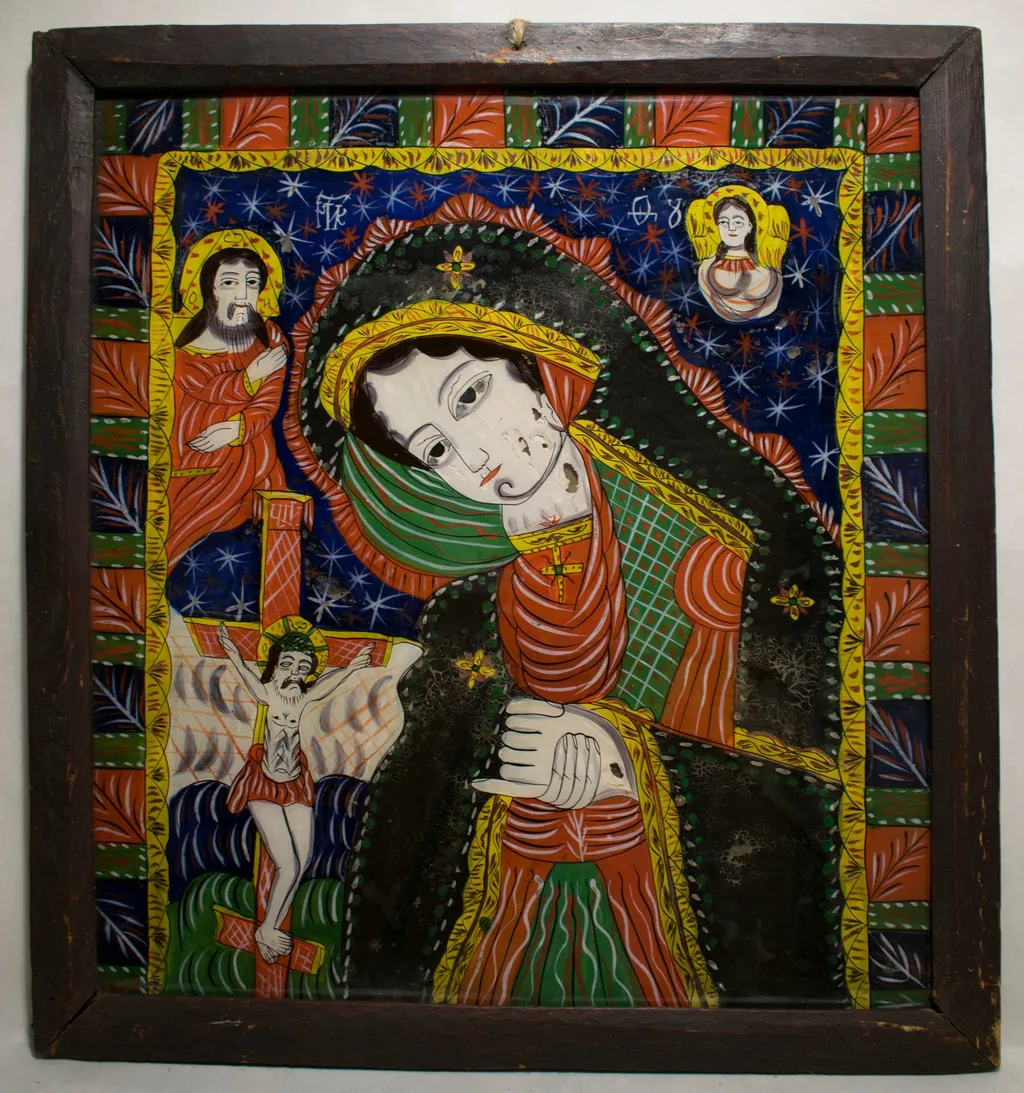
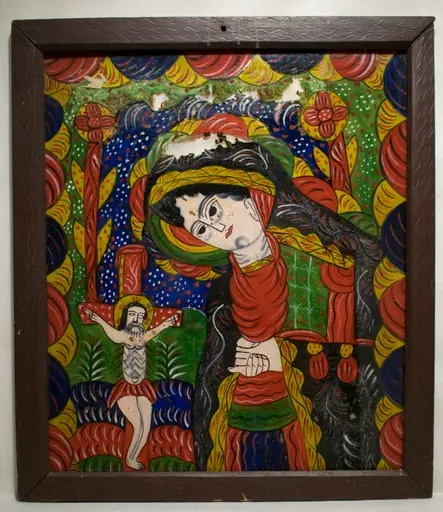
Icoaa și is a drawing by Tămaș Petru. It is held in the collection of the "Dimitrie Gusti" National Village Museum. This painting features a central figure enveloped in vividly colored robes of red, yellow, and green, crowned by a halo.
About this work
Overview
The central face is deliberately blurred, creating an enigmatic, introspective tone that contrasts with the otherwise bold and structured design.
This painting features a central figure enveloped in vividly colored robes of red, yellow, and green, crowned by a halo. Flanked by two smaller figures—one winged and haloed, the other with arms extended—the composition is set against a dense background of stylized stars, leaves, and geometric forms in blue, orange, and gold. The central face is deliberately blurred, creating an enigmatic, introspective tone that contrasts with the otherwise bold and structured design.
Subject & Meaning
The central figure, though faceless, appears to hold spiritual or symbolic significance, suggested by the halo and rich attire. The winged figure may represent a celestial presence, while the outstretched arms of the other suggest offering or invocation. The lack of facial detail invites personal interpretation, shifting focus from identity to presence, as if the figure embodies an idea rather than a person.
Technique & Style
Colors are applied flatly with high saturation, evoking the simplicity of folk or children’s art, yet the composition reveals deliberate precision. Patterns in the background are meticulously arranged, balancing spontaneity with structure. The blurred face contrasts with sharp outlines elsewhere, creating visual tension that deepens the work’s emotional ambiguity without resolving it.
History & Provenance
The work is attributed to Tămaș Petru, an artist whose oeuvre often explores spiritual themes through simplified forms and symbolic color. This piece aligns with their broader practice of blending traditional motifs with modern abstraction. No documented exhibition or ownership history is publicly available prior to its recent recognition in regional collections.
Context
Emerging from a cultural milieu where religious iconography and folk art intersect, the painting reflects a post-communist Romanian artistic trend that reimagines sacred imagery through personal, non-literal lenses. Its stylized forms and flattened space echo both Orthodox icon traditions and 20th-century modernist simplifications, yet resist direct homage to either.
Legacy
Tămaș Petru’s approach, exemplified here, has influenced a generation of Romanian artists who prioritize emotional resonance over narrative clarity. The work’s quiet strangeness—its blurred face, symbolic figures, and rhythmic patterns—has become a touchstone for those exploring spirituality through abstraction, without reliance on established religious iconography.
Artist & collection
Artist
Tămaș Petru’s small drawings—like Icoaiv v and Icoaată—feel intimate and direct. The spare, rough lines suggest a hand moving fast, capturing shapes that read like faces or objects without fussing over details. The…
Museum
"Dimitrie Gusti" National Village Museum
Continue through works from the same source collection.
 Icoaitud
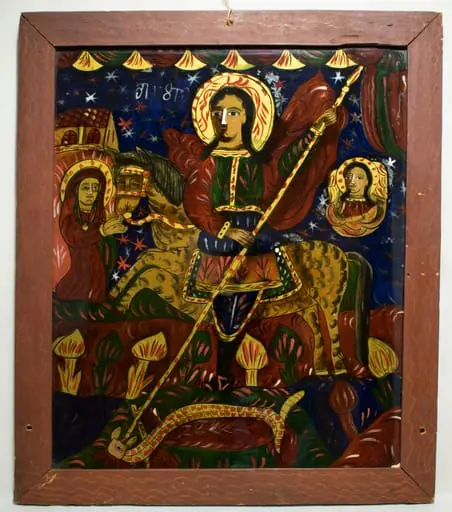
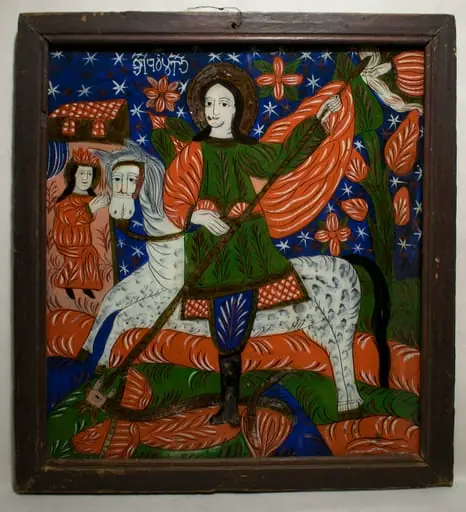 Sfântul, în centrul compoziției, călare pe un cal alb cu pete gri, înfige o suliță lungă(ce marchează diagonala compoziției)în gura balaurului. Veșminte asemănătoare celor ale soldaților austrieci, cizme înalte, negre, pantaloni bufanți, tunică scurtă, de culoare verde, cu motive fitomorfe dispuse longitudinal, deasupra tunicii, mantie roșu-cărămiziu .Chipul este redat din semiprofil; trăsăturile sunt butucănoase, ochii mari, negri, părul lung, negru lăsat pe umeri.Partea de sus a corpului e prezentată din față, de la mijloc în jos dintr-o parte. Calul este la rândul lui diform, cu capul întors astfel încât ă se văd ambii ochi, umani. Balaurul, plasat în registrul inferior, căzut pe spate, fliform, cu două aripi rudimentare în zona gâtului și creastă, are deasemenea un ochi uman. În planul doi fata de împărat, redată cu aureolă în jurul capului. Are părul lung, negru, corpul diform, coroană împărătească roșie ca și veșmântul. În plan îndepărtat, pe o colină în spatele fetei, o construcție cu un cat, două ferestre mari roșii, semicirculare și acoperiș în două ape, din olane roșii. Relieful foarte variat, coline și porțiuni diferit colorate. În spatele calului, o floare uriașă. Câmp albastru ultramarin cu numeroase steluțe albe și roșii și câteva flori roșii. Inscripția ,în partea stângă, sus, este incorectă și scrisă invers, cu litere albe. Compoziția este extrem de încărcată, proporțiile nu sunt respectate, chipurile diforme. Icoana are un farmec dat de elementele etnografice locale și .Paleta cromatică variată, echilibrată, dominată de roșu, albastru și verde. Rama este din lemn de brad baițuiță, decorată longitudinal cu un motiv vălurit.
 Icoaiv v
 Icoaată
 Temaobri
 Icoa îmb
 Icoată.
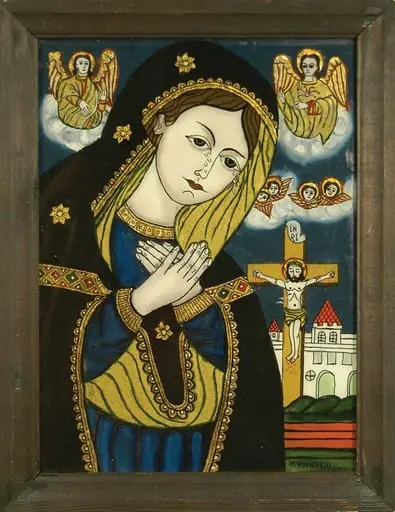 Maica Domnului îndurerată
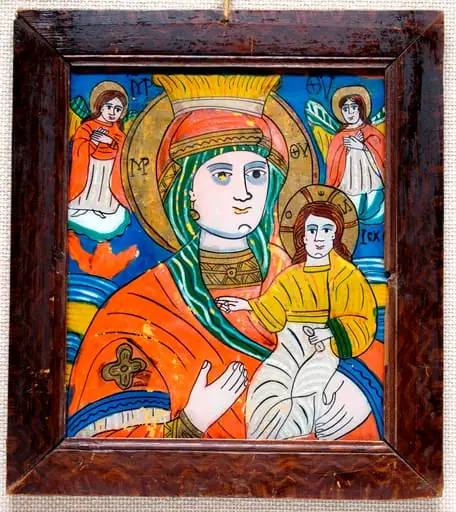 Repr
Repr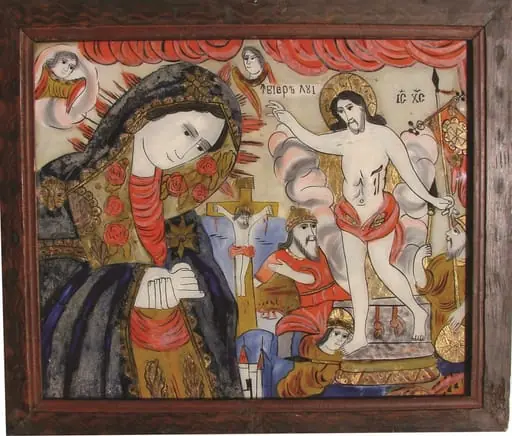 Maica Domnului îndurerată și Învierea lui Iisus
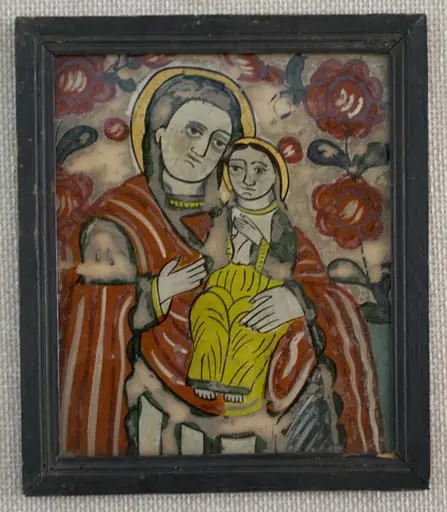 Icoana o reprezintă pe Maica Domnului cu Pruncul, tipul Hodighitria(Arătătoarea Căii). Cu mâna stângă susține Pruncul, cu dreapta arată către El. Maica are părul acoperit cu un văl verde.Veșmintele multicolore,(specific fazei de decadență a picturii de icoane pe sticlă)-roșu-mantia, cămașă, albă vrâstată cu verde, mâneci verzi, borduri diverse. Chipul cu umbre gri deschis, bărbia groasă, buze subțiri. Pruncul, cu amândouă mâinile la piept, are părul lung, castaniu și fața feminină. Aureolele sunt diforme, umplute cu bronz auriu. Câmp alb murdar decorat cu două ramuri cu flori roșii și boboci(ruje) care se unesc deasupra capului Maicii - 3/4 superior, bleu(1/4 inferior).Cromatica este dominată de roșu culorile stridente :alb, bleu, roșu, verde închis, ocru galben, brun, negru. Icoana are trăsăturile specifice picturii târzii din zona Nicula -Gherla: supraabundența detaliului, a decorului vegetal, apariția bronzului în locul foiței de aur, câmpul bicolor, sticla de proveniență industrială. Rama profilată este vopsită cu negru și încheiată oblic;dosul este din lemn subțire de brad;
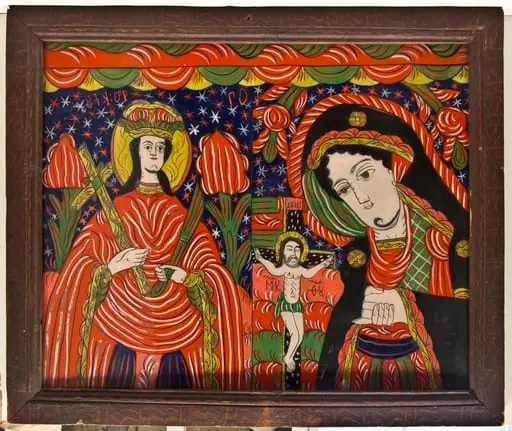 Sf. Parascheva și Maica Domnului îndurerată
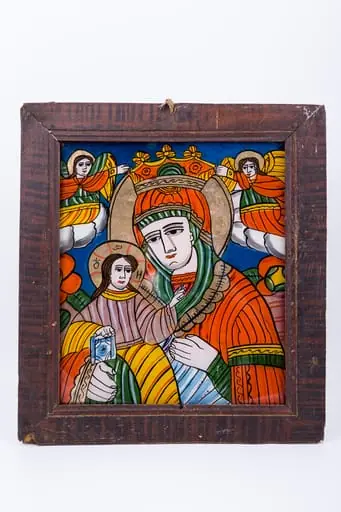 Maica Domnului Împărăteasă a Cerurilor îl ține în brațe pe Pruncul Iisus Hristos. Maica Domnului este îmbrăcată cu mantie cu maforion roșu vermillon, cu interiorul căptușit cu verde-brad și cu marginile manșetelor bej-bronzii. Poartă aureolă și coroniță de împărăteasă. Pruncul Iisus Hristos este îmbrăcat cu ocru și gri, are aureolă și ține în mâna dreaptă pe genunchi Sfânta Evanghelie și arată cu mâna stângă către Maica Domnului. În registrul superior îndepărtat sunt ocrotitori și păzitori Sfinții Arhangheli Mihail și Gavriil, așezați cu picioarele pe nori rotunzi, albi. Sfinții Arhangheli așează coronița de împărăteasă pe capul Maicii Domnului. Fondul icoanei este cerul albastru ultramarin. Tematica este deosebită și frecvent întâlnită în Țara Oltului. Cromatica este armonioasă, caldă și luminoasă: roșu vermillon, verde spanac-avocado, verde brad, galben-ocru, albastru bleu-ciel, cobalt, alb, negru.
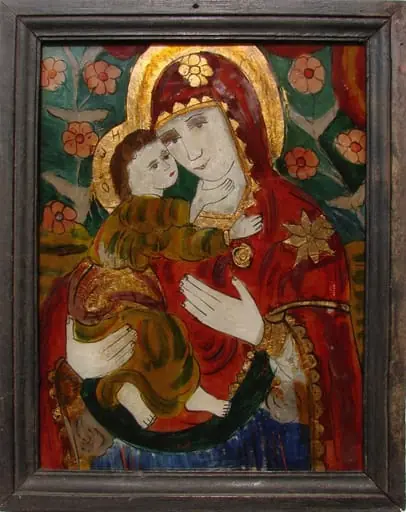 Maica Domnului cu Pruncul