Artwork
Icoaun o
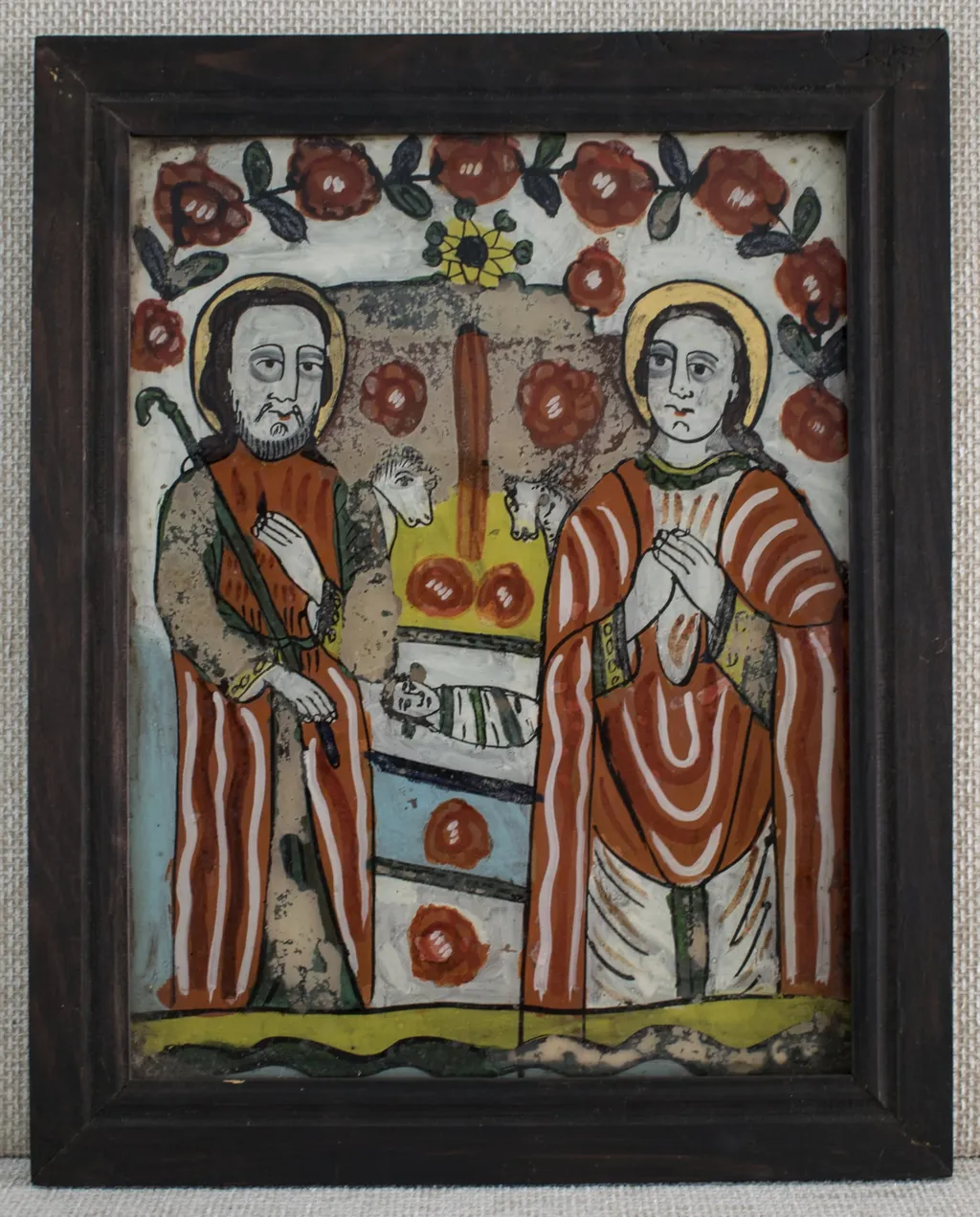
Icoaun o is a drawing by Fain Gherghel?. It is held in the collection of the "Dimitrie Gusti" National Village Museum. A small, flat-panel painting depicts two solemn figures standing before a modest table.
About this work
Overview
A small, flat-panel painting depicts two solemn figures standing before a modest table.
A small, flat-panel painting depicts two solemn figures standing before a modest table. The composition is sparse, with minimal spatial depth and no perspective. Bright reds and golds dominate the palette, though pigments have faded over time. The figures, dressed in striped garments, are rendered with simplified features and rigid postures, suggesting a devotional purpose rather than naturalistic representation.
Subject & Meaning
The two figures, one holding a staff and the other clasping hands, likely represent sacred individuals in a ritual context. The presence of red flowers and a small animal near the table may symbolize offerings or spiritual purity. The star above them hints at divine presence, common in religious iconography of the period. Their expressionless faces emphasize solemnity over individuality, aligning with liturgical imagery meant for contemplation.
Technique & Style
The painting employs a stylized, two-dimensional approach with flat planes of color and no shading. Outlines are clear but unrefined, and details like fabric patterns are reduced to stripes. Gold accents suggest sacredness, while the faded pigments indicate age and possible use in a devotional setting. The style reflects regional traditions prioritizing symbolic clarity over realism, typical of pre-Renaissance religious art.
History & Provenance
The painting’s origin is unrecorded, but its materials and style suggest it was created in a small workshop, possibly in Eastern Europe or the Balkans, during the late medieval or early Renaissance period. Its small size implies private or portable use, perhaps in a chapel or household shrine. The worn condition points to prolonged handling or exposure, consistent with devotional objects used over generations.
Context
This work belongs to a broader tradition of regional religious art that flourished outside major urban centers. Artists in these areas often followed established iconographic models passed down through generations, favoring symbolic elements over anatomical accuracy. Similar works, including those attributed to Fain Gherghel, share this restrained aesthetic, reflecting local spiritual practices and limited access to broader artistic trends.
Legacy
Though unsigned and undocumented in major collections, the painting contributes to understanding the diversity of medieval religious expression beyond canonical works. Its preservation offers insight into how faith was visually communicated in modest settings. Contemporary scholars reference it alongside similar regional pieces to map the spread of iconographic motifs in less-documented artistic communities.
Artist & collection
Artist
Fain Gherghel painted on the back of glass plates—flip one over and you’ll see the brushstrokes reversed, like a secret meant only for God.
Museum
"Dimitrie Gusti" National Village Museum
Continue through works from the same source collection.
 Icoană „Buna Vestire”
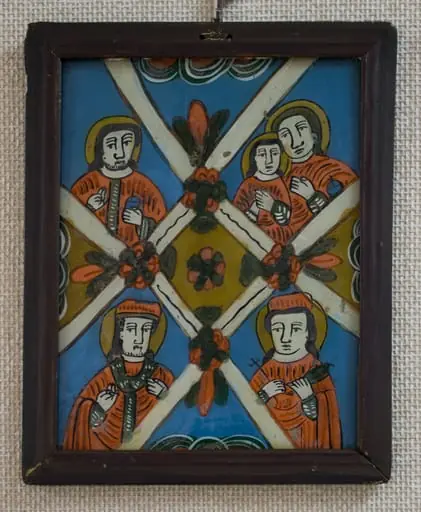
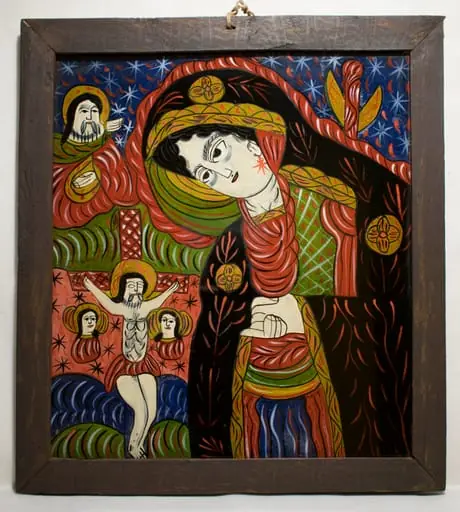
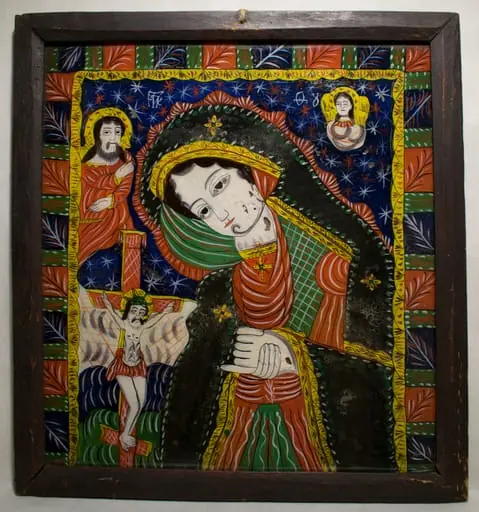
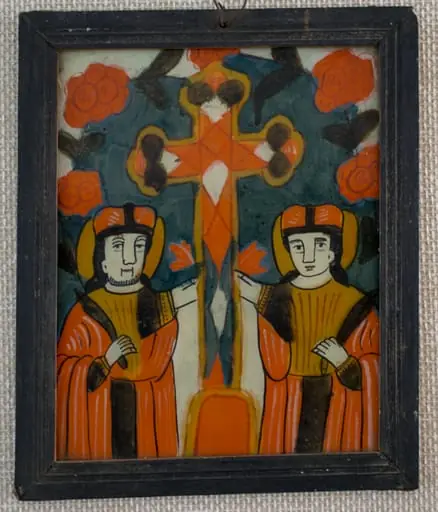 Icoana este pictată pe dosul unei bucăți de sticlă de formă dreptunghiulară în ax vertical. Crucea(tipul calvarului, cu brațele treflate)susținută în partea de jos de cei doi împărați, Constantin și mama sa Elena, (cea care a descoperit crucea la Ierusalim).este plasată sub o arcadă semicirculară de trandafiri roșii. Corpul crucii ornamentat cu motive geometrice policrome(alb, roșu, negru, galben).Sfinții (3/4) sub brațele orizontale ale crucii, o susțin cu cîte o mână(diformă), în cealaltă mână țin câte un sceptru vegetal. Fețele sunt butucănoase, veșmintele identice(galben, negru și roșu), mitrele rotunde, aureolele trasate liber. Câmpul despărțit în două zone de o arcadă de trandafiri roșii(ruje): albastru de Prusia sub arcadă, alb în rest. Desenul este schematic, naiv, Paleta cromatică este dominată culorile calde(roșu, galben, orange) contrastul cu câmpul albastru.creând perspectivă cromatică. Rama este alcătuită din patru stinghii brune, îmbinate oblic; dosul este nou, din lemn subțire de brad.
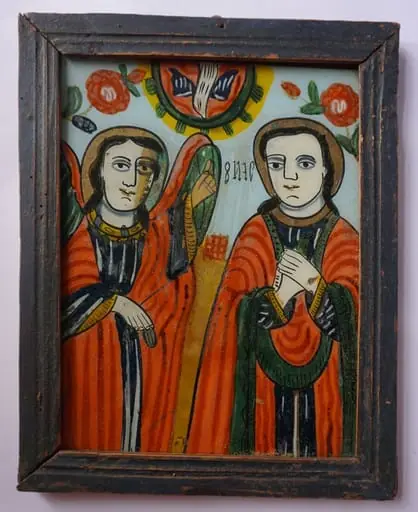
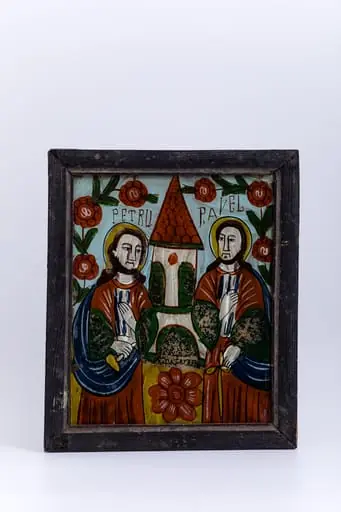 Icoana îi reprezintă pe cei doi Apostoli Sfinții Petru și Pavel, Petru cu cheile Împărăției Cerești în mână și pe Pavel cu sabia Cuvântului în mână, susținând împreună chivotul unei biserici, simbolul Bisericii sobornicești și apostolești. Biserica este situată în registrul îndepărtat, dar este redată în așa fel încât să fie înțeleasă ca și cum ar fi dusă pe umeri de Sfinții Apostoli. Au mantiile roșii vermillon, și veșmintele cu sacos-uri verzi și albastre cobalt. Fondul icoanei este cerul albastru bleu-ciel, în partea superioară, pe margini, și un câmp galben-chihlimbar, în spațiul de miez. În registrul inferior, fondul este un rând de galben chihlimbar-muștar, pe latura superioară. Cheile și crucea sunt simboluri puternice. Se creează astfel un triunghi de semnificații teologice: crucea-chivotul de biserică-cheile Raiului. Chipurile sunt foarte expresive, cu trăsături fine. Inscripția din româno-chirilică se traduce Petru Pavel. Compoziția este rezistentă și cromatica armonioasă: roșu vermillon-stacojiu, albastru cobalt, ultramarin și bleu-marin, verde văratic, galben chihlimbar, brun, gri, alb zinc, negru, auriu. Inscripția din româno-chirilică se traduce Petru Pavel. Icoana este din Nordul Transilvaniei, Nicula.
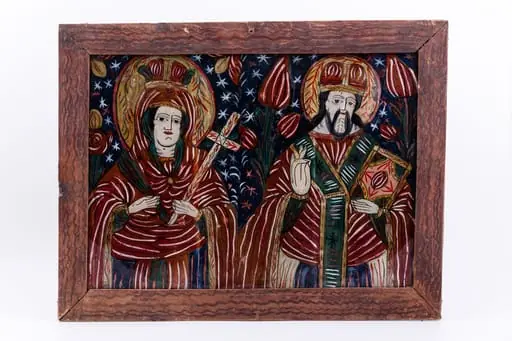 Icoana îi reprezintă pe Sfânta Mare Cuvioasă Parascheva de la Iași și pe Sfântul Ierarh Vasile cel Mare. Preacuvioasa este îmbrăcată în veșmânt roșu stacojiu-bordo-acajou, cu interiorul căptușit cu albastru și verde închis, ornat cu dungi albe subțiri. Peste maforionul roșu, sfânta cuvioasă are coroniță și aureolă. Mantia este prinsă la gât cu o fibulă aurie. În mâna dreaptă are un mănunchi de finic și în mâna stângă ține crucea. Alături de Sfânta Parascheva este Sfântul Ierarh Vasile cel Mare, îmbrăcat în veșminte liturgice arhierești cu felon-omofor roșu stacojiu, cu interiorul indigo închis, ornat cu striații albe fine, și cu epitrahil verde cu trei cruci negre. Cu mâna dreaptă Binecuvântează, iar în mâna stângă ține Sfânta Evanghelie închisă. Fondul icoanei este albastru ultramarin bleumarin închis înspre violet-indigo, cu elemente decorative fitomorfe și astrale albe și roșii. Cromatica este armonioasă, deși întunecată și rece: roșu stacojiu, bordo, acajou, albastru ultramarin bleumarin închis, violet-indigo, galben chihlimbar, brun, bej, verde de China, alb. Icoana este de Făgăraș și aparține Anei Deji.
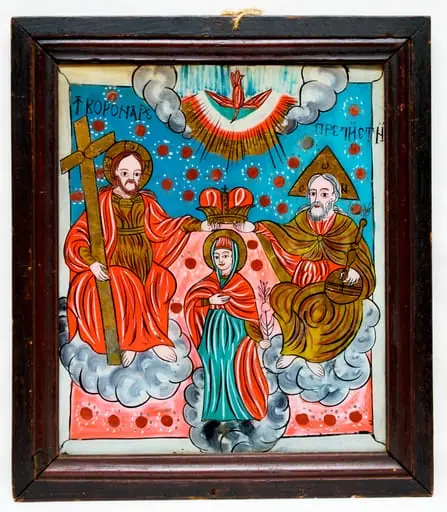
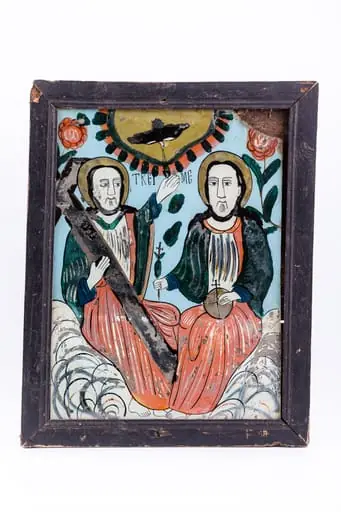 Icoana reprezintă Sfânta Treime. Dumnezeu-Tatăl are globul pământesc, pe genunchi și în mâna dreaptă are o cruce de mână. Dumnezeu-Fiul este alături, ține Crucea pe umărul drept și cu mâna stângă arată înspre Sfântul Duh, Pogorându-se ca un porumbel, astfel reunindu-Se Sfânta Treime. Dumnezeu-Tatăl și Dumnezeu-Fiul sunt îmbrăcați în veșminte în combinație de albastru cobalt, gri cenușiu-antracit și roșu vermillon. Se remarcă desenul fin al broderiei mânecii Tatălui Ceresc. Sfântul Duh se pogoară din miezul galben-solar, deschiderea Cerurilor, cu raze de lumină. Inscripția din româno-chirilică se traduce Treime. În registrul superior, fondul icoanei este cerul albastru bleu-ciel senin, cu câte o rujă - trandafir roșu - în colțurile din stânga și dreapta. În miezul rujelor este semnul zăluței albe, șerpuitoare. În registrul inferior sunt câmpuri de nouri albi-gri, mandorle peste mandorle. Cromatica este luminoasă și armonioasă: roșu vermillon, albastru bleu-ciel, albastru cobalt, alb, gri-antracit, ocru-muștar, alb, negru. Icoana este de Nicula.
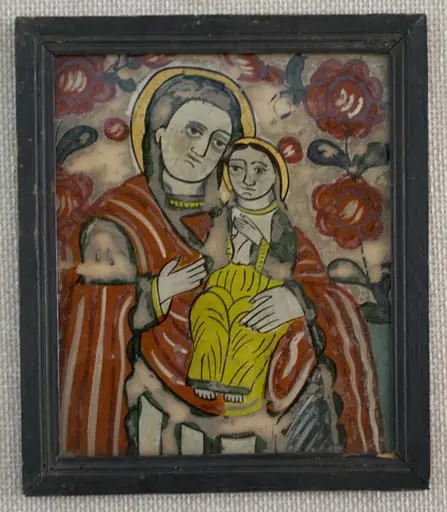 Icoana o reprezintă pe Maica Domnului cu Pruncul, tipul Hodighitria(Arătătoarea Căii). Cu mâna stângă susține Pruncul, cu dreapta arată către El. Maica are părul acoperit cu un văl verde.Veșmintele multicolore,(specific fazei de decadență a picturii de icoane pe sticlă)-roșu-mantia, cămașă, albă vrâstată cu verde, mâneci verzi, borduri diverse. Chipul cu umbre gri deschis, bărbia groasă, buze subțiri. Pruncul, cu amândouă mâinile la piept, are părul lung, castaniu și fața feminină. Aureolele sunt diforme, umplute cu bronz auriu. Câmp alb murdar decorat cu două ramuri cu flori roșii și boboci(ruje) care se unesc deasupra capului Maicii - 3/4 superior, bleu(1/4 inferior).Cromatica este dominată de roșu culorile stridente :alb, bleu, roșu, verde închis, ocru galben, brun, negru. Icoana are trăsăturile specifice picturii târzii din zona Nicula -Gherla: supraabundența detaliului, a decorului vegetal, apariția bronzului în locul foiței de aur, câmpul bicolor, sticla de proveniență industrială. Rama profilată este vopsită cu negru și încheiată oblic;dosul este din lemn subțire de brad;