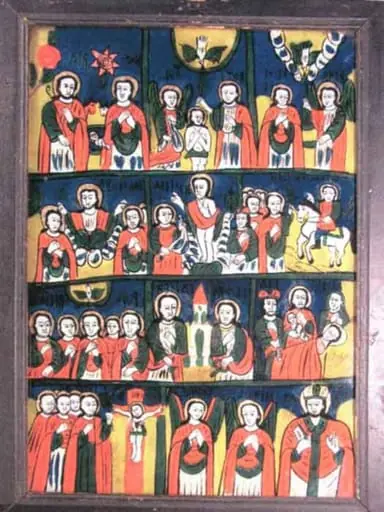
Artwork
Tăierea capului Sfântul Ioan
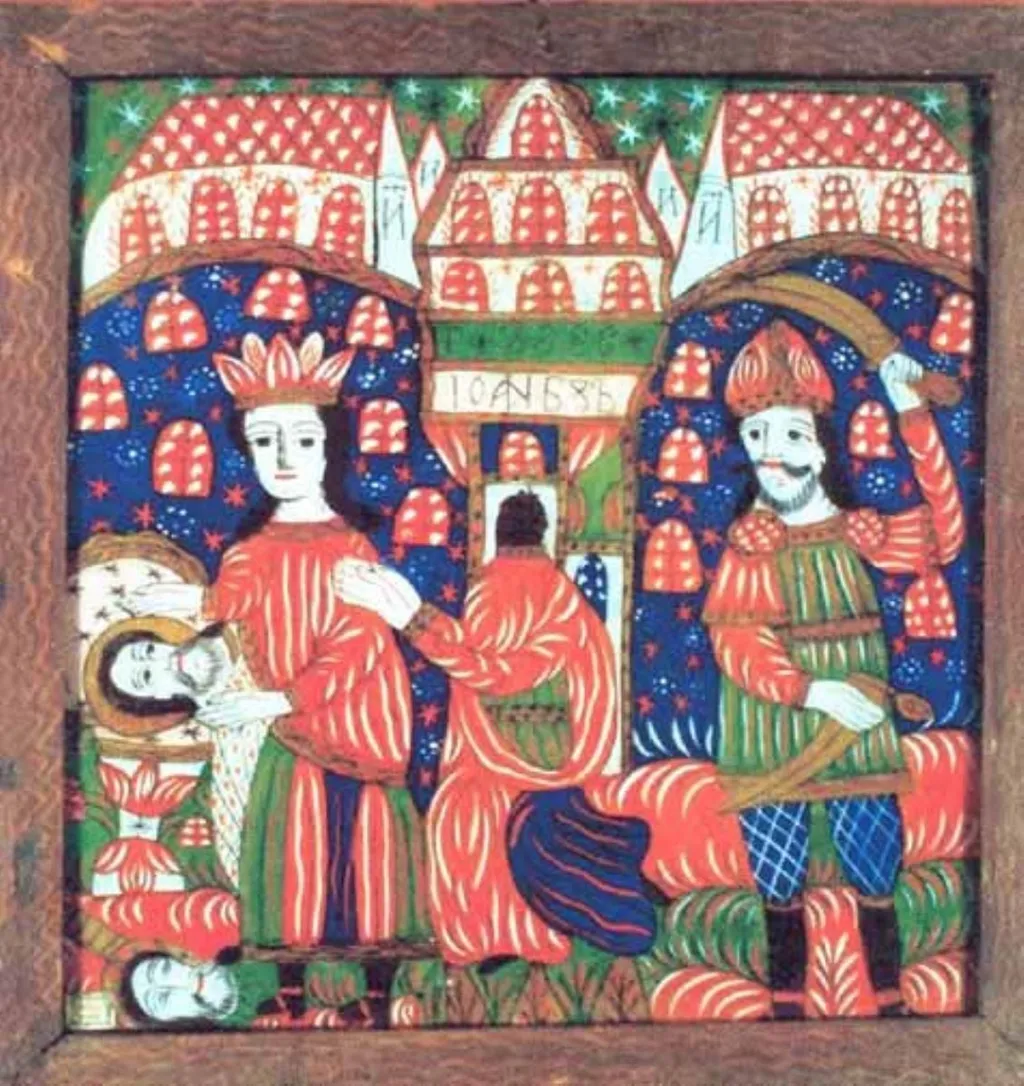
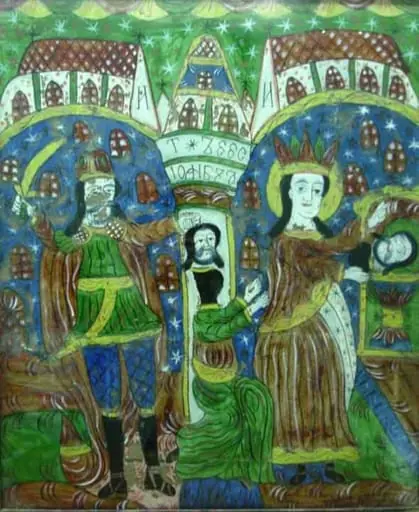
Tăierea capului Sfântul Ioan is a drawing by Ana Deji. It is held in the collection of the "Dimitrie Gusti" National Village Museum. This work depicts a biblical scene with three figures arranged in a static, symbolic composition.
About this work
Overview
The style emphasizes clarity over naturalism, suggesting a devotional or narrative function rooted in medieval or early Renaissance traditions.
This work depicts a biblical scene with three figures arranged in a static, symbolic composition. Bright, unmodulated colors and strong outlines define the forms, creating a decorative yet intentional visual rhythm. The background features a patterned surface, and a building with the inscription 'IANISE' anchors the setting. The style emphasizes clarity over naturalism, suggesting a devotional or narrative function rooted in medieval or early Renaissance traditions.
Subject & Meaning
The scene illustrates the beheading of Saint John the Baptist, a moment from the Gospel accounts. The crowned figure on the left, likely Herodias, holds a child—possibly representing Salome. The central figure, possibly Herod, presents the head to the bearded recipient. The inscription 'IANISE' may reference John the Baptist’s name in a regional form. The composition underscores the ritualized nature of the act, framing it as a solemn, divinely sanctioned event.
Technique & Style
The painting employs flat, saturated hues—reds, blues, and greens—without shading or perspective to model form. Figures are outlined in sharp, clean lines, and details are rendered with precision rather than illusion. The background’s geometric patterns contrast with the solid silhouettes of the figures, enhancing their symbolic presence. This approach reflects a pre-Renaissance aesthetic prioritizing spiritual clarity over spatial realism.
History & Provenance
The origin of this image is not documented in major collections, and its maker remains unidentified. Its stylistic traits suggest a regional workshop in Eastern Europe or the Balkans during the late medieval period. The presence of the inscription 'IANISE' hints at local linguistic or liturgical influences. It may have served as an icon or devotional panel in a church or private chapel.
Context
This image aligns with Byzantine and post-Byzantine traditions that favored symbolic representation over naturalism. Religious narratives were often rendered with standardized iconography to aid devotion and instruction. The use of bold color and clear outlines was practical for visibility in dimly lit interiors and reinforced the sacred nature of the subject, distinguishing it from secular or humanist art emerging in Western Europe.
Legacy
Though not widely known in mainstream art history, this work exemplifies the enduring influence of medieval iconography in Eastern Christian communities. Its stylistic choices reflect a continuity of visual language that persisted long after the Renaissance transformed Western art. Such images remain valuable for understanding how religious stories were visually transmitted across generations in less documented artistic traditions.
Artist & collection
Artist
Ana Deji made colorful religious drawings and paintings with bold colors and simple shapes.
Museum
"Dimitrie Gusti" National Village Museum
Continue through works from the same source collection.
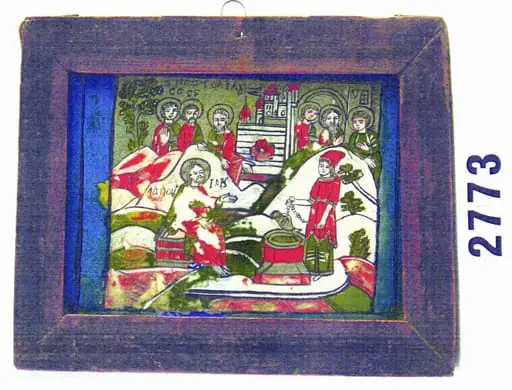
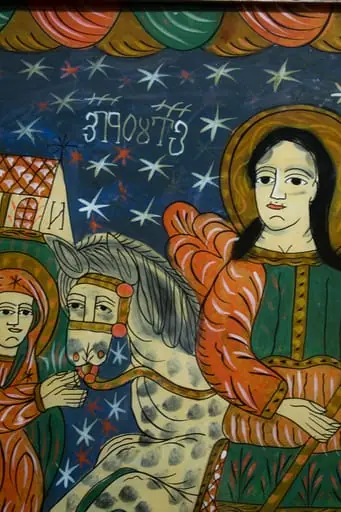
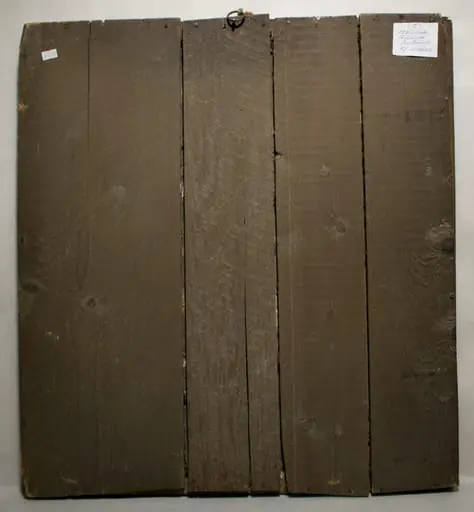
 Zugrăvița a combinat cu inocență două teme iconografice (cea a Bunei Vestiri cu cea a Botezului), fenomen frecvent în icoanele Anei Deji.În prim plan, în picioare, un sfânt cu o ramură verde în mâna dreaptă înălțată binecuvintează un înger. Sfântul tânăr, cu părul lung, negru, barbă scută, mustăți. După poziție și trăsături ar putea fi asimilat Sf. Ioan din scena Botezului. Poartă un chiton roșu, asemănător blănii de cămilă și un himation verde.În jurul capului are o aureolă cu limbi de foc asemănător acelora din Pogorârea Sfântului Duh. Îngerul privește către sfânt, ținînd pe brațul stâng un ștergar cu vrâste verzi și roșii, iarăși asemănare cu scena Botezului. Îngerul are trăsături feminine, ochii mari, negri, aripi strânse, tunică roșie cu poale cafenii.Nu poate fi vorba de Botez deoarece lipsește Isus dintre cele două personaje iar decorul arhitectural din planul doi(o construcție cu mai multe caturi, cu intrări largi, cu portal semicircular, 4 ferestre la ultimul cat și acoperiș rotund de olane) nu se regăsește în scena Botezului. De sus coboară sfântul Duh, sub formă de porumbel roșu cu aripi cafenii, pe un fond verde într-un oval de nori alburii marcați cu linii roșii. În partea de jos,relief ușor vălurit, realizat din benzi late cu margini ondulate de culoare verde, roșie și cafenie.Restul câmpului- albastru ultramarin, decorat cu steluțe albe și roșii. Pe trei laturi este pictat un chenar din semicercuri suprapuse, primul cu roșu alternînd cu verde, al doilea ocru. Icoana ar putea fi asimilată Buneivestiri, dar în acest caz în locul sfântului ar trebui să fie un înger iar în locul îngerului Fecioara Maria. Rama este alcătuită din patru șipci drepte, îmbinate oblic la colțuri. Dosul este realizat din scândurele subțiri de brad, dispuse vertical și fixate în cuie.
 Icoale c
 Icoaastr
 Icoacum
 Temadin
 Icoaotiv
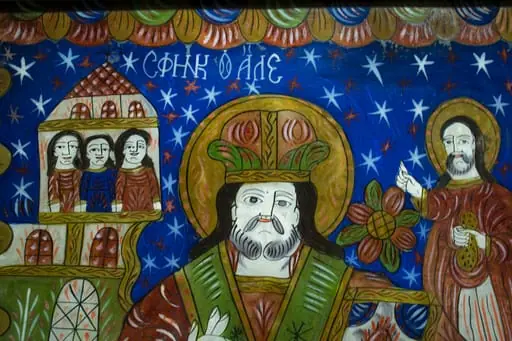
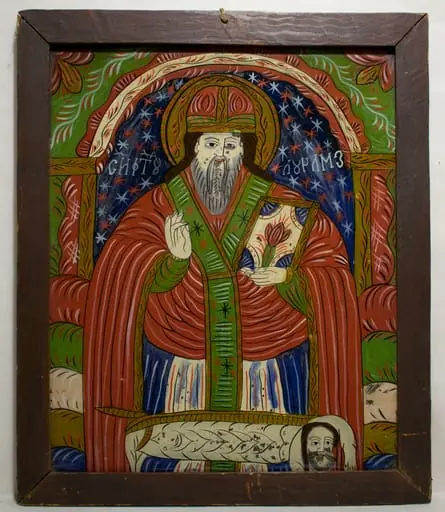
 Icoana este pictată pe dosul unei bucăți de sticlă de formă dreptunghiulară în ax vertical. Sfântul mare Ierarh Nicoale, 3/4, în veșminte de arhierești, redat frontal, cu mitră înaltă, bipartită pe cap, ține Evanghelia în stângă iar cu mâna dreaptă binecuvintează.Barba căruntă, ondulată, scurtă, părul lung, negru, lăsat pe umeri. Ochii, negri, înguști, asimetrici, gura roșie.În jurul capului aureolă galbenă cu motiv fitomorf. Înveșmântat cu un sacos roșu cu linii de fald albe, galon aurit decorat cu motiv fitomorf, stihar alb cu albastru și linii de fald albe, roșii, bleu. Epitrahilul, veșmântul liturgic cel mai important este verde, lung, chenar auriu punctat pe margini, steluțe negre. Relieful - succesiune de benzi late de culoare roșie, bleumarin și verde, brăzdate de linii subțiri, roșii și albe. Sfântul este încadrat de un portal semicircular, cu marginea ondulată, fond bleumarin, jos elemente arhitecturale schematizate. Lateral și superior un chenar dublu din semicercuri în culori alternante roșu, ocru, verde, bleumarin. Restul câmpului este de culoare verde deschis cu elemente fitomorfe. Desenul este îngrijit, dar prezintă asimetrii, stângăcii, disproporții. Paleta cromatică bogată, culorile intense. Țăranii îl țineau pe sfântul Nicolae "aducător de noroc, apărător de boli, apărător de vărsat și de lovituri" Rama îngustă, realizată din patru șipci îmbinate oblic, decorată cu un motiv vălurit, dispus longitudinal. Dos-scânduri de brad, dispuse vertical și fixate în cuie metalice.
 Icoaesiv