Artwork
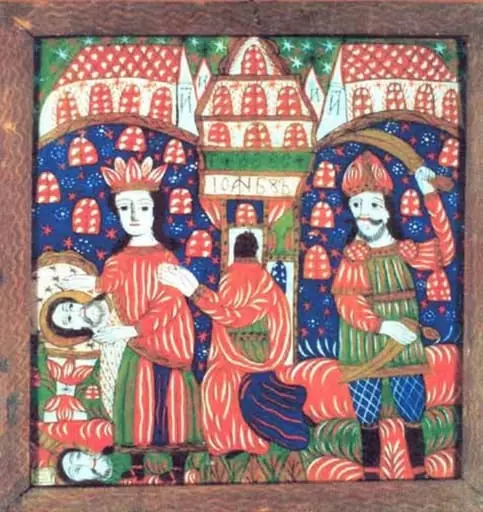
Tăierea capului Sfântului Ioan Botezătorul
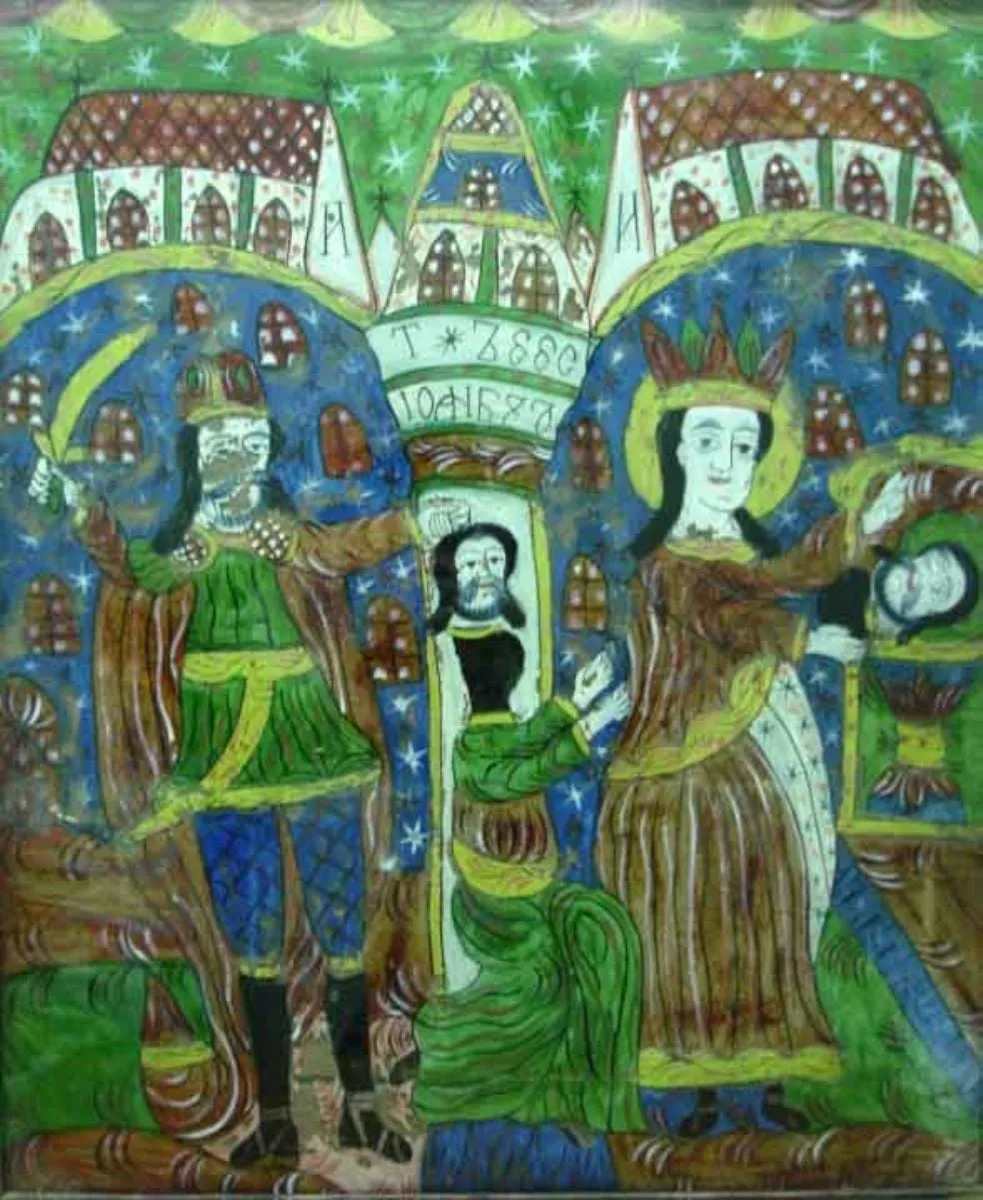
Tăierea capului Sfântului Ioan Botezătorul is a drawing by Unknown. It dates from 1850 and is held in the collection of the "Dimitrie Gusti" National Village Museum. This ink drawing depicts the beheading of Saint John the Baptist, rendered with minimal yet precise linework on paper.
About this work
Overview
The composition focuses on the moment of execution, with stark contrasts between the figures and the dark, star-strewn sky.
This ink drawing depicts the beheading of Saint John the Baptist, rendered with minimal yet precise linework on paper. Though unsigned, its devotional purpose aligns with common practices in pre-modern religious art. The composition focuses on the moment of execution, with stark contrasts between the figures and the dark, star-strewn sky. Subtle shading techniques lend depth despite the medium’s limitations.
Subject & Meaning
The scene captures the violent climax of John the Baptist’s martyrdom, as described in the Gospels. His kneeling posture conveys submission, while the soldier’s raised sword emphasizes inevitability. The scattered stars above may allude to divine witness or cosmic dissonance, reinforcing the sacred gravity of the act. Blood is rendered as a single thin line, avoiding sensationalism in favor of solemnity.
Technique & Style
The artist employs fine cross-hatching to model form and shadow, creating a sense of volume without color or tone. Background elements are dissolved through soft stippling, directing focus to the central figures. The ink lines are controlled and deliberate, suggesting familiarity with both draftsmanship and liturgical imagery. The absence of a signature reflects its function as a private or devotional study rather than a public display.
History & Provenance
The drawing’s origin remains undocumented, but its style and subject suggest it was produced in Eastern Europe during the late medieval or early modern period. Its current location in the Museum of Ethnography implies it was collected as part of regional religious material culture, possibly from a monastic or rural context where such images were used for contemplation.
Context
In Orthodox and Eastern Christian traditions, scenes of John the Baptist’s martyrdom were common in liturgical manuscripts and devotional objects. This drawing fits within a broader visual tradition that emphasized spiritual endurance over graphic violence. Its simplicity reflects an aesthetic of restraint, prioritizing symbolic clarity over narrative elaboration.
Legacy
Though unattributed and likely never widely circulated, the drawing preserves a quiet, intimate mode of religious expression. Its survival in a museum collection underscores its value as a witness to personal piety and regional artistic practice. It stands as an example of how sacred narratives were internalized through understated visual language.
Artist & collection
Museum
"Dimitrie Gusti" National Village Museum
Continue through works from the same source collection.
 Domestic Scene
 Giacomo and Cardinal Marco, investing Andrea, Abbot of San Zeno, with his Benefice
 The Nymph of Fontainebleau
 Portrait of a Woman
 Madonna and Child with Saints in the Enclosed Garden
 Venus and Minerva
 Family Group of Four on Sofa
 Wall painting from Room H of the Villa of P. Fannius Synistor at Boscoreale