Artwork
The Sacrifice of Marcus Curtius
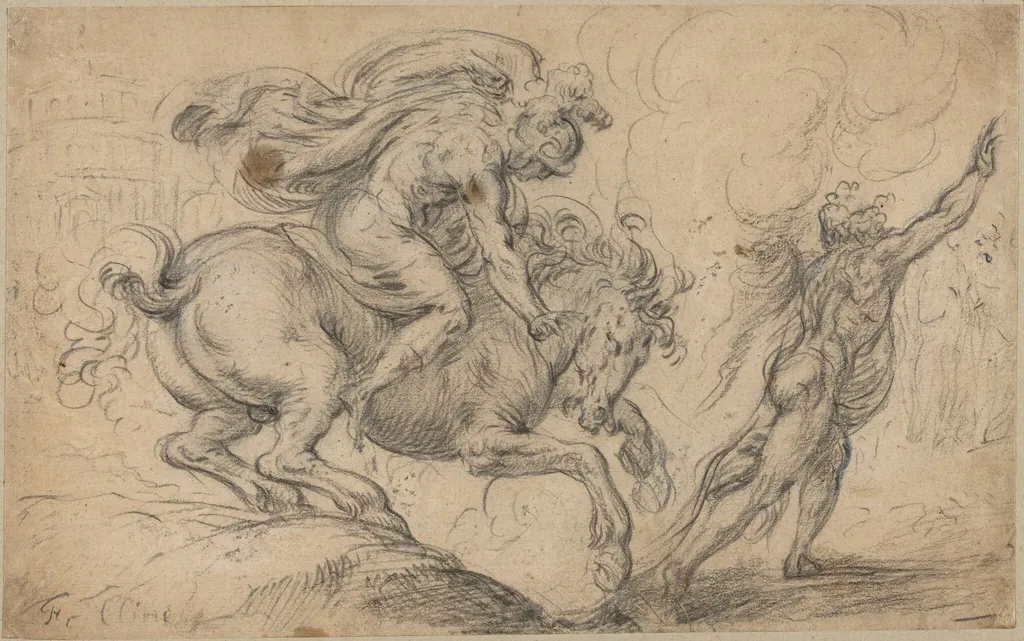
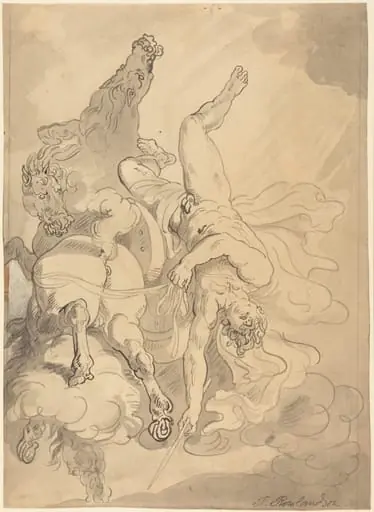
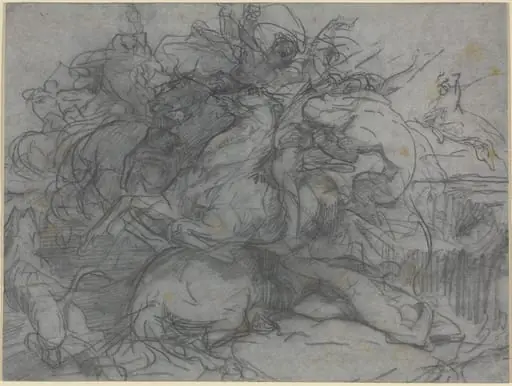
The Sacrifice of Marcus Curtius is a chalk drawing by the Baroque artist Franz Cleyn. It dates from 1644 and is held in the collection of the National Gallery of Art.
About this work
Overview
Franz Cleyn’s drawing titled The Sacrifice of Marcus Currius dates from around 1644. Executed in black chalk on laid paper, the work measures a modest size typical of preparatory studies of the period. It belongs to the Baroque era, a time when artists emphasized dynamic composition and heightened emotional content.
Technique & Style
The artist employed dense black chalk strokes to model forms, exploiting the textured surface of laid paper to suggest depth and volume. The drawing’s contrast of light and shadow reflects Baroque chiaroscuro principles, while the fluid line work conveys movement and drama without the use of color.
Subject & Meaning
The composition depicts the legendary Roman hero Marcus Currius, who, according to myth, leapt into a chasm to save his city. By illustrating this self‑sacrificial act, Cleyn engages with themes of civic virtue and personal bravery, resonating with contemporary Baroque interests in heroic narratives.
Context
Created in the mid‑17th century, the drawing aligns with the broader European fascination with classical antiquity and moral exempla. Cleyn, active in the German‑Dutch artistic circles, often produced works that combined scholarly subject matter with the expressive vigor characteristic of Baroque visual culture.
Artist & collection


![Statue of Alexander and Bucephalus [recto], by Hubert Robert](https://artifactworldgallery.com/img/hubert-robert--statue-of-alexander-and-bucephalus-recto--d9a688cc8df08f18-w320.webp)
![Figures on Horseback [verso], by Unknown](https://artifactworldgallery.com/img/unknown--figures-on-horseback-verso--014ce85ac0e4d9d4-w320.webp)