Artwork
Leçon de Voltiges (Trick Riding)
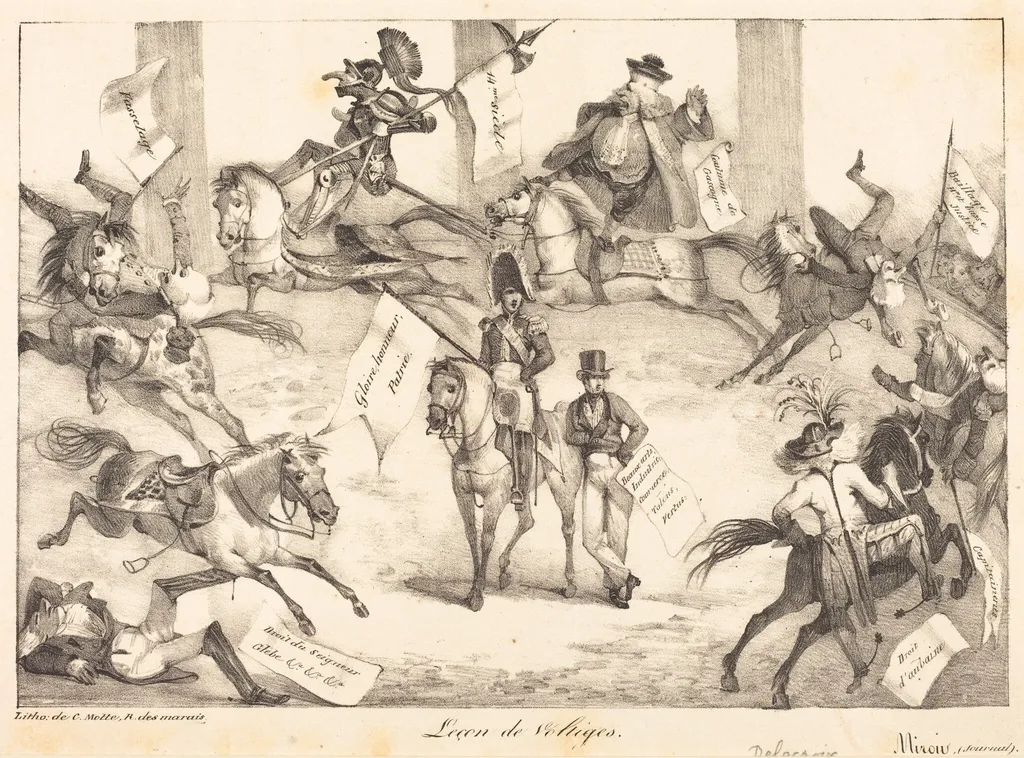
Leçon de Voltiges (Trick Riding) is an ink print by the Romanticist artist Eugène Delacroix. It dates from 1822 and is held in the collection of the National Gallery of Art.
About this work
Overview
The work stands as an experimental piece in his oeuvre, showcasing his fascination with motion and the physicality of human and animal interaction.
Created in 1822, *Leçon de Voltiges (Trick Riding)* is a lithograph by Eugène Delacroix that captures the energy of equestrian performance. Executed on wove paper, it reflects his early engagement with printmaking and his departure from academic rigidity. The work stands as an experimental piece in his oeuvre, showcasing his fascination with motion and the physicality of human and animal interaction.
Subject & Meaning
The scene portrays a chaotic training session where horses rear and riders struggle to maintain control, while spectators observe below. Inscriptions such as 'Gloire honneur Patrie' and 'Liberté, Égalité, Fraternité' subtly link the spectacle to revolutionary ideals, suggesting a metaphor for societal turbulence. Delacroix frames physical disorder as a mirror for political and emotional upheaval, without overt narrative resolution.
Technique & Style
Delacroix employed lithography to achieve rapid, expressive lines that mimic the spontaneity of a sketch. His scratchy, energetic marks convey motion and tension, contrasting with the stillness of the onlookers. The technique allowed him to translate the immediacy of his drawings into print, emphasizing texture and gesture over polished detail. This approach broke from traditional print conventions of the time.
History & Provenance
Produced in 1822, the lithograph emerged during Delacroix’s formative years, shortly after his breakthrough with *Dante and Virgil*. It was likely made for a limited audience, possibly as a study or promotional piece. Its survival in private and institutional collections attests to its significance as an early example of Romantic printmaking, though it was never widely circulated.
Context
In early 1820s France, lithography was gaining traction as a medium for artists seeking alternatives to engraving. Delacroix, influenced by Rubens and Venetian colorism, used it to explore dynamic subjects outside the academy’s favored themes. The trick riding scene reflects broader cultural interest in spectacle and equestrian arts, while the political slogans hint at lingering revolutionary fervor in post-Napoleonic society.
Legacy
Though not among Delacroix’s most famous works, *Leçon de Voltiges* demonstrates his pioneering use of lithography to capture movement and emotion. It influenced later artists who embraced printmaking for its immediacy and expressive potential. The work remains a key example of how Romantic ideals translated into the technical innovations of 19th-century graphic art.
Artist & collection
Artist
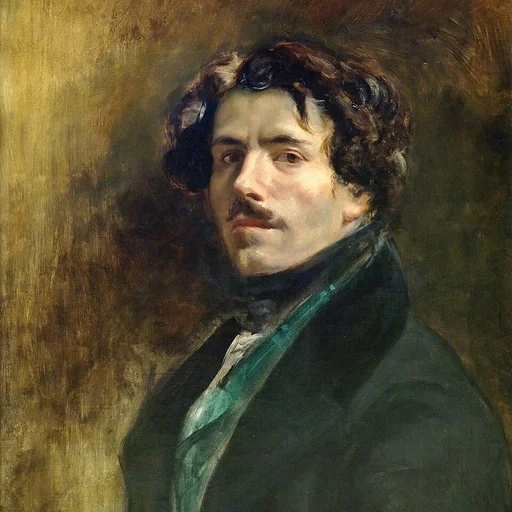
Ferdinand Victor Eugène Delacroix ( DEL-ə-krwah, -KRWAH; French: ; 26 April 1798 – 13 August 1863) was a French Romantic artist who was regarded as the leader of the French Romantic school.

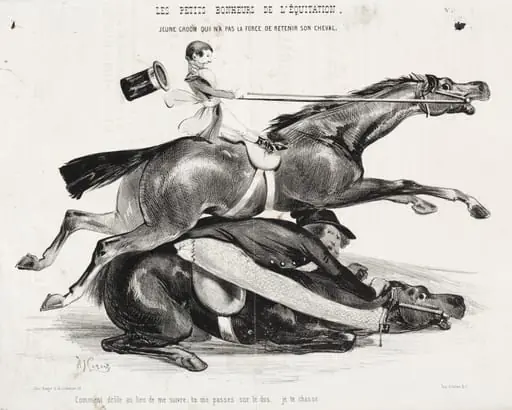 Les petits bonheurs de l'équitation: Jeune Groom qui n'a pas la force de retenir son cheval
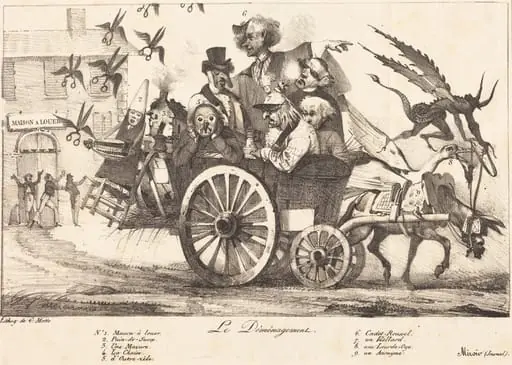 Le Déménagement de la Censure
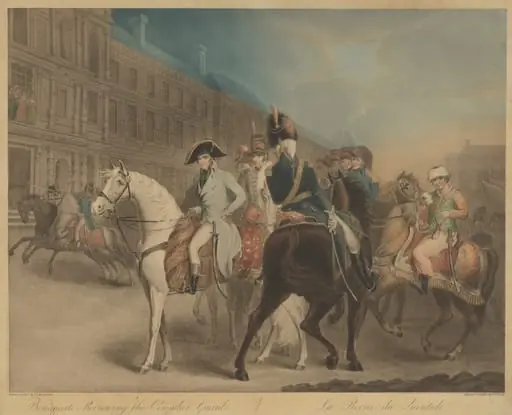 Bonaparte Reviewing the Consular Guard (La Revue du Quintidi)
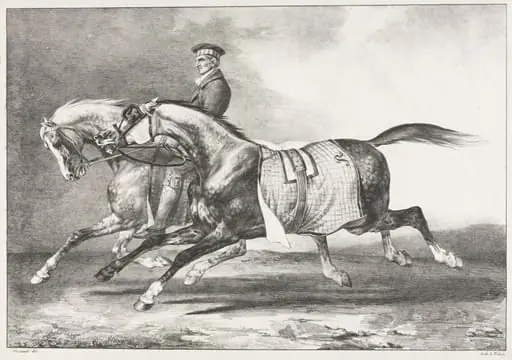 Two Dappled Horses Exercising
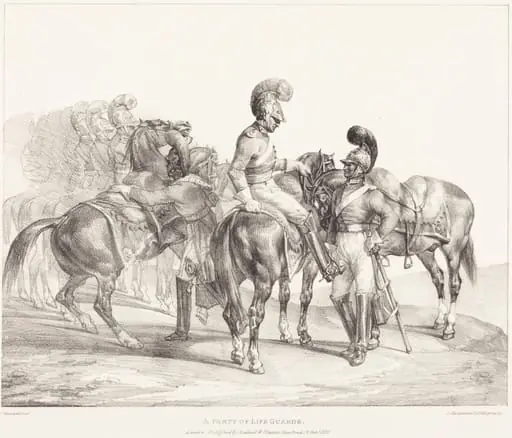 A Party of Life Guards
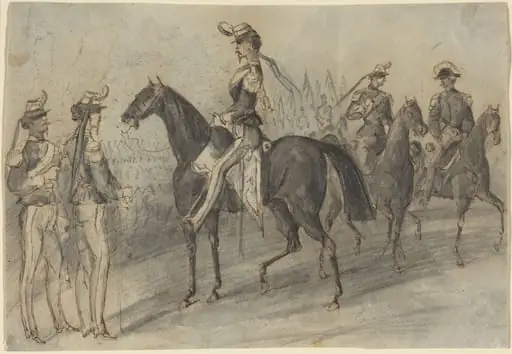 Military Parade
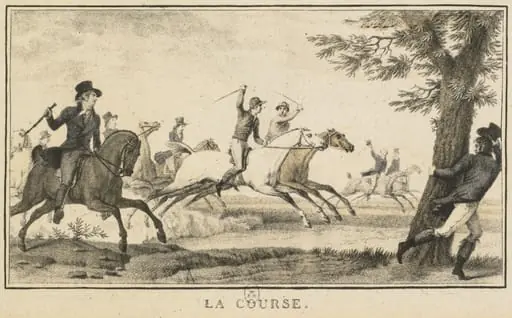 Racing Scenes: The Race (Scènes Hippiques: La course)
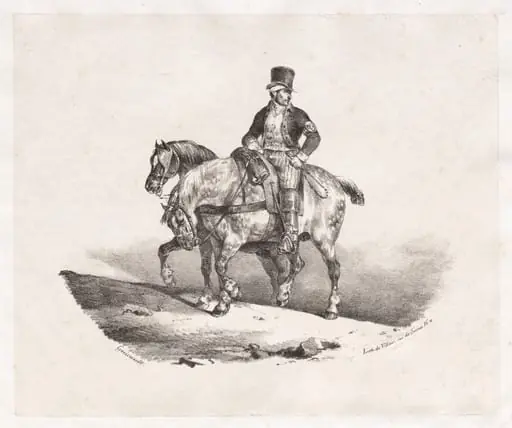 Postman or Two Harnessed Horses
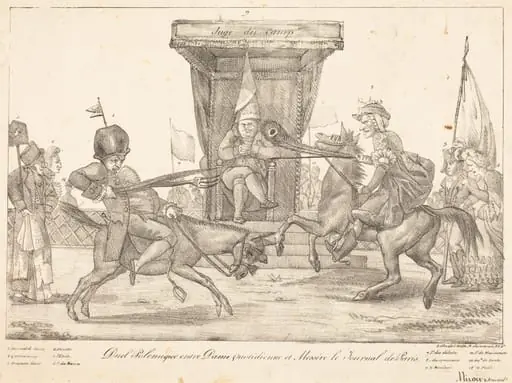 Duel Polemique
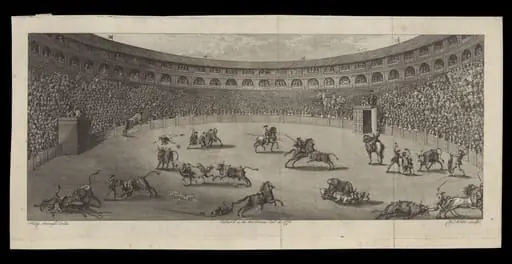 H Beard Print Collection
 The Course
 Prudhomme obligé de prendre des leçons...