Artwork
Prudhomme obligé de prendre des leçons...
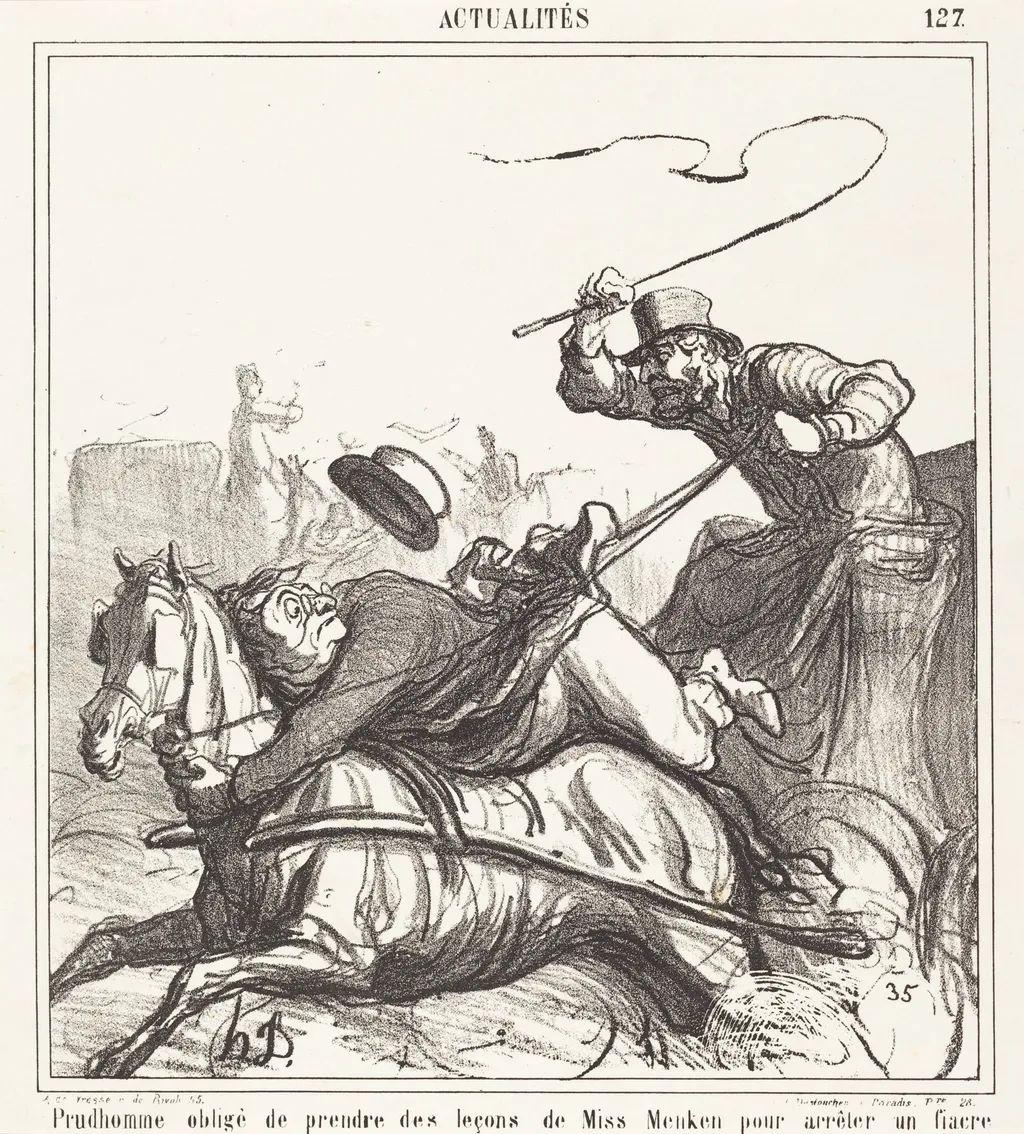
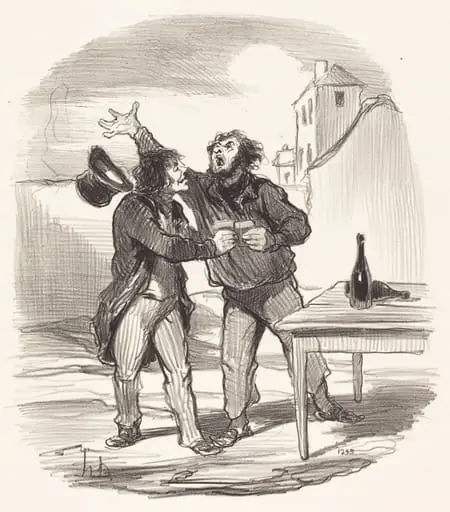
Prudhomme obligé de prendre des leçons... is an ink print by the Impressionist artist Honoré Daumier. It dates from 1867 and is held in the collection of the National Gallery of Art.
About this work
Overview
Created in 1867, this lithograph by Honoré Daumier captures a moment of reluctant domestic ritual: a man compelled to take piano lessons.
Created in 1867, this lithograph by Honoré Daumier captures a moment of reluctant domestic ritual: a man compelled to take piano lessons. Part of Daumier’s broader body of satirical prints, the work uses minimal line and expressive gesture to convey social observation. Unlike grand historical narratives, it focuses on the quiet absurdities of middle-class life, reflecting the artist’s enduring interest in the tensions between duty and desire.
Subject & Meaning
The figure, likely a caricature of the bourgeois Prudhomme—a recurring symbol of self-satisfied conformity—sits stiffly at the piano, his posture betraying aversion. The scene implies societal pressure to cultivate cultured pastimes, even when unenjoyed. Daumier critiques the performative nature of middle-class refinement, where artistic education becomes a social obligation rather than a personal pursuit, exposing the gap between aspiration and authentic engagement.
Technique & Style
Executed in lithography, the image relies on fluid, economical linework and tonal contrast to suggest form and emotion. Daumier’s brushwork on stone captures subtle shifts in posture and expression without detail, allowing the viewer to infer the subject’s discomfort. The absence of background or ornamentation focuses attention entirely on the psychological tension between the man and the unseen instructor, enhancing the humor and pathos.
History & Provenance
The print was produced during the final years of the Second Empire, a time when Daumier’s satirical output faced increasing censorship. Though originally published in a periodical, likely *Le Charivari*, the work survives as part of a broader archive of his graphic commentary. Its survival reflects its resonance as a cultural document, preserved in institutional collections for its insight into 19th-century French domestic norms.
Context
In mid-19th-century France, piano lessons were a common feature of middle-class upbringing, symbolizing moral and social advancement. Daumier’s depiction aligns with broader critiques of bourgeois pretension, echoing themes in literature and theater of the era. His work responds to a society increasingly defined by ritualized conformity, where cultural capital was as much about appearance as ability.
Legacy
Daumier’s lithographs, including this one, influenced later generations of illustrators and cartoonists through their psychological precision and social acuity. The image endures not as political manifesto but as a quiet, enduring observation of human resistance to imposed routines. Its simplicity and emotional clarity continue to resonate in visual culture’s treatment of everyday alienation.
Artist & collection

Artist
Honoré-Victorin Daumier was a French painter, sculptor, and printmaker, whose many works offer commentary on the social and political life in France, from the Revolution of 1830 to the fall of the Second French Empire in 1870.









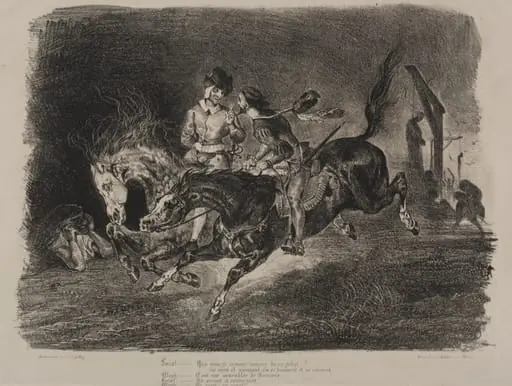 Illustrations for Faust: Faust and Méphistophélés horse riding on the Sabbath
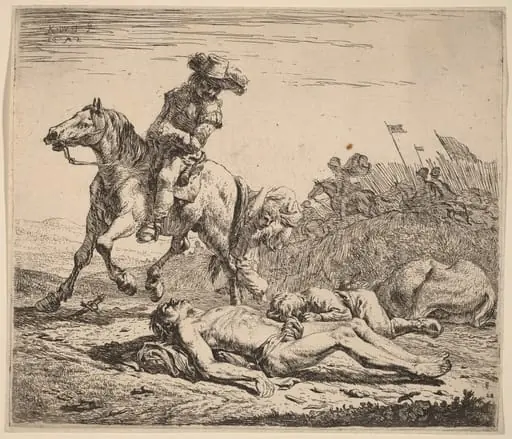 Battlefield
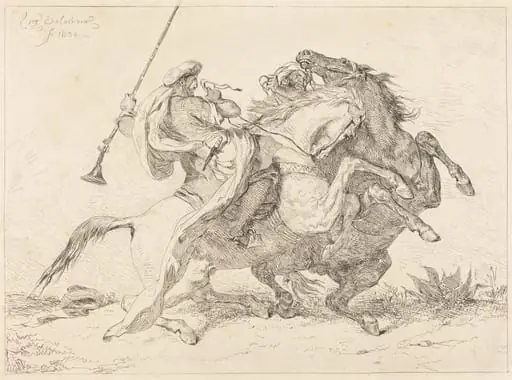 Encounter of the Moorish Horsemen (Rencontre de Cavaliers Maures)
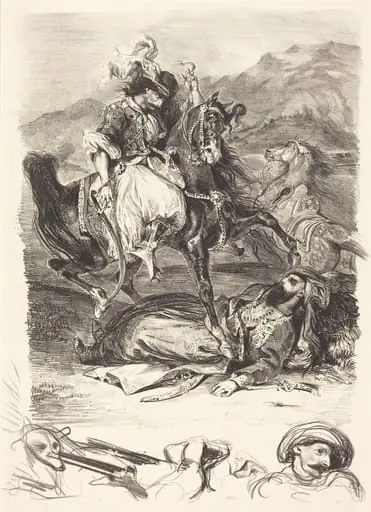 The Battle of the Giaour and the Pasha (Combat du Giaour et du Pacha)
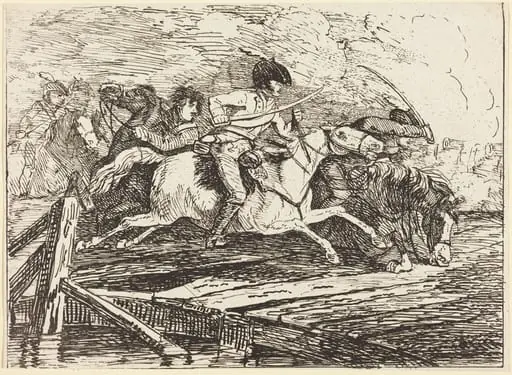 Cavalry Charging
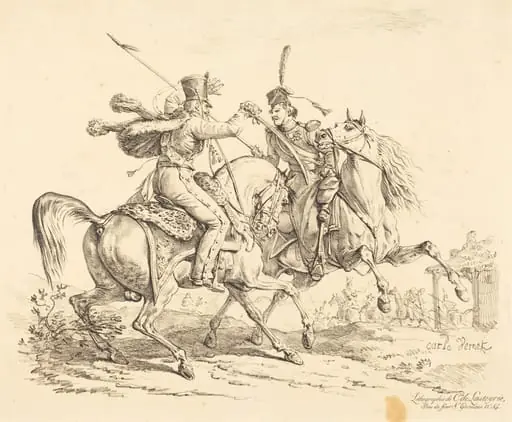 Hussard Striking a Cosack
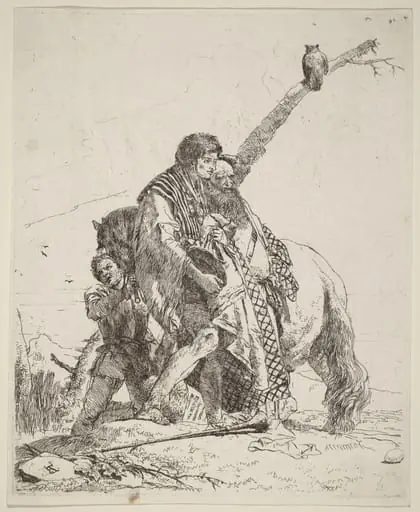 Youth, Sage, and Attendant with Horse
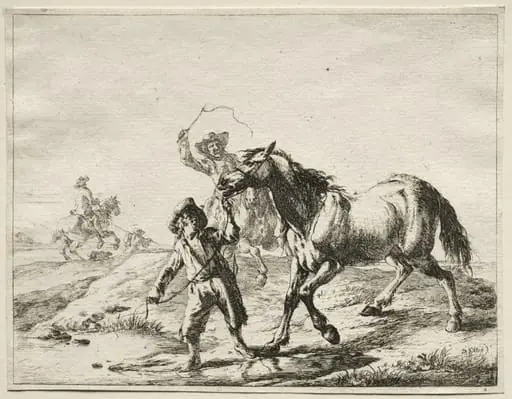 A boy taking a horse to drink
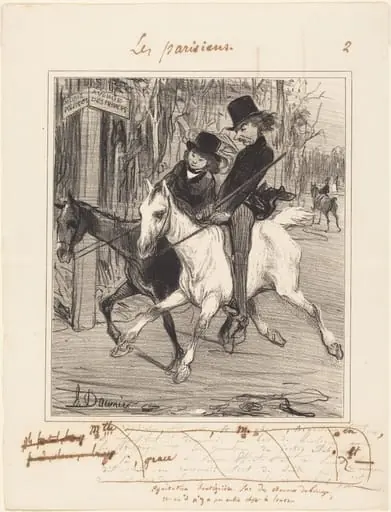 Équitation boutiquière
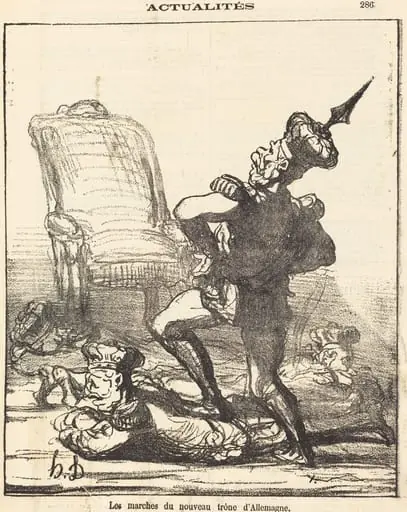 Les marches du nouveau trone d'Allemagne
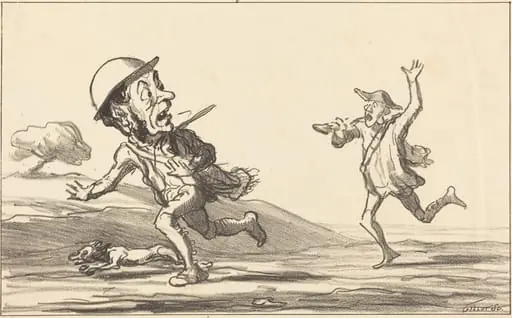 Allons bon!... il parait... chasse réservée
 Membre... du dix Décembre prenant le la...