Artwork
Les petits bonheurs de l'équitation: Jeune Groom qui n'a pas la force de retenir son cheval
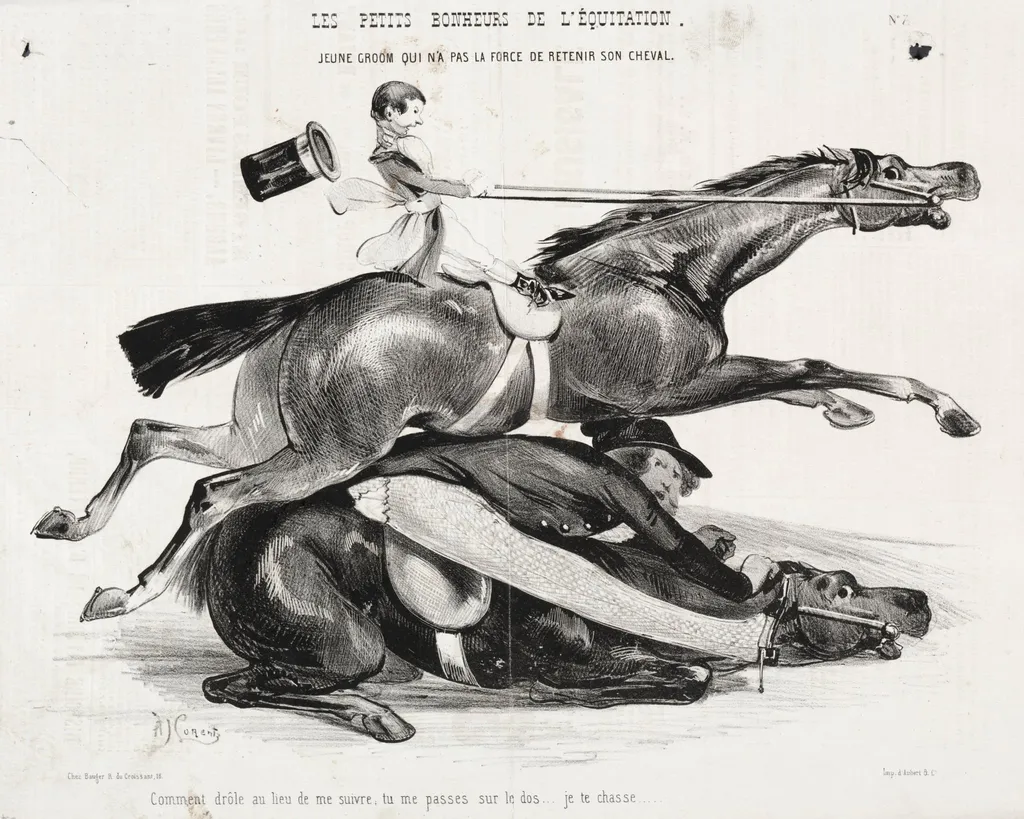
Les petits bonheurs de l'équitation: Jeune Groom qui n'a pas la force de retenir son cheval is a print by the Romanticist artist Alade Joseph Lorentz. It dates from 1842 and is held in the collection of the Cleveland Museum of Art.
About this work
Overview
Created in 1842 by Alade Joseph Lorentz, this print is part of a series titled Les petits bonheurs de l'équitation. It depicts a moment of chaotic instability during horse training, rendered with dynamic lines and exaggerated motion. The work is held in the collection of The Cleveland Museum of Art and reflects a satirical lens on equestrian culture, blending observation with comic exaggeration.
Subject & Meaning
The scene centers on a young groom, overwhelmed by a rearing horse, his hat airborne as he clings desperately to the saddle.
The scene centers on a young groom, overwhelmed by a rearing horse, his hat airborne as he clings desperately to the saddle. Beneath them, another horse and a dog are entangled on the ground, amplifying the sense of disorder. The ironic title—'The little joys of riding'—undercuts the violence of the moment, suggesting humor in the incompetence of inexperienced handlers rather than the nobility of horsemanship.
Technique & Style
Lorentz employs fluid, energetic linework to convey motion and tension. The composition is tightly packed, with overlapping figures and abrupt angles that heighten the feeling of chaos. Shading is minimal, emphasizing contour and gesture over realism. The style leans toward caricature, using distortion and exaggeration to amplify the absurdity of the situation, aligning with 19th-century satirical print traditions.
History & Provenance
The print was produced in 1842 as part of a series documenting the mishaps of equestrian life. It entered The Cleveland Museum of Art’s collection through documented acquisition, though its early circulation and ownership prior to museum acquisition remain unrecorded. As a printed work, multiple impressions likely existed, but few are known to survive in public collections.
Context
In mid-19th-century France, equestrian culture was both a social ritual and a subject of popular satire. Lorentz’s work responds to a broader trend in illustrated periodicals that mocked the pretensions of aristocratic pastimes. By focusing on the failures of low-status grooms, the image subtly critiques class dynamics within horsemanship, using humor to expose the gap between ideal and reality.
Legacy
Though Lorentz is not widely known today, this print exemplifies a niche but persistent genre of satirical equestrian imagery. Its blend of observation and caricature influenced later illustrators who depicted animal and human folly with similar wit. The work remains a quiet testament to how humor was used to interrogate social norms through visual narrative in pre-photographic media.
Artist & collection

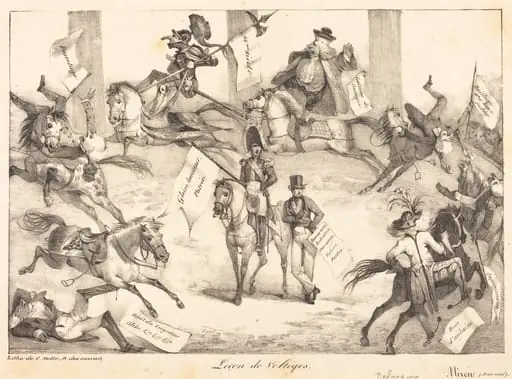 Leçon de Voltiges (Trick Riding)
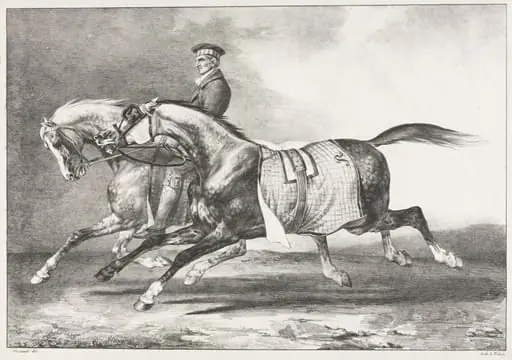 Two Dappled Horses Exercising
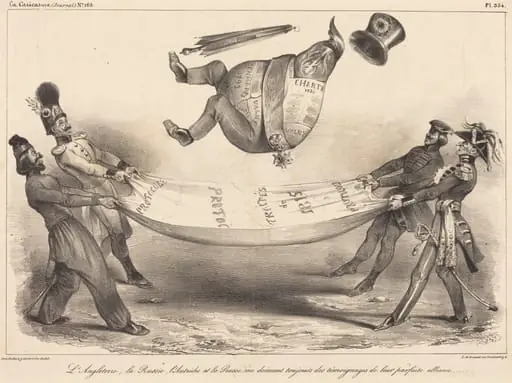 L'Angleterre, la Russie, l'Autriche...leur parfaite alliance
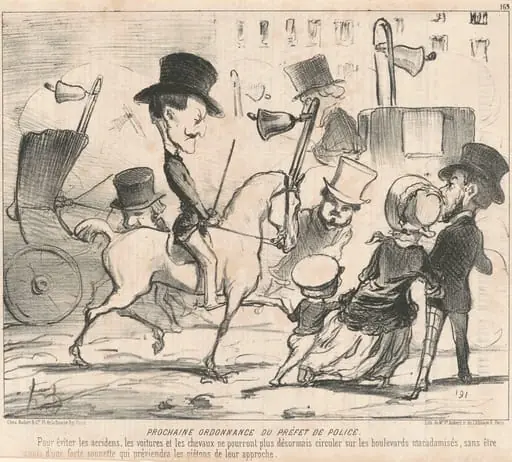 Prochaine ordannace du préfet de police
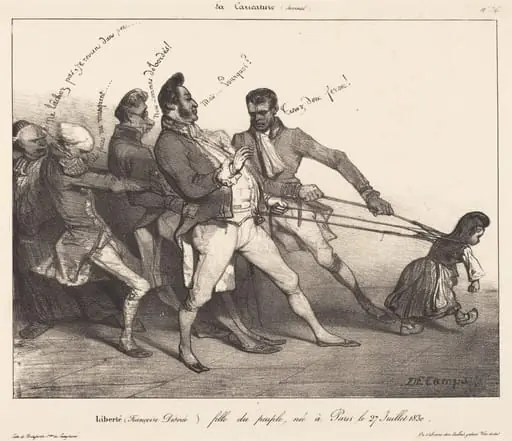 Liberté
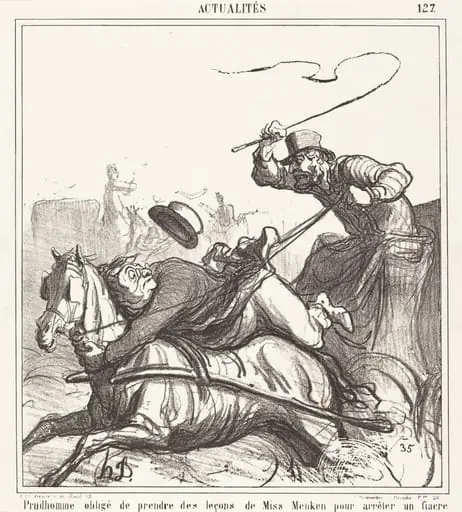 Prudhomme obligé de prendre des leçons...
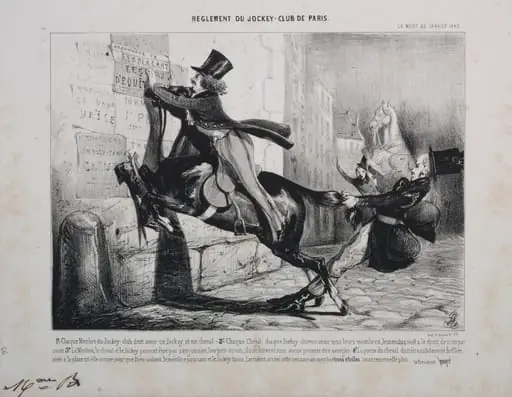 Réglement du Jockey Club de Paris: Chaque membre du Jockey Club doit avoir un Jockey, et un cheval...
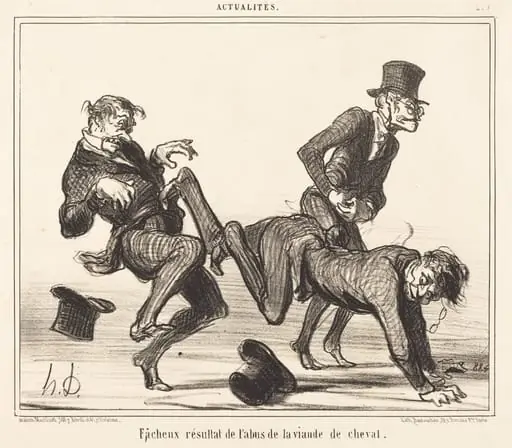 Facheux résultat... de la viande de cheval
 Postman or Two Harnessed Horses
 Progrès de l'équitation
 Un citoyen exaspéré par les buffleteries
 Les Petits bonheurs de l'equitation: Lancades. Il va arriver un malheur