Artwork
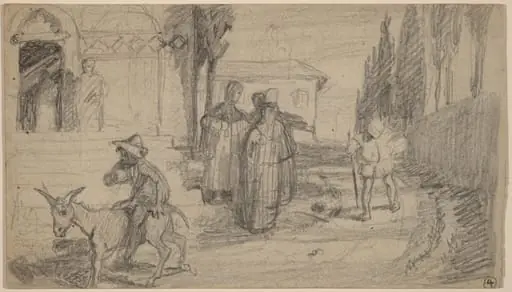
Son and Donkey
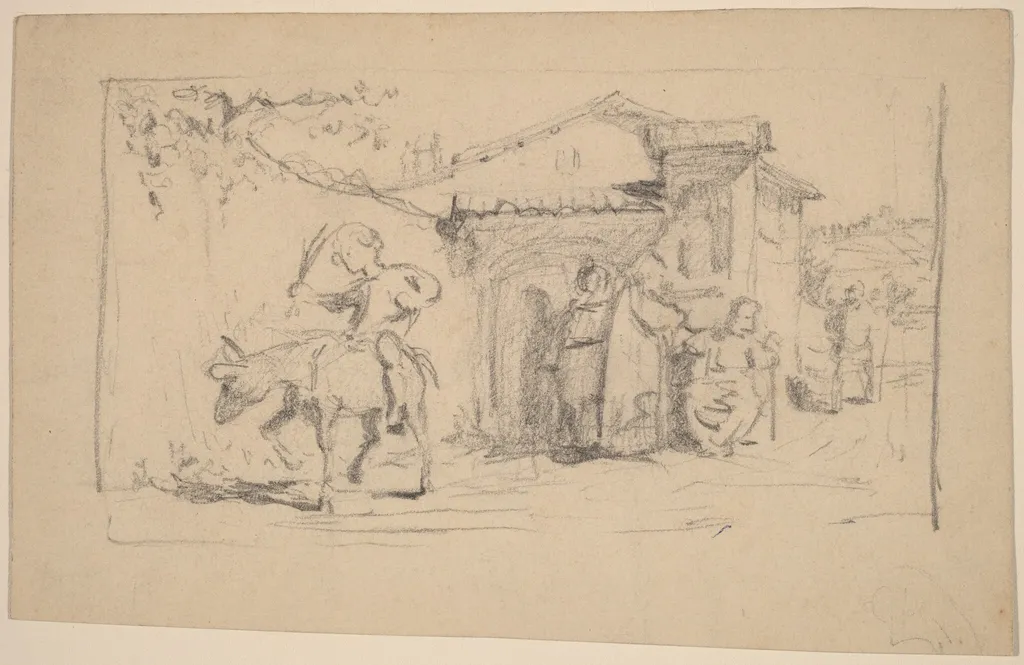
Son and Donkey is a graphite drawing by the Impressionist artist Elihu Vedder. It dates from 1859 and is held in the collection of the National Gallery of Art.
About this work
Overview
The work belongs to Vedder’s early period, before his later fame as a symbolist painter and illustrator of literary texts.
Created circa 1859, *Son and Donkey* is a graphite drawing on wove paper by American artist Elihu Vedder. The work belongs to Vedder’s early period, before his later fame as a symbolist painter and illustrator of literary texts. It exemplifies his initial exploration of narrative content through drawing, employing the modest medium favored for studies and book illustrations of the mid‑nineteenth century.
Subject & Meaning
The composition depicts a youthful figure alongside a donkey, a pairing that traditionally evokes themes of humility, labor, and pastoral innocence. While no explicit program accompanies the image, the title and simple arrangement suggest a modest, perhaps allegorical, meditation on the relationship between youth and animal companion within a rural setting.
Technique & Style
Vedder rendered the scene entirely in graphite, exploiting the medium’s capacity for fine line work and subtle tonal variation. The use of wove paper provides a smooth surface that supports delicate shading and precise contours, allowing the artist to model forms without the texture of laid paper. The drawing reflects a careful, controlled hand characteristic of preparatory studies of the era.
History & Provenance
The piece originates from Vedder’s New York period, prior to his relocation to Europe and subsequent involvement with the symbolist movement. It entered the public domain through a private collection before being acquired by the museum in the early twenty‑first century, where it now serves as an example of his formative graphic practice.
Context
In the 1850s American art circles, drawing served both as a pedagogical tool and a means of producing illustrations for books and periodicals. Vedder’s engagement with narrative drawing aligns with contemporary trends among illustrators who sought to convey literary and moral subjects through accessible, reproducible media. This work predates his celebrated illustrations for *The Rubaiyat of Omar Khayyam*, marking an early stage in his symbolic visual language.
Artist & collection

Artist
Elihu Vedder (26 February 1836 – 29 January 1923) was an American symbolist painter, book illustrator and poet from New York City.

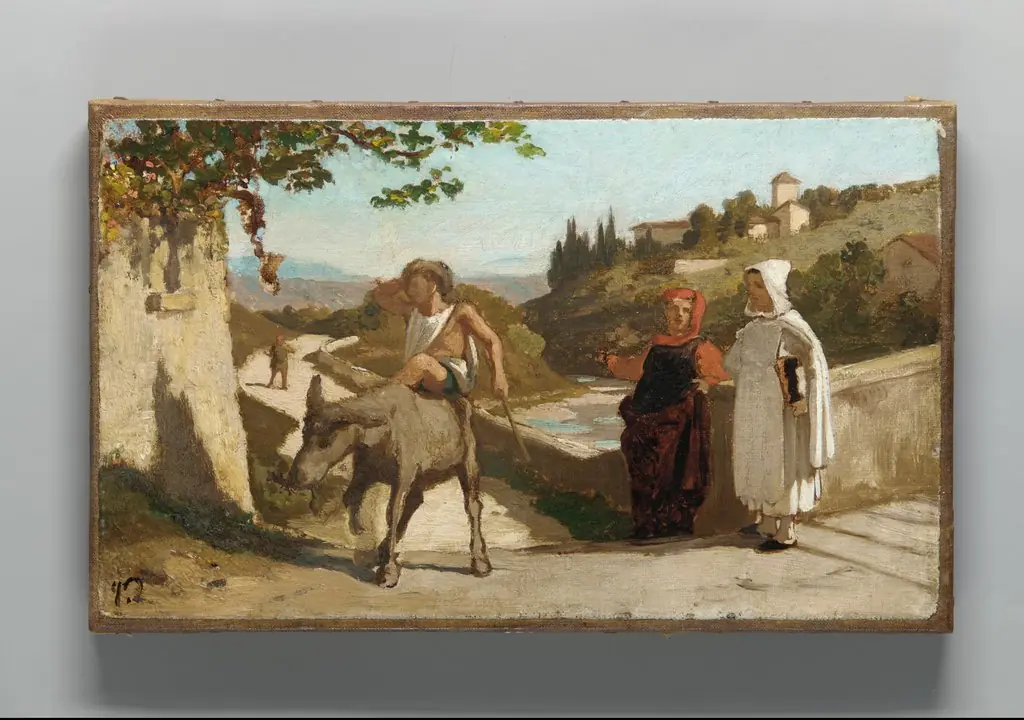 The Fable of the Miller, His Son, and the Donkey
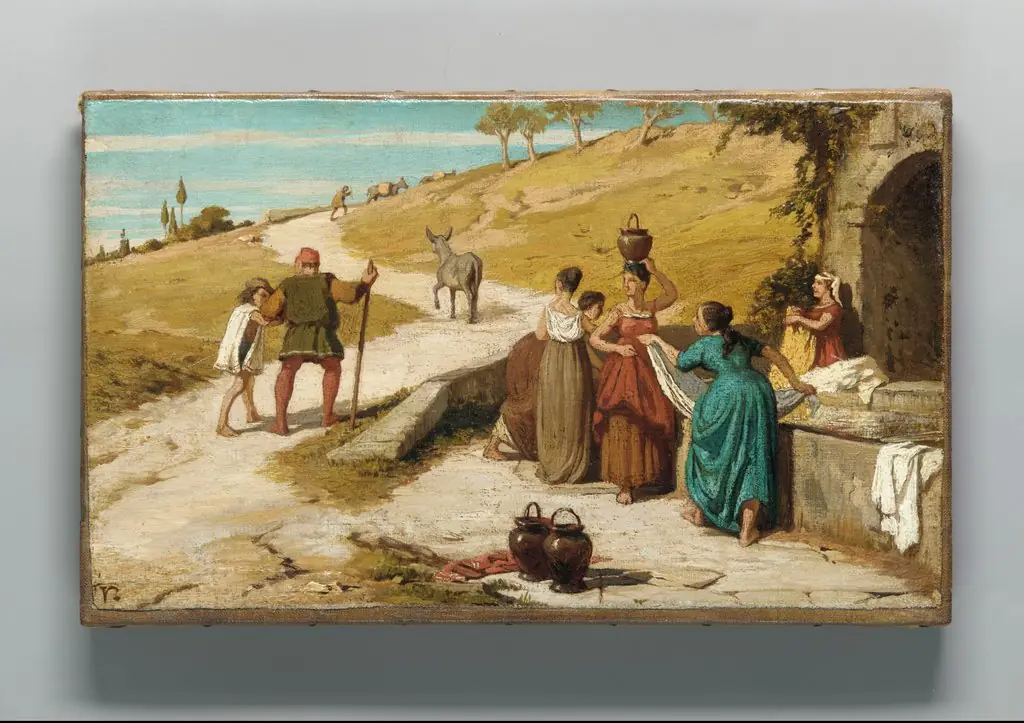 The Fable of the Miller, His Son, and the Donkey
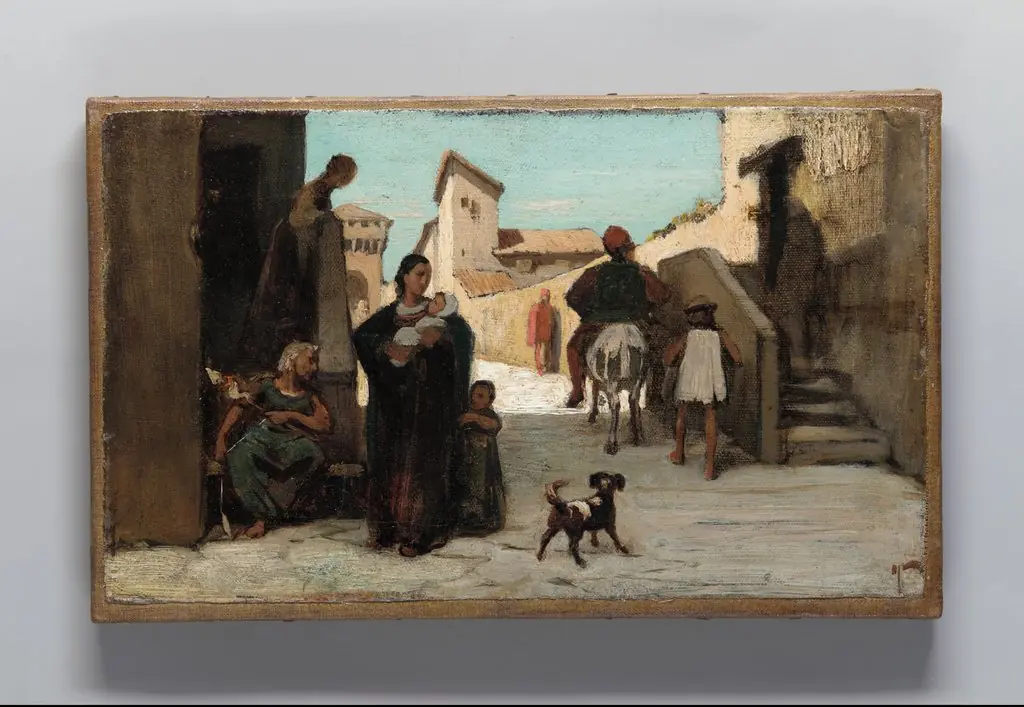 The Fable of the Miller, His Son, and the Donkey
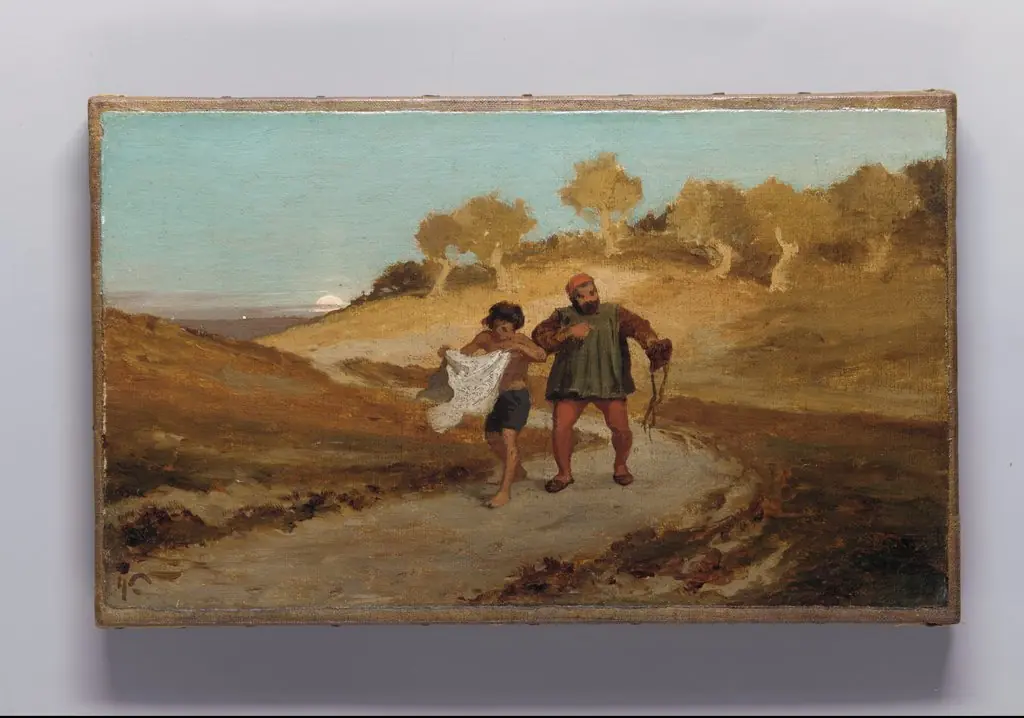 The Fable of the Miller, His Son, and the Donkey
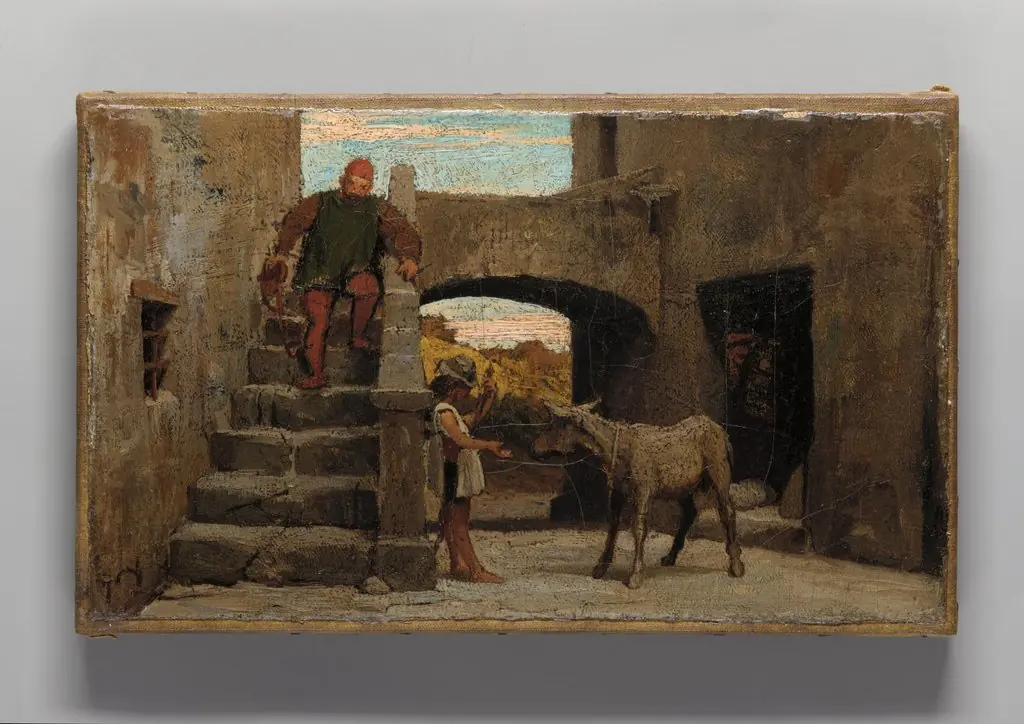 The Fable of the Miller, His Son, and the Donkey
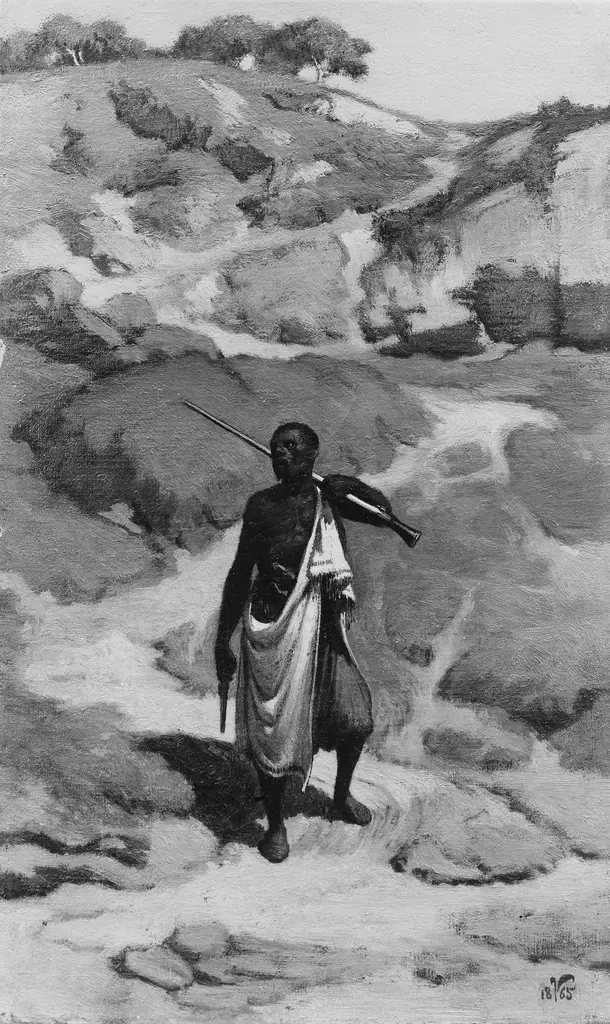 The African Sentinel
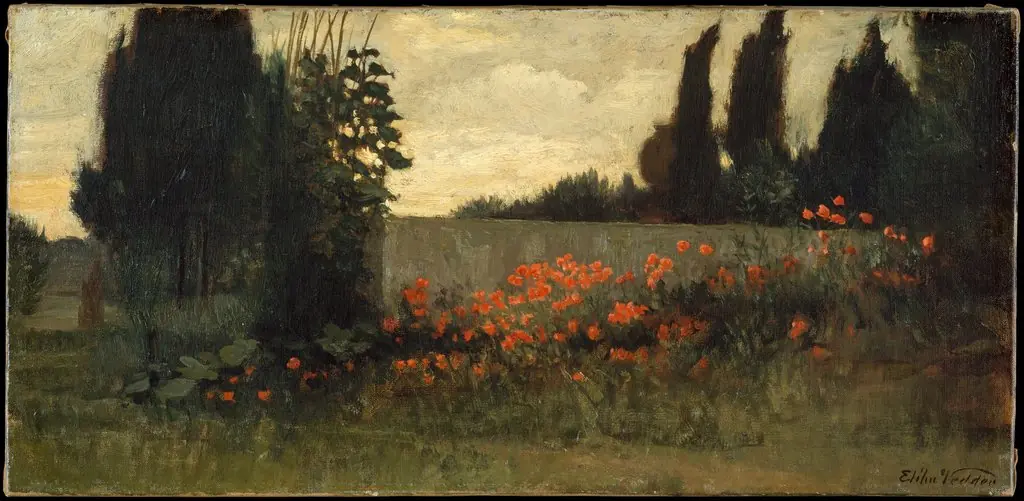 Cypress and Poppies
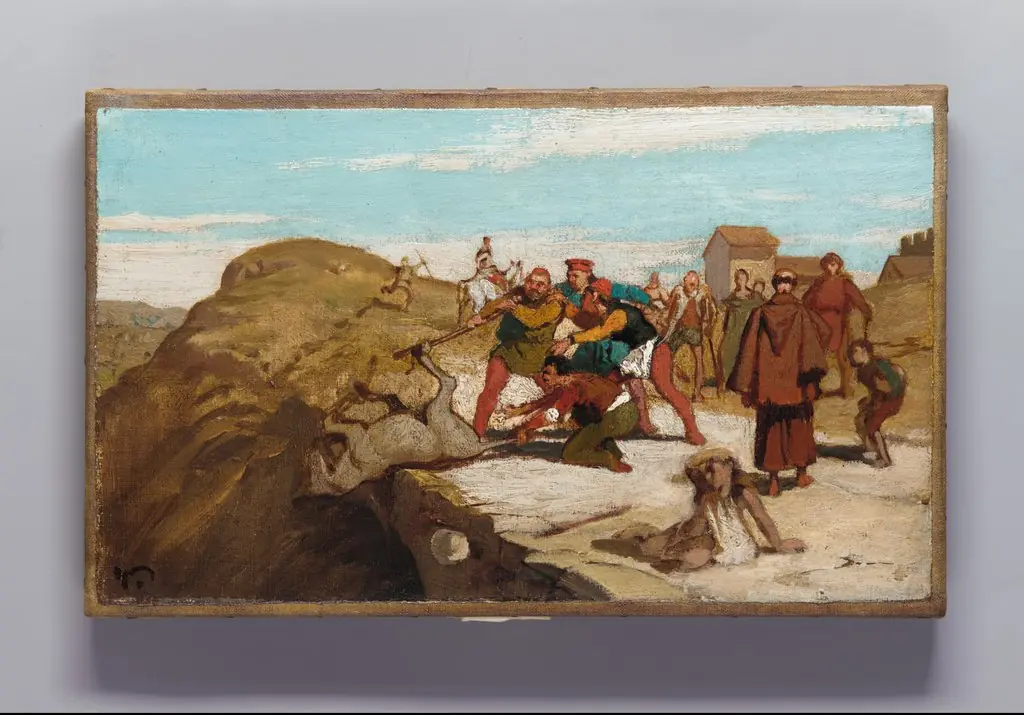 The Fable of the Miller, His Son, and the Donkey
 The Parable of the Miller and the Donkey
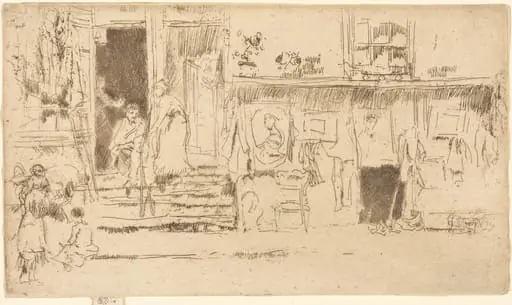 Old-Clothes Shop, No.II
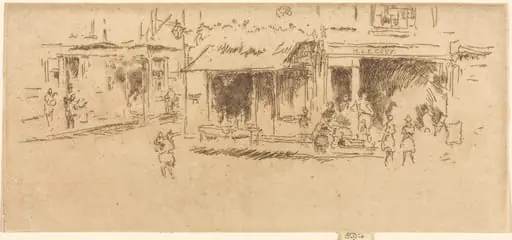 Saint James's Place, Hounsditch
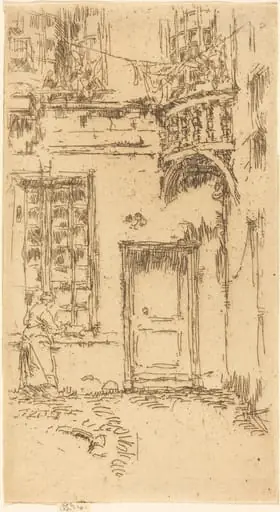 Courtyard, Rue P.L. Courier
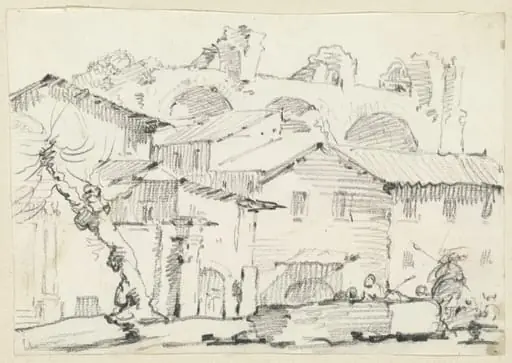 Houses on the North Side of the Forum with the Basilica of Maxentius Beyond
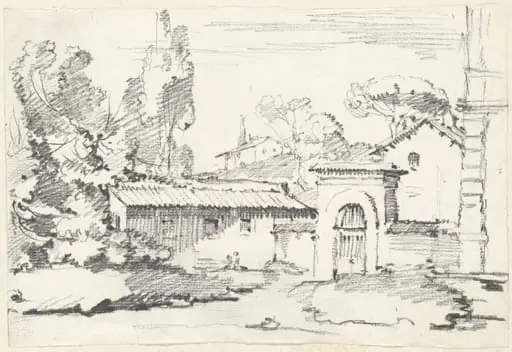 Entrance to the Gardens of the Villa Giulia
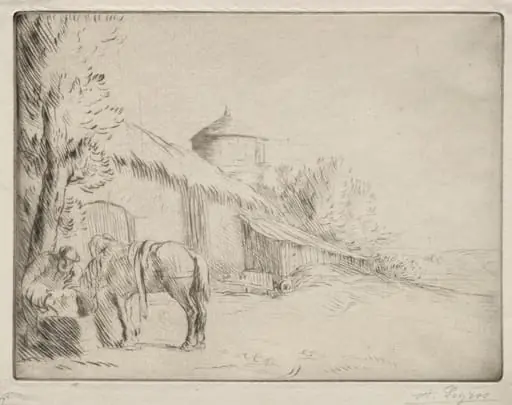 The Watering Place (2nd Plate)
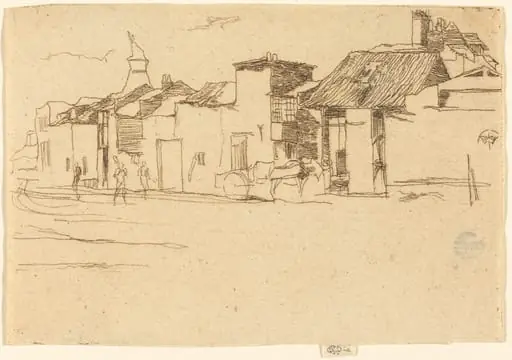 The Old Swan Brewery, Chelsea
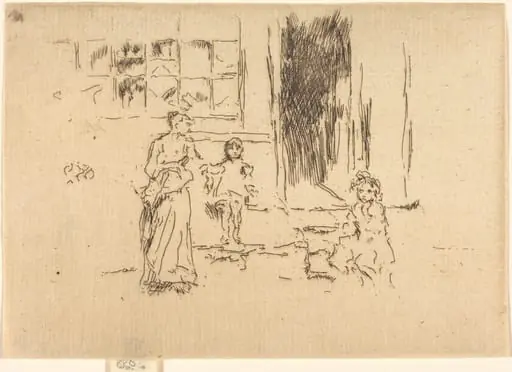 Petticoat Lane
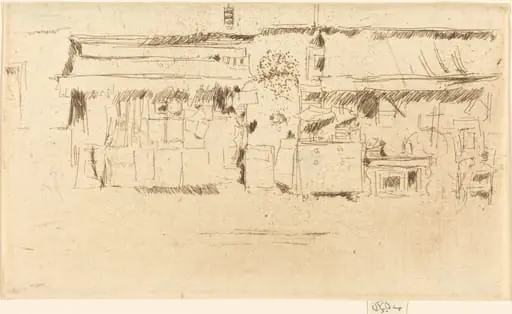 Furniture Shop