Artwork
The Song of Ophelia (Act IV, Scene V)
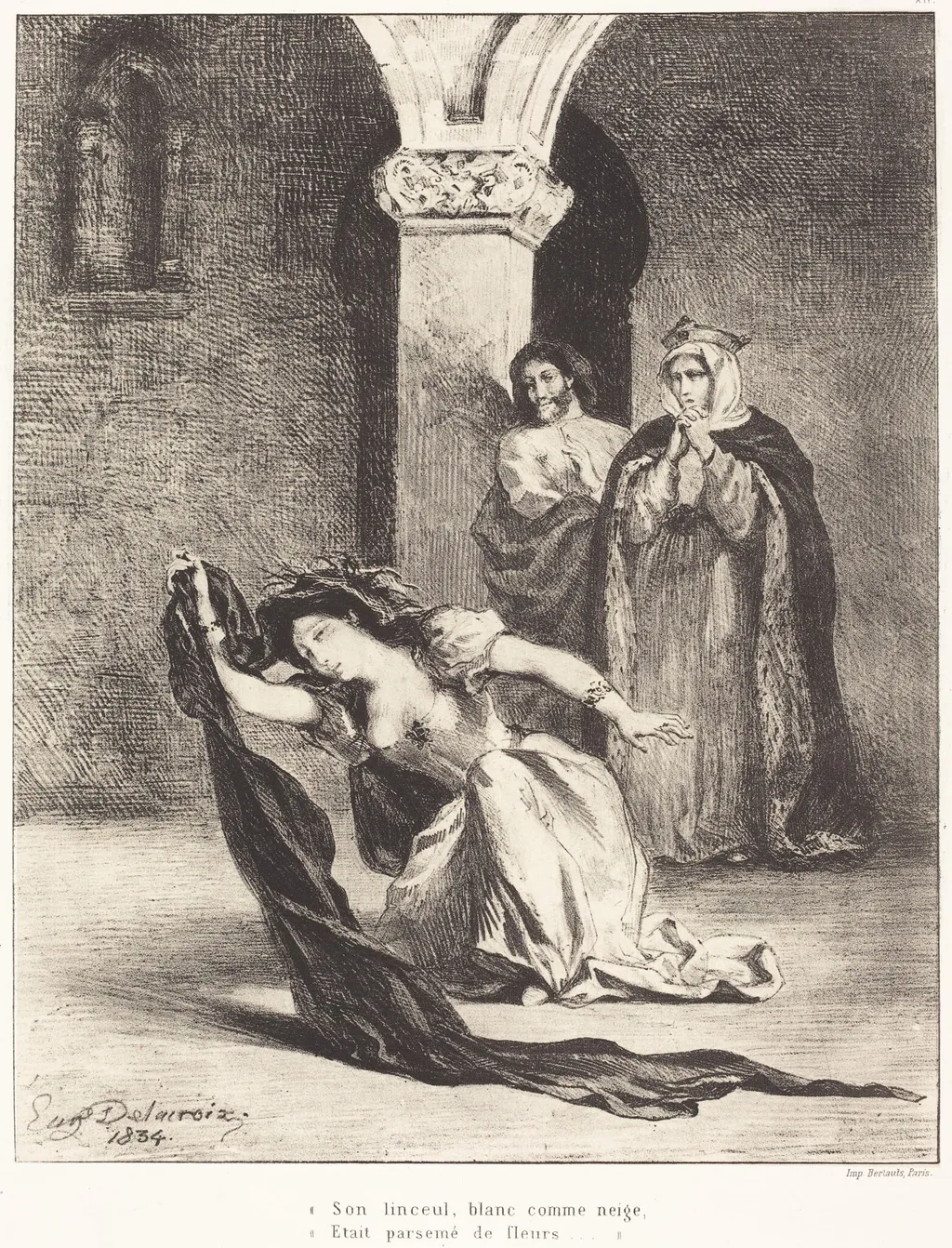
The Song of Ophelia (Act IV, Scene V) is an ink print by the Romanticist artist Eugène Delacroix. It dates from 1834 and is held in the collection of the National Gallery of Art.
About this work
Overview
Created in 1834, this lithograph by Eugène Delacroix illustrates a moment from Shakespeare’s Hamlet, specifically Ophelia’s descent into madness and death.
Created in 1834, this lithograph by Eugène Delacroix illustrates a moment from Shakespeare’s Hamlet, specifically Ophelia’s descent into madness and death. As a print, it reflects Delacroix’s engagement with literary themes and his mastery of lithographic technique, which allowed for expressive, fluid lines. Unlike academic traditions, his approach prioritized emotional intensity over formal clarity.
Subject & Meaning
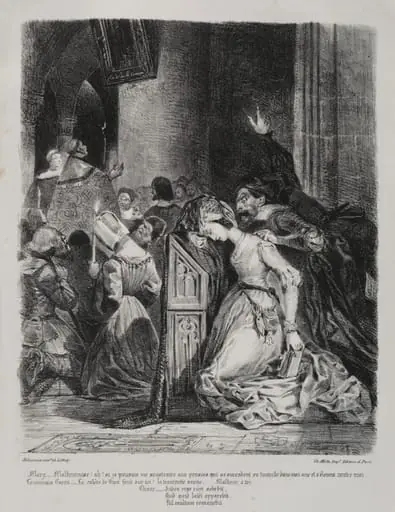
The scene captures Ophelia floating in water, crowned with flowers, her body limp and arms outstretched. Two observers stand nearby, one cloaked and distant, the other exposed and still, suggesting isolation and helplessness. The image conveys psychological fragility rather than narrative resolution, aligning with Romanticism’s fascination with inner turmoil and tragic beauty.
Technique & Style
Delacroix employed rapid, gestural strokes in lithography to evoke motion and emotional urgency. The contrast between Ophelia’s pale form and the dark, loosely drawn surroundings heightens her vulnerability. The medium’s capacity for tonal variation allowed him to suggest atmosphere—dampness, shadow, and enclosure—without detailed rendering, emphasizing mood over precision.
History & Provenance
The print was produced during a period when Delacroix was deeply immersed in literary and theatrical subjects. It was likely part of a series illustrating Shakespeare’s plays, commissioned for a French edition. Though not widely circulated at the time, it entered private and institutional collections in the decades following its creation, gaining recognition for its emotional resonance.
Context
In 1830s France, Romanticism was challenging the dominance of Neoclassicism, favoring passion, nature, and individual suffering. Delacroix, influenced by Rubens and Titian, rejected rigid composition in favor of dynamic forms and rich tonal contrasts. His Ophelia reflects this shift, aligning with broader cultural interests in Shakespeare and the psychological depth of female tragedy.
Legacy
This lithograph contributed to the redefinition of printmaking as a vehicle for expressive, non-academic art. Though less known than his paintings, the work influenced later artists seeking to convey emotion through loose, atmospheric techniques. Its enduring presence in museum collections underscores its role in bridging literature, visual art, and Romantic sensibility.
Artist & collection
Artist
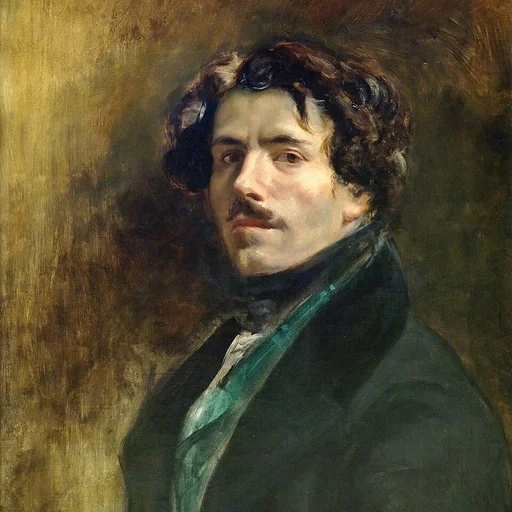
Ferdinand Victor Eugène Delacroix ( DEL-ə-krwah, -KRWAH; French: ; 26 April 1798 – 13 August 1863) was a French Romantic artist who was regarded as the leader of the French Romantic school.