Artwork
Hamlet: The Murder of Polonius
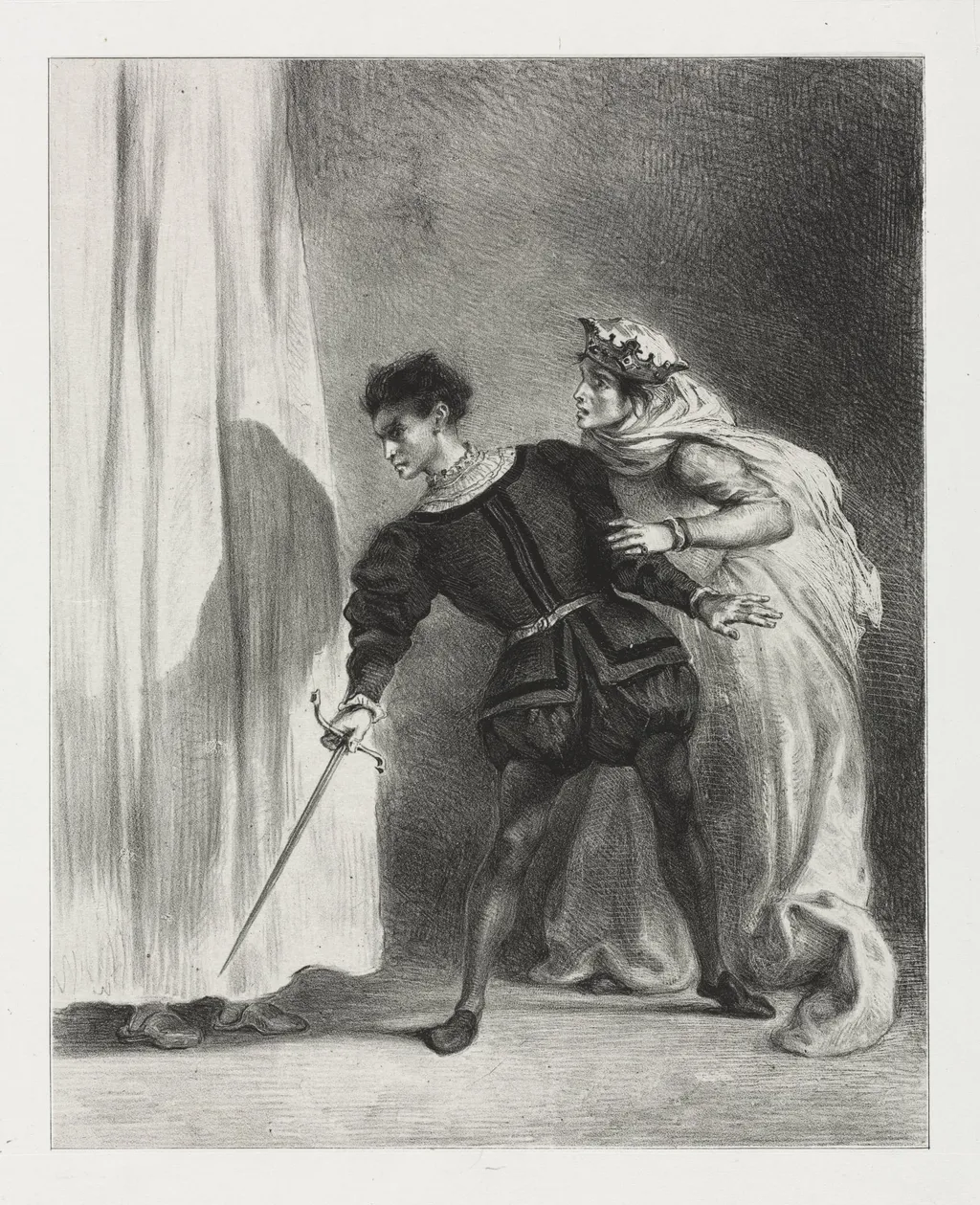
Hamlet: The Murder of Polonius is a print by the Romanticist artist Eugène Delacroix. It dates from 1834 and is held in the collection of the Cleveland Museum of Art.
About this work
Overview
Hamlet: The Murder of Polonius is an 1834 print by Eugène Delacroix, capturing a pivotal moment from Shakespeare's Hamlet. The work exemplifies Delacroix's Romantic style, emphasizing expressive color and dynamic movement.
Subject & Meaning
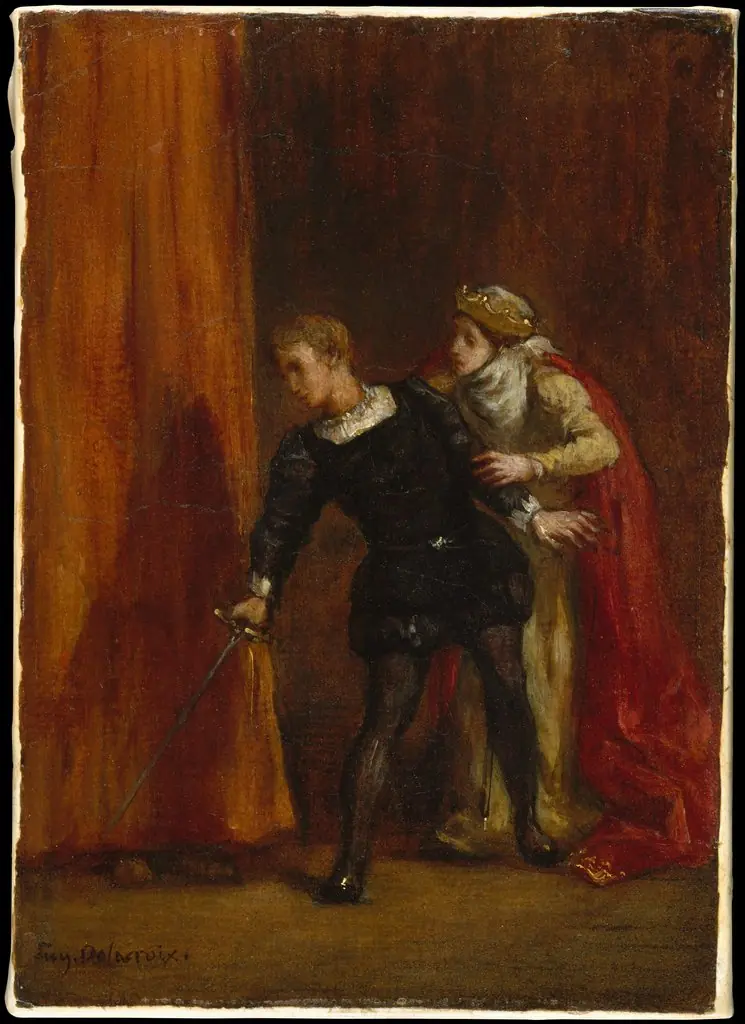
The print depicts the tense confrontation between Hamlet and Polonius, with Hamlet armed and turning left, while a crowned woman (likely Gertrude) grasps his arm in apparent restraint. The scene conveys the emotional intensity of the moment.
Technique & Style
Delacroix employs chiaroscuro, juxtaposing strong light and dark contrasts to heighten drama. Soft, flowing lines render the woman's dress and curtain, contrasting with the sharper, defined strokes of Hamlet's attire and sword, reflecting his influence by Rubens and Venetian Renaissance artists.
History & Provenance
Created in 1834, the print is characteristic of Delacroix's Romantic approach, diverging from classical precision in favor of emotional depth and movement.
Context
Part of a broader 19th-century artistic fascination with Shakespearean themes, Delacroix's work reflects the era's interest in dramatic literature and the expressive potential of printmaking.
Legacy
Hamlet: The Murder of Polonius contributes to Delacroix's reputation as a leading Romantic artist, influencing subsequent generations in their interpretation of literary themes through expressive, emotionally charged visuals.
Own this work as a print
Artist & collection
Artist
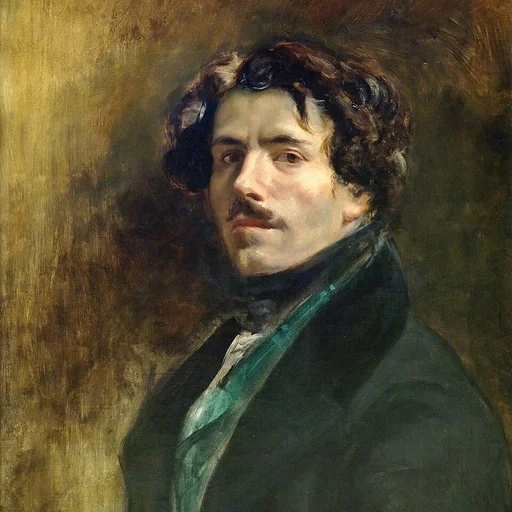
Ferdinand Victor Eugène Delacroix ( DEL-ə-krwah, -KRWAH; French: ; 26 April 1798 – 13 August 1863) was a French Romantic artist who was regarded as the leader of the French Romantic school.

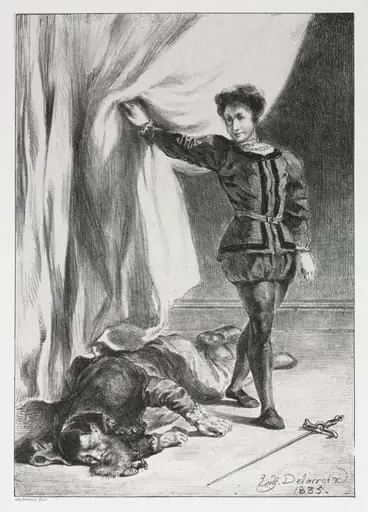 Hamlet: Hamlet and the Corpse of Polonius
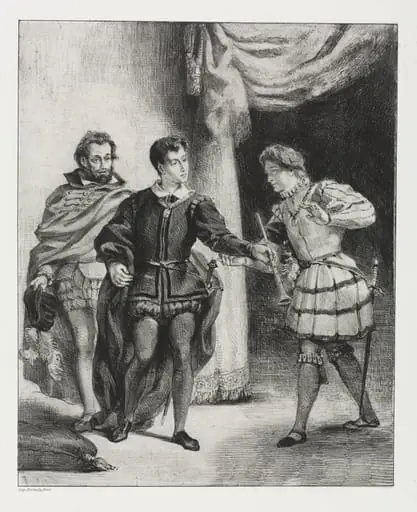 Hamlet: Hamlet and Guildenstern
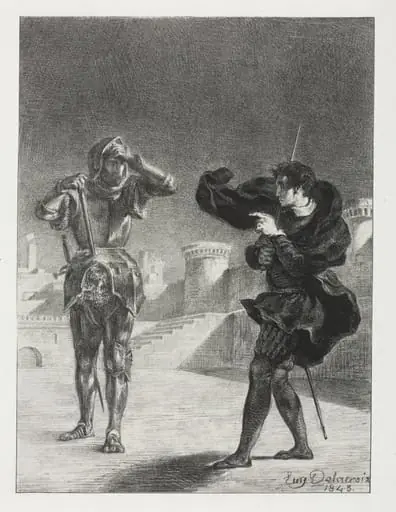 Hamlet: The Phantom on the Terrace
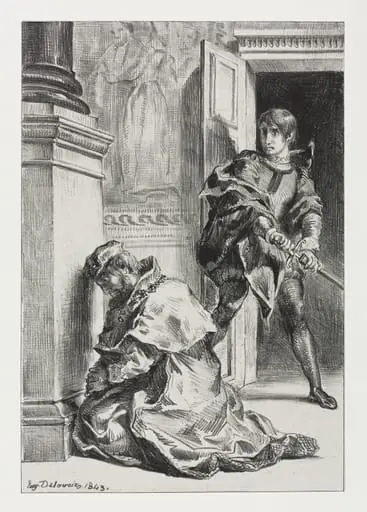 Hamlet: Hamlet Attempts to Kill the King
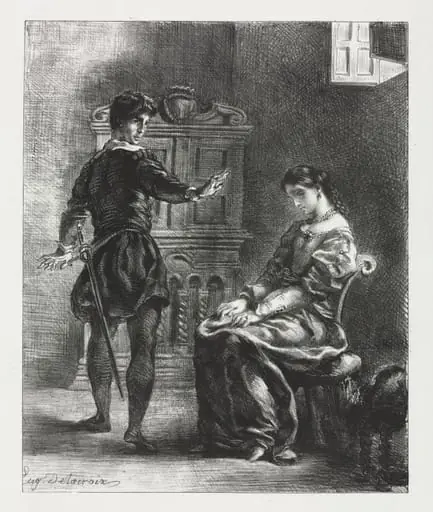 Hamlet: Hamlet and Ophelia
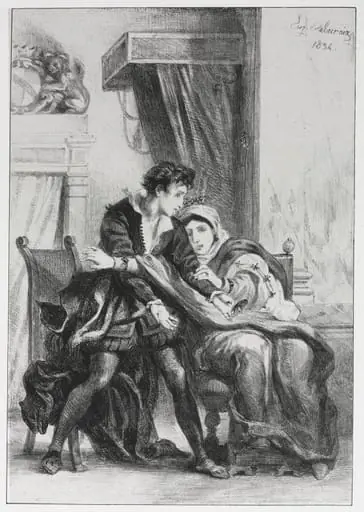 Hamlet: Hamlet and the Queen
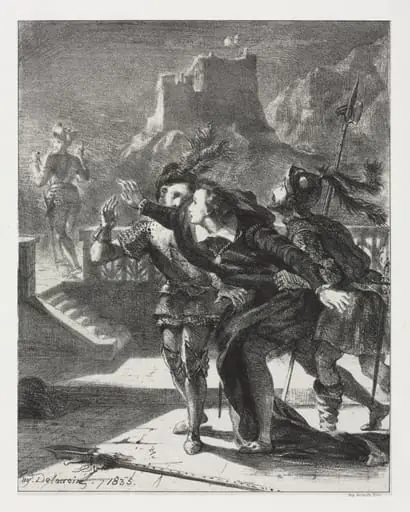 Hamlet: Hamlet Rushes to Follow the Ghost of His Father
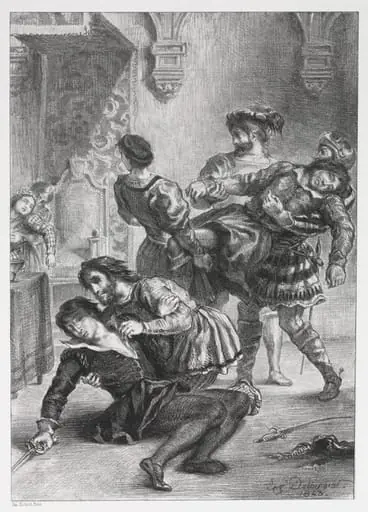 Hamlet: The Death of Hamlet
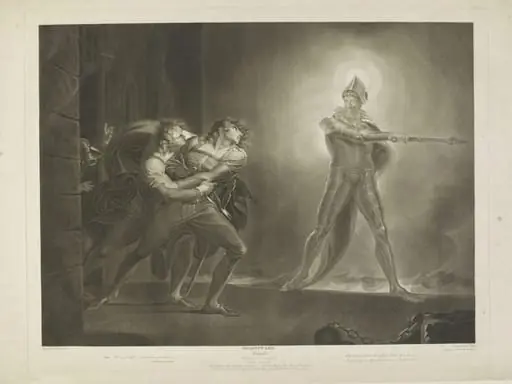 Scene from Hamlet, Act I., Scene IV.
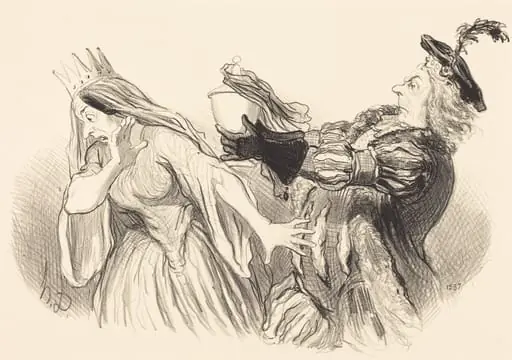 Hamlet