Artwork
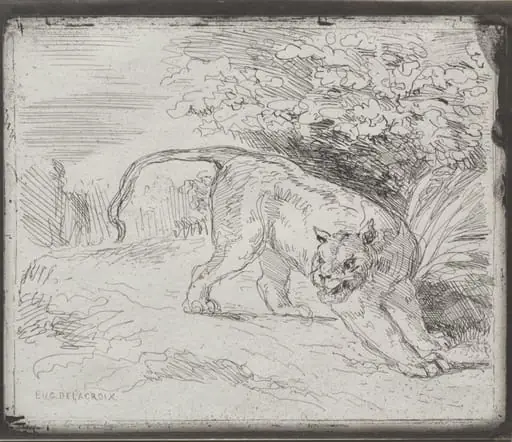
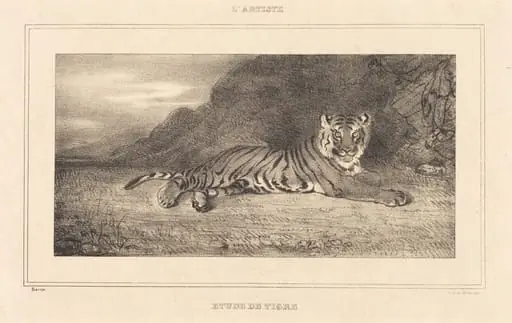
Tigre en arrêt
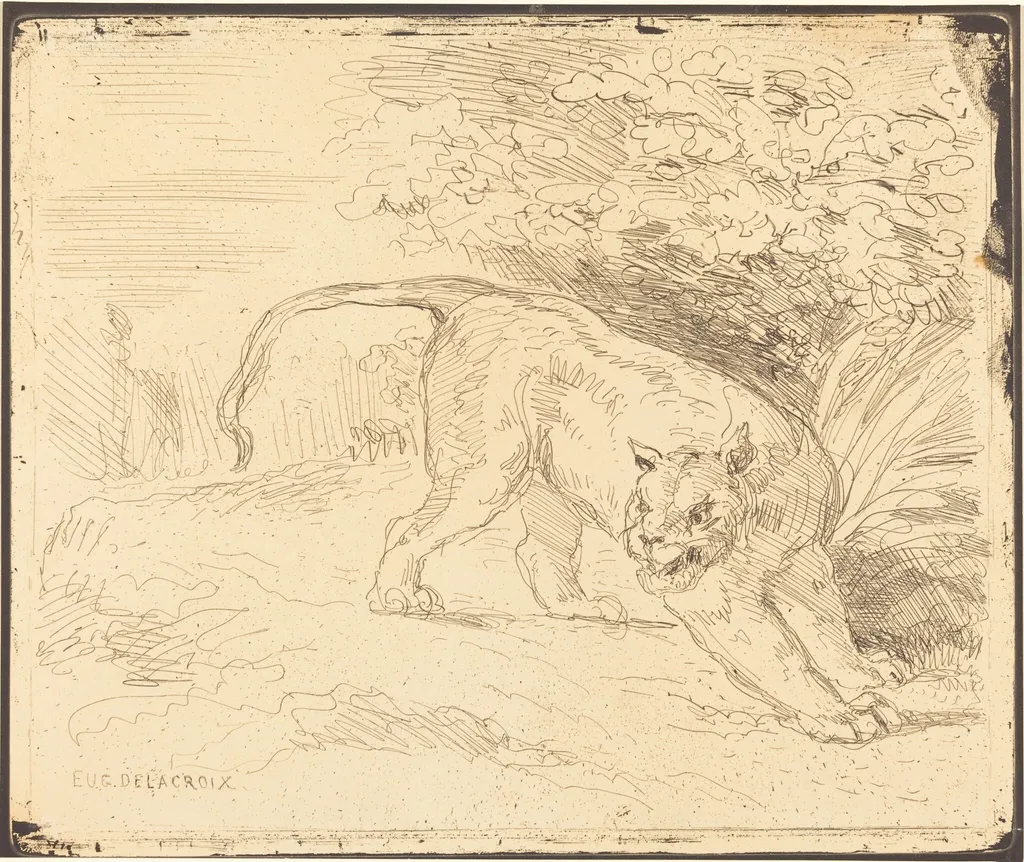
Tigre en arrêt is a print by the Impressionist artist Eugène Delacroix. It dates from 1854 and is held in the collection of the National Gallery of Art.
About this work
Overview
Tigre en arrêt is a 1854 print by Eugène Delacroix, created using the cliché-verre technique on wove paper. This work exemplifies Delacroix's Romantic style, emphasizing expressive movement and emotional intensity over classical restraint.
Subject & Meaning
The print depicts a tiger poised in a dynamic, pre-pounce stance, conveying power and intense energy. The tiger's tense facial expression, alert ears, and raised tail heighten the sense of impending action, drawing the viewer's focus through compositional simplicity.
Technique & Style
Delacroix employed cliché-verre, a hybrid drawing-photography process, to achieve dark, expressive lines and shading that reveal the tiger's muscularity and fur texture. The stark contrast between the detailed tiger and a light, unadorned background underscores the subject's dramatic presence.
History & Provenance
Created in 1854, Tigre en arrêt reflects Delacroix's late Romantic period, influenced by the expressive qualities of Rubens and Venetian Renaissance art, diverging from prevailing Neoclassical norms.
Context
This work aligns with Delacroix's broader artistic practice of capturing intense, emotive scenes, characteristic of the French Romantic movement's emphasis on passion and dynamic movement.
Own this work as a print
Artist & collection
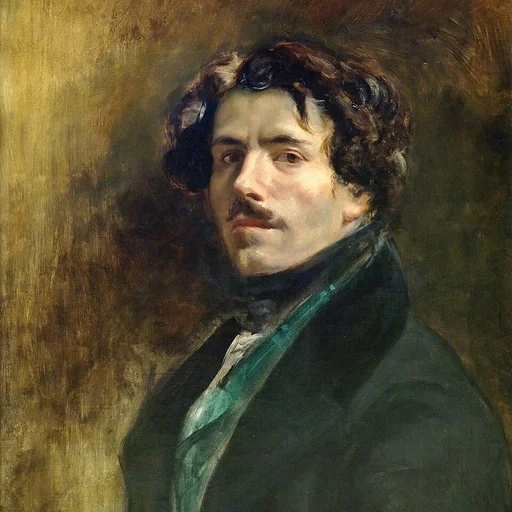
Artist
Ferdinand Victor Eugène Delacroix ( DEL-ə-krwah, -KRWAH; French: ; 26 April 1798 – 13 August 1863) was a French Romantic artist who was regarded as the leader of the French Romantic school.