Artwork
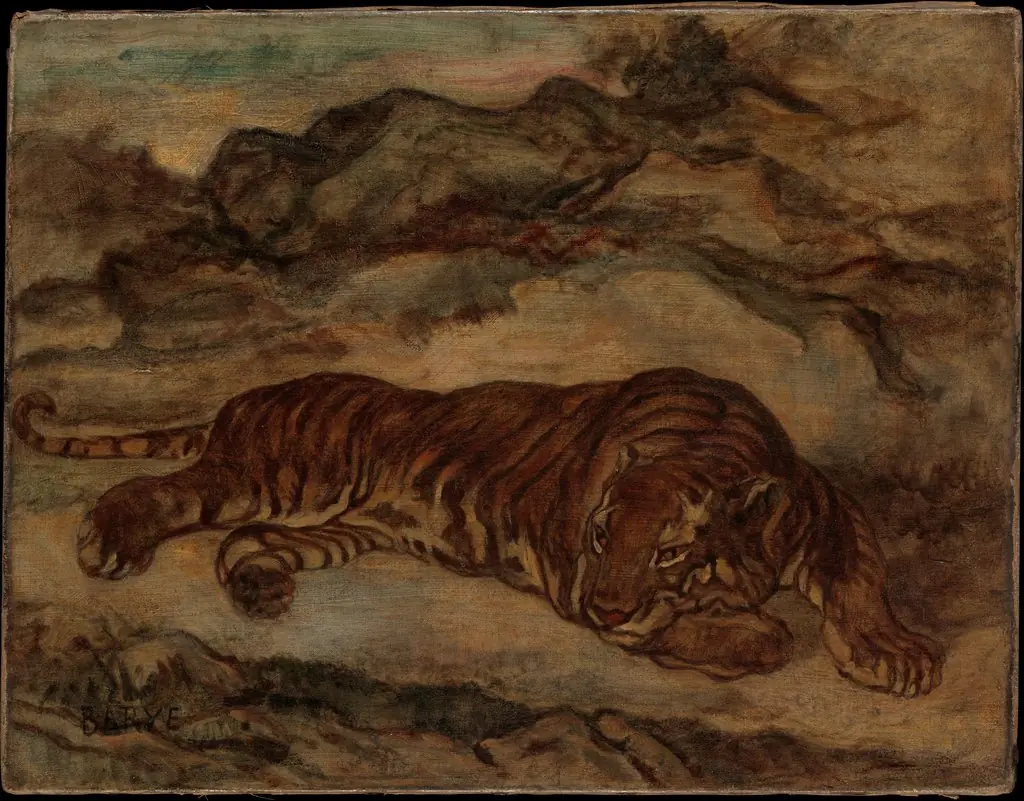
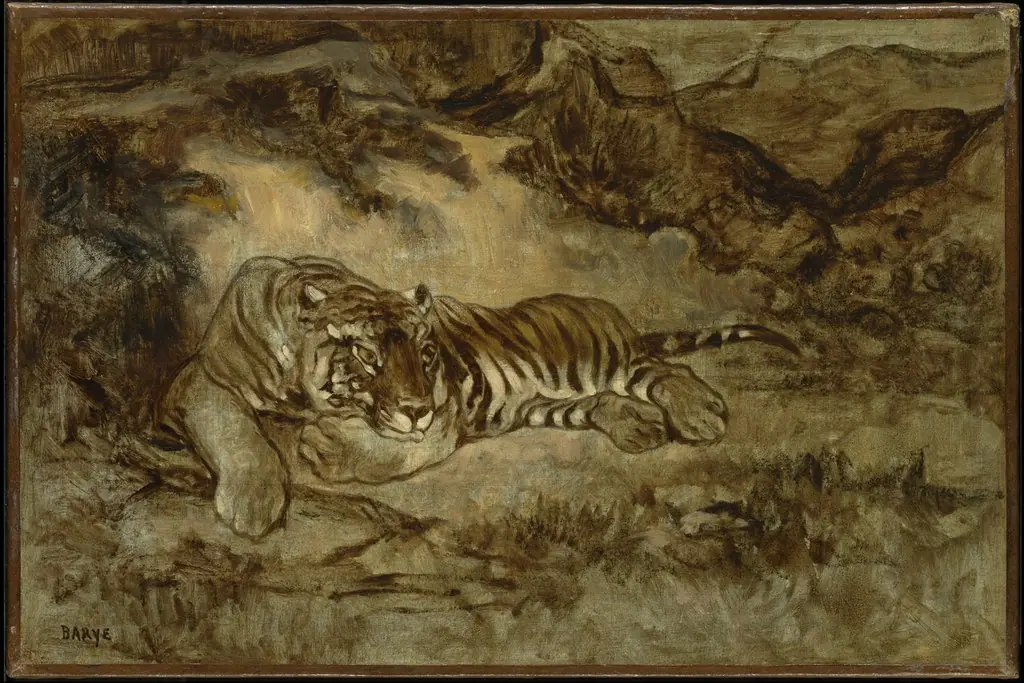
Study of a Tiger
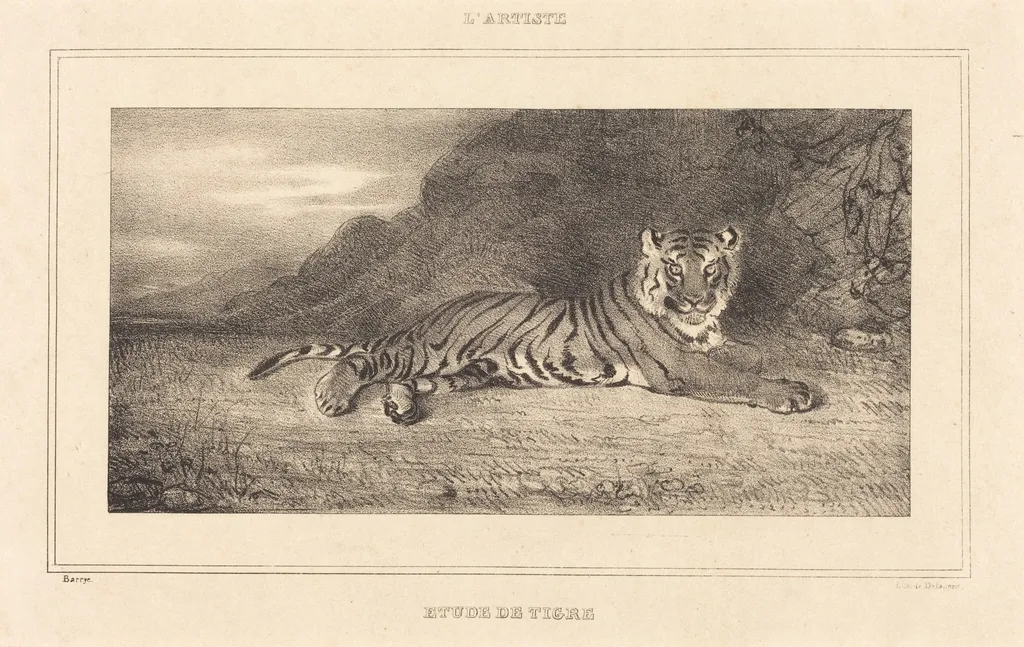
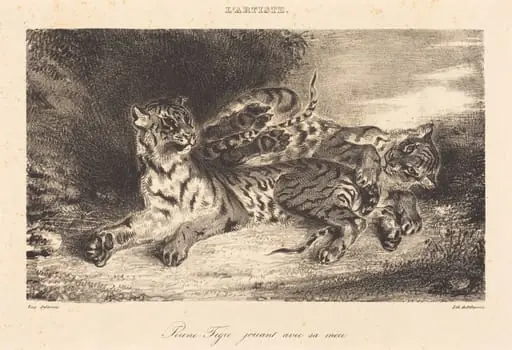
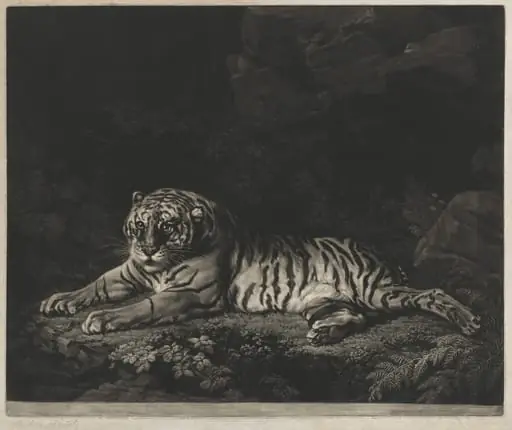
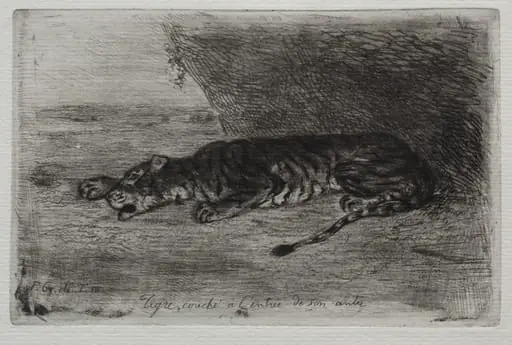
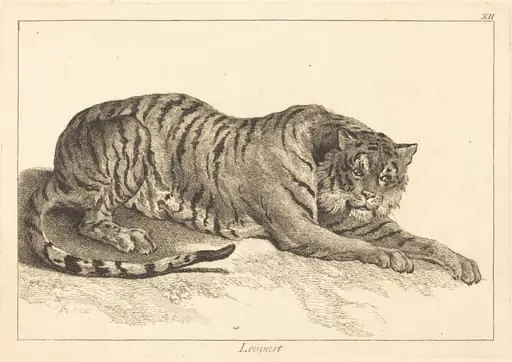
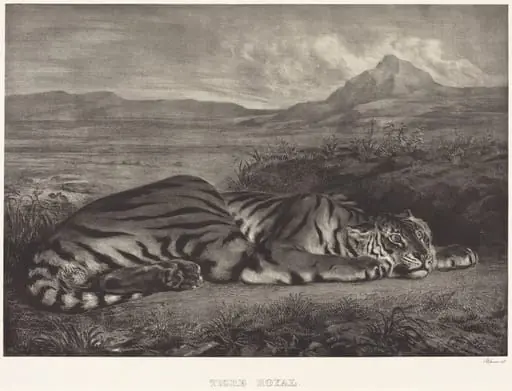
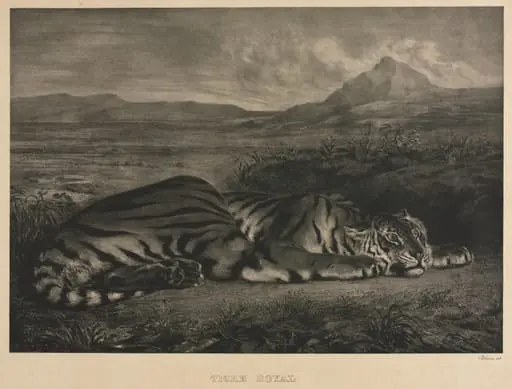
Study of a Tiger is a print by the Romanticist artist Antoine-Louis Barye. It dates from 1835 and is held in the collection of the National Gallery of Art.
About this work
Overview
Antoine-Louis Barye produced *Study of a Tiger* in 1835 as a print, reflecting his deep engagement with animal form.
Antoine-Louis Barye produced *Study of a Tiger* in 1835 as a print, reflecting his deep engagement with animal form. Though primarily known for sculpture, he also worked in graphic media to explore movement and anatomy. This piece exemplifies his commitment to direct observation, informed by frequent visits to the Jardin des Plantes in Paris, where he sketched live animals to understand their musculature and posture.
Subject & Meaning
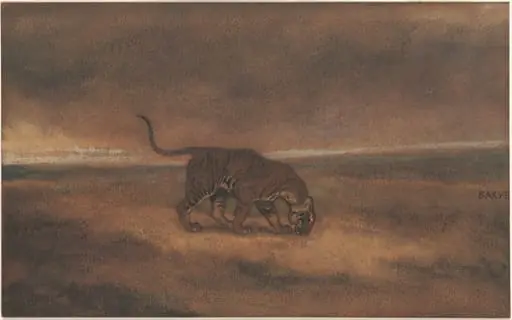
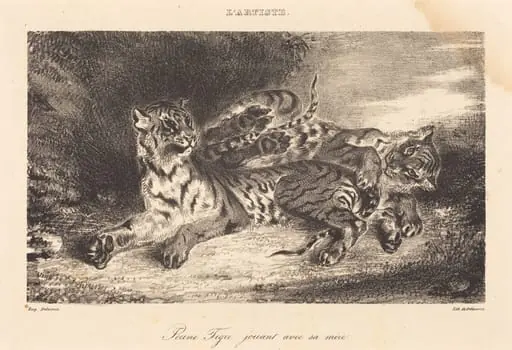
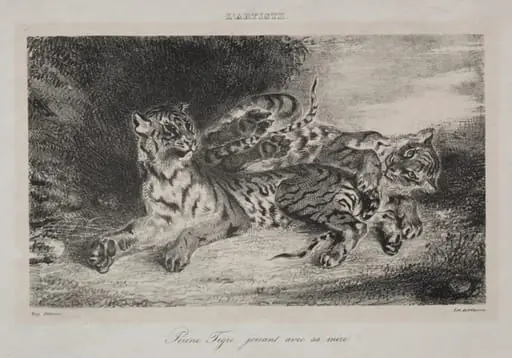
The print depicts a tiger moving through a dense woodland, its body partially obscured by shadow. Rather than portraying the animal as a symbol of power or exoticism, Barye focuses on its quiet, natural presence. The emphasis on concealment and motion suggests an interest in the tiger’s wild autonomy, aligning with Romantic ideals that valued nature’s untamed essence over human control.
Technique & Style
Barye employed stark chiaroscuro to model the tiger’s form, using sharp contrasts between light and dark to suggest volume and tension in the muscles. The surrounding foliage is rendered with rapid, gestural lines, creating a sense of atmospheric depth and implied movement. This technique mirrors his sculptural approach—prioritizing anatomical accuracy while preserving the energy of the moment.
History & Provenance
Created during Barye’s rise as a leading animalier, the print was likely made for dissemination among collectors and artists interested in naturalistic representation. It was not intended as a standalone work but as part of a broader study practice. No definitive record of its early ownership exists, though it circulated within French artistic circles alongside his more famous bronze sculptures.
Context
In the 1830s, European interest in exotic wildlife intensified due to colonial expansion and the growth of public zoological gardens. Barye’s work responded to this cultural moment by translating direct observation into art, rejecting idealized classical forms in favor of lifelike, emotionally resonant depictions. His focus on animals as subjects in their own right challenged traditional hierarchies in art.
Legacy
Barye’s detailed studies of animals, including this print, influenced later generations of naturalist artists and sculptors. His method of working from life became a model for animal representation in both fine art and scientific illustration. While his son Alfred followed in his footsteps, Antoine-Louis’s legacy rests in redefining the animal as a worthy and complex subject for serious artistic inquiry.
Own this work as a print
Artist & collection
Artist
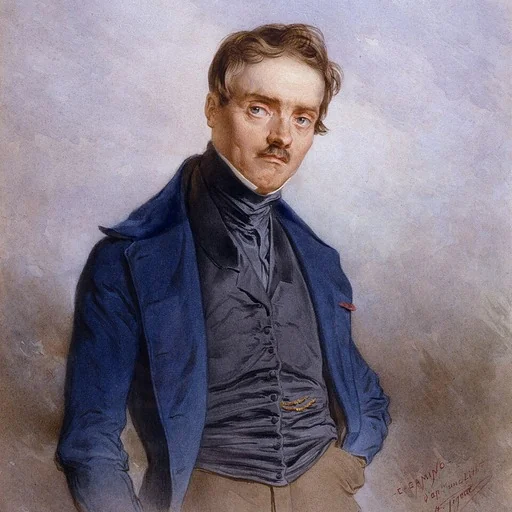
Antoine-Louis Barye was a Romantic French sculptor most famous for his work as an animalier, a sculptor of animals. His son and student was the sculptor Alfred Barye.