Artwork
Interior cu femei la masă
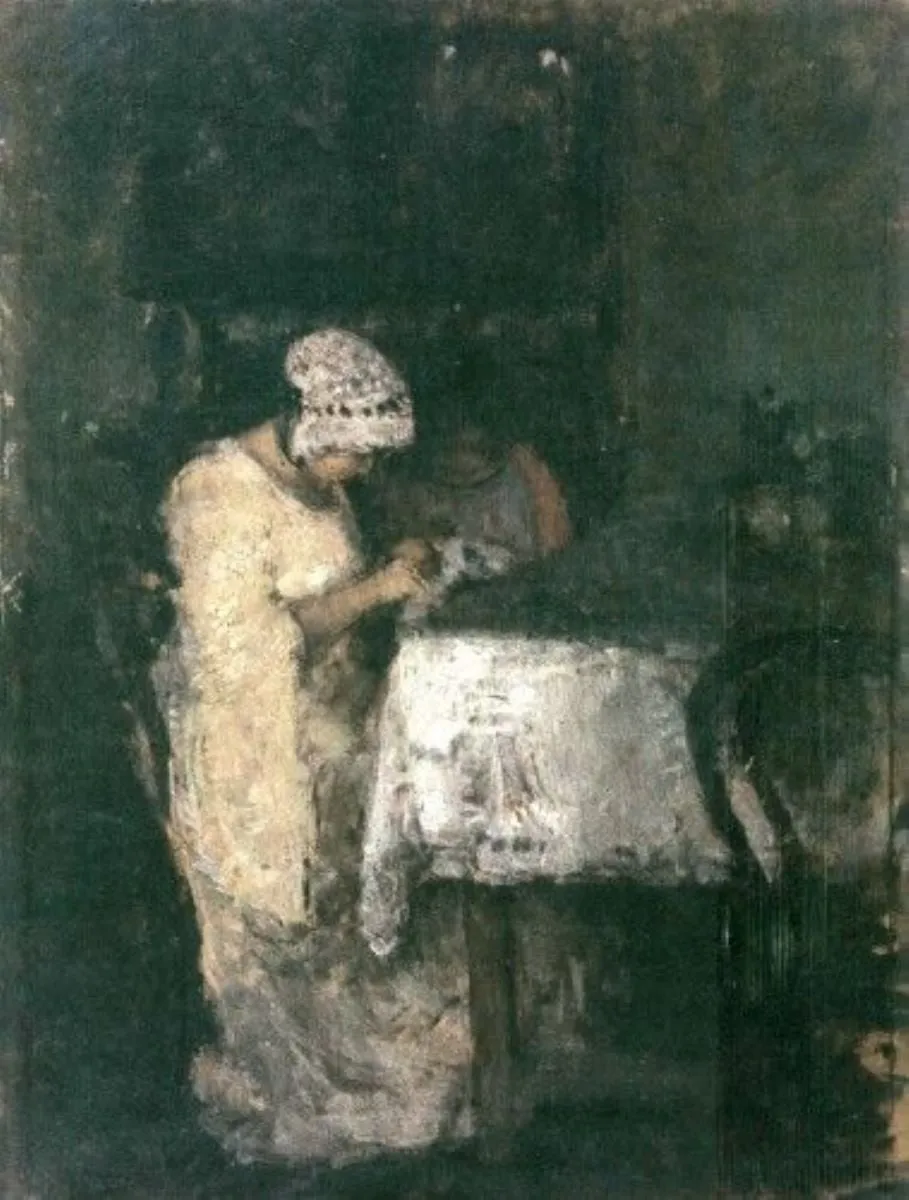
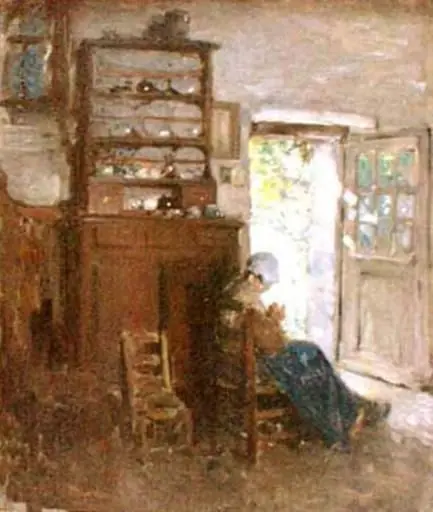
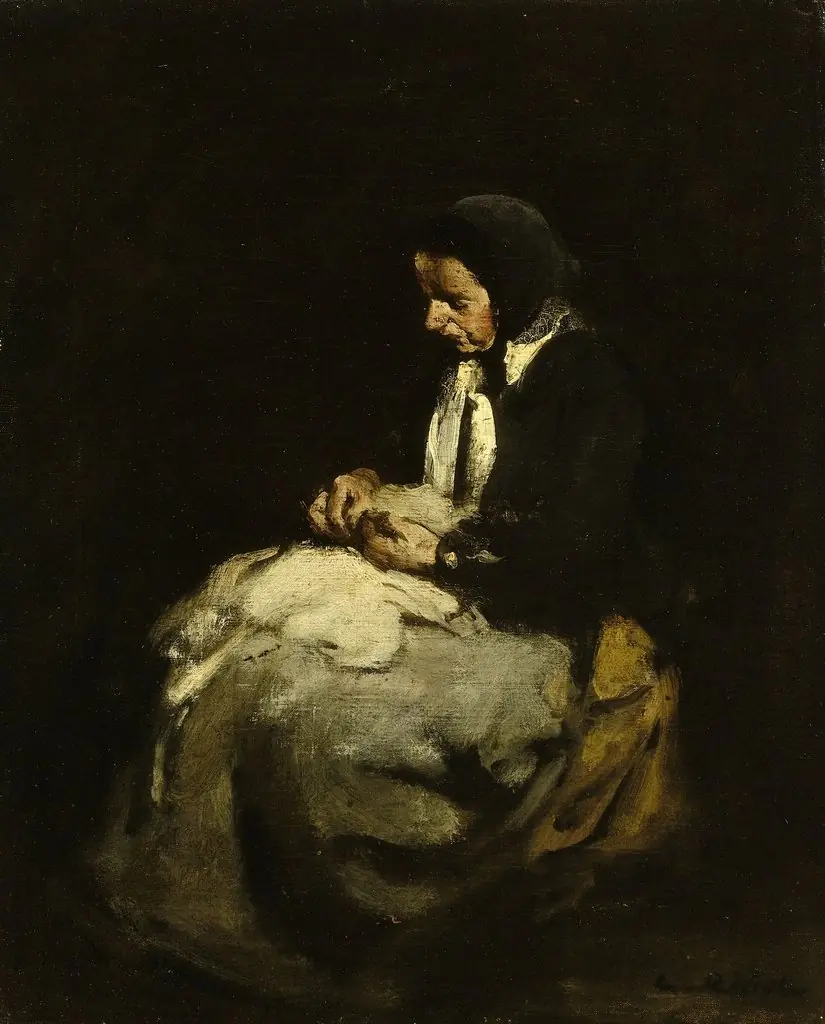
Interior cu femei la masă is an unspecified painting by Dona Niculina Delavrancea. It is held in the collection of the National Museum of Art of Romania. The painting depicts a solitary woman engaged in textile work within a dimly lit interior.
About this work
Overview
The composition isolates her figure through contrast, drawing attention to the texture of wool and the subtlety of her movements.
The painting depicts a solitary woman engaged in textile work within a dimly lit interior. Her posture and focused gesture emphasize labor, while the surrounding space recedes into shadow. The composition isolates her figure through contrast, drawing attention to the texture of wool and the subtlety of her movements. The lighting technique reflects a deliberate use of tonal variation to define form and space.
Subject & Meaning
The woman’s activity—handling raw wool—suggests domestic labor, a common theme in 19th-century genre scenes. Her headscarf and loose dress imply modesty and practicality, grounding the image in everyday life. The absence of other figures or narrative context invites contemplation of solitude and routine, transforming a mundane act into a quiet meditation on work and endurance.
Technique & Style
The artist employs chiaroscuro to model the woman’s form, using sharp contrasts between light and shadow to define her hands, face, and the wool’s fibrous surface. Background elements are softened into near-obscurity, enhancing the figure’s presence. Brushwork is restrained, prioritizing tonal accuracy over detail, a method common in realist traditions that valued atmospheric depth over ornamental flourish.
History & Provenance
The painting’s origin is tied to regional studio practices in Eastern Europe, where domestic scenes were frequently rendered by artists trained in academic traditions. It likely emerged in the late 1800s, a period when rural labor was increasingly documented as cultural heritage. Its provenance remains unverified, but its style aligns with works from provincial academies that emphasized observational realism.
Context
During the late 19th century, artists across Europe turned to ordinary life as subject matter, often highlighting women’s unseen labor. This painting reflects broader social interest in the private sphere, influenced by realism and early ethnographic documentation. Unlike urban scenes, it avoids narrative drama, instead presenting work as a silent, sustained act within a confined domestic space.
Legacy
The work contributes to a visual record of pre-industrial domestic labor, preserving the physicality of handwork before mechanization. While not widely exhibited, its quiet intensity resonates with later realist and feminist art that sought to elevate marginalized daily experiences. Its enduring value lies in its unembellished observation of human presence within the rhythms of routine.
Artist & collection
Artist
Dona Niculina Delavrancea painted still lifes and scenes from everyday life, often with Rumanians at work or bright flowers on a table.