Artwork
Cartouche Suspended from Corpses
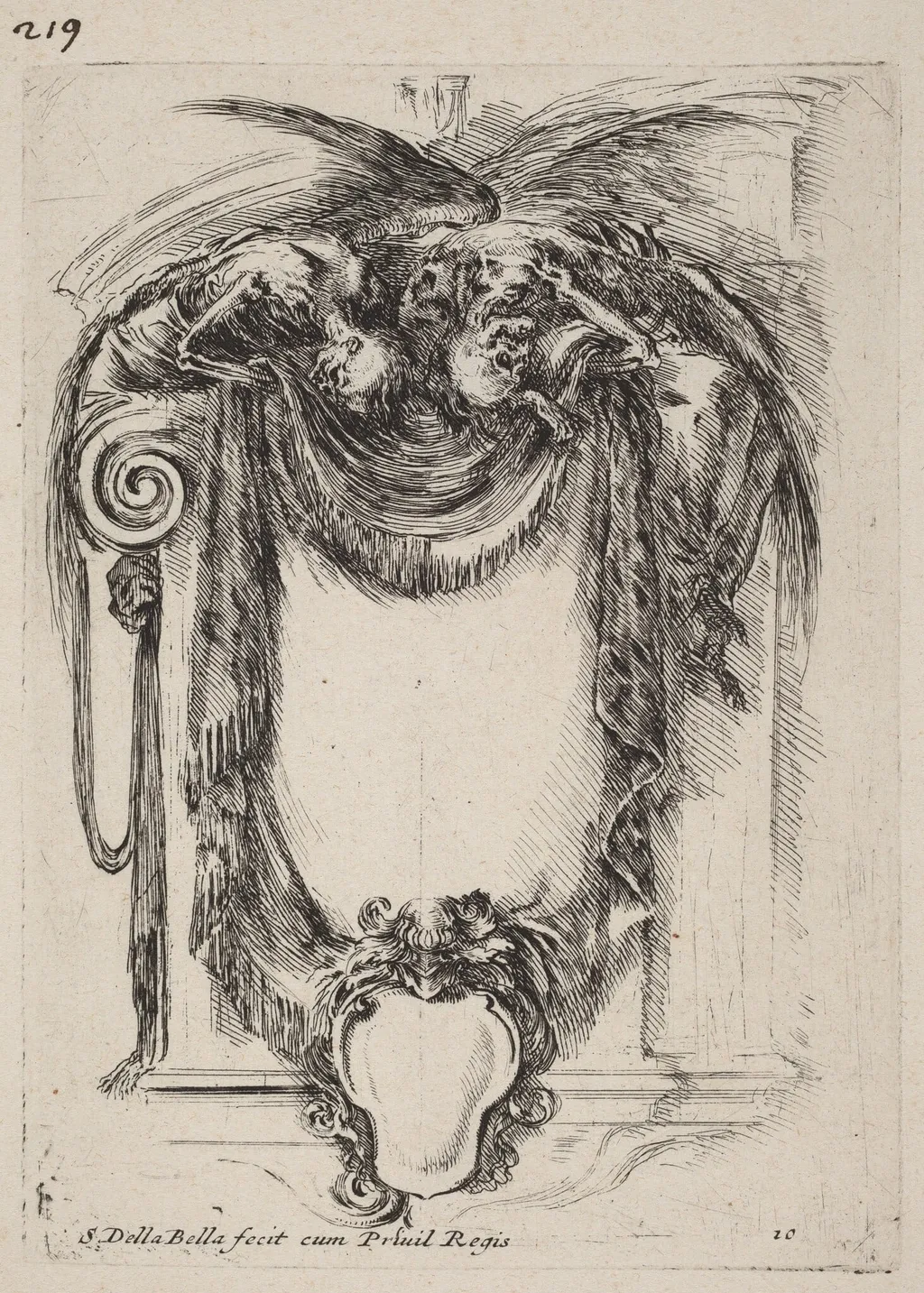
Cartouche Suspended from Corpses is an ink print by the Baroque artist Stefano Della Bella. It dates from 1647 and is held in the collection of the Metropolitan Museum of Art.
About this work
Overview
Created in 1647 by Stefano della Bella, this etching on laid paper is one of over a thousand prints produced by the Florentine artist during his career.
Created in 1647 by Stefano della Bella, this etching on laid paper is one of over a thousand prints produced by the Florentine artist during his career. The work belongs to a body of graphic art that explores themes of mortality and power through stark, intricate compositions. Della Bella’s technical precision in etching allowed him to render complex scenes with a sense of immediacy and tension, characteristic of his approach to printmaking.
Subject & Meaning
The image depicts two suspended corpses, their forms rendered with blurred features, beneath a decorative cartouche bearing a crown and inscribed text. The juxtaposition of death and heraldic symbolism suggests a commentary on authority, perhaps critiquing the vanity of power in the face of mortality. The absence of narrative context leaves interpretation open, inviting reflection on the transience of earthly status.
Technique & Style
Della Bella employed etching, a process involving acid-bitten lines on a metal plate, to achieve a dense, scratchy texture. The lines are irregular and layered, conveying movement and urgency. The use of laid paper, with its subtle watermark texture, enhances the tactile quality of the print. His hand is evident in the controlled yet energetic strokes, typical of his draftsmanship and mastery of the medium.
History & Provenance
The print was made during della Bella’s time in Florence, before his later years in Paris. While specific early ownership records are sparse, the work aligns with his broader output of satirical and allegorical prints circulated among collectors and intellectuals. Its survival in institutional collections suggests early recognition of its technical and conceptual significance within 17th-century print culture.
Context
In mid-17th-century Italy, printmaking served as a vehicle for both artistic expression and social commentary. Della Bella’s work responded to a cultural climate marked by political instability and religious tension. His macabre imagery resonated with contemporary themes of decay and the fragility of power, reflecting broader European preoccupations with vanitas and the inevitability of death.
Legacy
Della Bella’s prints, including this one, influenced later generations of printmakers through their expressive line work and thematic boldness. Though less celebrated than his contemporaries, his ability to merge technical rigor with unsettling imagery secured his place in the history of European graphic art. The work remains a quiet but potent example of Baroque-era visual skepticism.
Artist & collection
Artist
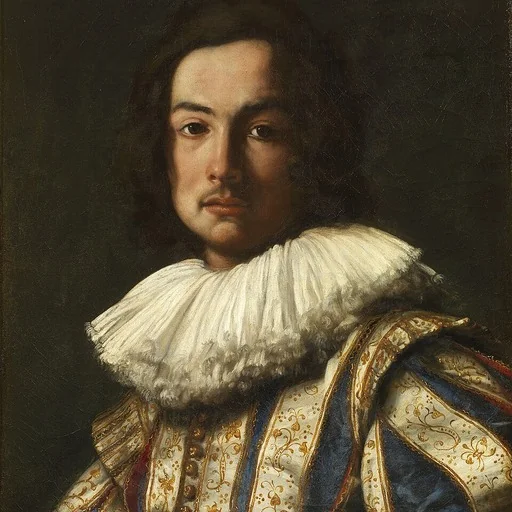
Stefano della Bella (18 May 1610 – 12 July 1664) was an Italian draughtsman and printmaker known for etchings of a great variety of subjects, including military and court scenes, landscapes, and lively genre scenes.

![The Flight into Egypt [verso], by Stefano Della Bella](https://artifactworldgallery.com/img/stefano-della-bella--the-flight-into-egypt-verso--3a100db72e6d25e3-w320.webp)
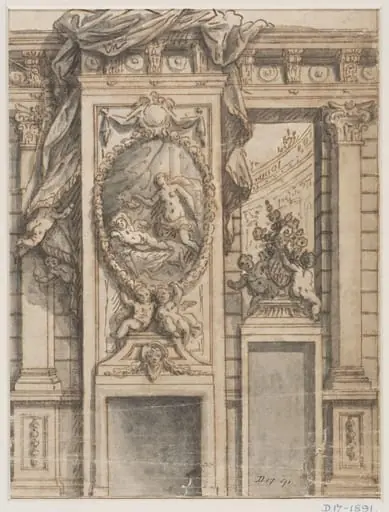 Design for wall decoration, possibly at Chatsworth, Derbyshire
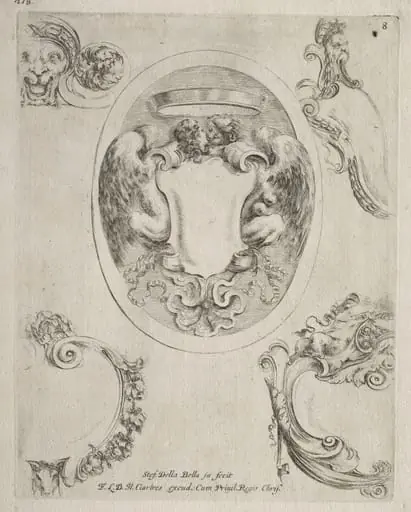 Collection of Various Caprices and New Designs of Cartouches and Ornaments: No 8
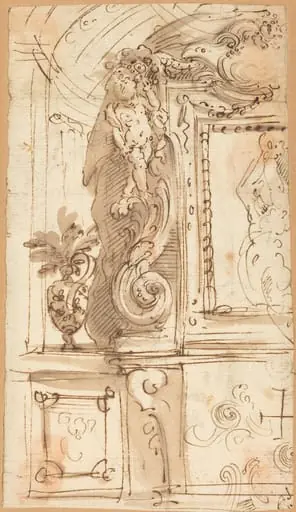 An Elaborately Sculpted Frame
 Panel of Ornament Inscribed Victoria Augusta
 Fantasy of a Façade with Bizarre Ornaments
 Collection of Various Caprices and New Designs of Cartouches and Ornaments: No 16
 Cartouche with Eagles and Two Infants Holding a Crown
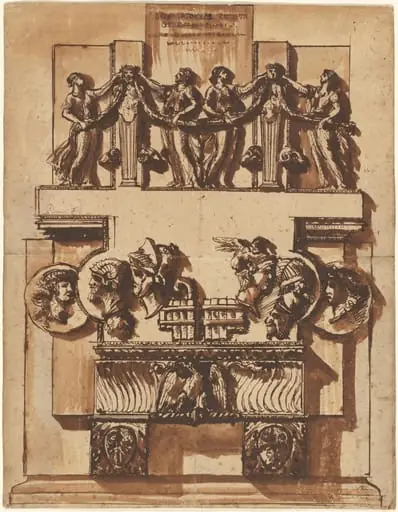 Fantasy of a Magnificent Wall Monument