Artwork
Ornamental Frieze with Cupid and Psyche
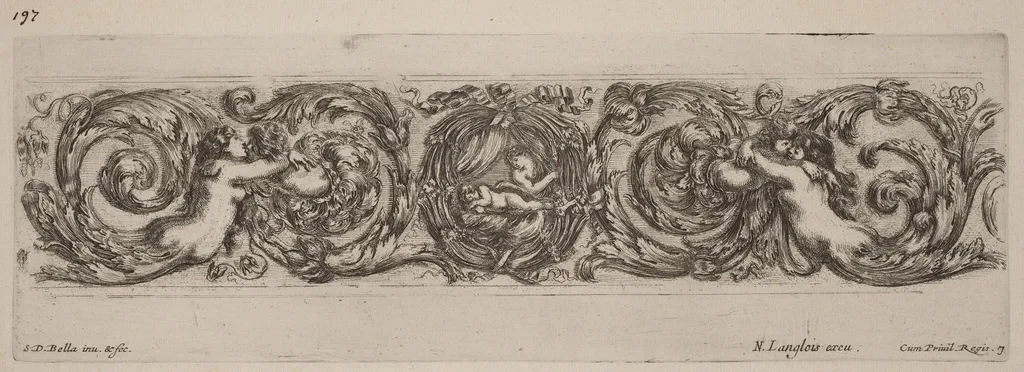
Ornamental Frieze with Cupid and Psyche is an ink print by the Baroque artist Stefano Della Bella. It dates from 1648 and is held in the collection of the National Gallery of Art.
About this work
Overview
Stefano della Bella, a Florentine artist active in the mid-17th century, produced this etching around 1648 as part of a series of ornamental designs.
Stefano della Bella, a Florentine artist active in the mid-17th century, produced this etching around 1648 as part of a series of ornamental designs. Known for his prolific output—over a thousand prints—he specialized in intricate, decorative compositions that blended natural forms with mythological vignettes. This work exemplifies his skill in translating fine draftsmanship into the medium of etching, where precision and delicacy coexist.
Subject & Meaning
At the center of the frieze, a miniature scene of Cupid and Psyche emerges amid elaborate scrollwork, foliage, and arabesques. The myth, drawn from Apuleius’s Latin narrative, symbolizes the soul’s journey toward divine love. Here, it is not the focus but a subtle allusion, embedded within ornamentation, suggesting a quiet intellectual playfulness—mythology as decorative cipher rather than grand narrative.
Technique & Style
The etching employs fine, controlled lines to create a lace-like texture, with delicate cross-hatching and fluid contours defining each leaf and curl. Della Bella’s hand is evident in the balance between rhythmic repetition and minute variation, giving the surface both unity and vitality. The small scale demands close viewing, rewarding attention with layered detail that mimics the craftsmanship of metalwork or manuscript illumination.
History & Provenance
Created during della Bella’s time in Florence and Paris, this print was likely intended for use as a decorative border in books, wall panels, or furniture. Such ornamental prints circulated among collectors and artisans as pattern sources. Though no specific original context survives, similar works were documented in 17th-century Italian and French interiors, where they served both aesthetic and symbolic functions.
Context
In mid-17th-century Europe, ornamental prints like this one bridged fine art and applied design. Artists such as della Bella responded to a demand for refined, portable motifs that could elevate domestic and literary spaces. Mythological fragments, though reduced to decorative elements, retained cultural resonance, reflecting a broader humanist interest in antiquity filtered through contemporary taste.
Legacy
Della Bella’s ornamental prints influenced later generations of designers and printmakers across Europe, particularly in the development of Rococo and neoclassical decorative vocabularies. While often overlooked in favor of his larger narrative works, these small etchings reveal his mastery of subtlety and his role in shaping the visual language of interior decoration in the early modern period.
Artist & collection
Artist
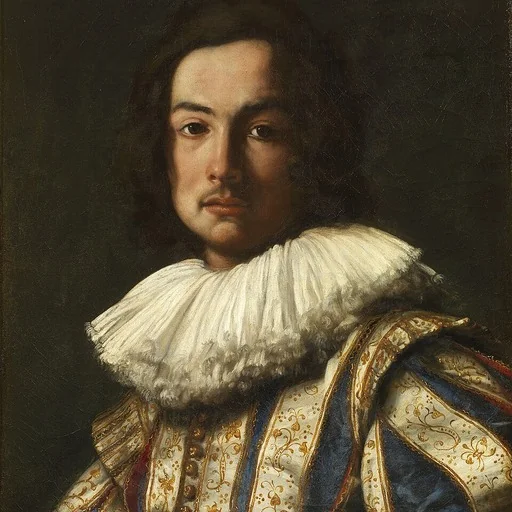
Stefano della Bella (18 May 1610 – 12 July 1664) was an Italian draughtsman and printmaker known for etchings of a great variety of subjects, including military and court scenes, landscapes, and lively genre scenes.

![The Flight into Egypt [verso], by Stefano Della Bella](https://artifactworldgallery.com/img/stefano-della-bella--the-flight-into-egypt-verso--3a100db72e6d25e3-w320.webp)
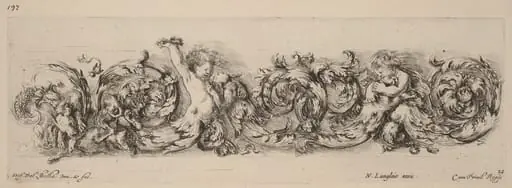 Ornamental Frieze with Children and Dogs
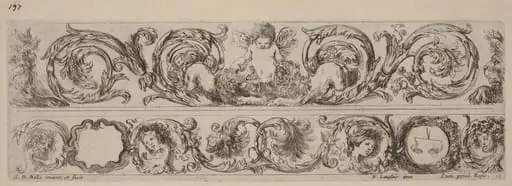 Two Ornamental Bands with Cupid and Heads of the Four Seasons
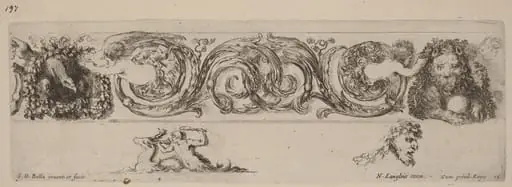 Ornamental Frieze with Eagle and Lion Engarlanded by Children
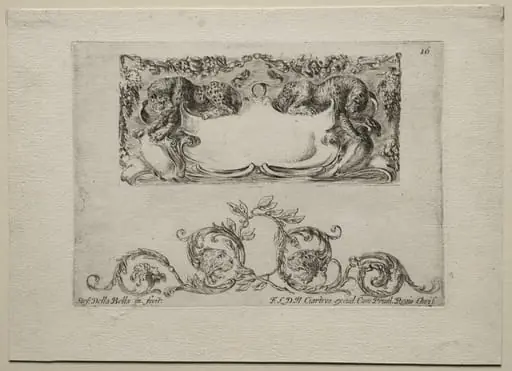 Collection of Various Caprices and New Designs of Cartouches and Ornaments: No 16
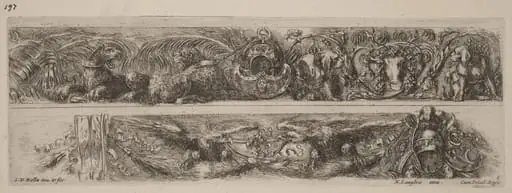 Two Ornamental Bands with Chained Leopards and Eagles
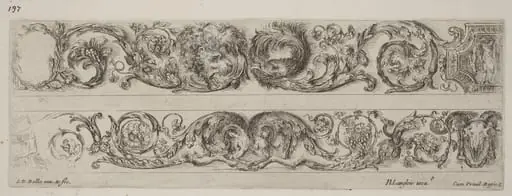 Two Ornamental Bands with Facing Heads of Lion and Eagle, and Two Rams
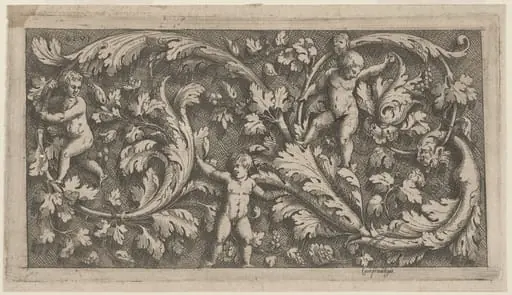 Panel of Ornament
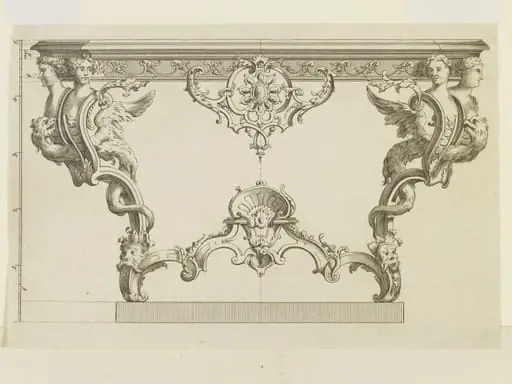 Nouveaux Desseins de Pieds de Tables et de Vases et Consoles de Sculpture
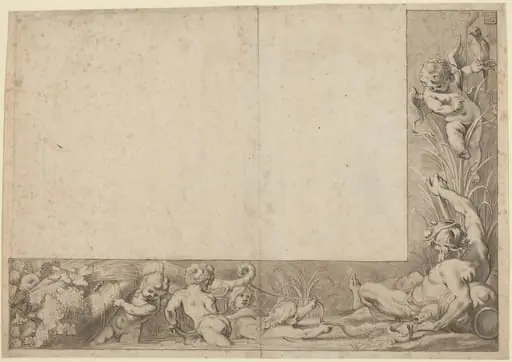 River God with Putti
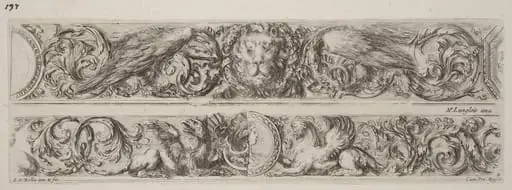 Two Ornamental Bands with Head of a Lion and Woman