Artwork
Panel of Ornament
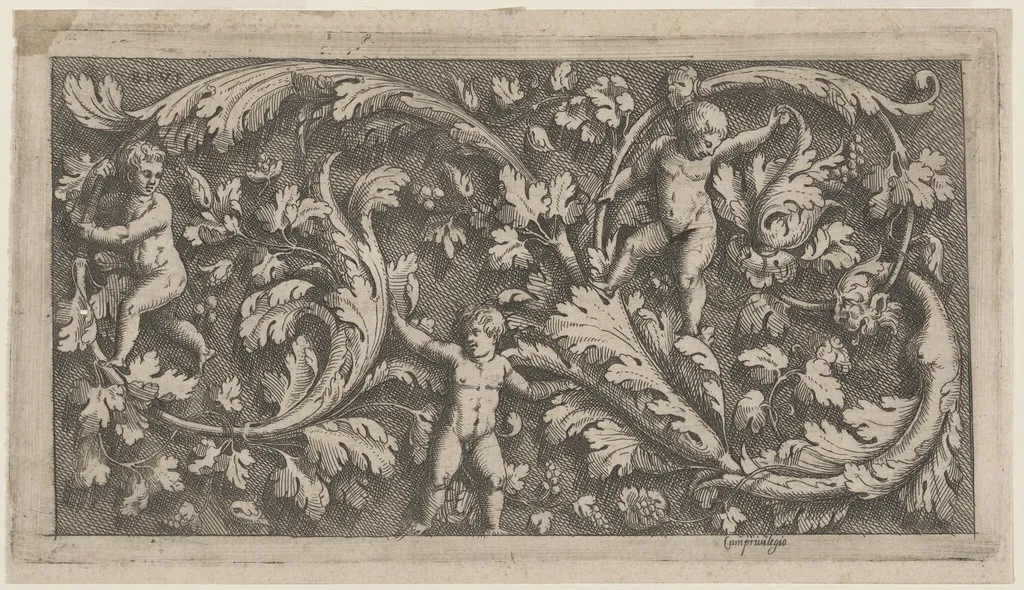
Panel of Ornament is an ink print by the Renaissance artist Giovanni Battista Pittoni. It dates from 1561 and is held in the collection of the National Gallery of Art.
About this work
Overview
Panel of Ornament is a print created in 1561 by the Italian artist Giovanni Battista Pittoni. Executed as an etching on laid paper, the work presents an intricate ornamental composition composed of winding vines, floral motifs, and diminutive animal figures rendered in fine, precise lines.
Subject & Meaning
The image functions as a decorative study, showcasing a dense network of botanical and zoological elements that interlace to form a continuous pattern. While no narrative is evident, the arrangement reflects the Renaissance fascination with natural forms and the ornamental potential of print media.
Technique & Style
Pittoni employed drypoint, incising the design directly into a metal plate with a sharp needle. The resulting burrs retain ink, producing the characteristic deep, velvety lines visible in the print. The paper’s laid texture accentuates the crispness of the etched lines, while small numerals in the lower left corner record each stage of the engraving process.
History & Provenance
The work dates to the mid‑sixteenth century, a period when Italian printmakers were experimenting with ornamental prints for use in book illustration and decorative arts. No specific ownership record precedes its inclusion in modern collections, but its attribution to Pittoni is based on stylistic comparison with his other prints.
Context
During the 1560s, the diffusion of printed ornamentation supported the spread of decorative motifs across Europe. Artists like Pittoni contributed to a visual vocabulary that could be reproduced in manuscripts, textiles, and architectural detailing, reflecting the era’s collaborative exchange between fine art and applied design.
Artist & collection



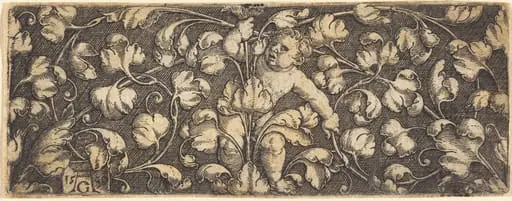 Ornament with Foliage and a Child in the Center
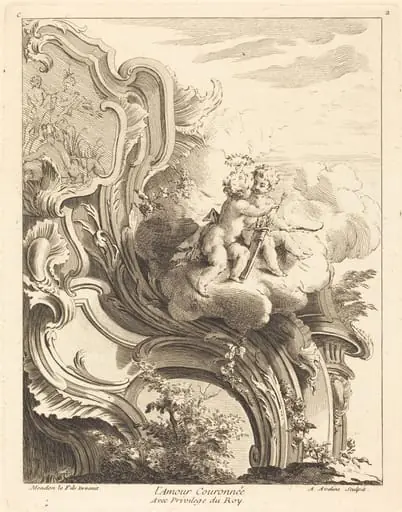 L'Amour Couronnée
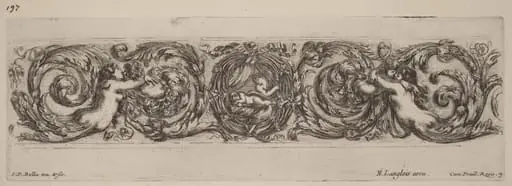 Ornamental Frieze with Cupid and Psyche
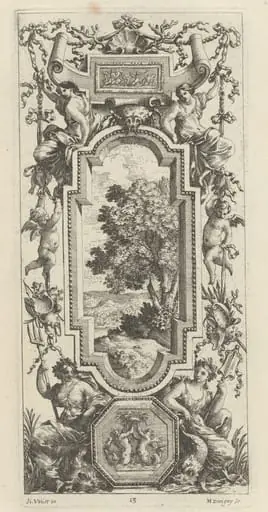 Ornamental Panel Surmounted by a Maritime Scene and a Shell
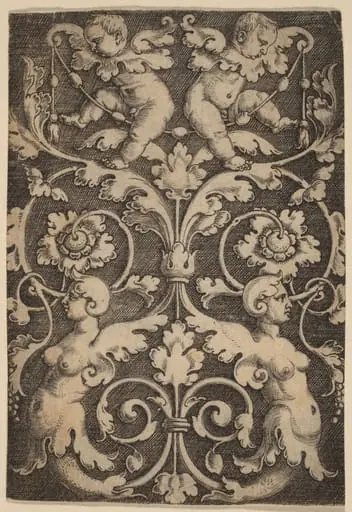 Upright Ornament with Two Sirens
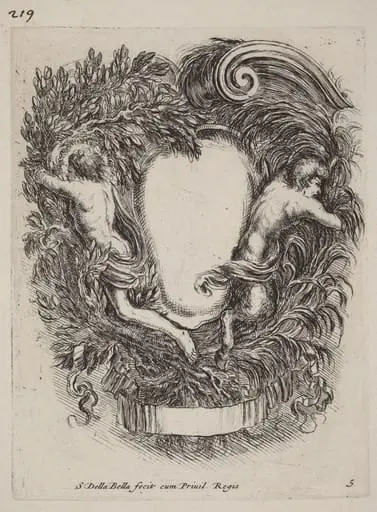 Cartouche with Apollo and Pan
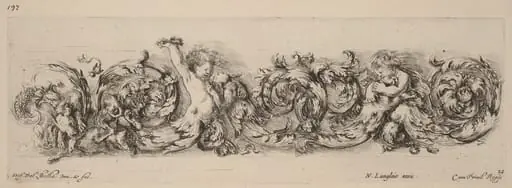 Ornamental Frieze with Children and Dogs
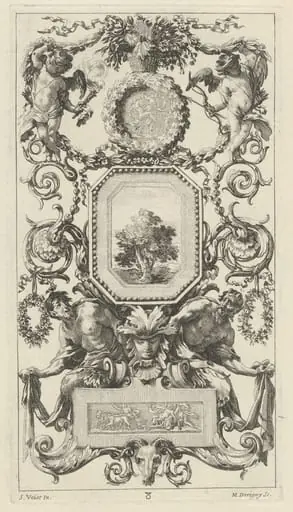 Ornamental Panel Surmounted by a Basket of Flowers with Cupid and Hymen
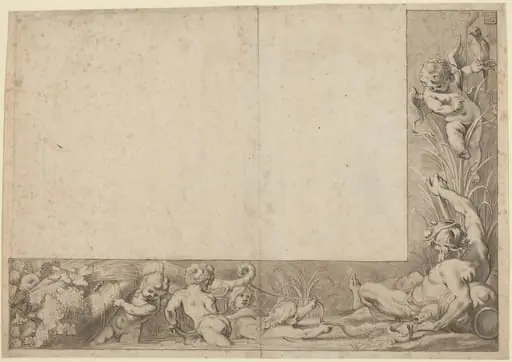 River God with Putti