Artwork
Familia muncitorului
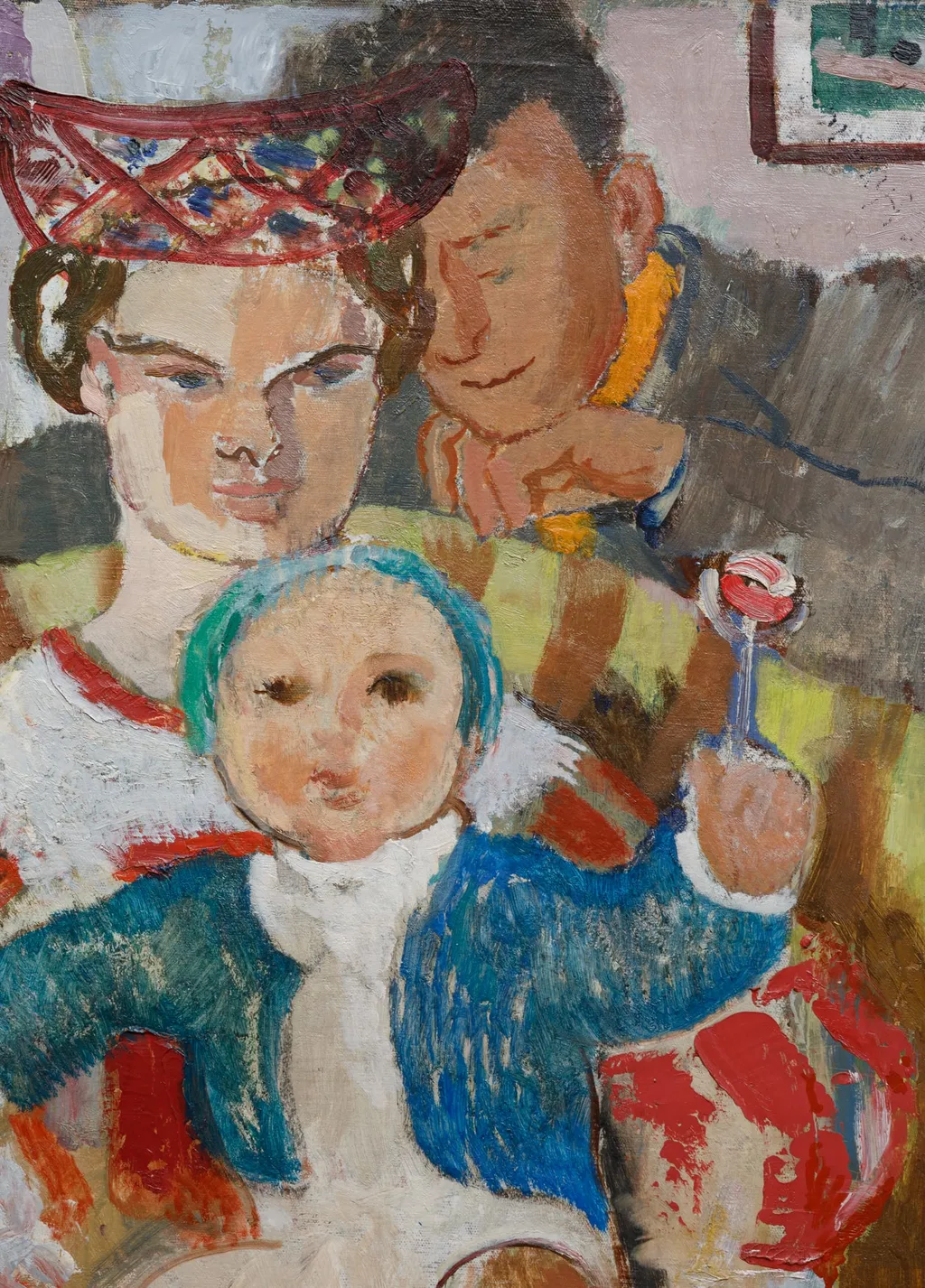
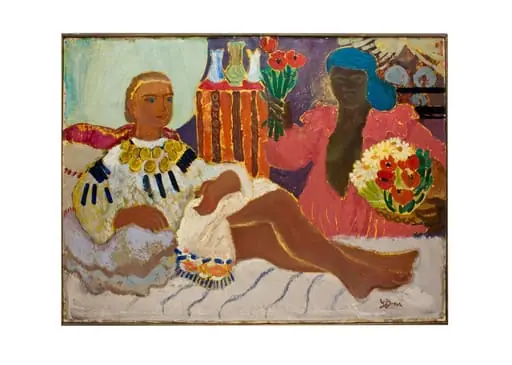
Familia muncitorului is a print by Lucia Dem-Bălăcescu. It dates from 1850 and is held in the collection of the National Museum of Art of Romania.
About this work
Overview
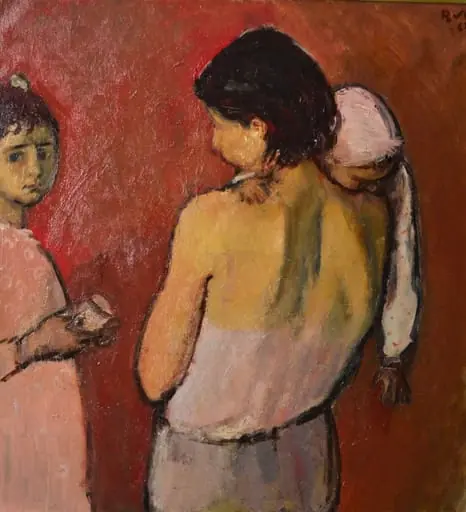
Created around 1850 by Lucia Dem-Bălăcescu, this painting depicts a working-class family in a direct, unadorned composition.
Created around 1850 by Lucia Dem-Bălăcescu, this painting depicts a working-class family in a direct, unadorned composition. The figures face the viewer with a quiet stillness, suggesting a moment of pause rather than a formal portrait. The rough application of paint and unrefined handling reflect an informal, possibly spontaneous approach to representation, distinct from academic conventions of the time.
Subject & Meaning
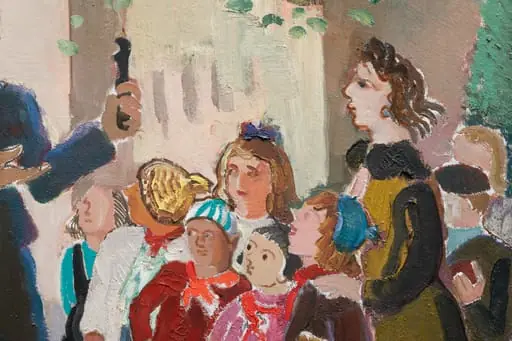
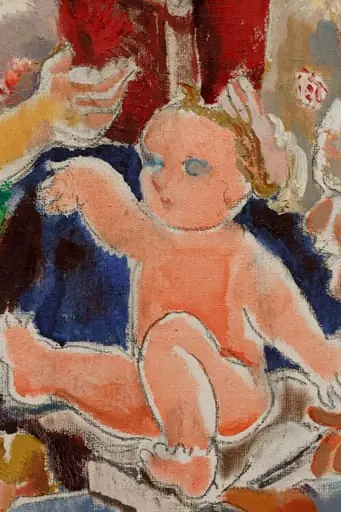
The trio—two adults and a young child—appears as an ordinary domestic unit, their simple attire and calm demeanor emphasizing everyday life. The child, rendered with greater attention to facial detail, draws focus, perhaps hinting at themes of continuity or hope within laboring families. The lack of narrative context invites interpretation grounded in presence rather than story, aligning with emerging interest in ordinary subjects during the mid-19th century.
Technique & Style
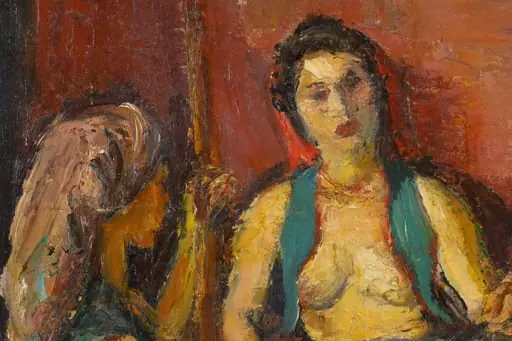
Thick, uneven brushwork and saturated hues—red, blue, yellow—create a tactile, almost raw surface. Background elements are loosely suggested, blurring spatial definition to center the figures. The child’s face is the most modeled, with subtle shading contrasting the flatter, more abrupt rendering of the adults. This unevenness suggests a prioritization of emotional immediacy over technical polish.
History & Provenance
The painting’s early provenance remains undocumented, and few records exist of Dem-Bălăcescu’s output. Its survival suggests it was retained within private circles, possibly by the artist’s family or local patrons. The absence of exhibition history or critical reception from the period indicates it was not part of the official art discourse of its time.
Context
Emerging in mid-19th-century Romania, the work coincides with broader European shifts toward depicting non-elite subjects. While academic traditions favored idealized forms, this painting’s unpolished realism aligns with nascent interest in the lives of laborers, though it lacks the social commentary typical of later movements like Realism.
Legacy
The painting remains a rare example of early Romanian domestic portraiture executed with informal technique. It contributes to understanding how non-academic artists engaged with everyday life before institutional recognition of such subjects. Its preservation offers insight into regional artistic practices outside major centers, though it has not influenced broader art historical narratives.
Artist & collection