Artwork
Femeia - factor social de preț al României
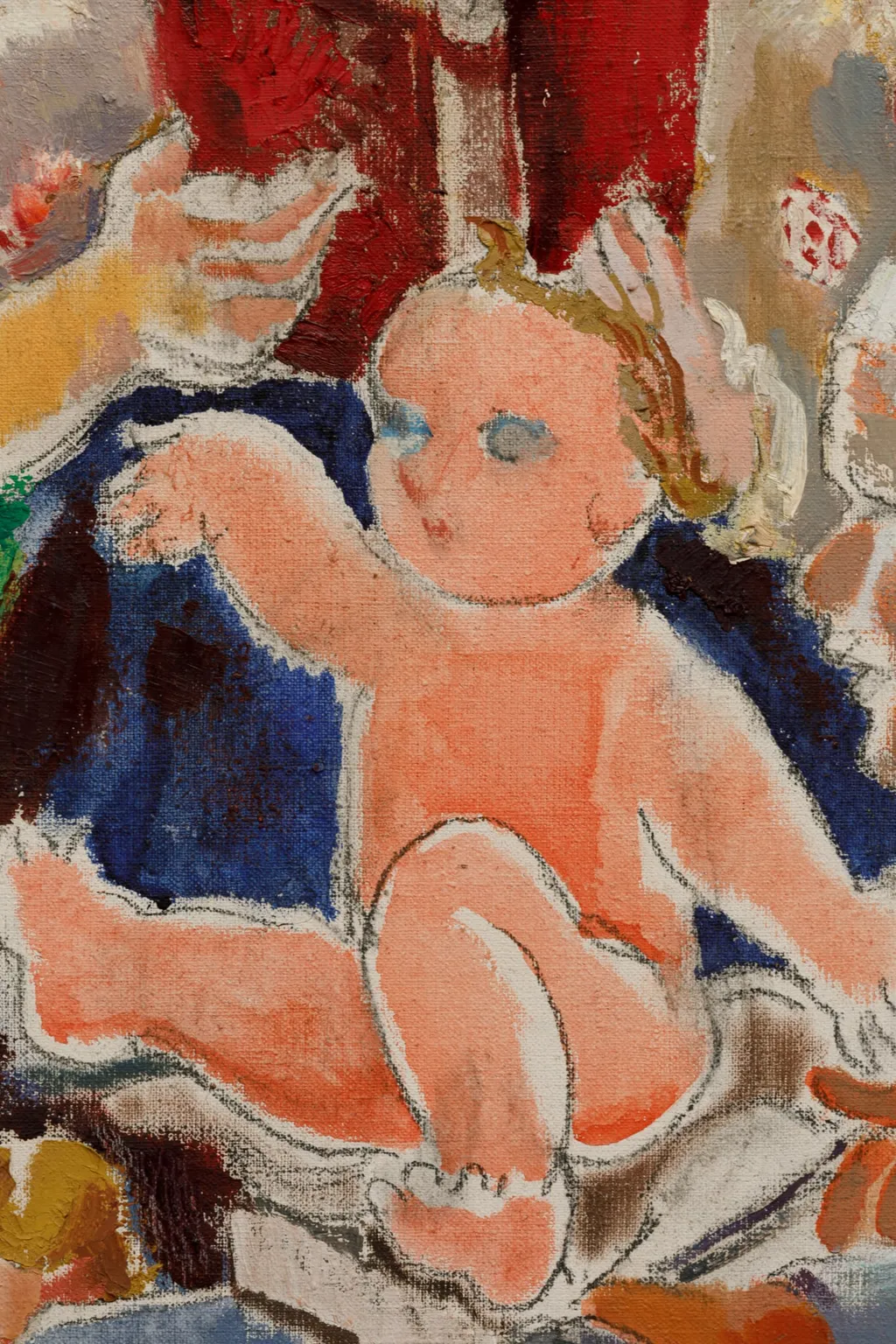
Femeia - factor social de preț al României is a print by Lucia Dem-Bălăcescu. It dates from 1850 and is held in the collection of the National Museum of Art of Romania.
About this work
Overview
Its limited palette of red, blue, pink, white, and black contributes to an emotional intensity that transcends conventional portraiture of the period.
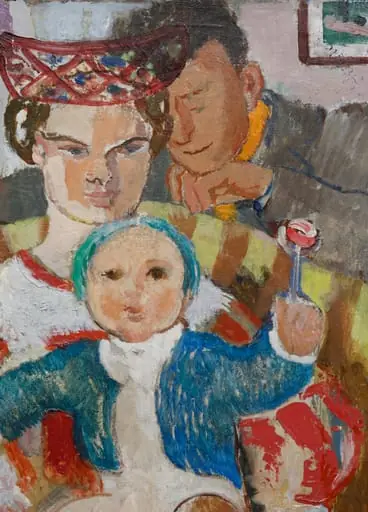
Created around 1850 by Lucia Dem-Bălăcescu, this portrait presents a woman’s face and shoulders with a direct, unadorned presence. The work is executed in thickly applied oil paint, producing a tactile surface that emphasizes physicality over detail. Its limited palette of red, blue, pink, white, and black contributes to an emotional intensity that transcends conventional portraiture of the period.
Subject & Meaning
The subject is a woman rendered with quiet dignity, her closed eyes and gentle smile suggesting introspection rather than performance. The title, translating to 'Woman as a Social Factor of Value in Romania,' frames her not as an individual but as a symbol of societal worth. Her calm expression resists idealization, instead asserting presence through stillness and simplicity.
Technique & Style
The painting employs impasto, with paint applied in heavy, visible strokes that build form through texture rather than fine modeling. Brushwork is deliberate and rough, rejecting smooth finishes in favor of raw materiality. This approach aligns with emerging 19th-century tendencies to prioritize emotional expression over academic polish, giving the figure a sculptural, almost relief-like quality.
History & Provenance
The work’s early provenance remains undocumented, with no record of public exhibition or private ownership prior to the 20th century. It is known only through later archival references and the artist’s personal collection. Its survival suggests it was retained by the artist or close associates, possibly as a study or personal statement rather than a commissioned piece.
Context
Produced during a period of national awakening in Romania, the painting reflects emerging discussions about gender and social identity. While academic art favored idealized figures, Dem-Bălăcescu’s unpolished style and titular framing align with nascent intellectual currents that sought to elevate the role of women in shaping national character beyond domestic spheres.
Legacy
Though not widely exhibited in its time, the work has gained retrospective attention for its departure from contemporary norms. It is now recognized as an early example of Romanian portraiture that prioritizes psychological presence over social convention. Its raw technique and thematic focus have influenced later generations of artists exploring identity through materiality.
Artist & collection