Artwork
Madame Polixenia la Mangalia
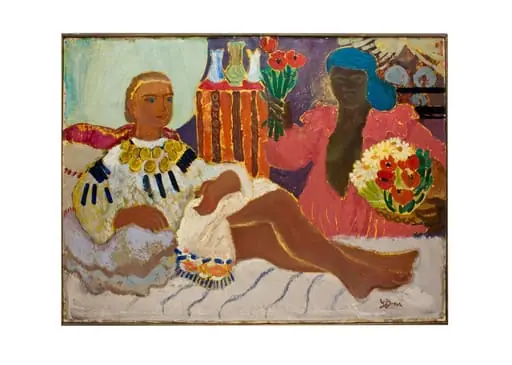
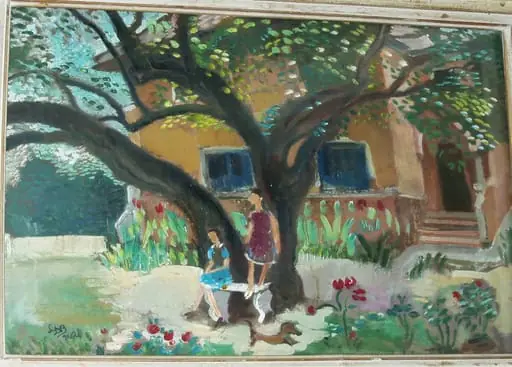
Madame Polixenia la Mangalia is a print by Lucia Dem-Bălăcescu. It dates from 1850 and is held in the collection of the National Museum of Art of Romania.
About this work
Overview
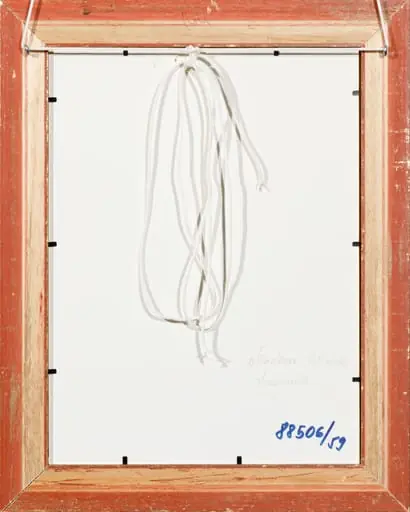
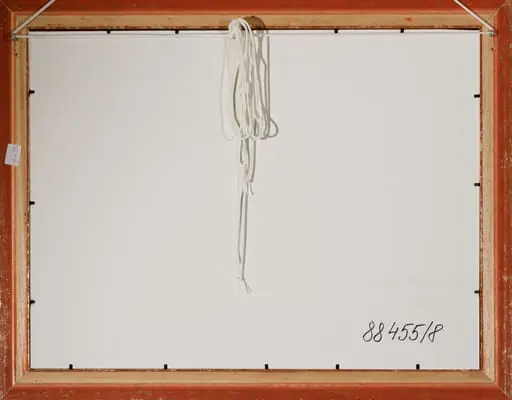
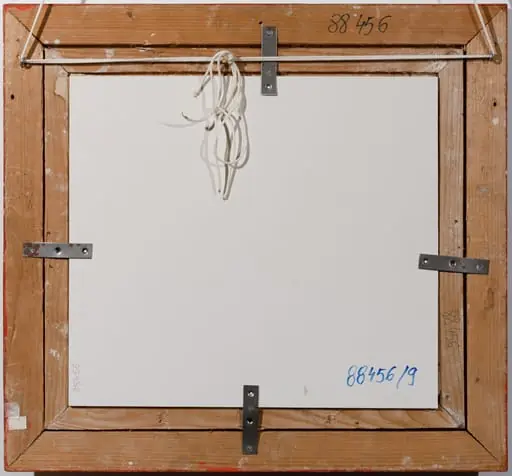
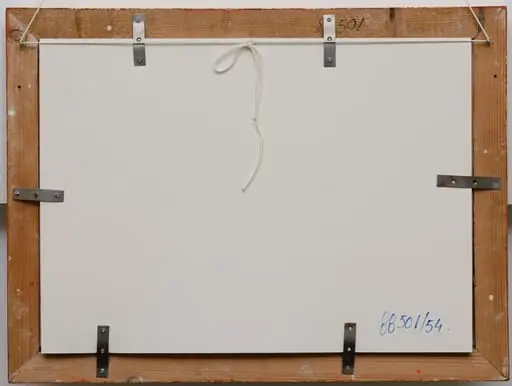
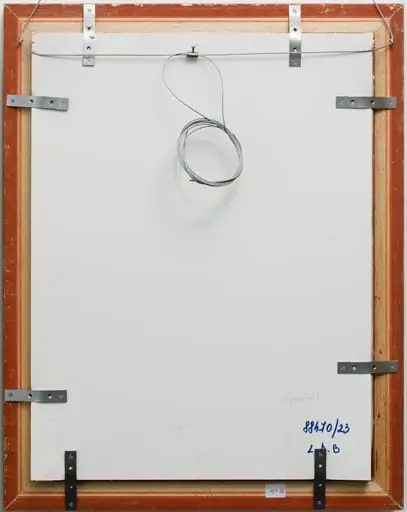
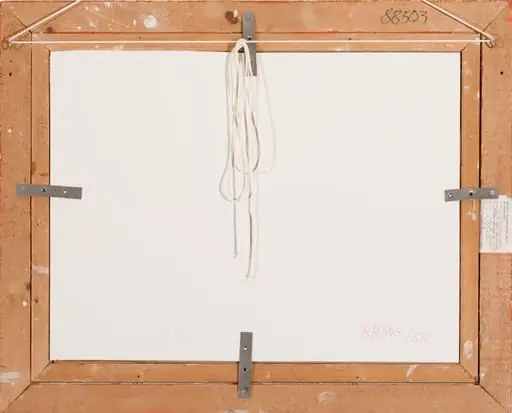
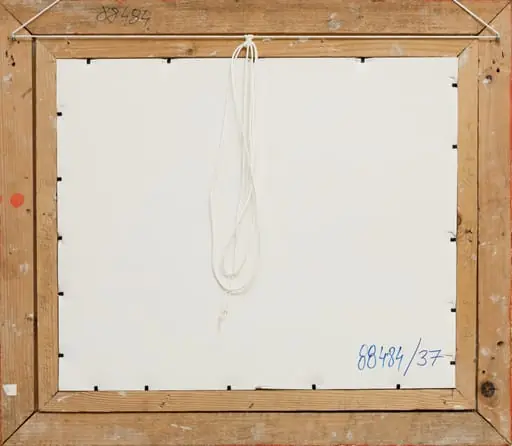
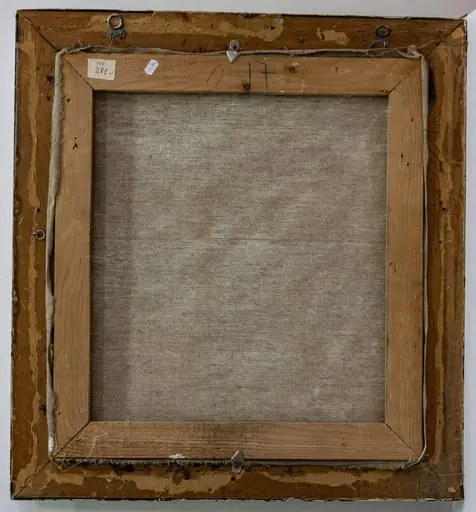
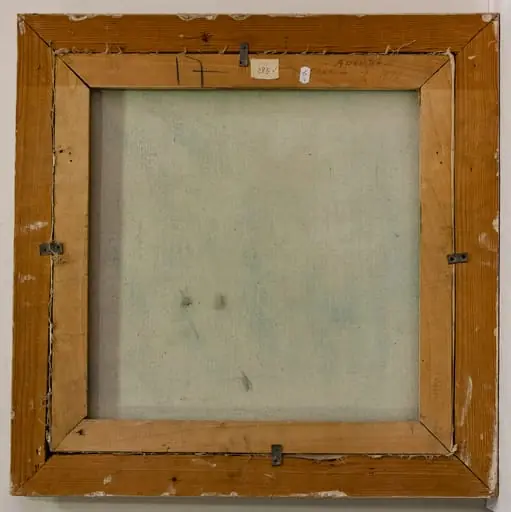
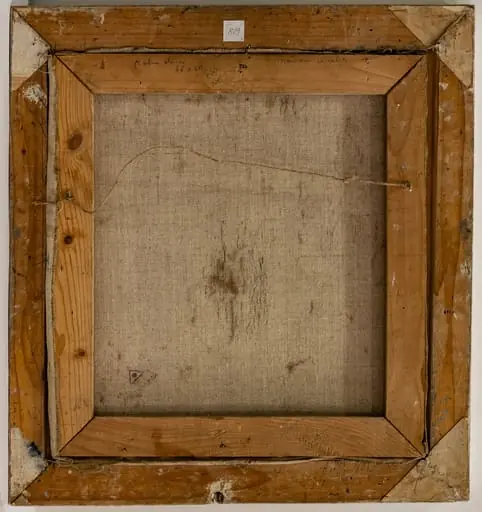
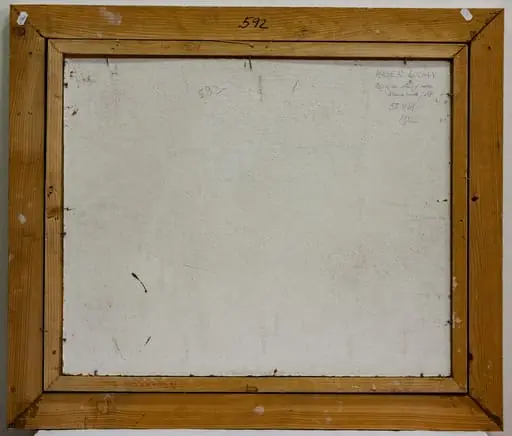
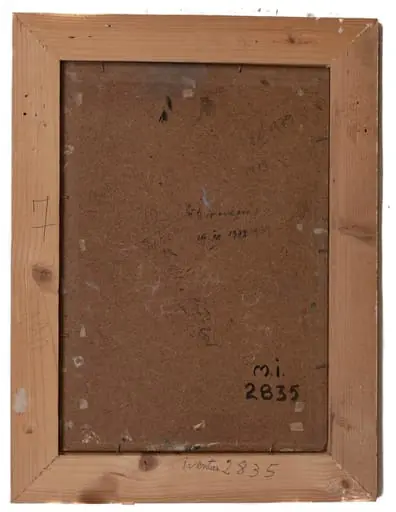
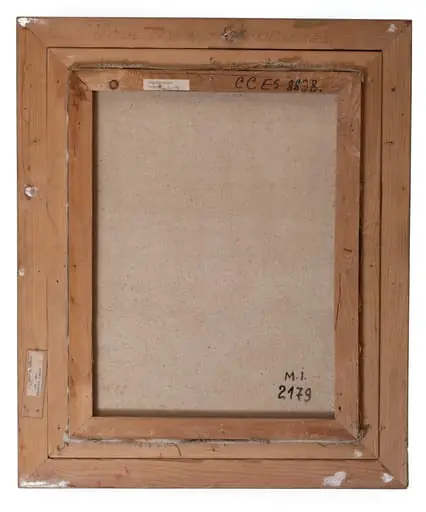
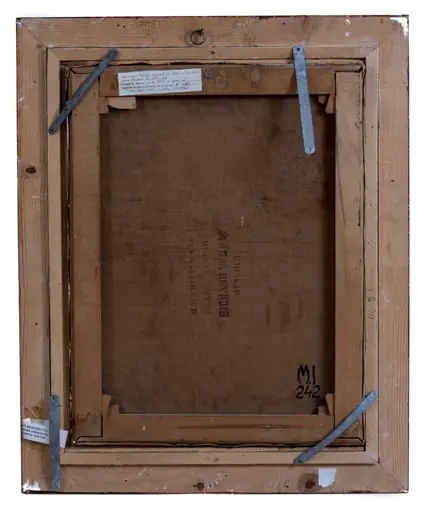
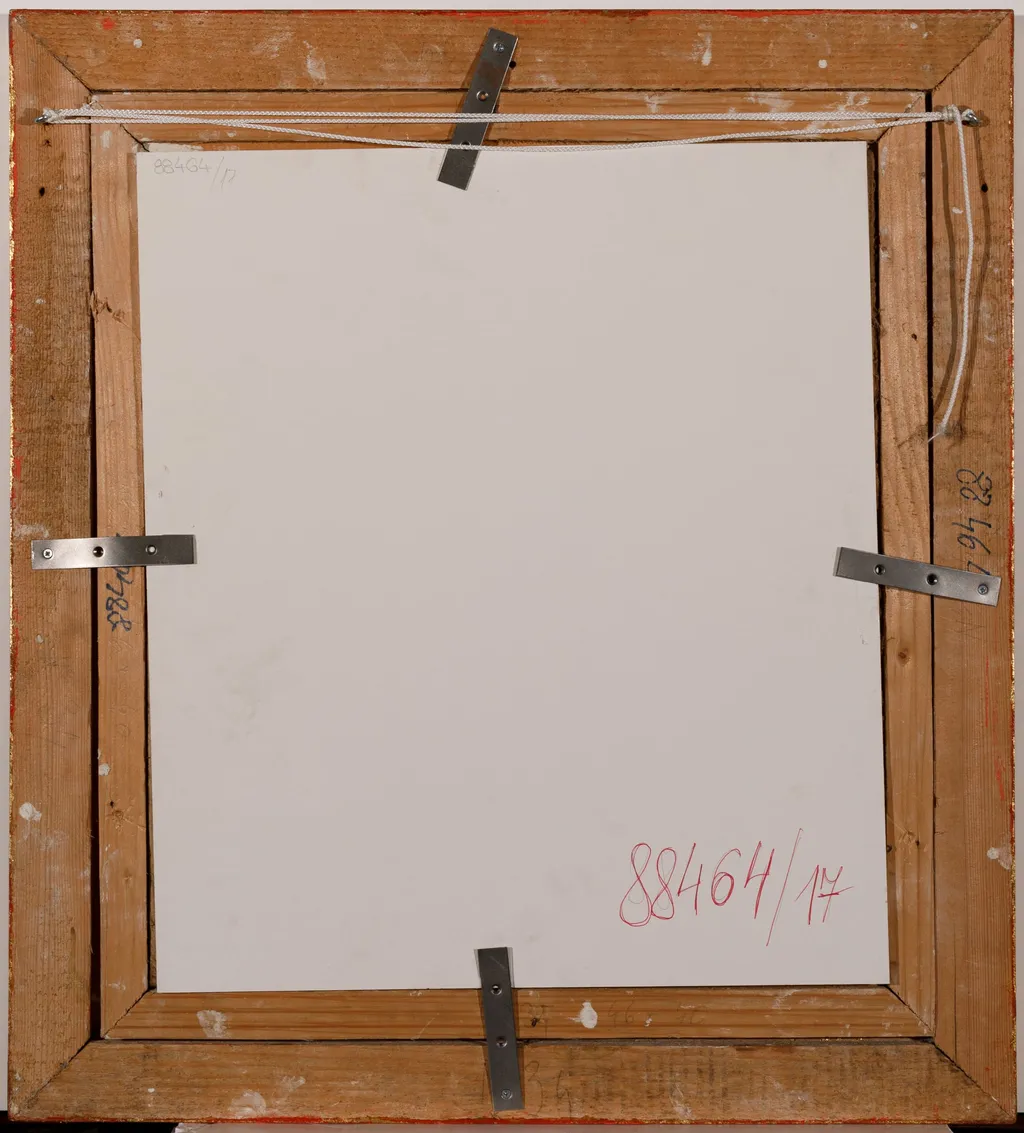
This object is a framed empty support, dated around 1850, attributed to Lucia Dem-Bălăcescu. The frame, made of plain wood with visible signs of age—scratches, faded paint, and worn edges—holds a blank surface of canvas or paper. Metal corner clips secure the structure, and handwritten red numerals appear on the reverse. No image remains within the frame, leaving its original purpose ambiguous.
Subject & Meaning
The title 'Madame Polixenia la Mangalia' suggests a portrait or depiction of a specific individual, likely from the Mangalia region. Yet no visual representation survives. The absence of imagery may indicate loss, deliberate removal, or an unfinished work. The name persists as a textual ghost, hinting at a lost narrative or identity now reduced to a frame and a label.
Technique & Style
The frame is constructed with utilitarian methods: simple joinery reinforced by metal clips, typical of mid-19th-century domestic or modest studio practice. The wood shows signs of repeated handling and environmental exposure. The blank interior suggests the original medium—paint or drawing—has been removed or degraded, leaving only the container behind without stylistic embellishment.
History & Provenance
The red numerals on the reverse may be inventory or catalog markings, possibly from a private collection or institutional archive. The frame’s condition implies prolonged storage or display, with no evidence of restoration. Its survival as an empty shell raises questions about its journey: was it discarded, repurposed, or preserved as a relic of something no longer present?
Context
In mid-19th-century Romania, portrait frames like this were common among middle-class households and regional artists. The reference to 'la Mangalia' situates the subject within a Black Sea coastal community, where cultural records were often fragile. The survival of an empty frame, rather than its contents, reflects broader patterns of loss in regional art histories.
Legacy
This object stands as a mute artifact of absence. Its preservation suggests a quiet reverence for what once was, even in its emptiness. It invites reflection on the impermanence of artistic records and the role of material containers in sustaining memory beyond the image itself. Institutions like the Museum of Ethnography may hold similar fragments of lost stories.
Artist & collection