Artwork
Portret de femeie - Mangalia
Portret de femeie - Mangalia is a print by Lucia Dem-Bălăcescu. It dates from 1850 and is held in the collection of the National Museum of Art of Romania.
About this work
Overview
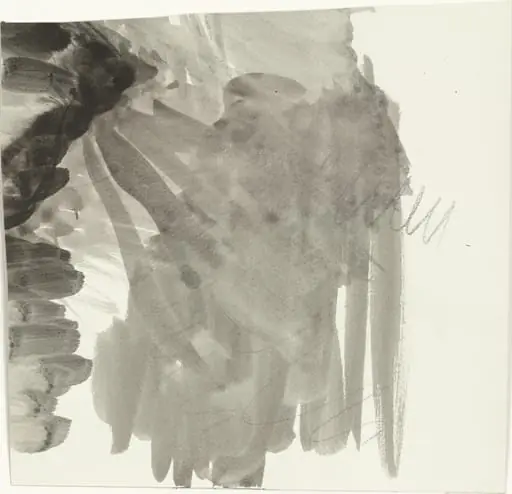
The surface shows significant deterioration: pigments have faded, layers have peeled, and the original composition is obscured by time and handling.
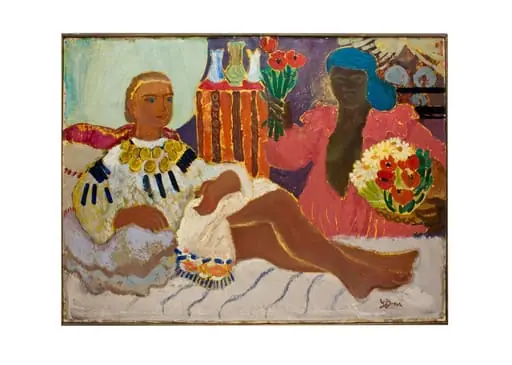
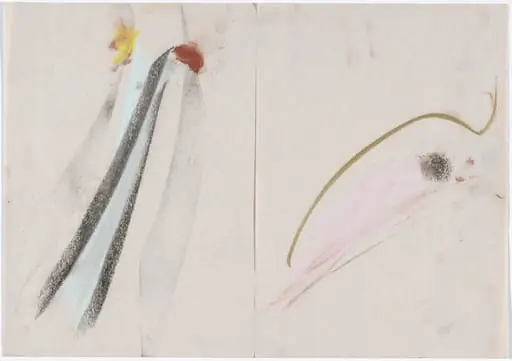
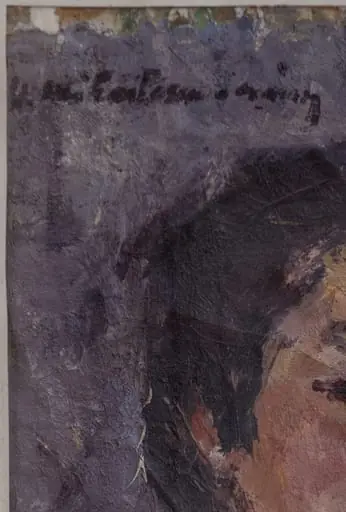
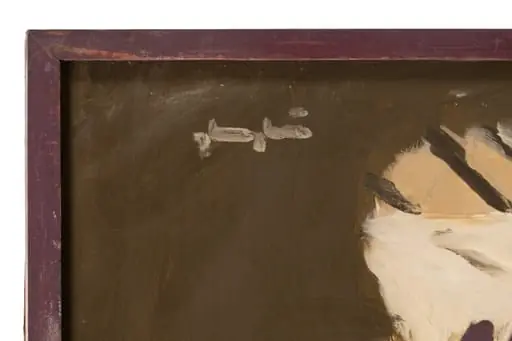
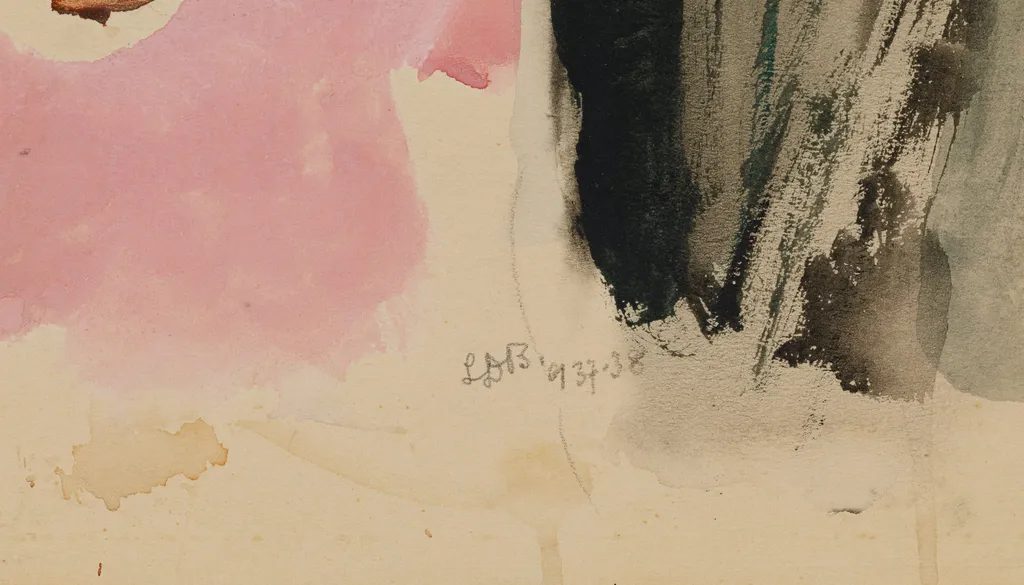
Created around 1850 by Lucia Dem-Bălăcescu, this image is a fragile portrait fragment, likely depicting a woman from Mangalia. The surface shows significant deterioration: pigments have faded, layers have peeled, and the original composition is obscured by time and handling. Only faint traces of form and color remain, suggesting a once-distinct likeness now reduced to muted tones of gray, beige, and a hint of pink in the upper corner.
Subject & Meaning
The work’s title suggests a portrait of a local woman, possibly intended as a personal or familial image. No clear facial features survive, leaving the subject anonymous. The absence of defining details shifts focus from individual identity to the passage of time itself, transforming the portrait into a relic of domestic memory rather than a documented likeness.
Technique & Style
The medium appears to be a water-based paint on paper, applied with loose, unrefined brushwork. The limited palette and uneven application indicate modest materials and a non-professional context. The wear patterns—scratches, smudges, and flaking—reveal the object’s physical history, suggesting it was handled frequently, perhaps kept in a private space rather than displayed formally.
History & Provenance
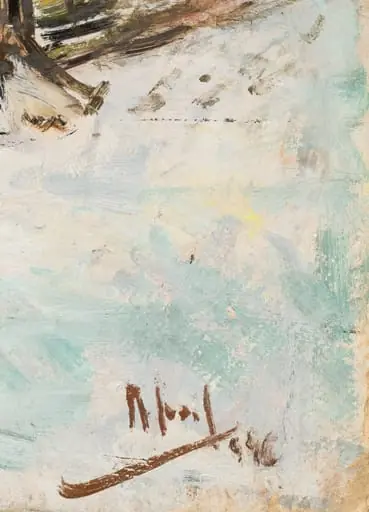
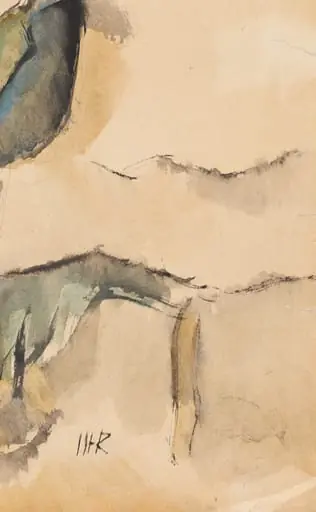
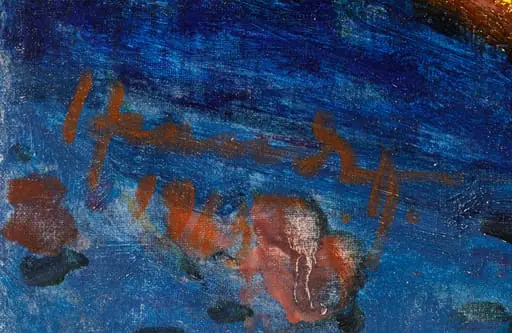
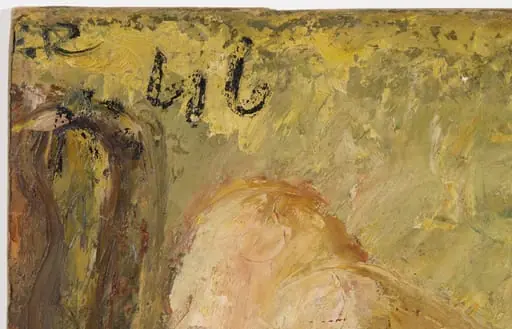
The artwork’s origin lies in mid-19th century Mangalia, a coastal town in what is now Romania. Its survival is likely accidental; few such personal images from this period and region were preserved. The faint signature in the lower right is the only direct link to the artist, Lucia Dem-Bălăcescu, whose broader oeuvre remains poorly documented.
Context
In mid-1800s Romania, portrait-making was uncommon outside urban elites or religious institutions. This image reflects a rural or provincial attempt at personal representation, possibly made by an amateur or local artisan. Its simplicity and deterioration mirror the limited access to art materials and training in the region during that era.
Legacy
Though visually diminished, the portrait endures as a quiet testament to ordinary lives in 19th-century Dobruja. Its fragility underscores how personal histories are often lost to neglect, making its survival notable. It contributes to a sparse visual record of non-elite women from the period, offering a subtle counterpoint to formal portraiture of the time.
Artist & collection